
I still have vivid memories of the chilly Sunday afternoon that almost made me swear off making “porcupine” meatballs forever.
My grandmother used to make them when I was a kid—tender, plump spheres of seasoned beef and long-grain rice simmered in a tangy, thick tomato sauce until the rice kernels poked out like tiny quills. It was pure comfort food on a plate. A couple of winters ago, on a frantic day packed with errands, I decided to adapt her stovetop recipe for my 6-quart oval slow cooker.
I figured it was a straightforward dump-and-go meal. I mixed ground beef, raw white rice, and seasonings, rolled them into balls, dumped them directly into the crock, poured a can of tomato sauce and a splash of water over the top, clamped the lid on, and set it to Low.
Six hours later, I walked into the kitchen to total culinary heartbreak.
The meatballs had disintegrated into a greasy, grey soup. Because the meatballs were submerged in unseasoned liquid without enough surface tension, they fell apart. Worse, the rice in the center of each ball was still chalky and hard, while the rice on the outside had exploded into mush. We ended up ordering pizza, and I spent half an hour scrubbing burnt tomato residue off my slow-cooker insert.
That flop bothered me for weeks. The convenience of a slow-cooker comfort meal like this is too good to abandon.
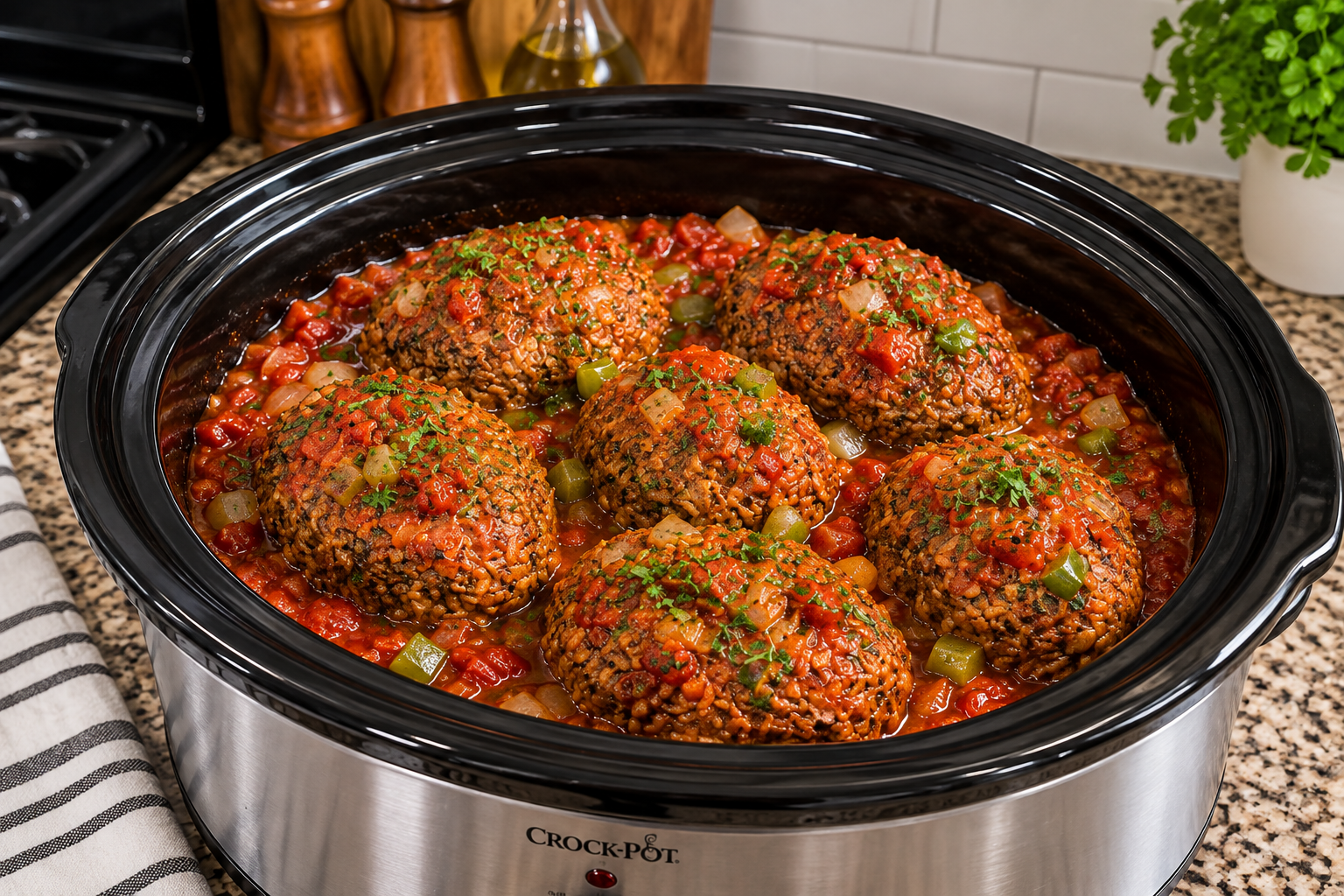
After testing multiple batches, adjusting the rice-to-meat ratios, playing with liquid density, and searing the meatballs before slow-cooking, I finally got it right. The photo above shows the sweet victory: six large, perfectly formed, fork-tender beef and rice meatballs simmered in a chunky, herb-flecked tomato sauce packed with sweet bell peppers and onions, holding their shape without swimming in grease.
Here is how you make foolproof porcupine meatballs in your slow cooker without ending up with soggy beef porridge.
Why Porcupine Meatballs Fail in a Slow Cooker
The chemistry of cooking raw grains inside ground meat under trapped steam is tricky. If your meatballs turn into mush or stay gritty, it almost always comes down to these three culprits:
1. Using Instant or Parboiled Rice
Minute rice or instant rice turns to paste within an hour of slow-cooking. When steam penetrates the meat, instant rice absorbs liquid too quickly, expands rapidly, and blows the meatball apart from the inside out. Standard raw long-grain white rice or Jasmine rice is essential. Its firm starch structure slowly drinks in the tomato juices over 4 to 5 hours, cooking through to a tender chew while keeping the meat intact.
2. High-Fat Meat Greasiness
If you use 70/30 ground beef, the huge volume of rendering fat will liquefy inside the cooker. Because the moisture cannot evaporate in a sealed slow cooker, your meatballs will boil in an orange, oily lake. An 85/15 or 90/10 lean beef blend provides just enough fat for rich moisture while preventing your tomato sauce from breaking into grease.
3. Thin, Watery Tomato Sauce
If your braising liquid is too thin, it dissolves the outer crust of the raw meatballs. A sturdy sauce built from crushed tomatoes, tomato sauce, and finely diced aromatic vegetables (onions and bell peppers) creates a thick bed that cradles the meatballs gently as they simmer.
Ingredients & Essential Equipment
Tools You’ll Need
- 6-Quart Oval Slow Cooker: (An oval shape gives you the wide bottom surface area needed to arrange 5 to 6 large meatballs in a single layer without stacking them).
- Large Skillet: (Cast iron or stainless steel, for giving the meatballs a quick 2-minute sear before they hit the crock).
- Cookie Scoop or Large Spoon: To portion the meat evenly into large, uniform oval portions.
- Instant-Read Digital Thermometer: (A ThermoWorks ThermoPop or similar probe ensures the meat hits a safe 160°F).
The Ingredient Breakdown
| Component | Ingredient | Quantity | Practical Role |
| The Meat | 85/15 Ground Beef (Chuck or Sirloin) | 1.5 to 2 lbs (700–900g) | Lean enough to prevent oily runoff, rich enough to stay tender. |
| The “Quills” | Long-Grain White Rice (Uncooked) | ½ cup | Raw rice expands as it cooks, giving the meatballs their iconic texture. |
| The Binder | Large Egg | 1 whole | Lightly beaten to hold the meat and rice matrix together. |
| The Liquid Binder | Whole Milk or Water | ¼ cup | Hydrates the raw rice grains slightly before the slow simmer begins. |
| Savory Punch | Worcestershire Sauce | 1.5 tbsp | Delivers deep fermented umami right into the beef. |
| Aromatic Base | Yellow Onion | 1 medium (finely diced, divided) | Half goes into the meat mixture; half goes into the sauce bed. |
| Aromatic Base | Green Bell Pepper | 1 medium (finely diced) | Adds classic homestyle flavor, color, and sweetness to the sauce. |
| Aromatic Base | Fresh Garlic | 4 cloves (minced, divided) | Essential savory backbone for both meat and tomato base. |
| Herbal Notes | Italian Herb Blend | 1.5 tsp | Dried oregano, basil, and thyme that bloom in the sauce. |
| Warmth & Color | Garlic Powder & Onion Powder | 1 tsp each | Evenly seasons the interior meat mix. |
| The Sauce Base | Crushed Canned Tomatoes | 1 can (15 oz) | Thick, textured tomato foundation. |
| The Sauce Base | Tomato Sauce | 1 can (15 oz) | Smooth, tangy sauce that coats the meatballs. |
| Richness Boost | Beef Bone Broth | ½ cup | Provides the extra moisture needed for the dry rice to absorb. |
| Seasoning | Kosher Salt & Cracked Black Pepper | 1.5 tsp salt, 1 tsp pepper | Divided across the meatball mix and the simmering sauce. |
| Garnish | Fresh Flat-Leaf Parsley | 2 tbsp (finely chopped) | Sprinkled over the cooked meatballs right before serving. |
Step-by-Step Cooking Instructions
Step 1: Mix the Porcupine Meatball Base
In a large mixing bowl, lightly beat the 1 egg with a fork.
Whisk in the ¼ cup of milk (or water), 1.5 tablespoons Worcestershire sauce, 1 teaspoon garlic powder, 1 teaspoon onion powder, 1 teaspoon kosher salt, and ½ teaspoon freshly cracked black pepper.
Stir in half of your finely diced yellow onion and 2 cloves of minced garlic.
Now, add the ½ cup of raw, uncooked long-grain white rice directly into the liquid mixture. Stir with a fork so the grains are fully coated in seasoning.
Add the ground beef to the bowl.
Using clean hands with fingers spread like rakes, gently fold the meat into the rice mixture just until everything is evenly distributed.
Cook’s Real-Life Tip: Do not overwork, knead, or squeeze the beef! If you compress ground meat tightly, it becomes dense and rubbery. Handle it with a light touch so the rice has physical space between the meat fibers to expand as it absorbs liquid.
Step 2: Shape into Uniform Ovals
Divide the meat mixture into 5 to 6 large, uniform oval meatballs (about the size of small baked potatoes or large eggs).
Cup each portion gently between your palms to shape it into a smooth, compact oval.
Make sure the rice grains are tucked into the surface rather than falling off the exterior.
Step 3: The Quick Skillet Sear (The Secret Step)
While traditional recipes toss raw meatballs directly into the slow cooker, doing a quick 2-minute sear on the stovetop is the secret to keeping them from disintegrating.
Heat a large skillet over medium-high heat with a single teaspoon of oil.
Carefully place the shaped meatballs in the hot skillet. Sear untouched for 90 seconds to 2 minutes just to develop a light, golden-brown crust on the bottom and top.
Do not try to cook them through! This rapid sear creates a firm protein barrier that locks the meatballs into shape, preventing them from falling apart during hours of slow cooking. Remove them to a plate.
Step 4: Build the Chunky Tomato Bed
In the bottom of your 6-quart slow cooker, add the crushed tomatoes, canned tomato sauce, and ½ cup of beef broth.
Toss in the remaining diced yellow onion, the diced green bell pepper, the remaining minced garlic, 1.5 teaspoons of Italian seasoning, ½ teaspoon of kosher salt, and a pinch of black pepper.
Stir the sauce directly in the bottom of the slow cooker insert until well combined. This vegetable-studded sauce acts as an aromatic bed that will braise the meat.
Step 5: Nestle and Spoon
Carefully arrange your seared meatballs in a single layer right inside the tomato sauce, resting them comfortably so they do not overlap.
Take a large metal spoon and scoop a generous ladle of the chunky tomato, pepper, and onion sauce directly over the top of each meatball.
Covering the tops ensures that the exposed rice kernels along the upper surface stay moist and cook completely through.
Step 6: The Gentle Slow Simmer
Clamp the slow cooker lid down securely.
- Low Setting (Strongly Recommended): Cook for 4.5 to 5.5 hours.
- High Setting: Cook for 2.5 to 3 hours.
Cook’s Warning: Whenever possible, use the Low setting. Cooking these on High can cause the tomato sauce along the outer edges to boil too vigorously, which can break apart the meatballs. Low heat allows the raw rice to gently drink in the broth and expand into tender, plump “quills” without tearing the meat.
Around hour 4, lift the lid quickly and check the texture of a grain of rice poking through the top of a meatball. It should be tender and fluffy, not crunchy or chalky.
Step 7: Garnish and Serve Warm
Turn the slow cooker to the “Warm” setting or switch it off.
Spoon the rich, bubbling tomato and bell pepper sauce over the tops of the meatballs one more time.
Scatter finely chopped fresh flat-leaf parsley across the dish for a pop of bright green.
Use a wide spoon or a silicone spatula to lift each meatball gently from the cooker, serving it alongside a generous ladle of the thick, savory tomato-pepper sauce.
Practical Troubleshooting & Common Mistakes
- “The rice in the middle of my meatballs was still crunchy.”
This happens if you used brown rice or if you didn’t add the beef broth to the sauce. Brown rice takes twice as long to cook and requires significantly more liquid than white rice. Always use standard uncooked long-grain white rice for this recipe, and never omit the extra ½ cup of broth in Step 4. - “My meatballs fell apart into loose meat sauce.”
Skipping the quick stovetop sear or stirring the pot during the cook cycle is the usual reason. Once the meatballs are settled into the sauce, leave the lid on and do not stir them with a spoon. Let the gentle radiant heat do the work undisturbed. - “The sauce tastes a bit too acidic.”
Canned tomatoes can sometimes have an aggressive metallic acidity. If your finished sauce tastes sharp, stir a teaspoon of brown sugar or a tablespoon of butter into the sauce during the final ten minutes to round out the flavor into a rich, sweet tomato profile.
What to Serve with It & Reheating Leftovers
These meatballs are incredibly hearty on their own thanks to the rice inside, but they pair naturally with:
- Creamy Mashed Potatoes: Spooning that chunky tomato, onion, and bell pepper sauce over buttery Yukon Gold potatoes is pure comfort food heaven.
- Warm Garlic Bread or Crusty Rolls: Essential for swiping every last drop of savory sauce from your plate.
- Steamed Green Beans or a Simple Garden Salad: Adds a crisp, fresh contrast to the rich, warm beef.
If you have leftover meatballs, store them in an airtight container completely submerged in their sauce in the refrigerator for up to 4 days.
Because the rice will continue to drink in sauce while chilled, the sauce will thicken up considerably overnight.
When reheating, place a meatball and sauce in a small saucepan over medium-low heat with a splash of water or beef broth, cover with a lid, and warm gently for 8 to 10 minutes until hot throughout. They taste even richer the second day!