
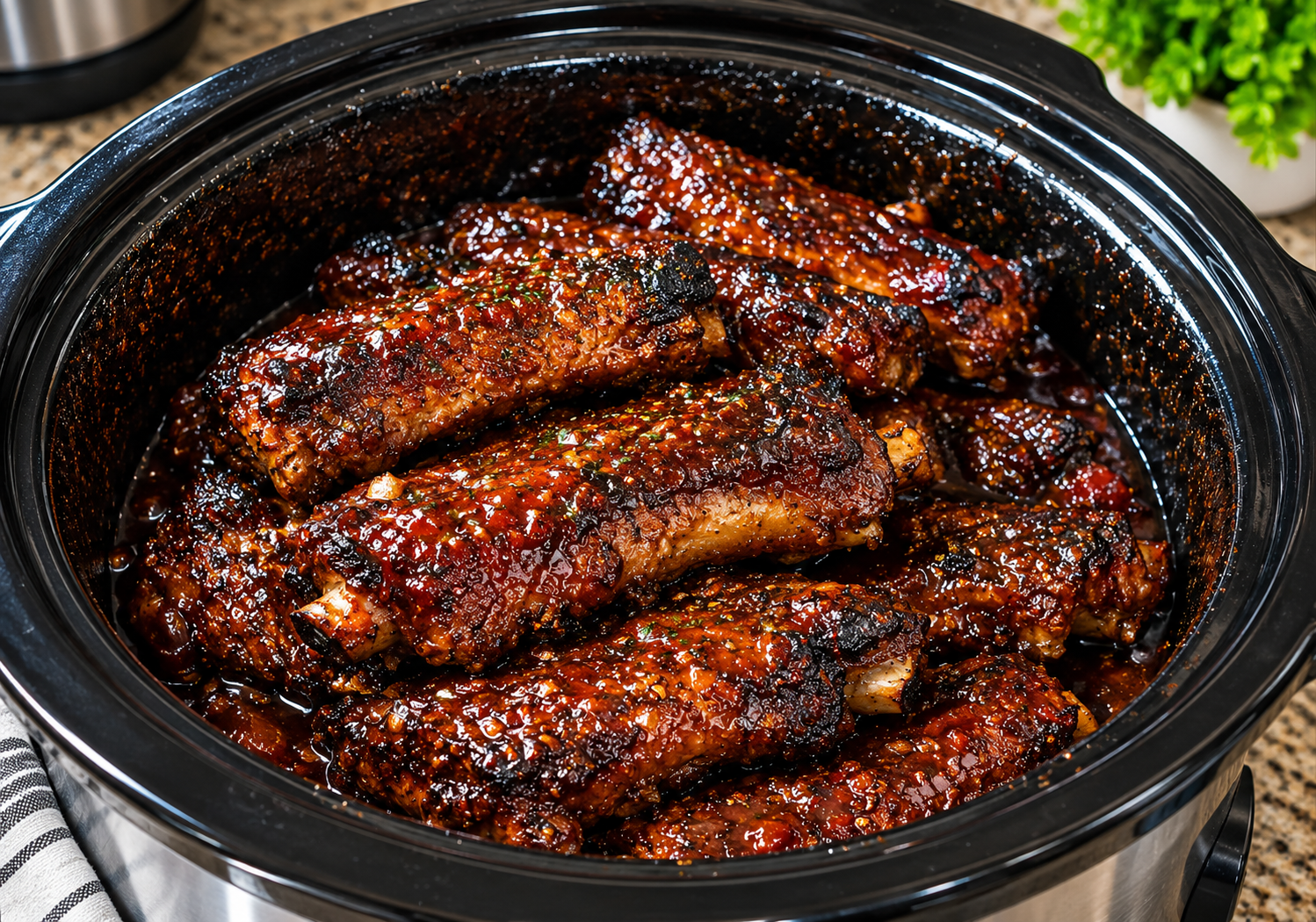
- Relatable hook & personal failure (watery, boiled ribs in a slow cooker)
- Clear problem identification (membrane issues, too much liquid, no sear/broil finish)
- Equipment & ingredients table
- Step-by-step instructions (rub, arranging, cooking, the crucial broiler caramelization step)
- Practical troubleshooting & common mistakes
- Leftover/serving ideas with no canned AI transitions.# The Day I Stopped Making Boiled Meat: Fall-Off-The-Bone Slow-Cooker BBQ Ribs
If you’ve ever had a slow-cooker barbecue rib fail, you know the exact heartbreak I’m talking about.
A few summers ago, I volunteered to host an afternoon cookout for our neighborhood. I didn’t want to stand over an outdoor smoker for seven hours babysitting charcoal in ninety-degree heat, so I thought I’d take the easy way out. I picked up three racks of baby back ribs, dusted them in a store-bought dry rub, dumped an entire bottle of sweet barbecue sauce directly on top, poured in a cup of water “to keep things moist,” clamped down the lid of my slow cooker, and went about my day.
Six hours later, when I lifted that lid, I was met with complete culinary disappointment.
The ribs hadn’t roasted or caramelized at all. They had boiled. The meat sat submerged in an ocean of diluted, watery red sludge, grey and rubbery. Worse, because I hadn’t removed the tough papery membrane on the back of the bones, every bite was like chewing on a rubber band. When I tried to lift a slab out with tongs, the bones slipped straight into the liquid and the shredded meat sank like a stone. It tasted like plain boiled pork drowned in watery ketchup.
I had to apologize to our guests, chop the meat into emergency shredded pork sandwiches, and drown it in extra hot sauce just to salvage dinner.
That failure stung, but it also lit a fire under me. The slow cooker is arguably the greatest appliance in your kitchen for breaking down tough, collagen-rich cuts like pork ribs—if you understand how to control moisture and finish the meat properly.
After dozens of test batches, I cracked the sequence. The photo above is the delicious reality: deeply caramelized, mahogany-glazed ribs with tender, juicy meat that hugs the bone just enough to bite cleanly, coated in a sticky, bubbling barbecue lacquer that rivals any backyard smoker.
Here is how you make foolproof, restaurant-quality ribs in your slow cooker without ending up with soggy boiled pork.
Why Most Slow-Cooker Ribs Fail (And the Physics to Fix Them)
A slow cooker traps steam. Moisture released from the meat condenses on the underside of the lid and rains continuously back down into the crock. If you don’t adjust your technique for that environment, ribs turn to mush.
1. The Water Mistake (Never Add Liquid)
Never pour water, broth, or beer into the bottom of a slow cooker when making ribs. A rack of pork ribs is loaded with natural juices and rendering fat. As it cooks, the meat releases plenty of liquid on its own. Adding extra water dilutes your dry rub and guarantees your meat will boil rather than braise.
2. The Membrane Barrier
On the underside (bone side) of every rack of ribs sits the peritoneum—a thin, tough, papery membrane. If you leave it intact, rubs and heat cannot penetrate the meat from the back, and the membrane shrinks into a leathery skin that makes the ribs unpleasantly chewy. Peeling off this silverskin takes sixty seconds and is the single most important prep step you will take.
3. Baking with Sweet Sauce Too Early
Store-bought and homemade barbecue sauces are loaded with brown sugar, molasses, or honey. If you coat raw ribs in heavy sauce at minute zero, the sugar dissolves into the rendered pork fat, sliding right off the meat into the bottom of the pot. The secret is cooking the ribs with a dry spice rub first, letting the pork tenderize in its own steam, and applying the thick sauce during the final phase.
4. The Mandatory Broiler Finish
A slow cooker can make meat tender, but it cannot caramelize sugar or create a crisp, sticky bark. Once the ribs are fork-tender in the slow cooker, transferring them to a baking sheet, brushing them generously with sauce, and running them under a hot oven broiler for four minutes caramelizes the glaze into that sticky, finger-licking mahogany lacquer.
Ingredients & Kitchen Tools
Essential Gear
- 6-Quart or 7-Quart Oval Slow Cooker: (An oval cooker gives you the width needed to curl whole racks or stand cut portions upright without crowding).
- Rimmed Baking Sheet: Lined with heavy-duty aluminum foil for the final caramelization stage.
- Paper Towels & Butter Knife: The dynamic duo for peeling the membrane off the bone side.
- Silicone Basting Brush: To paint the ribs with thick barbecue sauce before and after broiling.
- Sturdy Metal Tongs: To gently transfer tender ribs without tearing the meat from the bone.
The Ingredient Breakdown
| Component | Ingredient | Quantity | Practical Purpose |
| The Star | Pork Baby Back Ribs (or St. Louis Cut) | 2 full racks (approx. 4 to 5 lbs total) | Baby backs are tender, lean, and curl easily inside the crock. |
| The Glue | Yellow Mustard or Apple Cider Vinegar | 2 tbsp | Thin layer used to help the dry rub adhere without tasting like mustard. |
| Sweet Bark | Dark Brown Sugar | ¼ cup (packed) | Caramelizes into that deep amber barbecue crust. |
| Smoky Depth | Smoked Paprika | 2 tbsp | Provides rich color and mimics genuine pit-smoker flavor. |
| Savory Backbone | Garlic Powder & Onion Powder | 1 tbsp each | Distributes clean, bold aromatics evenly across the meat. |
| Warmth & Spice | Chili Powder | 1 tsp | Gentle heat that balances the sweet brown sugar. |
| Woodsy Note | Dried Oregano or Thyme | ½ tsp | Subtle herbal depth in the spice rub. |
| Seasoning | Coarse Kosher Salt | 1.5 tbsp (Diamond Crystal) | Penetrates deep into the pork muscle fibers. |
| Seasoning | Freshly Ground Black Pepper | 1 tbsp | Coarse grind for texture and peppery bark. |
| Heat Accent | Cayenne Pepper | ¼ to ½ tsp (to taste) | Adds a pleasant tingle at the back of the palate. |
| The Glaze | Your Favorite Thick BBQ Sauce | 1.5 to 2 cups | Thick tomato-molasses or hickory style sauce for basting. |
| Acid Lift | Apple Cider Vinegar (for the sauce) | 1 tbsp | Stirred into the barbecue sauce to keep it tangy and bright. |
Step-by-Step Cooking Instructions
Step 1: Remove the Membrane (The Game-Changer)
Pat the racks of ribs bone-dry with paper towels on both sides.
Flip the ribs over so the bone side faces up. Slide the dull tip of a butter knife beneath the thin, translucent membrane near one corner bone to loosen an edge.
Grab the loosened edge with a dry paper towel (the paper towel gives you traction so the slippery membrane doesn’t shoot out of your fingers) and pull it firmly across the length of the rack in one smooth motion. It should peel away like masking tape. Discard it.
Step 2: Cut into Manageable Portions
Unless you are cooking a single small rack in a massive slow cooker, trying to jam whole slabs into the pot will lead to uneven cooking.
Using a sharp chef’s knife, slice between the bones to divide each rack into 3- to 4-bone sections (or cut individual bone ribs, as shown in the pot in the photo).
Sectioning makes arranging the ribs much easier and ensures maximum surface area catches the dry seasoning and sauce.
Step 3: Coat and Season
Rub a very thin film of yellow mustard or apple cider vinegar across all sides of each rib section.
In a medium bowl, whisk together the dark brown sugar, smoked paprika, garlic powder, onion powder, chili powder, dried oregano, kosher salt, coarse black pepper, and cayenne pepper.
Generously sprinkle and massage the rub over every square inch of the pork. Don’t be timid—use all of it. Let the seasoned ribs sit on your cutting board for 15 minutes. The salt will draw out a small amount of moisture, turning the dry rub into a rich, dark paste that clings to the meat.
Step 4: Pack the Slow Cooker Strategically
Lightly spray the ceramic insert of your slow cooker with nonstick spray.
Do not add water, broth, or sauce to the bottom of the pot.
Arrange the rib portions inside the slow cooker. You have two great options depending on your cut:
- The Standing Method: Stand the 3-to-4 bone slabs upright on end around the perimeter of the oval crock, with the meatier side facing the hot outer ceramic wall and the bones facing inward.
- The Stacked Rib Method: If you cut individual bone ribs, layer them meat-side up in alternating crisscross stacks (just like the full pot in the reference shot).
Drizzle about ⅓ cup of your barbecue sauce lightly over the top ribs, keeping the remaining sauce reserved in a bowl for later.
Step 5: The Low-and-Slow Simmer
Clamp the lid down securely.
- Low Setting (Strongly Recommended): Cook for 6 to 7 hours.
- High Setting: Cook for 3.5 to 4 hours.
Cook’s Real-Life Tip: Always choose the Low setting whenever you have the time. Cooking ribs on High can boil the connective tissue too fast, wringing out the juices and making the meat stringy rather than tender. On Low, the collagen melts gently into rich gelatin, leaving the meat tender and juicy.
Around hour 6 on Low, test a piece: the meat should have shrunk back from the tips of the bones by about half an inch. When you tug gently with tongs, the meat should pull away effortlessly without disintegrating into mush.
Step 6: The Essential Broiler Caramelization
Preheat your oven’s broiler to HIGH. Line a large, sturdy rimmed baking sheet with heavy-duty aluminum foil.
Using your tongs, carefully transfer the tender rib portions from the slow cooker onto the prepared baking sheet in a single layer, meat-side up.
In a bowl, stir the 1 tablespoon of apple cider vinegar into the remaining barbecue sauce.
Using your silicone basting brush, paint a thick, generous layer of barbecue sauce over the tops and sides of every rib.
Slide the baking sheet onto the upper oven rack, about 5 to 6 inches below the broiler heating element.
Broil for 3 to 5 minutes, watching constantly through the oven glass door.
The high radiant heat will cause the sugars in the sauce to bubble, char, and caramelize, transforming the wet coating into a sticky, glossy lacquer with crispy, darkened edges.
Pull the pan out, brush with one more thin coat of sauce, and broil for another 60 seconds until deeply browned and tacky.
Step 7: The Short Rest and Plating
Set the baking sheet on a trivet or wooden board.
Let the ribs rest undisturbed for 5 minutes.
This brief pause gives the bubbling sugar glaze time to set and thicken into that finger-licking coating that won’t run off when you pick a rib up.
Transfer the ribs back into the warm slow cooker for a casual, self-serve potluck presentation (as pictured), or pile them high on a wooden platter alongside extra sauce for dipping.
Practical Troubleshooting & Common Mistakes
- “My ribs were falling apart and lost all their chew.”
There is a difference between “tender” and “overcooked mush.” If ribs cook too long, they lose all structure. Check baby back ribs at the 5.5-hour mark on Low. They are done when a toothpick slides easily into the meat between bones with zero resistance, but before the slab completely separates on its own. - “The bottom of the slow cooker filled with grease.”
Pork ribs naturally render liquid and fat. That is completely normal! That’s why we never add extra water, and why we always pull the ribs out onto a foil-lined baking sheet to broil them rather than trying to glaze them inside the slow cooker juices. - “The sauce burned black under the broiler.”
Barbecue sauce contains high levels of sugar, which turns from bubbling caramel to bitter black ash in seconds. Never walk away from the oven while the broiler is running. Keep your eyes on the pan and pull it out the second you see dark charred freckles forming along the tips of the ribs.
What to Serve with BBQ Ribs & How to Handle Leftovers
These sticky ribs are the ultimate centerpiece for relaxed weekend entertaining. Round out the meal with:
- Southern Creamy Potato Salad or Cool Macaroni Salad: The creamy, tangy cold dressing balances the hot, sweet barbecue glaze.
- Warm Cast-Iron Skillet Cornbread: Drizzled with honey butter to catch every runaway drop of sauce.
- Crispy Vinegar Slaw: Cabbage tossed in a light apple cider dressing brings crisp acidity to cut through the rich pork fat.
If you have leftover ribs, let them cool completely, wrap them tightly in heavy foil, and keep them refrigerated for up to 4 days.
To reheat without drying out the pork, do not use the microwave. Wrap the foil packet tightly around the ribs with a spoonful of extra barbecue sauce and warm them in a 300°F (150°C) oven or toaster oven for 15 to 20 minutes until heated through. The glaze will liquefy and baste the meat, keeping it tender from the first bite to the last bone.