
Introduction: When a Cozy Seafood Soup Turns Into Rubber
Let me take you back to a chilly Friday evening a few months ago. I wanted to treat my family to a luxurious, restaurant-quality seafood dinner that would warm us up from the inside out. I picked up a big bag of fresh shrimp at the local market, completely confident that I could wing it without a recipe.
“How hard can it be?” I told myself with supreme overconfidence. “Just toss raw shrimp and heavy cream into a pot with some broth, crank the heat up, and let it boil.”
What followed was an absolute culinary catastrophe.
Without managing the cooking time of the seafood or controlling the heat of the dairy, I threw raw shrimp straight into a pot of cold cream and broth and let the whole thing come to a rolling, aggressive boil for twenty minutes.
When I pulled the lid off, the disaster was complete. Because I boiled the shrimp for way too long, every single piece shrunk into a tiny, tough, rubbery question mark. Meanwhile, the heavy cream had curdled and separated into an oily, grainy grease slick floating over a thin, watery broth.
My family took polite, painful bites while chewing for a solid minute per forkful, struggling with the rubbery seafood.
That kitchen catastrophe bruised my ego, but it also made me obsessed. I refused to let seafood chowder defeat me. I spent the next few weeks studying soup bases, testing dairy stability, and mastering when to add delicate shrimp so they stay plump and tender.
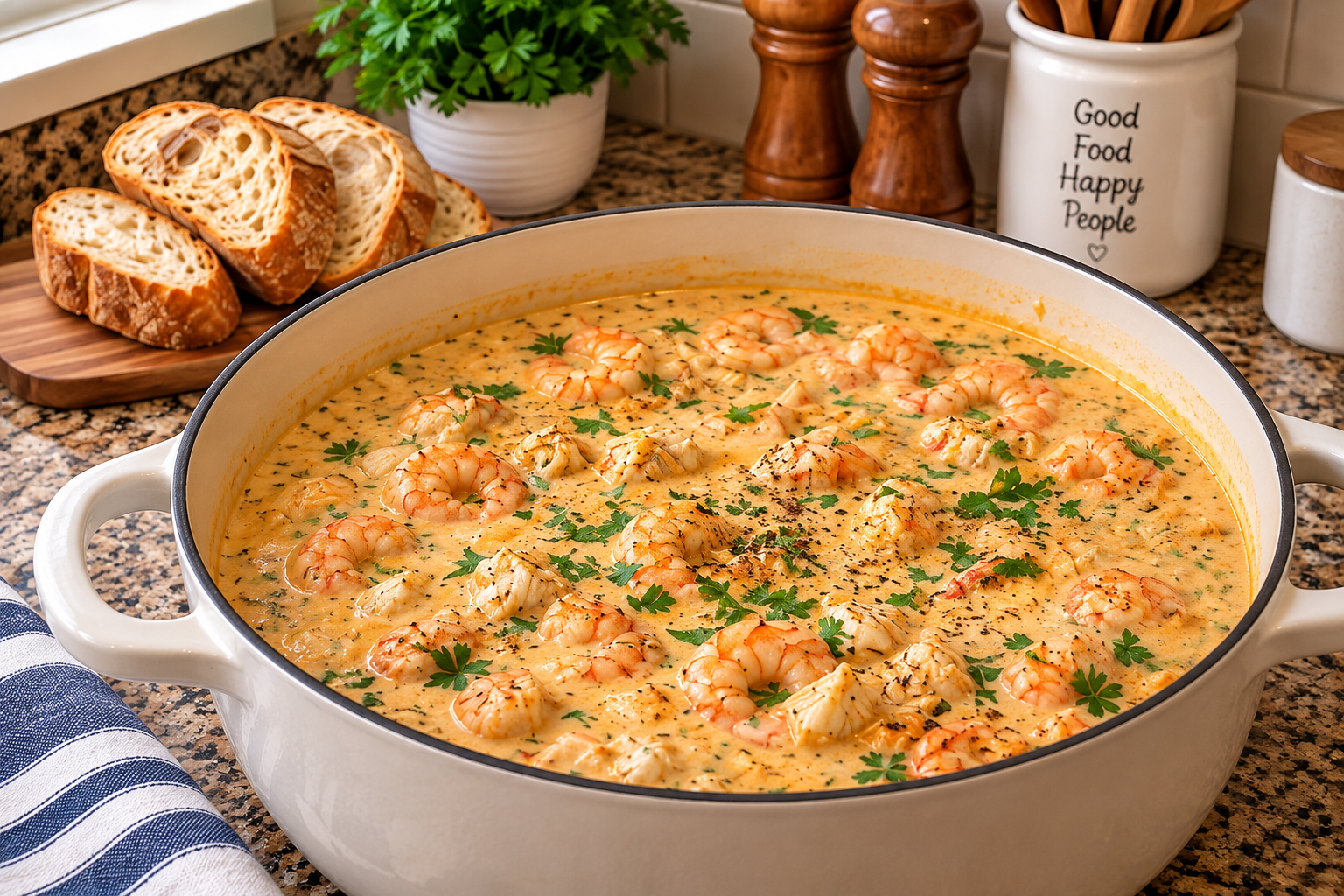
Today, I am sharing the glorious result of that journey: my absolute favorite Creamy Seafood Chowder. It is rich, velvety, packed with tender shrimp, and served alongside warm, crusty artisan bread. Grab a heavy Dutch oven and let’s dive in.
The Reality Check: Why Most Homemade Seafood Chowders Fail
Before we get to the fun part of cooking, we need to talk about why making a cream-based seafood soup at home can feel like walking through a minefield.
Have you ever tried making a seafood chowder, only to find that the shrimp turns out tough and rubbery while the soup curdles into an oily mess?
I made every single one of those mistakes so you don’t have to repeat them. Here are the three golden rules I learned the hard way:
- Never boil your dairy. Heavy cream and whole milk hate high heat. If you let a dairy-based chowder come to a rolling boil after adding the cream, the proteins seize up, separating into an oily, grainy texture. Always simmer gently on low heat.
- Add shrimp at the very end. Shrimp cooks in under 3 minutes. If you throw raw shrimp into your soup at the beginning, they will boil for too long and turn into rubber. Nestle them into the warm broth during the final minutes!
- Build a proper roux. Whisking a simple butter-and-flour roux into your aromatics before adding broth creates a stable, luxurious base that naturally thickens your chowder without needing artificial thickeners.
With those hard-earned lessons tucked under our aprons, let’s look at what you need to stock your kitchen counter with.
The Ingredient List
For a meal that tastes like an expensive coastal bistro classic, the ingredient list is refreshingly straightforward. You can find everything easily at your local grocery store.
| Category | Item | Quantity / Notes |
| The Seafood | Large Shrimp (Peeled & Deveined) | 1.5 lbs, fully thawed and patted dry. |
| Aromatics & Veggies | Yellow Onion & Celery | 1 medium yellow onion (diced) + 2 stalks celery (diced). |
| Fresh Garlic | 4 cloves, freshly minced. | |
| The Base | Unsalted Butter & All-Purpose Flour | 4 tbsp butter + 1/4 cup flour (for the chowder roux). |
| Chicken or Seafood Broth | 3 cups (low-sodium preferred). | |
| The Dairy | Heavy Cream & Whole Milk | 1.5 cups heavy cream + 1.5 cups whole milk (for ultimate velvety richness). |
| Seasoning & Finish | Old Bay Seasoning & Smoked Paprika | 1 tsp Old Bay + 1/2 tsp smoked paprika for that coastal flavor. |
| Fresh Parsley | 3 tablespoons, chopped, for a bright green garnish. | |
| Crusty Artisan Bread | 1 loaf, sliced, for serving alongside the chowder. |
Step-by-Step Guidance: Building Your Masterpiece
Ready to get to work? Make sure you have a heavy Dutch oven ready (just like the wide ceramic pot in our reference image). Let’s walk through the process step by step.
Step 1: Sauté Aromatics and Build the Roux
- Sauté Veggies: Melt 4 tablespoons of butter in your heavy Dutch oven over medium heat. Add your diced yellow onions and celery, cooking for 5 minutes until soft and translucent. Add your minced garlic and cook for 1 minute.
- Make the Roux: Sprinkle your 1/4 cup of flour evenly over the vegetables, stirring constantly for 1 to 2 minutes to cook out the raw flour taste.
Step 2: Pour Broth and Simmer
- Slowly pour in your seafood or chicken broth, whisking vigorously the entire time to ensure a smooth, lump-free base.
- Stir in your Old Bay seasoning, smoked paprika, salt, and black pepper. Bring the broth up to a gentle simmer and let it cook for 10 minutes so the flavors meld together.
Step 3: Add Dairy and Shrimp
- Turn your stove burner down to its absolute lowest setting.
- Slowly pour in your heavy cream and whole milk, stirring gently as the liquid transforms into a rich, velvety chowder base.
- Gently lay your raw, peeled shrimp into the warm chowder. Let them simmer on low heat for 3 to 4 minutes, just until they turn pink, opaque, and curl into tender “C” shapes. Do not boil!
Step 4: Garnish and Serve
- Turn off the heat and stir in your freshly chopped parsley.
- Ladle the smoking-hot creamy seafood chowder into bowls, and serve immediately alongside thick slices of warm, crusty artisan bread for dipping!
Real Examples, Use Cases, and Life Lessons
Even seasoned home cooks run into roadblocks. Here are a few practical scenarios and common traps to keep in mind so your dinner goes off without a hitch:
- The Rubbery Shrimp Trap: Overcooking shrimp is the number one mistake in seafood soups. Adding raw shrimp during the final 3 minutes of cooking guarantees they stay plump, tender, and juicy.
- Choosing the Right Dairy: Never use skim or low-fat milk for chowder, as it lacks the fat content needed to prevent curdling. Stick to heavy cream and whole milk!
- Leftovers and Reheating: Seafood chowder is best enjoyed fresh. If you have leftovers, reheat individual portions gently on the stovetop over low heat, stirring constantly. Avoid the microwave, which can overcook the shrimp.
As for serving suggestions? Serve this rich, comforting creamy seafood chowder hot from your Dutch oven, accompanied by sliced crusty French bread or sourdough for mopping up every last drop of that velvety broth.
Common Mistakes to Avoid Summary
To ensure your Creamy Seafood Chowder turns out velvety, tender, and delicious on your very first try, keep these quick checkpoints handy:
- Don’t boil the shrimp: Add your raw shrimp during the final 3 minutes of cooking to prevent them from turning rubbery.
- Don’t boil the dairy: Keep your heat on low once the heavy cream and milk go in to prevent curdling and separation.
- Don’t skip the roux: Whisking flour into melted butter creates a stable thickener for your soup base.
Final Thoughts
That disastrous seafood disaster feels like a lifetime ago now. Making an incredible, restaurant-quality chowder at home isn’t about guesswork; it’s about managing your heat levels and timing your seafood additions correctly.
Next time you want a comforting, elegant dinner that will warm up your entire family, skip the restaurant bill and spend 35 minutes making this Creamy Seafood Chowder.
Take your time, time your shrimp to perfection, and enjoy every single rich, savory spoonful. Happy cooking!