
We have all been there. It is seven in the evening on a cold Tuesday, your stomach is growling louder than the television, and the thought of cooking a complicated meal makes you want to curl up on the couch with a bowl of cereal. You open the fridge, stare blankly at the shelves, and see a pack of chicken thighs staring back at you. For the longest time, my default response to this situation was to throw those thighs in a baking dish with some bottled barbecue sauce, bake them until dry, and call it a night. It was food, but it certainly was not an experience.
Everything changed the day I decided to stop treating weeknight dinners like a chore and start treating them like a mini culinary playground. I rummaged through the back of my refrigerator door and pulled out a tub of Korean gochujang paste that I had bought months prior for a single recipe and completely forgotten about. Beside it sat some fresh ginger, a bulb of garlic, and a bottle of toasted sesame oil. I fired up my trusty twelve-inch cast-iron skillet, threw together a makeshift glaze, and hoped for the best.
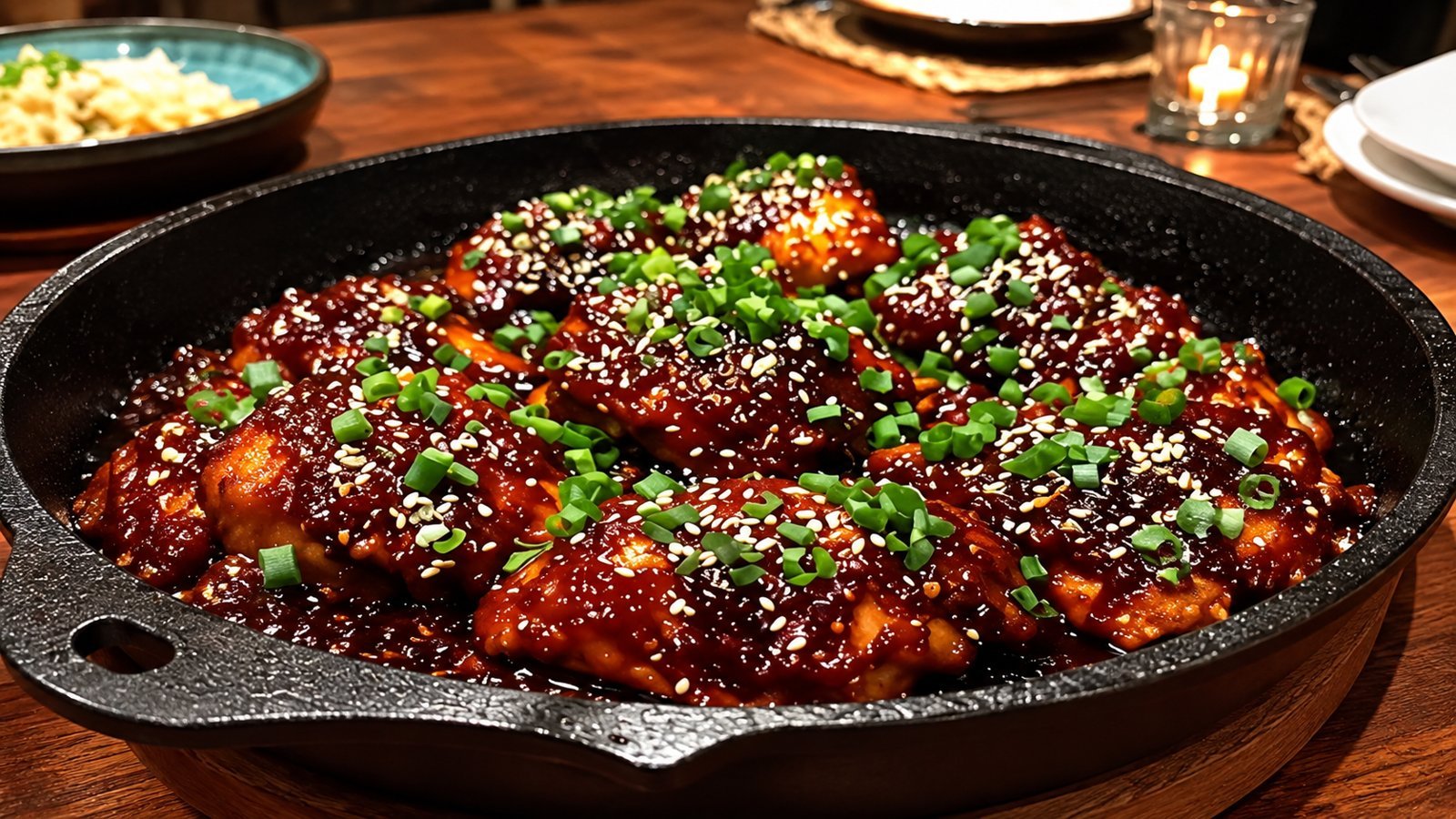
What came out of that skillet was nothing short of a revelation. The chicken thighs were incredibly juicy, their edges charred to a sweet and smoky perfection, all draped in a thick, mahogany-red glaze that bubbled furiously around the pan. When I topped it with a handful of toasted sesame seeds and bright green scallions, it looked like something out of a high-end restaurant, yet it had taken me less than forty minutes from start to finish.
Since that fateful night, this Gochujang Glazed Chicken has become a permanent resident in my dinner rotation. I have made it for solo comfort meals, quick family dinners, and even casual dinner parties where friends hovered around the stove, flatly refusing to wait for me to plate the food. Over dozens of batches, I have made every mistake possible, from burning the glaze into a bitter black crust to ended up with rubbery skin. Today, I want to share the complete, foolproof guide to making this magnificent dish in your own kitchen, along with all the hard-earned lessons I learned along the way.
Why the Cast-Iron Skillet is Non-Negotiable
Before we even talk about ingredients, we need to talk about the vessel. I have tried making this recipe in stainless steel pans, non-stick skillets, and glass baking dishes. None of them hold a candle to a well-seasoned cast-iron skillet.
Cast iron has an incredible ability to retain and distribute heat. When you drop cold chicken thighs into a hot cast-iron pan, the temperature of the pan does not plummet the way it does with thin aluminum cookware. This constant, intense heat is what allows you to get that beautiful, deeply browned sear on the chicken before you even introduce the sauce.
Furthermore, cast iron behaves beautifully when transitioning from the stovetop to the oven. For this recipe, we start by searing the chicken on the stove to render out the excess fat and crisp up the surface. Then, we pour over our sweet and savory glaze and transfer the whole skillet into a hot oven. This dual-cooking method ensures the chicken cooks through evenly while the glaze reduces, caramelizes, and clings to every single nook and cranny of the meat.
If you do not own a cast-iron skillet, a heavy-bottomed oven-safe stainless steel pan or a Dutch oven can work, but I highly recommend investing in a classic cast-iron skillet. It is cheap, practically indestructible, and will give you the best results for this specific dish.
Understanding Gochujang: The Secret to the Glaze
If you are unfamiliar with gochujang, allow me to introduce you to your new favorite pantry staple. Gochujang is a savory, sweet, and spicy fermented condiment popular in Korean cooking. It is made from red chili powder, glutinous rice, fermented soybeans, barley malt powder, and salt.
Unlike standard hot sauces that rely heavily on vinegar for a sharp, acidic bite, gochujang is thick, rich, and deeply earthy. The fermentation process breaks down the starches into sugars, giving it a natural, subtle sweetness that balances its fiery kick. It is this unique sugar content that makes gochujang the absolute perfect base for a sticky glaze. As it heats up in the skillet, those sugars begin to caramelize, creating a luscious, glossy coating that wraps around the chicken like a warm blanket.
When you go to buy gochujang, you will usually find it in plastic tubs (often bright red) in the Asian aisle of your local grocery store or at an Asian specialty market. It comes in various spice levels, ranging from mild to extremely hot. If you are sensitive to spice, look for a mild version. If you love a good kick, go for the hot or extra-hot. Personally, I find the medium-hot variety offers the perfect balance of warmth and flavor complexity without overpowering the other ingredients.
The Ingredient List
Here is what you will need to gather before you start cooking. I have kept this ingredient list accessible, but each item plays a vital role in balancing the sweet, spicy, salty, and acidic elements of the dish.
Ingredients for the Skillet Feast:
- Chicken thighs: 6 to 8 boneless, skinless or skin-on thighs
- Gochujang paste: 4 tablespoons
- Honey: 3 tablespoons
- Low-sodium soy sauce: 3 tablespoons
- Rice vinegar: 2 tablespoons
- Toasted sesame oil: 2 tablespoons
- Fresh garlic: 6 cloves, finely minced
- Fresh ginger: 1 tablespoon, grated
- Brown sugar: 1 tablespoon
- Vegetable oil: 1 tablespoon (for searing)
- Green onions: 4 stalks, thinly sliced
- Toasted sesame seeds: 2 tablespoons (for garnish)
Choosing Your Chicken: Skin-On vs Skinless, Bone-In vs Boneless
One of the questions I get asked most often is what cut of chicken works best for this recipe. My short answer is always boneless, skin-on chicken thighs. However, since those can sometimes be difficult to find at standard grocery stores, let us look at the pros and cons of each option.
Boneless, skinless chicken thighs are the easiest to work with. They cook quickly, are incredibly forgiving, and do not dry out easily. Since there is no skin to render, you can get straight to the searing and glazing process. This is my go-to choice when I want a fast, fuss-free weeknight dinner.
Skin-on, bone-in chicken thighs are arguably the most flavorful option. The skin acts as a natural shield, keeping the meat beneath exceptionally juicy, while the bone adds extra depth of flavor to the pan juices. The trick here is that you must spend extra time rendering the fat out of the skin on medium-low heat before adding the glaze. If you do not render the fat properly, you will end up with soggy, rubbery skin swimming in a greasy sauce, which is not pleasant.
For the middle ground, you can buy bone-in, skin-on thighs and de-bone them yourself at home. This gives you the speed of boneless cooking with the crispy joy of skin-on chicken. Whichever cut you choose, please steer clear of chicken breasts for this particular recipe. Breasts are far too lean and will dry out long before the glaze has a chance to reduce and caramelize.
Prepping Your Aromatics
Before you turn on the stove, make sure all your prep work is done. This is a fast-moving recipe once the heat is on, and you do not want to be peeling ginger while your garlic is burning in the pan.
I like to use a microplane grater for both my garlic and my ginger. This turns them into a fine paste that melts seamlessly into the gochujang glaze. If you do not have a microplane, take your time to mince them as finely as possible with a sharp chef's knife.
When prepping your green onions, separate the white and light green parts from the dark green tops. We will toss the white and light green parts into the sauce during the final stages of cooking so they can soften and release their sweet onion flavor. The dark green tops will be reserved for the very end, sprinkled raw over the bubbling skillet to provide a fresh, crisp contrast to the heavy, sticky glaze.
Step-by-Step cooking Instructions
Now that your ingredients are prepped, let us walk through the cooking process. Grab your skillet and let us make some magic happen.
First, take your chicken thighs out of the refrigerator about fifteen minutes before you plan to cook. Cold chicken hitting a hot pan will cause the muscle fibers to tense up, resulting in a tougher texture. Pat the thighs completely dry with paper towels. Removing excess moisture is the single most important step for getting a good sear. If the chicken is wet, it will steam instead of brown. Season both sides generously with kosher salt and black pepper.
Next, whisk up the glaze in a medium bowl. Combine the gochujang, honey, soy sauce, rice vinegar, toasted sesame oil, minced garlic, grated ginger, and brown sugar. Whisk until the mixture is smooth and cohesive. Taste it. It should be a bold, punchy balance of sweet, spicy, and tangy. If you want it sweeter, add a touch more honey. If you want more tang, splash in a little extra rice vinegar.
Set your oven to four hundred degrees Fahrenheit. This will ensure it is fully preheated by the time your chicken is ready to make the transition from stovetop to oven.
Add your tablespoon of vegetable oil to the cast-iron skillet and place it over medium-high heat. You want the oil to be shimmering but not smoking. Gently lay the chicken thighs in the pan, smooth side down (or skin side down if using skin-on). You should hear a loud, satisfying sizzle. If you do not hear that sizzle, your pan is not hot enough. Take the chicken out and wait another minute.
Let the chicken sear undisturbed for about five to six minutes. Resist the temptation to move them around. Moving the meat prevents a crust from forming and can cause it to stick to the pan. Once the chicken releases easily from the bottom of the skillet and has a beautiful golden-brown crust, flip them over.
Sear the second side for another three to four minutes. At this point, the chicken will not be fully cooked through, and that is exactly what we want.
Now, pour the gochujang glaze mixture directly over and around the chicken thighs in the skillet. Use a spoon to baste the top of each thigh so they are completely coated in the rich red sauce. Throw in the chopped white and light green parts of your green onions, letting them settle into the sauce surrounding the chicken.
Carefully transfer the hot skillet into your preheated oven. Bake for twelve to fifteen minutes. During this time, the heat of the oven will finish cooking the chicken gently from all sides while the sauce bubbles, thickens, and reduces into a sticky, jam-like glaze.
After fifteen minutes, carefully remove the skillet from the oven using a thick oven mitt (remember, that handle is incredibly hot!). Place the skillet back on the stovetop over medium heat for just two to three minutes. Use a spoon to continuously scoop up the bubbling glaze from the bottom of the pan and pour it over the tops of the chicken thighs. This process, called basting, creates that gorgeous, thick, lacquer-like finish you see in professional food photography.
Once the sauce is thick enough to coat the back of a spoon, turn off the heat. Scatter your toasted sesame seeds and the dark green parts of the green onions generously over the top. Let the skillet rest for five minutes before serving. This resting period allows the juices inside the chicken to redistribute, ensuring every bite is incredibly tender.
My Biggest Kitchen Failures with This Recipe
I did not perfect this recipe on the first try. In fact, my early attempts yielded some spectacular disasters. By sharing my mistakes, I hope to save you from making them yourself.
My very first mistake was cooking the glaze on high heat on the stovetop the entire time. Gochujang contains a high amount of natural sugars, as do honey and brown sugar. Sugar burns quickly when exposed to direct, high heat. I ended up with a pan full of black, bitter, smoking tar and chicken thighs that were raw in the middle. This is why we transition the pan to the oven. The indirect heat of the oven allows the glaze to reduce slowly and gently without burning, while the direct heat of the stovetop is reserved for the initial sear and final brief reduction.
My second failure involved using bone-in, skin-on thighs without properly rendering the skin. I simply seared them for two minutes, poured the sauce over, and baked them. The fat under the skin had nowhere to go, so it melted into the gochujang sauce. The result was a greasy, separated sauce and soggy chicken skin that fell off in sad, wet clumps. If you are using skin-on thighs, you must start them skin-side down in a cold or medium-heat skillet and let them cook slowly for ten to twelve minutes to render out that fat before flipping and adding the glaze.
Lastly, I once tried to make this using low-sodium soy sauce substitutes like liquid aminos without adjusting the salt levels. The dish ended up incredibly sweet and flat. The soy sauce is absolutely crucial because its salty, umami profile cuts through the heavy sweetness of the honey and the heat of the chili paste. Do not skip it, and make sure to use a good-quality fermented soy sauce.
How to Customize Your Gochujang Chicken
Once you master the basic technique, this recipe becomes a fantastic canvas for experimentation. Here are some of my favorite ways to switch things up depending on what I have in the pantry.
If you love garlic as much as I do, try adding whole, peeled garlic cloves to the skillet right before it goes into the oven. The cloves will slowly confit in the chicken fat and gochujang glaze, turning buttery-soft and sweet. You can smash them onto pieces of chicken or spread them over warm rice.
For a fruitier flavor profile, replace the brown sugar with two tablespoons of unsweetened applesauce or grated Asian pear. Asian pear is a traditional marinade ingredient in Korean barbecue because it contains natural enzymes that help tenderize the meat while adding a delicate, clean sweetness.
If you want a dairy-rich twist, you can make Cheese Buldak (Korean Fire Chicken). Once your chicken is fully cooked and the glaze is reduced, cover the entire skillet with a generous layer of shredded mozzarella cheese. Pop the skillet under the broiler for two to three minutes until the cheese is melted, bubbling, and browned in spots. The creamy, mild mozzarella stretches beautifully and tames the heat of the spicy glaze perfectly.
Perfect Side Dishes to Serve Alongside
Because this dish is so bold, intense, and rich, you want to serve it with sides that offer a clean, refreshing contrast.
My absolute baseline recommendation is a massive bowl of steamed Jasmine or Calrose rice. The fluffy, neutral rice acts like a sponge, soaking up all the extra sticky glaze from the bottom of the skillet. I like to ladle a generous amount of the pan sauce over the rice, creating a incredibly flavorful porridge-like bite.
To cut through the richness of the glaze, a quick pickled cucumber salad is a game-changer. Simply slice English cucumbers thinly, toss them with a pinch of salt, sugar, and rice vinegar, and let them sit for fifteen minutes. The cold, crisp, acidic crunch of the cucumbers resets your palate between bites of the hot, sticky chicken.
For greens, charred baby bok choy or broccolini are fantastic. You can toss them in a little sesame oil and garlic, then sear them in a separate pan until tender-crisp. Alternatively, you can push the chicken to one side of your cast-iron skillet during the last five minutes of baking and nestle the greens directly into the bubbling sauce to cook alongside the meat.
The Sticky Cast-Iron Cleanup Guide
Let us address the elephant in the room. Looking at a cast-iron skillet covered in caramelized gochujang, honey, and chicken juices can be intimidating. You might be tempted to leave the pan soaking in the sink overnight. Do not do that! Leaving cast iron wet for long periods will cause it to rust, stripping away years of hard-earned seasoning.
Fortunately, cleaning sticky sugar off cast iron is incredibly easy if you do it while the pan is still warm. Once you have finished eating, bring a cup of water to a boil. Pour the hot water directly into the warm skillet. The heat and water will immediately begin to dissolve the hardened sugars and glaze.
Use a wooden spatula or a stiff-bristled brush to gently scrape the bottom of the pan. The burnt-on bits should slide off effortlessly. Dump out the dirty water, rinse the pan under hot tap water, and dry it completely with a clean towel.
To ensure your skillet stays in peak condition, place the dried pan back on the stove over medium-low heat for two minutes to evaporate any microscopic droplets of water. Apply a tiny drop of neutral oil (like canola or grapeseed oil) to a paper towel and rub it all over the inside and outside of the warm pan. Wipe away any excess oil so it does not become sticky, let the pan cool completely, and store it away for your next kitchen adventure.
This Gochujang Glazed Chicken is more than just a recipe; it is a testament to how simple ingredients, combined with the right technique and a trusty skillet, can transform a mundane weeknight into a memorable culinary event. The next time you are staring uninspired at a pack of chicken thighs, skip the takeout, fire up your skillet, and let the magic of gochujang bring your kitchen to life.