
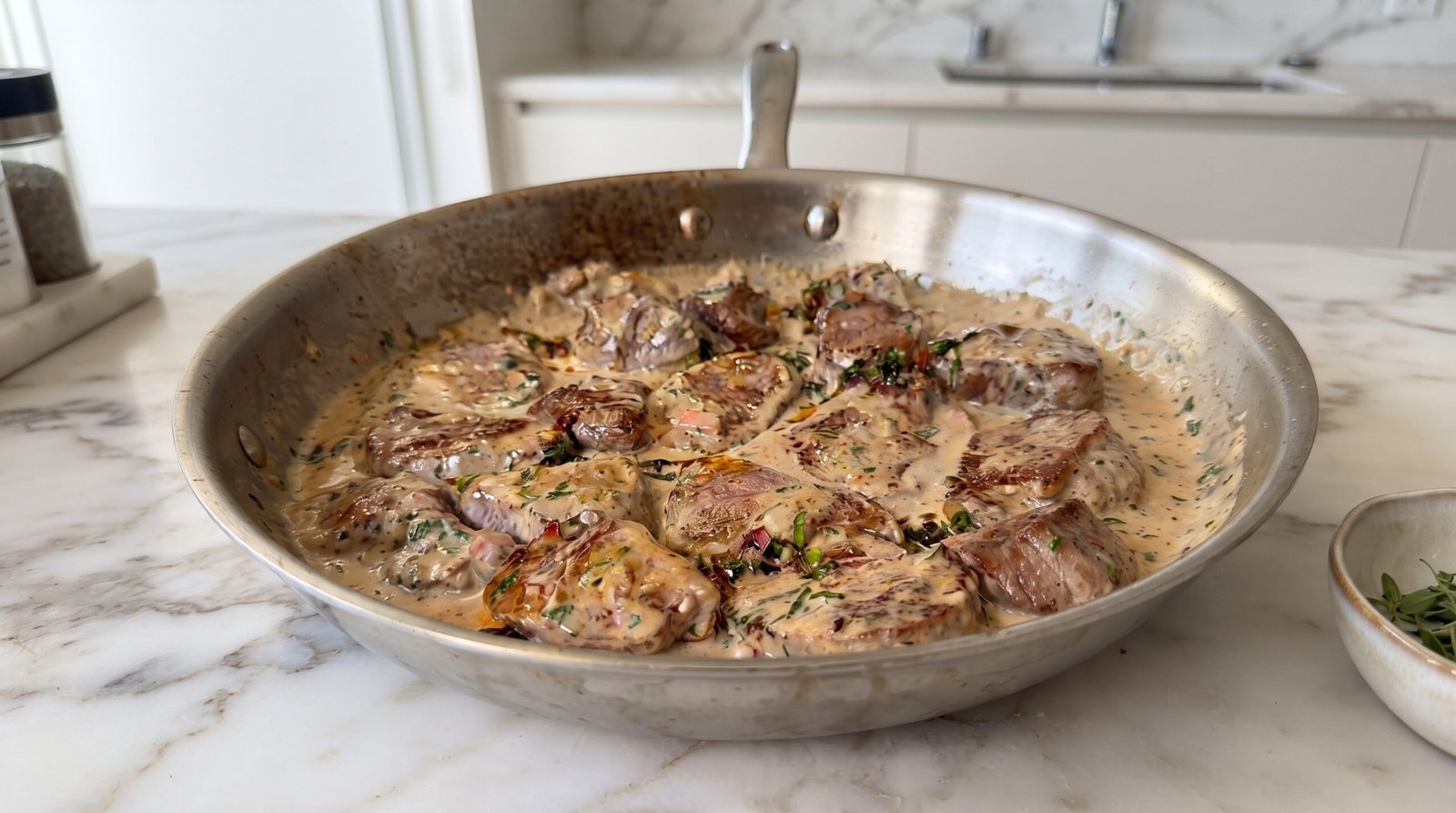
Finding a dinner that feels special but fits into a busy weeknight is a challenge. I often find myself staring at a pork tenderloin, wondering how to turn it into something more than just a dry roast. These creamy peppercorn pork tenderloin medallions are my answer to that problem. By slicing the meat into rounds before cooking, you get a much faster sear and more surface area for that rich, velvety sauce to coat every bite. It is the kind of meal that makes you feel like you spent hours in the kitchen, even when you are just pulling it together in about thirty minutes.
The secret to this meal is balancing the richness of the cream with the sharp, woody bite of freshly cracked peppercorns. It creates a depth of flavor that is hard to find in such a simple dish. Once you learn how to properly sear the medallions and build the pan sauce, you will likely find yourself making this on repeat for family dinners or when you have a friend over for a quick meal.
Why This Recipe Works
This recipe succeeds because it prioritizes the texture of the pork. Tenderloin is a lean cut, which means it can turn chalky if cooked for too long in a large piece. By slicing it into medallions, you control the heat exposure precisely. You sear them quickly on the stovetop to get a brown crust, and then you pull them out before they overcook. This ensures the center remains soft and juicy while the outside has that savory, browned edge that gives the dish its character.
The sauce comes together right in the same pan, which is a major win for cleanup. You keep all the browned bits, or fond, from the pork and use them as the foundation for your cream base. The combination of shallots, garlic, and heavy cream creates a luxurious mouthfeel that balances the bite of the cracked pepper. It is a harmonious blend where the fat in the cream rounds out the intensity of the spice.
Another reason this method works is its efficiency. Because the medallions are small and uniform, they cook at the same rate. You do not have to worry about thick spots staying raw while thin ends dry out. It takes the guesswork out of the process, leaving you with a consistent result every time you step up to the stove. It is a technique-driven dish that relies on simple pantry staples to produce a high-end outcome.
Ingredient Notes
The Pork
For this dish, you really need a fresh pork tenderloin. Avoid the pre-marinated or pre-seasoned versions sold in plastic vacuum packs, as they often contain excess salt or additives that can interfere with the sauce. You want a clean, unadorned piece of meat so you can season it yourself. If you cannot find a whole tenderloin, you could technically use pork loin chops, but the texture will be slightly firmer. Always look for a tenderloin that is firm and pinkish-red in color without any gray patches. When you are ready to prep, remove the silver skin, which is the tough, white connective tissue running along the length of the meat. If you leave it on, it stays chewy even after the meat is cooked.
The Sauce Components
The aromatics are critical here. Use fresh shallots rather than yellow or white onions. Shallots have a milder, more delicate profile that does not overpower the cream. Finely mincing them ensures they melt into the sauce. For the peppercorns, buy whole black peppercorns and crush them yourself. Using pre-ground pepper from a shaker just does not provide the same aromatic punch or texture. I like a coarse grind for this recipe so you get little pops of spice throughout the meal. The heavy cream is the base of the liquid, so do not try to swap it for low-fat milk or half-and-half. They will not thicken correctly and may curdle when they hit the acidity of the pan. A splash of good quality beef or chicken stock helps to deglaze the pan and adds extra body.
| Ingredient | Amount | Notes |
|---|---|---|
| Pork Tenderloin | 1.5 pounds | Trimmed of silver skin |
| Black Peppercorns | 2 tablespoons | Freshly cracked/coarse |
| Kosher Salt | 1 teaspoon | To taste |
| Butter | 3 tablespoons | Unsalted preferred |
| Olive Oil | 1 tablespoon | For searing |
| Shallots | 2 small | Finely minced |
| Garlic | 2 cloves | Smashed and minced |
| Beef Stock | 1/2 cup | Low sodium |
| Heavy Cream | 1 cup | Full fat |
| Fresh Parsley | 2 tablespoons | Chopped for garnish |
The Recipe
- Prep Time: 10 minutes
- Cook Time: 20 minutes
- Total Time: 30 minutes
- Servings: 4
- Difficulty: Intermediate
Equipment Needed
- Large stainless steel or cast-iron skillet
- Sharp chef knife
- Cutting board
- Tongs
- Small whisk
- Measuring cups and spoons
Step 1: Prep the Pork
Start by removing the pork tenderloin from its packaging and patting it dry with paper towels. Excess moisture on the surface of the meat will prevent it from getting a good sear. Place the meat on a clean cutting board and trim away the silvery white strip known as the silver skin. Slice the meat into rounds that are about one inch thick.
Once they are sliced, use the flat of your hand to press down on the medallions slightly to flatten them to a uniform thickness. This helps them cook evenly. Sprinkle both sides of the medallions with the kosher salt and the freshly cracked black pepper. Press the pepper into the meat with your fingers so it sticks.
Step 2: Sear the Medallions
Place your skillet over medium-high heat. Add the olive oil and one tablespoon of the butter. Once the butter is melted and foaming, place the pork medallions into the pan in a single layer. Do not crowd the pan; if your skillet is small, do this in two batches. You want enough space around each piece so the moisture can evaporate.
Let the meat cook undisturbed for about 3 to 4 minutes on the first side. You are looking for a deep, golden-brown color on the bottom. Flip the medallions and cook for another 3 minutes on the second side. A meat thermometer should register 145 degrees Fahrenheit in the center. Remove the medallions to a clean plate and tent them loosely with foil.
Step 3: Develop the Sauce Base
Reduce the heat to medium. In the same pan you just used, add the remaining two tablespoons of butter. Once it is bubbling, add the minced shallots. Sauté them for about 2 minutes until they are soft and translucent, scraping the bottom of the pan with a wooden spoon or spatula to release the brown bits left behind by the pork.
Add the minced garlic to the skillet. Cook for only about 30 to 60 seconds, just until it becomes fragrant. Be careful not to let the garlic brown or burn, as this will turn the base of your sauce bitter. Keep the heat steady and make sure you are actively stirring the mixture.
Step 4: Deglaze and Simmer
Pour the beef stock into the pan. Increase the heat to medium-high and let the liquid reduce by about half, which should take roughly 3 minutes. This reduction concentrates the flavors and creates a savory foundation. You will see the sauce thickening slightly as the proteins from the pan bits emulsify with the stock.
Lower the heat back to medium. Slowly pour in the heavy cream while whisking constantly. Stir in any juices that have accumulated on the plate where the pork was resting. Let the sauce simmer gently for 3 to 4 minutes until it thickens enough to coat the back of a spoon. Taste the sauce and adjust the salt if needed.
Step 5: Finish and Serve
Return the pork medallions and any remaining juices from the resting plate back into the skillet. Spoon the creamy sauce over the meat and let it all heat through together for 1 minute. You do not want to cook it much longer than this, or the pork will start to dry out.
Remove the skillet from the heat immediately. Garnish the dish generously with fresh chopped parsley. Serve the pork and sauce warm, perhaps with some crusty bread or roasted vegetables on the side to help clean up the remaining cream sauce from your plate.
Mistakes I Made (So You Don't Have To)
Overcrowding the Pan
My first attempt at this dish was a disaster because I tried to squeeze all the meat into one small pan. Because the medallions were touching, they essentially steamed in their own juices instead of searing. This meant the edges stayed pale and gray rather than developing that flavor-packed brown crust. The fix is simple: use the largest pan you have, and if it still feels cramped, work in two smaller batches. Patience here is rewarded with significantly better flavor.
Burning the Garlic
I used to be very impatient with the aromatics and would try to rush the process by turning the heat up too high. I ended up burning the garlic more times than I care to admit. Once garlic burns, its flavor turns harsh and acrid, which ruins the entire cream base. Now, I always keep the heat at a moderate level for the shallots and add the garlic only at the very end. If I see the pan getting too hot, I pull it off the burner for a few seconds to let it cool down before moving to the next step.
Not Using a Meat Thermometer
Early on, I relied entirely on visual cues or time, which often resulted in overcooked, dry pork. Tenderloin is very lean, so even an extra minute of heat can make a massive difference in texture. Now, I use a digital meat thermometer every single time. Pulling the meat out the moment it hits 145 degrees Fahrenheit ensures it is safe to eat while remaining tender. It takes the stress out of the cooking process because I am not guessing if it is done.
Skipping the Deglazing
In one of my early versions, I was too excited to add the cream and forgot to scrape the bottom of the pan after searing the meat. I realized later that those dark, crispy bits left on the surface are pure flavor gold. They add a depth that the cream and stock cannot provide on their own. Now, I make it a point to scrape the pan thoroughly while adding the stock. It makes the sauce look better and taste significantly more robust.
Variations and Tips
Adding a Touch of Brandy
If you want a classic restaurant-style twist, add a splash of brandy or cognac to the pan after the shallots have softened but before adding the stock. Let it bubble away for 30 seconds to cook off most of the alcohol. This adds a sophisticated, slightly fruity depth to the sauce that pairs very well with the black pepper. It is a simple addition that feels fancy when you are hosting someone for dinner.
Using Different Peppercorns
While black peppercorns are the standard, you can play with the flavor profile by using a peppercorn blend. Pink peppercorns are more floral and mild, while green peppercorns in brine offer a sharp, pungent bite that is traditional in many French recipes. If you use the jarred green peppercorns, make sure to rinse them first and crush them gently before adding them to the sauce. It changes the character of the dish entirely.
Time-Saving Prep
You can slice the tenderloin into medallions up to a few hours before you plan to cook, provided you keep it in the refrigerator. Do not season the meat with salt until just before you sear it, though. Salt draws moisture out of the meat over time, which would make the surface wet and ruin your sear. Keeping the pork pre-sliced allows you to get dinner on the table in under 20 minutes on a busy weeknight.
Serving Suggestions
Because the sauce is quite rich, I like to serve this with sides that can balance it out. Roasted asparagus, steamed green beans, or a simple side salad with a bright vinaigrette are my go-to choices. If you want something starchy, mashed potatoes or a simple buttered egg noodle dish work well to capture any extra sauce. Keeping the sides simple keeps the focus on the pork.
Storage and Reheating
If you have leftovers, they should be stored in an airtight container in the refrigerator within two hours of cooking. Because this dish relies on a cream base, it will stay good for up to two days. Do not try to freeze this meal; the cream will separate and become grainy once thawed, and the pork will likely toughen up significantly during the freezing and thawing process.
When you are ready to eat the leftovers, the best way to reheat is on the stovetop. Put the medallions and the sauce in a small pan over medium-low heat. Add a tiny splash of water or stock to thin the sauce out, as it will thicken significantly in the fridge. Stir gently until the pork is heated through and the sauce is steaming. Be careful not to let the sauce boil, or it might break. Check that the center of the meat reaches 165 degrees Fahrenheit for food safety.
Frequently Asked Questions
Can I use pork loin instead of tenderloin?
Yes, you can use a boneless pork loin, but keep in mind that it is leaner and slightly tougher than the tenderloin. You should slice it into medallions just like the tenderloin and be very careful not to overcook it. The cooking times will be roughly the same, but you might want to give it a minute or two less in the pan to ensure it stays as moist as possible.
What should I do if my sauce breaks or separates?
A broken sauce usually happens if the heat was too high when the cream was added or if it boiled too vigorously. If this happens, remove the pan from the heat and whisk in a tablespoon of cold butter or a little bit of extra heavy cream. Sometimes, whisking in a teaspoon of room temperature water can help re-emulsify the fats. It might not look quite as smooth, but it will still taste fine.
Is there a non-alcoholic way to add more depth to the sauce?
If you want that extra depth without using alcohol, you can add a half-teaspoon of Worcestershire sauce or a tiny drop of balsamic vinegar to the pan when you add the stock. These additions bring a bit of acidity and complexity that mimics the role of a deglazing wine or brandy. Just be careful not to add too much, or it will overpower the delicate flavor of the pork.
Why do I need to rest the meat?
Resting the meat is essential because it allows the internal juices to redistribute throughout the medallions. If you cut into the meat or serve it the second it comes out of the pan, the juices will run out onto the plate, leaving you with dry pork. Waiting just three to five minutes makes a noticeable difference in how juicy the final bite is.
Can I make this dish for a larger group?
You certainly can, but you will need to scale the ingredients and likely cook in multiple pans. The most important thing is not to crowd your skillet. If you try to cook eight portions in one pan, you will not get the sear you need, and the sauce will not develop correctly. It is better to use two large skillets simultaneously if you are cooking for a larger crowd.
Final Thoughts
Making these pork medallions is a wonderful way to practice your stovetop technique. Once you get a feel for how the heat affects the meat and how the sauce comes together, it becomes second nature. It is a satisfying meal that relies on basic skills and simple timing.
I hope this becomes a staple in your rotation whenever you want something savory and comforting. Enjoy the process of crafting the sauce and the simple pleasure of a well-cooked dinner at home.