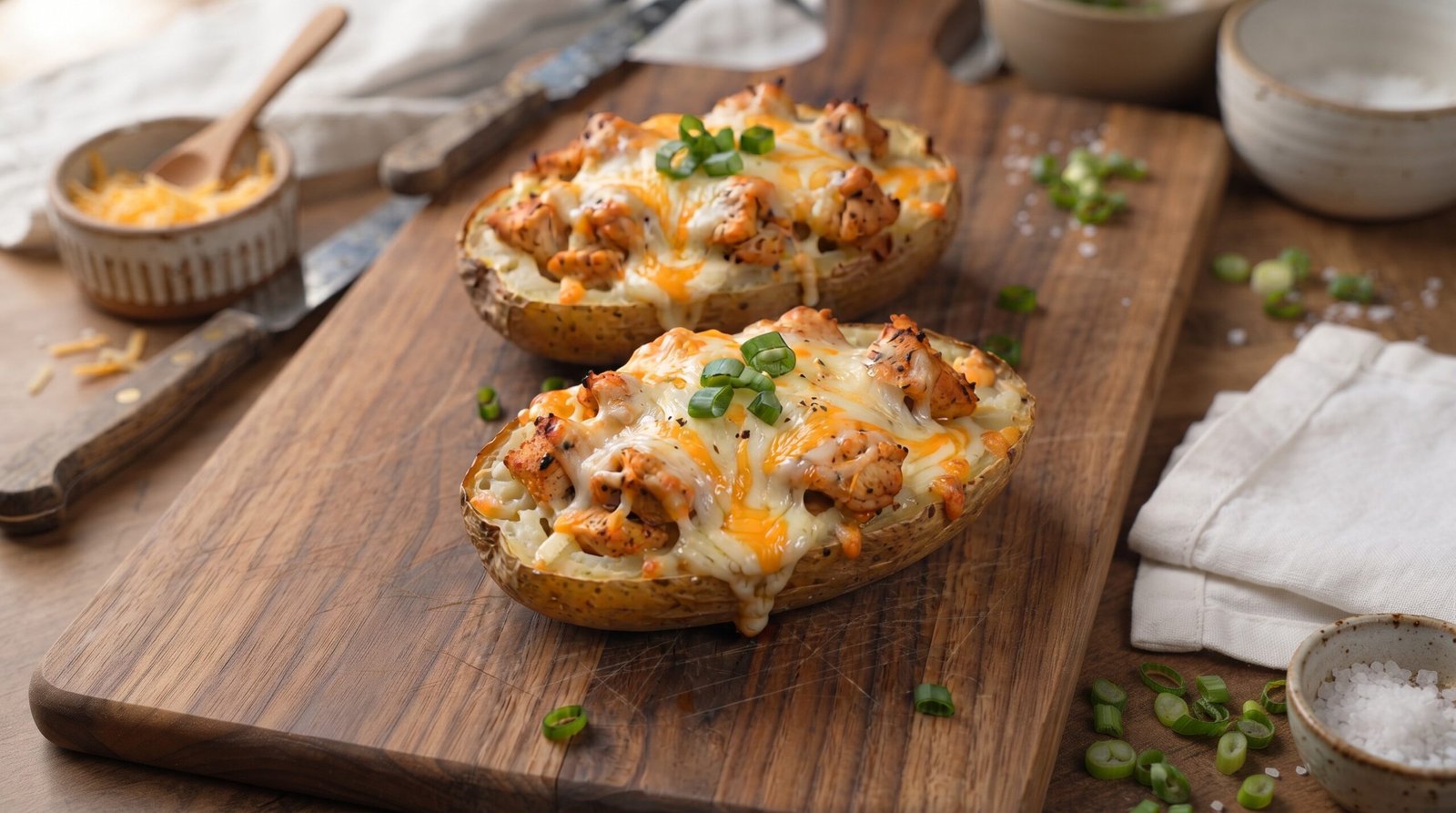
I often find myself standing in the kitchen on a busy Tuesday evening, staring into the refrigerator without a clear plan for dinner. This happens more than I like to admit, especially after a long day when the last thing I want to do is spend hours preparing a complicated meal. A few years ago, I started experimenting with ways to turn a simple baked potato into a hearty, satisfying meal that feels like a treat without requiring a pile of dishes to clean up. My solution was to combine tender, seasoned chicken pieces with plenty of cheese and fresh green onions, stuffed inside a fluffy potato shell. It has become a reliable staple in my home because it uses ingredients that I usually already have on hand and provides a comforting balance of savory flavors. If you are looking for something that is filling and relatively straightforward to put together, this might just become a regular part of your rotation as well.
Why This Recipe Works
This meal is effective because it relies on basic, high-quality ingredients that complement each other naturally. When you bake the potatoes properly, you end up with a soft, cloud-like center that holds the weight of the chicken and melted cheese without falling apart. The skin of the potato provides a slight structure and a touch of earthiness that contrasts with the richness of the dairy. By seasoning the chicken separately before adding it to the potato, you ensure that every bite has flavor, rather than relying on the potato or the cheese to do all the work.
The texture is another reason this works so well. You get the contrast between the tender chicken chunks, the stringy, melted cheese, and the soft interior of the potato. If you add the fresh green onions right at the end, you get a sharp, crisp bite that cuts through the fat of the cheese, which keeps the palate interested. It is a hearty combination that feels substantial.
Ease of preparation is the final component here. You are essentially baking potatoes and pan-searing some chicken, two things that most home cooks can manage even when tired. You do not need any specialized equipment, and the cleanup is minimal since the potato serves as your bowl. Because the components are cooked separately before coming together in the final heat-up, you have full control over the doneness of both the starch and the protein, meaning you avoid the common problem of dry chicken or undercooked, crunchy potato bits.
Ingredient Notes
The Potatoes
The choice of potato is key to getting the right texture. You need a Russet or similar high-starch potato. These varieties are ideal because they have a mealy, fluffy texture once baked, which is perfect for absorbing the flavors of the toppings. Avoid waxy potatoes like red-skinned or Yukon gold for this specific purpose, as they tend to stay firm and do not break down into that desirable soft mash inside the skin. Pick potatoes that are roughly the same size so they finish cooking at the same time. Scrub them well before baking, as you will be eating the skins.
The Chicken
For the meat portion, I almost always use boneless, skinless chicken breast. It is lean and cooks quickly, which is necessary for a weeknight meal. You could substitute with chicken thighs if you prefer darker, more flavorful meat, but keep in mind that thighs take a minute or two longer to cook through in the pan. Regardless of which cut you choose, make sure to trim off any excess fat or gristle. Cut the meat into uniform, bite-sized cubes of about half an inch. This size allows the chicken to cook evenly and ensures you get a good amount of protein in every scoop.
The Cheese and Toppings
I recommend using a mix of cheeses for the best result. A sharp cheddar provides a strong, tangy flavor that stands up to the potato, while something like Monterey Jack or mozzarella helps provide that classic, gooey pull when the potato is sliced open. Buy the cheese in blocks and grate it yourself if you can; pre-shredded cheese is often coated in cellulose, which prevents it from melting as smoothly. Fresh green onions are a must-have for the finish. They provide a bright, zesty contrast to the heavy cheese and starch. You only need the green parts for the freshest look and flavor.
| Ingredient | Amount | Notes |
|---|---|---|
| Russet potatoes | 4 large | Scrubbed clean |
| Chicken breasts | 2 large | Cut into half-inch cubes |
| Shredded cheddar | 1.5 cups | Freshly grated is best |
| Shredded Monterey Jack | 1.5 cups | Freshly grated is best |
| Olive oil | 2 tablespoons | For pan searing |
| Garlic powder | 1 teaspoon | For seasoning the chicken |
| Paprika | 0.5 teaspoon | For color and mild flavor |
| Salt | 0.75 teaspoon | Plus more for the potato |
| Black pepper | 0.5 teaspoon | Freshly cracked |
| Green onions | 1 bunch | Thinly sliced |
The Recipe
- Prep Time: 15 minutes
- Cook Time: 65 minutes
- Total Time: 80 minutes
- Servings: 4
- Difficulty: Easy
Equipment needed:
– Baking sheet
– Large skillet
– Sharp knife
– Cutting board
– Cheese grater
– Serving fork
Step-by-Step Instructions
Step 1: Prepare and Bake the Potatoes
Preheat your oven to 400 degrees Fahrenheit. Use a fork to poke deep holes all over the surface of each cleaned potato. This allows steam to escape during the cooking process, which prevents them from bursting in the oven. Lightly rub the skins with a tiny bit of oil or just leave them plain if you prefer a crispier skin. Place the potatoes directly on the center rack of the oven. Bake them for 55 to 60 minutes. They are ready when you can easily pierce the center with a knife without any resistance.
Step 2: Season and Cook the Chicken
While the potatoes are in the oven, heat the two tablespoons of olive oil in a large skillet over medium-high heat. Toss your cubed chicken with the salt, black pepper, garlic powder, and paprika in a small bowl until evenly coated. Once the oil in the skillet is shimmering, add the chicken in a single layer. Do not crowd the pan, as this causes the meat to steam rather than develop a nice surface color. Cook for about 6 to 8 minutes, turning the pieces occasionally until they are opaque throughout and reach an internal temperature of 165 degrees Fahrenheit. Remove the chicken from the heat and set it aside.
Step 3: Prepare the Potato Filling
When the potatoes are done, remove them from the oven and carefully slice each one open lengthwise down the center. Use a spoon to gently fluff the inside flesh of the potato. Be careful not to scoop it all out, as you want to keep the structure of the shell intact. If you like, you can sprinkle a tiny pinch of salt or a small dab of butter inside the potato at this stage to build a flavor base, though the cheese and chicken will provide most of the richness later on.
Step 4: Assemble the Loaded Potatoes
Distribute the cooked chicken cubes evenly among the four open potatoes. Pack the pieces into the soft potato centers so they stay in place. Next, pile the shredded cheese over the chicken and the potato flesh. You want to cover the meat well so that as the cheese melts, it creates a cohesive layer. It is fine if some of the cheese spills over the sides, as it will get nice and hot against the skin.
Step 5: Final Bake and Serve
Place the stuffed potatoes back onto the baking sheet and put them back in the 400 degree Fahrenheit oven for another 5 to 7 minutes. Watch them closely during this time. The goal is to melt the cheese until it is bubbling and slightly golden in spots. Once the cheese is melted and the chicken is warmed through again, remove the tray from the oven. Immediately sprinkle the fresh, thinly sliced green onions over the top of the hot cheese. Serve these warm while the potato is still steaming inside.
Mistakes I Made (So You Don't Have To)
Under-baking the Potatoes
The most common error I made in the beginning was pulling the potatoes out of the oven too soon. If the center still feels slightly firm when you push a knife into it, the potato will have a grainy texture that ruins the experience. I learned to wait until the knife slides in like it is going through soft butter. If you are unsure, just leave them in for another five minutes. Better to have them slightly overdone than underdone.
Crowding the Skillet
I used to be impatient and dump all the chicken into the pan at once. This leads to the chicken sitting in its own juices and turning gray instead of getting a decent sear. Now, I always make sure there is space between the cubes. If your skillet is small, cook the chicken in two batches. It takes a tiny bit longer, but the result is much more satisfying.
Using Pre-Shredded Cheese
I once bought a big bag of pre-shredded cheese because I wanted to save time. I noticed that the cheese didn't melt into that beautiful, gooey pool I wanted; it stayed in little strips and had a strange, slightly dry coating. I finally realized that the anti-caking agents they add to prevent clumping in the bag stop it from melting properly. Now I just take the extra two minutes to grate my cheese at home.
Skimping on the Seasoning
Early on, I was too shy with the spices. I found the final dish tasted a bit bland, as the potato itself doesn't offer much flavor. I started being much more intentional with the salt and garlic powder on the chicken. Since the chicken provides the main flavor profile for the entire meal, it needs to be seasoned properly before it meets the potato and cheese.
Variations and Tips
Adding Smoky Flavor
If you enjoy a smoky profile, add a half-teaspoon of smoked paprika instead of standard paprika to the chicken seasoning. You can also mix in a small amount of cooked, crumbled bacon with the chicken before adding the cheese. This adds a nice crunch and a savory depth that pairs perfectly with cheddar.
Using Different Cheeses
While cheddar and Monterey Jack are my go-to choices, you can experiment with others. A smoked gouda adds a complex, rich note, while a bit of pepper jack gives the dish a little bit of heat. Avoid using very soft cheeses like brie, as they turn into a puddle that can be difficult to manage inside a potato.
Making it Ahead
If you want to save time, you can bake the potatoes earlier in the day or even the day before. Keep them in the refrigerator, and then just slice them open and add your cooked chicken and cheese when you are ready for dinner. Just increase the final bake time by about 5 to 10 minutes to ensure the center of the potato is completely hot again.
Alternative Cooking Methods
If you don't want to turn on your oven during a hot day, you can cook the potatoes in an air fryer at 400 degrees Fahrenheit for about 40 to 45 minutes, depending on their size. You will still need to poke holes in them first. The skin comes out thinner and often crispier than in a standard oven, which is a nice change of pace.
Storage and Reheating
If you find yourself with leftovers, store them in an airtight container in the refrigerator. They will stay fresh for up to three days. When you are ready to eat them again, do not use the microwave if you can avoid it, as it tends to make the potato skin soggy. I prefer to reheat them in the oven at 350 degrees Fahrenheit for about 15 minutes or until the cheese is melted and the center is steaming. Ensure the chicken inside reaches 165 degrees Fahrenheit again for food safety. I do not recommend freezing this dish, as the texture of the cooked potato becomes watery and mushy once it thaws.
Frequently Asked Questions
Can I use sweet potatoes instead of Russet potatoes?
You certainly can, but keep in mind that the flavor will be much sweeter. The savory chicken and cheddar combination works well with the natural sugar of a sweet potato, but it is a different flavor profile than the traditional savory Russet. If you use sweet potatoes, monitor them closely as they often cook faster than Russet potatoes.
What is the best way to tell if the chicken is done?
The best way to know for sure is to use a meat thermometer. When you insert the probe into the center of the thickest piece, it should read 165 degrees Fahrenheit. If you do not have a thermometer, cut into the largest piece; the juices should run clear, and the meat should be white throughout with no pink remaining.
Do I have to use olive oil to cook the chicken?
You can use any neutral-flavored cooking oil, such as avocado oil or grapeseed oil. Avoid using butter for the initial sear, as the high heat required to cook the chicken quickly will cause the butter to burn and turn bitter before the chicken is fully cooked. You can add a small knob of butter at the very end if you want that flavor.
How do I stop the potato skin from getting tough?
The skin usually gets tough if the potatoes are baked for too long at a temperature that is too high, or if they are left in the oven after they are already finished. By checking them at the 55-minute mark, you avoid that dry, leathery texture. Also, keep the potatoes off the very bottom of the oven and use the center rack to allow for even airflow.
Can I add vegetables to this recipe?
Absolutely. You can stir some sautéed bell peppers or cooked broccoli florets into the chicken mixture before stuffing the potatoes. This is a great way to add color and nutrition to the dish. Just make sure that whatever vegetables you add are cooked until they are soft, as the final baking time is too short to cook raw vegetables through.
Final Thoughts
Putting together this meal is one of the most rewarding things I do when I am short on time but still want something substantial to eat. It is simple, requires very few tools, and always hits the spot. The combination of fluffy potato, savory seasoned chicken, and melty cheese is something that never seems to get old, no matter how many times I make it.
I hope you find this recipe as helpful as I do. It is meant to be a flexible guide, so feel free to adjust the seasonings or cheese types based on what you have in your pantry. Enjoy the process of creating something warm and filling for your next lunch or dinner.