
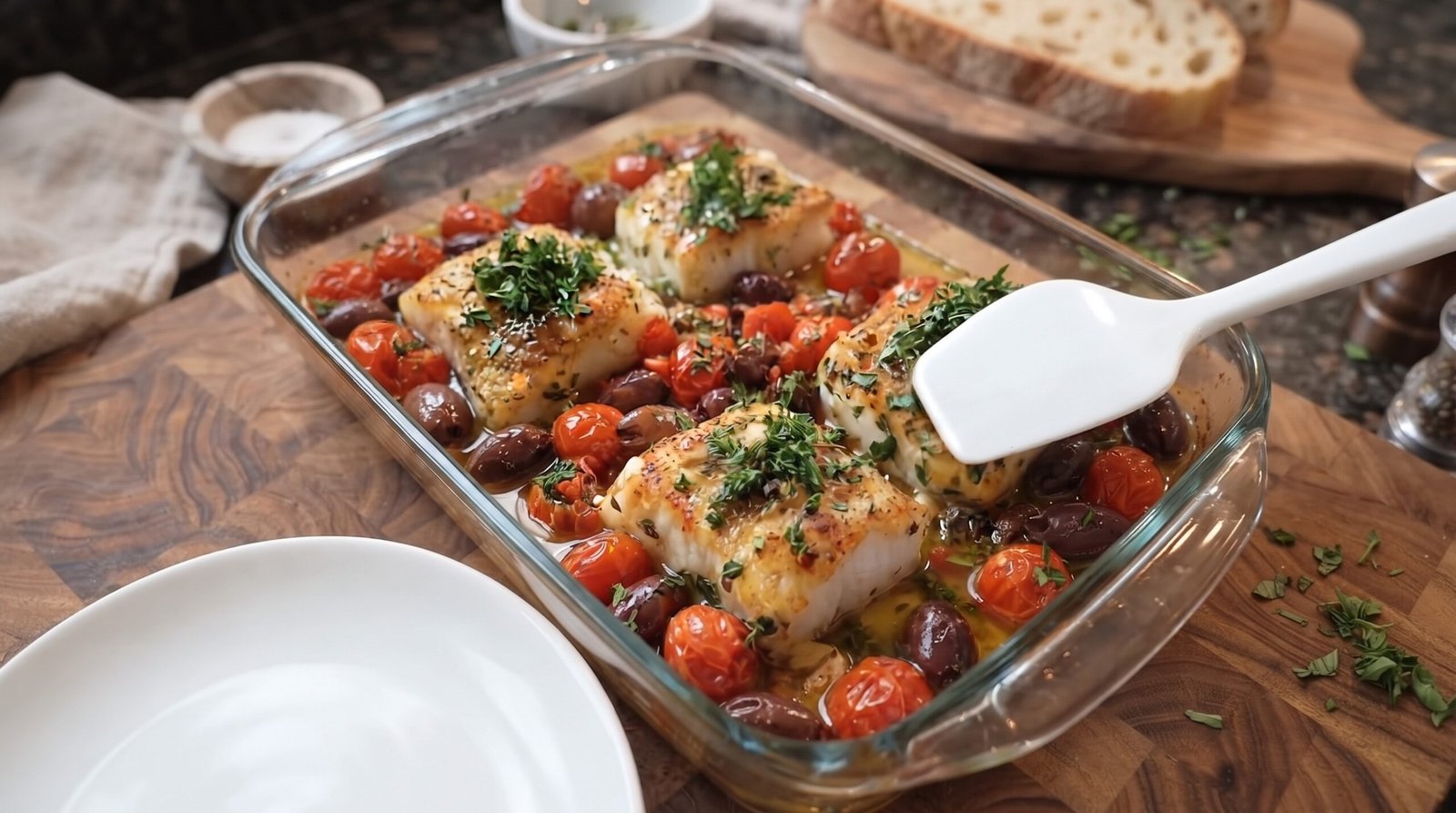
I often find myself standing in my kitchen at five o’clock in the evening, wondering what to make that doesn't feel like a chore. After a long day, the last thing I want is a complicated process involving ten pots or a sink full of heavy pans. This baked Mediterranean cod with tomatoes and olives has become my reliable go-to because it relies on the oven to do almost all the heavy lifting. The fish stays moist while the tomatoes burst into a sweet, jammy sauce that pools around the bottom of the dish, mingling with the salty punch of the olives. It is the kind of meal that looks like you spent hours on it, even though the actual hands-on time is quite minimal. If you are looking for a simple dinner that brings bright flavors to the table without much fuss, this recipe is a great place to start.
Why This Recipe Works
The primary reason this recipe succeeds is the ratio of ingredients. Cod is a very lean white fish, which means it can easily dry out if cooked too long or over high heat. By tucking the fillets into a bed of cherry tomatoes and olive oil, the fish essentially steams in a flavorful liquid rather than just roasting in dry air. The juices from the tomatoes release as they soften, creating a natural poaching medium that infuses the delicate white flesh of the fish with a savory essence.
Flavor balance is the second factor here. You get the acidity and natural sweetness of the tomatoes, which helps cut through the richness of the olive oil. Then, the olives provide a deep, briny saltiness that grounds the entire dish. I find that when I use Kalamata olives specifically, they offer a meaty texture that contrasts nicely with the soft flakes of the cod. You do not need to add much else in terms of seasoning because the olives provide plenty of salt, and the fresh herbs added at the end brighten everything up.
Ease of cleanup is the final win. Using one glass baking dish means that you are not scrubbing multiple pans. Because the fish is baked at 400 degrees Fahrenheit, it cooks through in about fifteen to eighteen minutes. This is fast enough for a Tuesday night but elegant enough to serve if someone stops by for dinner. The process is forgiving, as long as you watch the clock, making it an accessible method for anyone who might be nervous about preparing fish at home.
Ingredient Notes
The Fish
When shopping for cod, look for fillets that are roughly the same thickness. Uniform thickness ensures that every piece finishes cooking at the same time. If you cannot find fresh cod, frozen fillets are perfectly fine, but you must thaw them completely in the refrigerator overnight and pat them very dry with paper towels before adding them to the dish. Excess water on the surface of the fish will make the sauce watery rather than syrupy.
The Vegetables and Aromatics
Cherry tomatoes are the best choice here. Grape tomatoes work too, but cherry tomatoes tend to be juicier and soften faster. I prefer to leave them whole if they are small, or halve them if they are larger, so they release their juices during the roasting time. Fresh garlic is non-negotiable for me; I slice it thin so it infuses the olive oil without burning.
The Pantry Essentials
You need a good quality extra virgin olive oil. Since it serves as the base for the sauce that you will likely want to scoop up with bread, the flavor matters. For the olives, Kalamata is my preference for its distinct flavor, but any pitted Mediterranean-style olive will do. Make sure they are pitted, as it makes the dish much more enjoyable to eat.
| Ingredient | Amount | Notes |
|---|---|---|
| Cod fillets | 4 pieces | About 6 ounces each, uniform size |
| Cherry tomatoes | 2 cups | Whole or halved depending on size |
| Kalamata olives | 1/2 cup | Pitted and left whole |
| Extra virgin olive oil | 1/3 cup | Good quality for the sauce |
| Garlic | 4 cloves | Thinly sliced |
| Dried oregano | 1 teaspoon | Adds a classic Mediterranean scent |
| Fresh parsley | 1/4 cup | Chopped, for garnish |
| Sea salt | To taste | Use sparingly due to the salt in olives |
| Black pepper | 1/2 teaspoon | Freshly cracked |
The Recipe
- Prep Time: 10 minutes
- Cook Time: 18 minutes
- Total Time: 28 minutes
- Servings: 4
- Difficulty: Easy
Equipment:
– One 9×13 inch glass baking dish
– Chef knife and cutting board
– Measuring cups and spoons
Step-by-Step Instructions
Step 1: Prepare the Oven and Baking Dish
Start by preheating your oven to 400 degrees Fahrenheit. Ensure the rack is in the center position so the heat circulates evenly around the baking dish. While the oven warms up, gather your glass baking dish. I do not usually grease the dish with butter or spray, as the olive oil I add later is more than enough to prevent sticking.
Step 2: Combine the Aromatics and Tomatoes
Place the cherry tomatoes, sliced garlic, and pitted olives into the bottom of the baking dish. Drizzle about two-thirds of your olive oil over them. Add the dried oregano, a pinch of black pepper, and just a very small pinch of salt, keeping in mind that the olives are quite salty. Toss everything together in the dish with a spoon until the ingredients are well distributed.
Step 3: Nestle the Fish
Pat the cod fillets dry with paper towels. Arrange them directly on top of the tomato and olive mixture. You want them to be snug but not overlapping. If there is a little space around the fish, that is good, as it allows the heat to reach the edges. Drizzle the remaining olive oil over the top of the fish fillets and give them a very light sprinkle of pepper.
Step 4: Bake the Dish
Slide the dish into the preheated oven. Bake for 15 to 18 minutes. You are looking for the fish to turn opaque and flake easily when nudged with a fork. If you use a food thermometer, the internal temperature of the thickest part of the fish should reach 145 degrees Fahrenheit. The tomatoes should look soft and slightly wrinkled, having released their juices to form a light sauce.
Step 5: Final Touches and Serving
Remove the dish from the oven carefully. The oil and juices will be very hot. Sprinkle the chopped fresh parsley over the entire dish. The heat of the cooking liquid will slightly wilt the parsley, releasing its aroma. Serve directly from the baking dish, making sure to spoon plenty of the tomato, olive, and oil mixture over each piece of fish on the plates.
Mistakes I Made (So You Don't Have To)
Overcrowding the Pan
The first time I made this, I tried to fit six fillets into a pan that was only meant for four. Because the fish were touching so much, they steamed rather than cooked in the oil and ended up a bit mushy. Now, I always make sure there is at least an inch of space between the pieces of fish. If I am cooking for more than four people, I use two separate dishes instead of cramming them into one.
Using Salted Ingredients Too Heavily
I once added a full teaspoon of salt to the tomatoes and olives, thinking it needed more seasoning. The result was nearly inedible because the Kalamata olives release a significant amount of salt into the cooking oil as they heat up. Now, I add almost no extra salt until the very end, and even then, I usually find it does not need any. Always taste the sauce before you decide to add more salt.
Skipping the Drying Step
I used to be lazy about patting the fish dry, thinking the moisture would just help the steam. It actually watered down the sauce, making it thin and flavorless rather than rich and fragrant. Now, I spend an extra thirty seconds with paper towels to ensure the fish is dry. This allows the olive oil to coat the fish and keeps the sauce concentrated.
Overcooking the Cod
Early on, I let the fish bake for twenty-five minutes because I was worried it wouldn't be done in the middle. The fish became dry and tough, losing that nice, succulent texture. I learned that eighteen minutes is the absolute maximum for a standard six-ounce fillet at 400 degrees. If the fish is thinner, check it at twelve or thirteen minutes.
Variations and Tips
Adding Citrus
If you like a bright note, add thin slices of lemon right on top of the fish before it goes into the oven. The lemon zest infuses the oil and adds a refreshing acidity that complements the mild white fish. Just remove the slices before eating, or leave them for people to squeeze over their portion.
Incorporating Vegetables
You can tuck chunks of zucchini or artichoke hearts into the mix. These vegetables hold up well to the 400-degree heat and soak up the juices from the tomatoes. Just make sure to cut them into similar sizes so they cook through at the same rate as the fish.
Make-Ahead Strategy
You can prep the tomatoes, olives, and garlic in the baking dish a few hours before you plan to eat. Keep it covered in the refrigerator. When you are ready, simply place the room-temperature fish on top, add the oil, and slide the dish into the oven. This saves you the prep time right when you are hungry.
Serving Suggestions
This dish really needs something to soak up the sauce. A loaf of crusty sourdough or a baguette is ideal. I often toast the bread lightly and rub it with a raw clove of garlic before serving it alongside the fish. It makes the meal feel much more substantial.
Storage and Reheating
If you have leftovers, store them in an airtight container in the refrigerator within two hours of cooking. Fish is sensitive, so try to consume it within two days for the best quality. To reheat, I suggest using the oven again rather than the microwave. Place the leftovers in a small baking dish and warm them at 300 degrees Fahrenheit until they are steaming hot throughout. The microwave often turns fish rubbery, so a low and slow oven approach preserves the texture much better. I do not recommend freezing this dish, as the tomatoes and the delicate fish texture tend to break down and become mushy once thawed.
Frequently Asked Questions
Can I use a different type of fish?
You can use other firm white fish like halibut, snapper, or bass. These varieties hold their shape well during the roasting process. Stay away from oily fish like salmon or mackerel for this specific recipe, as their stronger flavor can overwhelm the delicate balance of the tomatoes and olives. If the fillets are thicker than the cod, you might need to add a few extra minutes to the cooking time.
Why do I need a glass baking dish?
A glass dish conducts heat in a way that allows the oil and tomato juices to bubble gently. Metal pans can sometimes conduct heat too quickly and cause the garlic or the tomatoes to scorch before the fish is cooked through. A glass dish also makes for a beautiful presentation, as you can bring it straight from the oven to the table for a rustic, home-style meal.
How do I know when the fish is finished cooking?
The most reliable way to check is with a fork. Gently press into the thickest part of the fillet; if it flakes easily, it is done. It should also be opaque all the way through, with no translucent or raw-looking center. Using an instant-read thermometer is the safest bet for beginners; you are looking for 145 degrees Fahrenheit in the center of the thickest part of the fish.
Is it necessary to peel the garlic?
Yes, definitely peel and slice the garlic. You want the garlic to soften into the oil so that the flavor permeates the entire dish. If you leave the skins on, they can be tough and difficult to eat. I prefer thin slices rather than minced garlic because thin slices of garlic are less likely to burn during the eighteen minutes of cooking time.
Can I add wine to the sauce?
You can add a splash of dry white wine to the baking dish before adding the fish. It adds a lovely depth to the sauce. Most of the alcohol cooks off during the eighteen minutes, leaving behind a nice acidity. If you choose to add wine, keep it to about a quarter cup so you do not thin out the olive oil sauce too much.
Final Thoughts
Making this Mediterranean cod with tomatoes and olives has reminded me that some of the best meals are the ones that require the least amount of effort. When you let good, simple ingredients speak for themselves in the oven, you rarely end up with a bad result. It is a dish that makes me feel like I have done something special for dinner, even on the busiest of weeknights.
Next time you are at the store, just grab a few fillets and a handful of cherry tomatoes. You will have a beautiful, fragrant, and satisfying meal in less than thirty minutes. I hope this becomes a staple in your kitchen just as it has in mine, providing you with a reliable option whenever you need a quick, warm, and comforting dinner.