
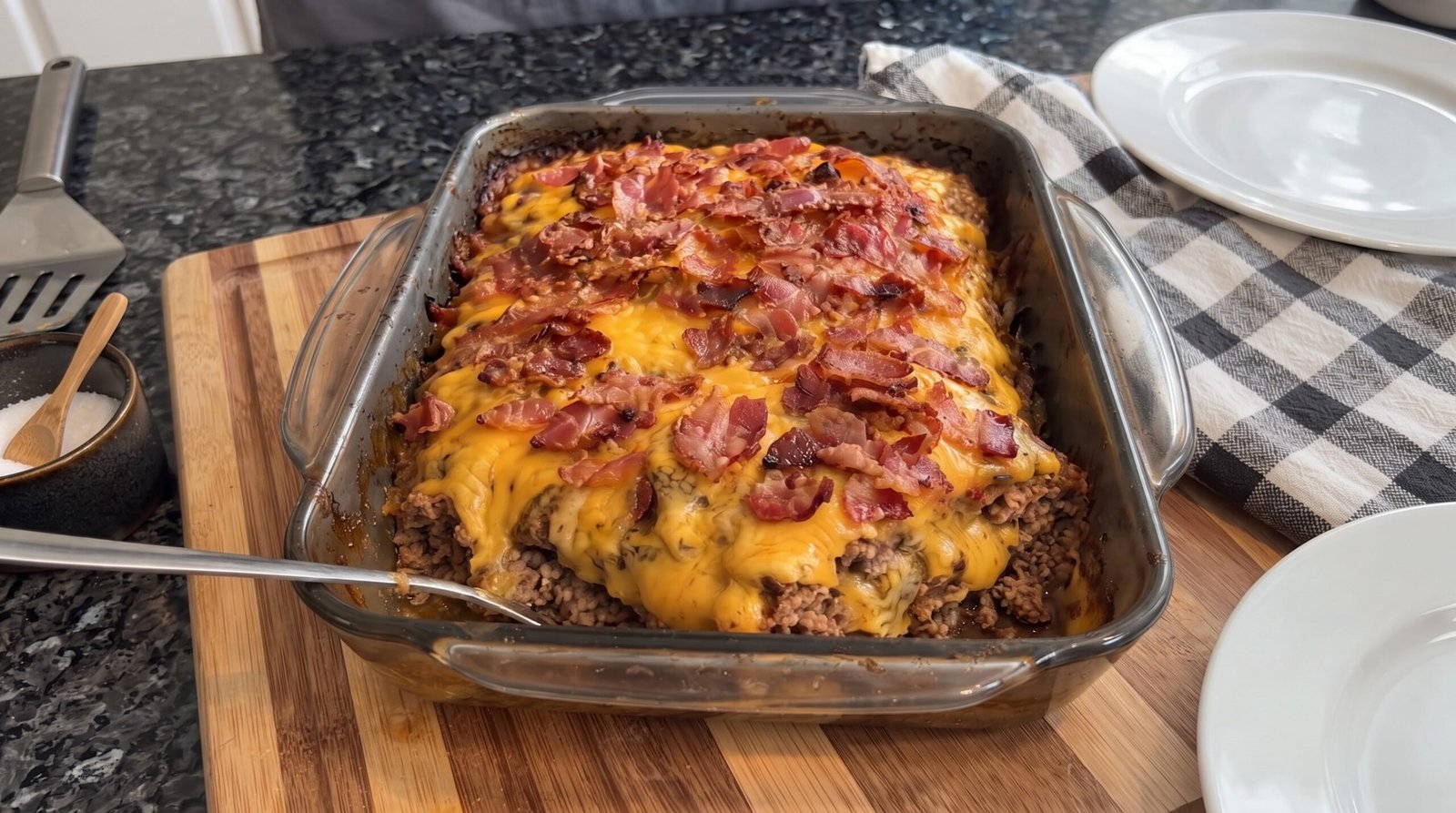
I remember the first time I pulled this dish out of the oven. It was one of those frantic Tuesday evenings where the fridge was mostly empty and the clock was ticking toward dinner time. I had a pound of ground beef sitting there and a block of cheddar that needed to be used up. I did not want to make standard tacos or plain pasta again, so I decided to layer everything into a baking dish. The result was a hearty, savory meal that saved me from ordering takeout. Now, this is my go-to when I need something reliable, filling, and straightforward to put on the table.
This recipe for a bacon cheddar ground beef casserole gives you a comforting, straightforward meal. It relies on basic pantry staples to create a deep flavor profile that feels like a treat without requiring complex preparation. You are looking at a base of seasoned beef, a layer of melted cheese, and a crowning finish of crispy bacon bits that tie all the textures together. It is exactly the kind of home-cooked meal that satisfies a hunger after a long day.
Why This Recipe Works
The primary reason this casserole works so well is the balance of textures. You have the soft, savory ground beef which acts as the foundation, followed by a thick layer of melted cheese that provides a creamy richness. On top, the bacon pieces add a necessary bite and a salty contrast to the richness of the beef and cheese. It is a simple structure but it hits all the notes you want in a comfort meal.
Another reason to like this dish is the ease of the cooking process. You are really only doing two things here: browning the meat on the stovetop and then baking the assembly in the oven. There is no complicated layering, no delicate sauces to whisk, and no tricky timing to worry about. Once the meat is browned and seasoned, the oven does all the heavy lifting. This makes it a forgiving recipe if you are multitasking in the kitchen.
Finally, the flavor profile is incredibly approachable. Everyone generally enjoys the combination of beef, cheddar, and bacon. You can easily adjust the seasonings to your liking without risking the integrity of the dish. Whether you like a bit of heat or prefer it more savory and earthy, the core components hold up well to whatever flavor profile you decide to build. It is a reliable base that remains consistent every single time you prepare it in your own kitchen.
Ingredient Notes
The Beef and Aromatics
For the base, you want a good quality ground beef. I find that an 80/20 or 85/15 lean-to-fat ratio works best here. You need enough fat to keep the meat moist while it bakes in the oven, but you do not want it so greasy that the casserole becomes soggy. If you use a very lean beef, you might find the final texture a bit dry, so aim for that middle ground. As for the onions, white or yellow work perfectly. You want to dice them finely so they soften and disappear into the meat, adding sweetness without big chunks in every bite.
The Cheese and Bacon
Sharp cheddar is my top choice because it stands up well to the beef. If you use a mild cheese, you might find that the flavor gets lost. Regarding the bacon, you should fry it until it is quite crispy before adding it to the top of the dish. Because the bacon is only in the oven for a short time at the end, it will not have the chance to render down or crisp up significantly if you start with raw or partially cooked pieces. Using pre-cooked or fully fried bacon is the secret to getting that right texture on the finished surface.
| Ingredient | Amount | Notes |
|---|---|---|
| Ground Beef | 2 lbs | 80/20 or 85/15 lean ratio |
| Bacon | 8 slices | Fully cooked and crumbled |
| Sharp Cheddar | 3 cups | Shredded from a block |
| Onion | 1 medium | Finely diced |
| Garlic | 3 cloves | Minced |
| Salt | 1 teaspoon | To taste |
| Black Pepper | 0.5 teaspoon | Coarsely ground |
| Worcestershire Sauce | 1 tablespoon | Adds depth |
The Recipe
- Prep Time: 15 minutes
- Cook Time: 35 minutes
- Total Time: 50 minutes
- Servings: 6
- Difficulty: Simple
Equipment:
– Large skillet
– 9×13 inch baking dish
– Spatula
– Grater
– Chef knife
Step-by-Step Instructions
Step 1: Prep the Oven and Ingredients
Preheat your oven to 375 degrees Fahrenheit. While the oven heats up, gather all your ingredients. Take your sharp cheddar block and shred it manually. I find that the pre-shredded bags often contain anti-caking agents that prevent the cheese from melting into that smooth, gooey texture we want for this casserole. If you have time, grating your own is worth the effort for the final consistency.
Dice your onion into small, uniform pieces. Minced garlic should be ready to go. If you are frying your bacon from scratch, do that now in your skillet until it is nice and crisp. Remove the bacon, let it cool on a paper towel, and then crumble it into bits. Pour out most of the bacon grease from the skillet, leaving just about a teaspoon behind for the beef.
Step 2: Brown the Beef
Place your large skillet over medium-high heat. Once the pan is hot, add your ground beef. Break it apart with a spatula as it cooks. You want to cook the beef until it is completely browned and no longer pink. This usually takes about 7 to 9 minutes. If there is an excess of rendered fat in the pan once the meat is browned, spoon it out, but leave a little bit behind to keep the meat moist.
Add the diced onions to the beef. Sauté them with the meat for about 3 to 4 minutes until they are translucent and soft. Next, stir in the minced garlic and cook for another minute until fragrant. Be careful not to burn the garlic, as it turns bitter quickly if left to sit in the high heat for too long.
Step 3: Season the Mixture
Once the onions and garlic are cooked through, add your salt, black pepper, and the tablespoon of Worcestershire sauce. The Worcestershire adds a savory, slightly tangy depth that helps round out the richness of the beef. Stir everything well to ensure the seasonings are distributed evenly throughout the meat mixture. Let it simmer for just a minute more to meld the flavors.
Taste the mixture at this point. If you feel it needs more salt or a little extra kick of pepper, add it now. Remember that the cheese you will add later is also salty, so go easy on adding too much extra salt at this stage. You want the beef base to be savory, but not overwhelming.
Step 4: Assemble the Casserole
Transfer your browned beef mixture directly into the 9×13 inch baking dish. Use your spatula to spread the beef into an even layer so it covers the bottom of the dish. Press it down lightly so it is level. This ensures that the cheese melts evenly across the surface rather than pooling in one corner.
Take about two-thirds of your shredded cheddar cheese and sprinkle it evenly over the beef. You want a good, solid coverage here. The cheese is going to act as a binder for the meat, so do not be shy with the amount. Save the remaining third of the cheese for the final stage of baking.
Step 5: Bake the Dish
Place the baking dish into your preheated 375 degree Fahrenheit oven. Bake it for 20 minutes. At this point, the cheese should be fully melted and starting to bubble around the edges. Carefully remove the dish from the oven and top it with the remaining third of the cheese and the crumbled bacon bits you prepared earlier.
Put the dish back into the oven for another 5 to 7 minutes. This final blast of heat is to ensure the top layer of cheese is melted and the bacon has warmed through. Once the cheese is melted and the edges are slightly golden, take it out of the oven. Let the dish rest for about 5 minutes before serving. This resting period allows the fats to settle so the casserole does not fall apart when you scoop it out.
Mistakes I Made (So You Don't Have To)
Using Too Lean Ground Beef
Early on, I tried making this with a very lean ground beef to cut down on fat. The result was disappointing because the meat dried out significantly during the baking process. Since there are no heavy liquids like cream or sauce added to the beef, it relies on that little bit of natural fat to keep it tender. Stick with an 80/20 mix. If you do end up using lean beef, try mixing in a tablespoon of beef broth before baking to add some moisture back in.
Forgetting to Drain the Grease
One time, I was in a rush and did not drain the fat after browning the beef. The casserole ended up with a pool of grease at the bottom of the dish, which made the final texture unappealing and quite oily. Always take the time to spoon out excess fat from the skillet. You want just enough to coat the meat, not enough to turn the casserole into a soup. Draining properly ensures the cheese stays on the meat instead of sliding off into a pool of oil.
Not Resting the Dish
I used to serve this immediately after pulling it out of the oven. While it smelled great, it was a mess on the plate because it had not set. The beef and melted cheese need a few minutes to firm up once removed from the heat. Giving it 5 minutes on the counter makes a huge difference in how it holds together when you scoop it out. It does not lose its heat in that short time, so you still get a warm, comforting meal.
Using Pre-Shredded Cheese
I once used a bag of pre-shredded cheese to save time, but I noticed it never got quite as gooey as when I grated my own block. The anti-caking agents in bagged cheese prevent it from melting together perfectly. It stayed a bit grainy and did not create that cohesive layer I wanted. Since then, I always make the effort to shred my own cheddar. It takes an extra minute or two, but the texture of the finished meal is much better.
Variations and Tips
Adding Green Chiles
If you want a little bit of heat and brightness, add a small can of diced green chiles to the beef mixture before putting it in the baking dish. They add a mild, tangy kick that cuts through the richness of the cheese and beef. It is a simple addition that changes the personality of the dish without making it spicy. Just be sure to drain the liquid from the can well before adding them to the meat.
Trying Different Cheeses
While sharp cheddar is the classic choice, you can mix in other cheeses for variety. I have tried a blend of cheddar and Monterey Jack before. The Monterey Jack melts exceptionally well and adds a creamy element, while the cheddar provides the flavor. You could also sprinkle a little Parmesan on top for a sharper, saltier finish. As long as you stick to cheeses that melt well, you have plenty of room to experiment based on what is in your fridge.
Making it Ahead of Time
You can definitely prep the beef mixture ahead of time. Brown the meat, add the seasonings, and let it cool completely. Store it in an airtight container in the fridge for up to 24 hours. When you are ready to eat, spread it into your baking dish, top with the cheese and bacon, and bake according to the instructions. You might need to add an extra 5 minutes to the initial bake time since you are starting from a cold state, but it works perfectly for busy days.
Including Vegetables
If you want to add some color and texture, stir in some finely chopped bell peppers or mushrooms when you are browning the onions. Just make sure to sauté them long enough so that they release their moisture. If you add watery vegetables without cooking them down first, you will end up with a soggy casserole. Cooking them with the beef until they are soft is the key to keeping the texture right.
Storage and Reheating
If you have leftovers, they will keep well in the refrigerator for up to 3 days when stored in an airtight container. This dish is actually quite good the next day, as the flavors have more time to meld together. To reheat, you can place a serving in the microwave for a minute or two until it is steaming hot. Make sure the internal temperature reaches 165 degrees Fahrenheit.
If you are reheating a larger portion, use the oven. Cover the dish with foil to keep it from drying out and heat it at 350 degrees Fahrenheit for about 15 to 20 minutes until it is hot throughout. I do not recommend freezing this casserole. The cheese texture changes when frozen and thawed, often becoming oily or crumbly, and the meat can lose its quality. It is best enjoyed fresh or within those few days of refrigeration.
Frequently Asked Questions
Can I use turkey instead of beef?
Yes, you can certainly use ground turkey for this recipe. Just keep in mind that turkey is much leaner than beef, so you might want to add a little bit of olive oil to the pan when you start cooking the onions to ensure it does not dry out. The cooking time remains the same, but you will need to pay closer attention to the moisture levels. It will taste slightly different, but the salty cheddar and bacon will still provide plenty of flavor.
Do I need to use a specific type of baking dish?
A standard 9×13 inch glass or ceramic baking dish works best for this recipe. These materials distribute heat evenly, which is important for getting that consistent, melted cheese layer. If you use a metal pan, be aware that it might conduct heat faster, which could lead to the bottom of the meat browning or crisping more than you want. If you only have metal, just check the dish a few minutes earlier to ensure it does not overcook.
Is there a way to make the bacon extra crispy?
If you want that extra crunch, you can broil the casserole for the last 60 seconds of cooking. Once the cheese is melted and the bacon is on top, place the dish under the broiler on low. Keep a very close eye on it because it can burn in a matter of seconds. Broiling adds a nice, charred quality to the bacon and bubbles the cheese, but you have to be vigilant.
What should I serve with this?
Since this is a heavy, protein-forward dish, it pairs well with something fresh and crisp. A simple green salad with a light vinaigrette balances the richness of the cheese and beef perfectly. You could also serve it with some roasted vegetables like broccoli or asparagus to add a little bit of fiber and texture. A side of toasted bread or a small portion of plain rice can also work if you want to soak up any juices.
How do I know when the meat is fully cooked?
You are browning the beef on the stove until it is no longer pink and then baking it again in the oven. For safety, you want the beef to reach an internal temperature of 160 degrees Fahrenheit. Since you are breaking the beef apart into smaller pieces in the skillet, it is almost impossible to undercook if you follow the browning steps correctly. If you are unsure, use a kitchen thermometer to check the center of the meat.
Final Thoughts
Making this bacon cheddar ground beef casserole has become a regular part of my cooking rotation because it is simple and reliable. It does not require any fancy techniques or hard-to-find ingredients, yet it consistently delivers a satisfying meal that feels like a true reward after a long day.
I hope this dish finds a place in your regular meal planning, just as it has in mine. It is the perfect example of how a few quality ingredients, handled with care, can create something truly enjoyable for the whole table. Enjoy the process of putting it together in your own kitchen tonight.