
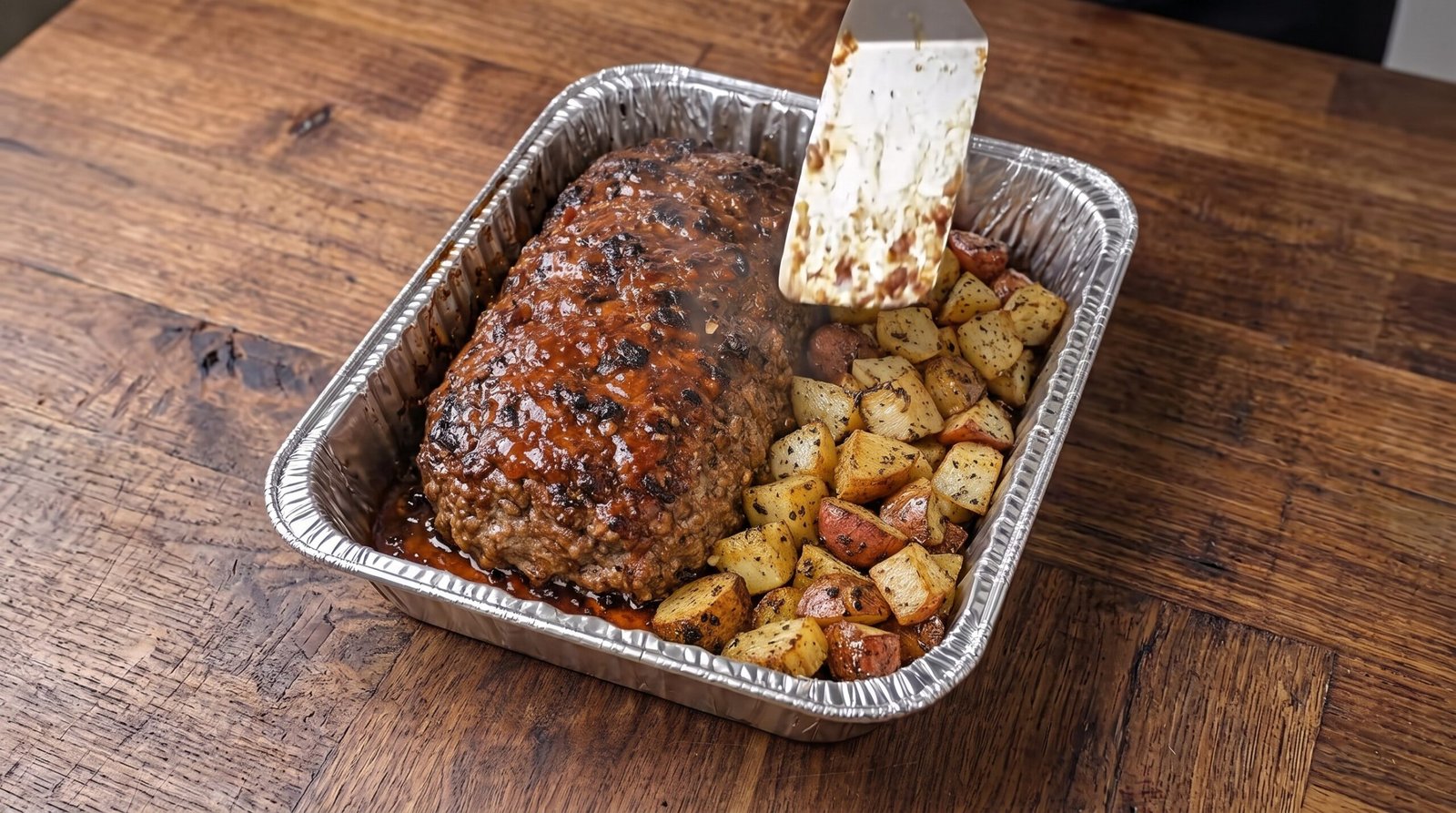
I remember the first time I tried to make a meatloaf dinner. I had guests coming over on a Tuesday, and I wanted something comforting that did not require me to stand at the stove for hours. The result was a bit dry and flavorless, which left me feeling disappointed. Over the years, I learned that the secret to a good meatloaf is not just the meat blend, but how you treat the fat and the moisture. I started experimenting with roasting the potatoes directly alongside the loaf, and that changed everything. The juices from the meat settle into the potatoes, giving them a rich taste that you just cannot get otherwise.
This meal is one I come back to when I need a reliable dinner that feeds a group without stress. It is a hearty combination that feels like a full Sunday dinner, even when you make it on a random weeknight. By following a few simple steps to balance the texture of the beef and the seasoning of the potatoes, you can make a reliable, filling meal that leaves everyone satisfied.
Why This Recipe Works
This recipe works because it relies on the principle of indirect flavor transfer. When you bake the meatloaf and the potatoes together in the same pan, the fat and the savory glaze from the beef drip down onto the potatoes as they roast. This creates a foundation of flavor that makes the potatoes much more interesting than if they were cooked separately. The starch from the potatoes also helps keep the environment in the pan stable, which helps the meat cook evenly.
Another reason this works is the choice of ingredients. Using a mix of ground beef and some aromatics keeps the loaf from becoming too dense. A meatloaf that is too tightly packed feels like a brick, but by using a moderate amount of binder, we ensure it keeps its shape while remaining soft enough to cut with a fork. The glaze is designed to provide a contrast to the savory interior. It brings a bit of acidity and sweetness to the surface, which caramelizes just enough in the heat of the oven to provide a nice layer of texture on the top of the loaf.
The process is also incredibly efficient. You prepare the meat mixture, chop your potatoes, toss them in oil, and put everything in the pan. After that, you set it and forget it. There is no flipping or basting every ten minutes. It is a one-pan solution that makes cleanup easier and ensures that the timing of the sides and the main course are perfectly synced. You get a consistent result every time you pull the pan out of the oven.
Ingredient Notes
The Meat Base
For the meatloaf, I always use a mix of 80/20 ground beef. The higher fat content is necessary because it prevents the loaf from drying out during the hour-long bake. You could use a leaner blend, but you might find the final texture a bit grainy or chalky. If you cannot find standard ground beef, you can mix in a small amount of ground pork, which adds a bit of moisture and a slightly different depth of flavor.
The Binder and Moisture
To keep everything together, you need breadcrumbs. I prefer using plain dry breadcrumbs, but you can use fresh ones if you let them soak in a little bit of milk for a few minutes first. This step, often called a panade, ensures the breadcrumbs do not absorb all the moisture from the meat. Eggs are the other essential component here. They act as the glue. Make sure you beat them lightly before adding them to the meat mixture to ensure they distribute evenly without leaving cooked bits of egg inside the loaf.
The Potato Component
For the potatoes, red skin potatoes are your best choice. They hold their shape well under long baking times and do not turn mushy. I like to keep the skins on because they add a bit of earthiness and help the cubes maintain their structure. Make sure you cut them into uniform one-inch pieces. If they are too large, they will remain raw in the middle when the meat is done; if they are too small, they will turn into mashed potatoes before the loaf is ready.
The Glaze and Seasoning
The glaze is simple: ketchup, a little brown sugar, and a splash of vinegar. The sugar helps it set and take on a dark color, while the vinegar cuts through the richness of the beef. For the seasoning, I stick to dried herbs like oregano and thyme, plus plenty of salt and black pepper. Do not be shy with the salt, as ground meat needs more seasoning than you might think to really pop.
| Ingredient | Amount | Notes |
|---|---|---|
| Ground Beef (80/20) | 2 pounds | Must have some fat content |
| Breadcrumbs | 1 cup | Plain, dry style |
| Eggs | 2 large | Lightly beaten |
| Red Potatoes | 1.5 pounds | Cut into 1-inch chunks |
| Ketchup | 3/4 cup | Use your favorite brand |
| Brown Sugar | 2 tablespoons | Packed well |
| Apple Cider Vinegar | 1 tablespoon | For acidity |
| Dried Oregano | 1 teaspoon | Adds earthy flavor |
| Dried Thyme | 1 teaspoon | Dried is fine here |
| Olive Oil | 2 tablespoons | For the potatoes |
| Salt | 2 teaspoons | Adjust to your taste |
| Black Pepper | 1 teaspoon | Freshly cracked is best |
The Recipe
- Prep Time: 20 minutes
- Cook Time: 60 minutes
- Total Time: 80 minutes
- Servings: 6 servings
- Difficulty: Easy
Equipment needed: Large mixing bowl, rimmed baking sheet or foil pan, meat thermometer, sharp knife, cutting board.
Step-by-Step Instructions
Step 1: Prepare the Oven and Pan
Start by preheating your oven to 375 degrees Fahrenheit. It is important to let the oven reach its full temperature before you put the pan inside. If the oven is not hot enough, the meatloaf will steam rather than cook through, which ruins the texture of the glaze. Prepare your baking pan by lining it with a piece of aluminum foil for easy cleanup, though it is not strictly required.
Step 2: Mix the Meat Base
In a large bowl, combine the ground beef, breadcrumbs, eggs, dried oregano, dried thyme, one teaspoon of the salt, and half of the black pepper. Use your hands to mix this together, but be gentle. You do not want to overwork the meat, as that makes the loaf dense and tough. Stop mixing as soon as everything is just combined.
Step 3: Shape the Loaf
Place the meat mixture into the center of your prepared pan. Gently pat it into an oval shape about two inches thick. It should be wide enough to leave space on the sides for the potatoes, but thick enough that it won't cook too fast. The uniform thickness is key to making sure the center cooks through before the outside gets burnt.
Step 4: Season and Arrange the Potatoes
In a separate bowl, toss the cubed red potatoes with the olive oil, the remaining salt, and the remaining black pepper. Once they are coated, arrange them in the pan around the meatloaf in a single layer. Try not to pile them up too much. The potatoes that are directly touching the bottom of the pan will get a bit of a crust, which is exactly what you want.
Step 5: Glaze and Bake
Whisk together the ketchup, brown sugar, and apple cider vinegar. Pour this mixture over the top of the meatloaf, using a spoon or brush to spread it evenly. Place the pan in the center rack of the oven. Bake for 55 to 60 minutes. You know it is done when a meat thermometer inserted into the thickest part reads 160 degrees Fahrenheit. The potatoes should be tender when pierced with a fork.
Step 6: Rest and Serve
This is the hardest part, but you must let the meatloaf rest for at least 10 minutes before slicing it. Resting allows the juices to redistribute throughout the meat, which prevents them from running out the moment you cut into it. If you cut it immediately, the loaf will fall apart and lose its moisture. After 10 minutes, slice into thick pieces and serve with the roasted potatoes from the pan.
Mistakes I Made (So You Don't Have To)
Overworking the Beef
Early on, I thought that mixing the meat vigorously was the way to get a smooth loaf. I found that this resulted in a very rubbery texture. I learned to use my hands just until the ingredients were incorporated. If you feel the fat starting to warm up and become sticky in your hands, stop immediately. You want the ingredients to be mixed, but the meat fibers should stay somewhat loose to ensure a tender bite.
Cutting the Potatoes Too Small
I once chopped my potatoes into half-inch cubes because I wanted them to cook faster. They turned into mush before the meatloaf was even halfway through the cooking time. The meatloaf needs about an hour, and an inch-sized cube is the perfect size to handle that duration without losing its integrity. Stick to larger chunks, and you will have potatoes that are soft in the middle but still hold their shape on the plate.
Skipping the Rest Time
I was often too hungry to wait, so I would slice the meatloaf right out of the oven. Every time I did this, the loaf would crumble, and a pool of liquid would form on the cutting board. Resting for 10 minutes is a non-negotiable step. It lets the proteins firm up slightly. When you cut it after the rest, you get clean, beautiful slices that stay intact.
Using Lean Ground Beef
I once tried to use the leanest ground beef I could find, thinking it would be a healthier version. The result was very dry and had almost no flavor. Meatloaf relies on the rendered fat to keep the interior moist. If you must use lean meat, you need to add an extra binder like an extra egg or a splash of broth, but even then, it will never be as good as the 80/20 blend. Stick to the higher fat ratio for the best results.
Variations and Tips
Using a Different Glaze
If you are not a fan of ketchup-based glazes, you can use a mixture of barbecue sauce and a little bit of honey. This gives the meatloaf a deeper, smokier flavor. Just be careful with the sugar content, as barbecue sauces can burn faster than plain ketchup. If you notice it browning too quickly at the 45-minute mark, cover the top of the loaf loosely with a piece of foil for the remainder of the cooking time.
Adding Veggies to the Loaf
I sometimes finely grate a carrot or a zucchini into the meat mixture. This adds a little hidden nutrition and helps keep the meat very moist. Make sure to squeeze out any excess liquid from the grated vegetables before adding them to the bowl, or the meatloaf will become too loose and difficult to shape.
Time-Saving Tip
To save time during the week, I often chop my potatoes and measure out my dry ingredients the night before. I store the potatoes in a bowl of cold water in the fridge to keep them from turning brown, and keep the dry spices in a small ramekin. When I get home, all I have to do is mix the meat, drain the potatoes, toss them in oil, and start the oven.
Serving Ideas
While the potatoes are the classic side, this meal also pairs well with something acidic to cut through the richness of the meat. A simple side salad with a bright vinaigrette or some steamed green beans with lemon juice works well. The contrast between the heavy meat and the light, crisp vegetables makes for a much more balanced dinner experience.
Storage and Reheating
If you have leftovers, they should be stored in an airtight container in the refrigerator. The meatloaf and potatoes will keep safely for up to three days. Make sure you get them into the fridge within two hours of taking them out of the oven to keep them food-safe.
To reheat, the oven is the best tool. Place the slices of meatloaf and the potatoes on a tray, add a tiny splash of water or broth to the pan, and cover with foil. Bake at 325 degrees Fahrenheit until they are steaming hot throughout. If you use a thermometer, the internal temperature of the meat should reach 165 degrees Fahrenheit. I do not recommend freezing this dish, as the potatoes tend to lose their texture and become mealy once thawed.
Frequently Asked Questions
Can I use a different type of meat?
Yes, you can use ground turkey or a mix of ground beef and ground pork. If you use turkey, keep in mind that it is much leaner, so you might need to add a bit more fat, like a tablespoon of olive oil or some finely diced bacon, to the mixture to keep it from becoming dry.
Why is my meatloaf falling apart?
The most likely culprit is not enough binder or not enough resting time. Ensure you are using the correct amount of breadcrumbs and eggs, as these are the structures that hold the meat together. Also, never skip the 10-minute rest after pulling it out of the oven, as this is when the structure settles and sets.
Can I cook this in a loaf pan instead of a flat pan?
You can, but it changes the cooking time. A loaf pan makes the meat thicker, so it will take longer to cook through. Also, you would not be able to roast the potatoes in the same pan. If you use a loaf pan, plan for a longer baking time and check the temperature carefully to ensure the middle is done.
What if I do not have dried herbs?
You can use fresh herbs, but you need to use about three times the amount of the dried herbs listed in the recipe. Fresh herbs have a higher water content, so they will not pack the same punch as the dried versions unless you use more. Make sure to chop them finely so they distribute evenly.
How do I know the potatoes are done?
The best way to tell is by the appearance and a fork test. The potatoes should be slightly browned on the edges where they touched the pan. If you pierce a piece with a fork, it should slide in with no resistance. If the fork meets hard spots in the center, they need a few more minutes in the oven.
Final Thoughts
Making a good meatloaf at home does not have to be a complicated production. It is a simple, honest meal that rewards you for focusing on the basics: the right ratio of meat, a good binder, and enough time to let the flavors develop in the oven. Once you get the timing down, you will see how easily it fits into a regular rotation.
I hope this version becomes as much of a staple in your kitchen as it is in mine. It is one of those meals that always feels like a treat, especially on a chilly evening. Enjoy the process of putting it together and the smell of dinner filling your home as it roasts.