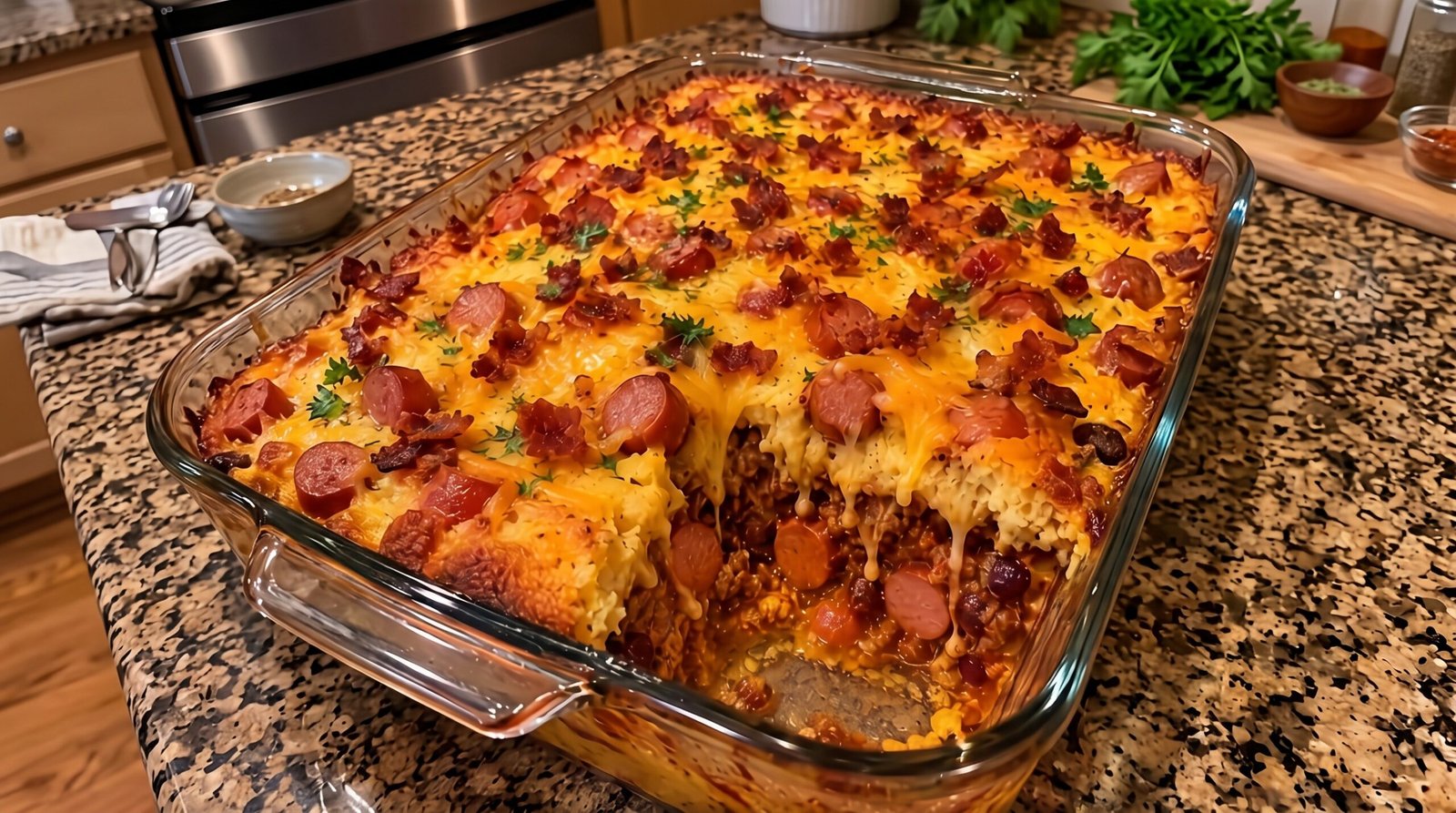
I remember the first time I realized my busy weeknights needed a change. It was a Thursday, the fridge was looking sparse, and I was exhausted. I stared at a pack of smoked sausages and a few potatoes, thinking there had to be a way to combine them into something comforting without spending hours in the kitchen. That evening, I threw together a quick version of this cheesy sausage and potato hotdish, and it immediately became a staple in my rotation. There is something deeply satisfying about the combination of hearty potatoes, savory sausage, and a layer of golden, melted cheese. It is the kind of meal that feels like home, even when you have had the longest day.
This recipe provides a straightforward way to put dinner on the table for your family or for a few days of meal prep. It focuses on accessible ingredients that you likely already have on hand, or can pick up easily at any grocery store. By breaking down the process into simple phases, you will end up with a pan that is bubbly, filling, and consistent every single time. It is a sturdy meal that holds up well, and I have found that it tastes even better the next day once the flavors have had time to settle together.
Why This Recipe Works
This dish works because it balances textures and savory notes in a way that feels intentional without being fussy. The foundation is made of potatoes, which provide a substantial base that absorbs the juices from the sausage. When you slice the potatoes thin, they soften through the cooking process, becoming tender and almost creamy as they meld with the cheese. The smoked sausage offers a hit of salt and fat, which acts as the main seasoning for the entire dish. Using a smoked variety means you do not have to worry about browning raw meat perfectly, as the flavor is already deeply developed.
The cheese component is another reason this works well. Using a sharp cheddar provides a bold contrast to the milder potatoes, and because you add it in a way that allows it to melt over the entire top, you get those delightful crispy edges along the rim of the glass baking dish. The structure of a hotdish is inherently forgiving. Unlike a delicate pastry or a temperamental sauce, this dish is robust. It handles high heat in the oven well, which helps in achieving that slightly browned, appetizing crust on the surface.
From a practical standpoint, the ease of preparation is a huge factor. You are essentially chopping, layering, and letting the oven do the heavy lifting. There is no need for complex searing or multiple pans. Everything happens within the casserole dish or the initial prep board. This minimizes cleanup, which is exactly what I need on a weeknight. The consistency of the results is another highlight. Whether you use a red potato or a starchy potato, the outcome is reliable, provided you cut them to a uniform size. It is a no-nonsense meal that delivers on comfort and satiety every time I make it.
Ingredient Notes
The Core Base
The potatoes are the backbone of this recipe. I prefer using a mix of starchy potatoes like Russets, which soften beautifully, or a waxier potato like Yukon Gold, which holds its shape a bit better. For this recipe, you want to cut them into thin, even slices. If they are too thick, they stay crunchy, and if they are too thin, they might turn to mush. Aim for about an eighth of an inch in thickness. This ensures they cook through in the same amount of time as the sausage and the cheese.
The Protein
Smoked sausage is my go-to choice here. You can use any smoked kielbasa or similar sausage you enjoy. The key is to look for one that is already fully cooked, as this saves time and ensures safety. I like to slice these into rounds that match the diameter of my potato slices. This creates a uniform look in the final dish and makes every forkful balanced. If you are sensitive to spice, stick to a mild smoked sausage. If you want a bit of a kick, a jalapeño or Cajun-style smoked sausage works perfectly fine.
The Dairy
You cannot have a hotdish without cheese. I recommend using a block of sharp cheddar and grating it yourself. While the pre-shredded bags are convenient, they often contain anti-caking agents that prevent the cheese from melting as smoothly as you want. A freshly grated sharp cheddar will melt into a cohesive, gooey layer that creates that signature top crust. You can also mix in a little bit of Monterey Jack if you want an extra level of creaminess, but cheddar is the classic choice that adds the right amount of tang.
The Aromatics and Seasonings
While the sausage carries most of the flavor, I always add a touch of black pepper and sometimes a little bit of dried thyme to lift the dish. Keep in mind that smoked sausages are quite salty, so you should be very careful with adding extra salt. Taste a small piece of the sausage before you start seasoning the potatoes. You will likely find that you do not need much salt at all. A little bit of fresh parsley sprinkled on top after baking provides a nice pop of color and freshness that cuts through the richness of the cheese.
| Ingredient | Amount | Notes |
|---|---|---|
| Potatoes | 3-4 large | Peeled and sliced thin |
| Smoked Sausage | 1 pound | Sliced into rounds |
| Sharp Cheddar | 2 cups | Freshly grated |
| Black Pepper | 1/2 teaspoon | Freshly cracked |
| Dried Thyme | 1/2 teaspoon | Optional for depth |
| Fresh Parsley | 1 tablespoon | Chopped, for garnish |
The Recipe
- Prep Time: 15 minutes
- Cook Time: 45 minutes
- Total Time: 60 minutes
- Servings: 6 servings
- Difficulty: Easy
Tools you need:
– Large cutting board
– Sharp chef knife
– Box grater
– 9×13 inch glass baking dish
– Oven mitts
Step-by-Step Instructions
Step 1: Prep the Oven and Dish
Start by preheating your oven to 375 degrees Fahrenheit. This temperature is ideal because it is hot enough to soften the potatoes effectively while allowing the cheese on top to bubble and brown without burning. While the oven heats up, prepare your 9×13 inch glass baking dish. You do not need to grease it heavily, but a light spray of non-stick cooking oil helps significantly when it comes time to serve and clean up.
Ensure your oven rack is positioned in the middle of the oven. This promotes even heat circulation, which is vital for a casserole-style dish that has a layered structure. If you place it too low, the bottom might brown too quickly while the top remains pale. If it is too high, the cheese might brown before the potatoes are tender.
Step 2: Prepare the Main Components
Gather your potatoes and peel them if you prefer a smoother texture, though leaving the skin on is fine for a more rustic result. Slice the potatoes into consistent, thin rounds. Uniformity is the secret here. If some slices are significantly thicker than others, you will end up with uneven cooking. Take your time with the knife work; consistent slices ensure that every piece is cooked through.
Slice your smoked sausage into rounds that are roughly the same thickness as your potato slices. Having the potato and sausage rounds be similar in size makes the hotdish much more pleasant to eat. Once everything is sliced, place the potatoes in a large bowl and toss them with the black pepper and thyme. You want the seasoning to coat the slices as evenly as possible.
Step 3: Layer the Hotdish
Start layering the ingredients in your prepared glass dish. I usually begin with a layer of potatoes, overlapping them slightly to cover the base of the dish. Follow this with a layer of the sliced smoked sausage. You can scatter the sausage rounds randomly or arrange them in a pattern; both work well.
Repeat these layers until you have used up all your ingredients. I usually finish with a layer of potatoes on top, which acts as a protective shield for the sausage rounds. This helps the sausage stay succulent rather than drying out in the intense heat of the oven. Press down slightly on the layers to ensure they are packed reasonably well, which helps the heat move through the dish efficiently.
Step 4: Add the Cheese and Bake
Once your layers are assembled, cover the dish with a piece of aluminum foil. This is crucial for the first 30 minutes of baking. The foil traps steam, which is what actually cooks the potatoes. Without this moisture, you will have hard, undercooked potatoes even if the cheese on top looks done. Place the dish in the oven and set a timer for 30 minutes.
After 30 minutes, carefully remove the foil. The potatoes should be fork-tender at this point. Now, distribute your freshly grated sharp cheddar cheese over the top of the dish. Return the dish to the oven, uncovered, for another 15 minutes. During this time, the cheese will melt, bubble, and begin to develop some brown spots, which adds that depth of flavor I love.
Step 5: Final Check and Serving
Keep a close eye on the oven during these final 15 minutes. You are looking for a beautiful golden-brown color on the cheese. The edges should be bubbling vigorously. Once the cheese reaches that point, remove the dish from the oven and let it sit for about 5 to 10 minutes before serving. This resting period allows the sauce and the cheese to firm up slightly, making it much easier to scoop into portions.
Finally, sprinkle the fresh chopped parsley over the top. The brightness of the parsley really wakes up the heavy flavors of the sausage and cheese. Serve this hot directly from the baking dish. It is a hearty meal, so keep the side portions reasonable. The internal temperature of the sausage pieces should reach at least 165 degrees Fahrenheit, though since they are pre-cooked, you are really just making sure the entire dish is piping hot throughout.
Mistakes I Made (So You Don't Have To)
Cutting Potatoes Too Thick
Early on, I was in a rush and sliced my potatoes nearly a quarter-inch thick. I thought they would be fine, but when I pulled the dish out, the potatoes were still crunchy in the center. The fix is simple: use a mandoline if you have one, or just take an extra minute with your knife to ensure they are truly thin. If you accidentally cut them thick, just add an extra 10 to 15 minutes to the covered baking time and keep checking with a fork until they are tender.
Using Pre-Shredded Cheese
I once tried to save time by using a bag of pre-shredded cheddar. It did not melt properly; instead, it formed a dry, plastic-like layer on top of the potatoes. I learned that the starch added to pre-shredded cheese to keep it from clumping prevents it from becoming gooey. Now, I always grate my cheese from a block. It takes an extra minute, but the result is a smooth, stretchy melt that clings to the potatoes perfectly.
Skipping the Foil
One time I forgot to cover the dish with foil. The cheese turned dark brown and hard before the potatoes had any chance to cook through. I ended up with a burnt top and raw potatoes underneath. The foil is non-negotiable here. It creates a steam environment that softens the potatoes while preventing the top from overcooking. If you lose your foil, use a heavy baking sheet or a lid that fits the dish securely to create that seal.
Over-Salting the Dish
Because I love bold flavors, I used to add salt to the potato layers. I didn't realize how much salt was already in the smoked sausages until the dish was finished and nearly inedible. Smoked sausages are essentially cured meats, and they pack a lot of sodium. Now, I never add extra salt. If you feel it needs more, add a tiny bit of salt at the table, but always wait until you taste it first. Trust the sausage to do the work.
Variations and Tips
Add Some Heat
If you like a bit of spice in your food, you can replace the plain smoked sausage with a spicy andouille or a jalapeño cheddar sausage. This changes the character of the dish entirely. You can also sprinkle a little crushed red pepper flake in between the layers with the potatoes to give the whole dish a subtle, warming heat that pairs perfectly with the sharpness of the cheddar cheese.
Incorporate Vegetables
While this is a classic meat-and-potato dish, you can sneak in some vegetables without sacrificing the comfort factor. Thinly sliced onions or bell peppers layered between the potatoes add a nice sweetness. If you want to use something like broccoli or cauliflower, make sure to blanch them first so they do not introduce too much water into the dish, which would make the bottom soggy.
Make-Ahead Tip
This dish is great for busy schedules. You can assemble the entire hotdish up to 24 hours in advance, cover it with plastic wrap, and keep it in the refrigerator. When you are ready to eat, simply take it out of the fridge and let it come to room temperature for about 20 minutes before putting it in the preheated oven. You might need to add 5 to 10 minutes to the initial covered cooking time to ensure everything heats through properly.
Use Your Freezer
If you have leftovers, this dish freezes surprisingly well. Once it has cooled down completely, portion it out into individual containers. It will stay good in the freezer for up to a month. To reheat, thaw it in the refrigerator overnight and then microwave it on medium power until it is steaming hot. You might notice the cheese loses a bit of its stretch, but the flavor remains just as comforting as it was on the first day.
Storage and Reheating
If you find yourself with leftovers, you want to make sure you handle them safely. Always get the remaining portions into the refrigerator within two hours of taking them out of the oven. I store mine in an airtight container to keep the potatoes from drying out. They will stay fresh in the fridge for up to three days.
When it comes time to reheat, I prefer the oven. It helps regain some of that texture that you lose in the microwave. Cover the dish with foil and bake at 350 degrees Fahrenheit for about 15 to 20 minutes. If you are in a rush and use the microwave, be sure to stir the contents halfway through to ensure even heating. Always ensure the internal temperature reaches 165 degrees Fahrenheit before eating.
Frequently Asked Questions
Can I use sweet potatoes instead of regular potatoes?
You can, but keep in mind that sweet potatoes cook faster and have a different sugar profile. The dish will be significantly sweeter, and the texture might be softer. If you go this route, monitor the oven closely after 20 minutes to ensure they do not become too mushy. Some people love the contrast between the sweet potato and the salty sausage, but it definitely changes the profile.
Do I have to use smoked sausage, or can I use fresh links?
The recipe is designed for smoked, pre-cooked sausage because it provides the seasoning and the safety factor. If you want to use fresh sausage, you must brown it in a skillet until it is fully cooked before adding it to the dish. Do not put raw sausage into the hotdish, as it will release too much grease and will not reach a safe temperature effectively among the potatoes.
What should I serve on the side of this dish?
Since this is quite a heavy and filling meal, I recommend serving it with something light and acidic to balance the richness. A simple side salad with a bright vinaigrette, or some steamed green beans with a squeeze of lemon, works perfectly. The acidity cuts right through the fat from the cheese and sausage, making each bite feel a bit lighter.
My potatoes were soft but the top wasn't browned. What happened?
This usually means your oven was not calibrated correctly or you opened the oven door too many times. To fix this, if the dish is done but the cheese is still pale, turn your oven to the broiler setting for 2-3 minutes. Watch it like a hawk because it will go from perfect to burnt in seconds. This will give you that nice golden color you are looking for.
Can I add milk or cream to this dish?
Some people like to add a splash of milk or a little heavy cream to the layers to make it more like a gratin. If you do this, add about half a cup, but be aware that it will change the final texture significantly. It will be much more like a sauce-based casserole. If you try this, do not add too much liquid, or you will end up with a watery, soupy dish instead of a structured hotdish.
Final Thoughts
This cheesy sausage and potato hotdish has become a reliable friend in my kitchen. It does not require special equipment or expensive ingredients, just a bit of patience with the layering and the timing. The result is always a warm, substantial meal that makes any kitchen feel a little more inviting.
I hope you find that this recipe becomes as much a staple in your home as it is in mine. It is honest food that does exactly what it promises, providing a satisfying dinner after a long day. Enjoy the process of putting it together and even more so the first warm bite when it finally comes out of the oven.