
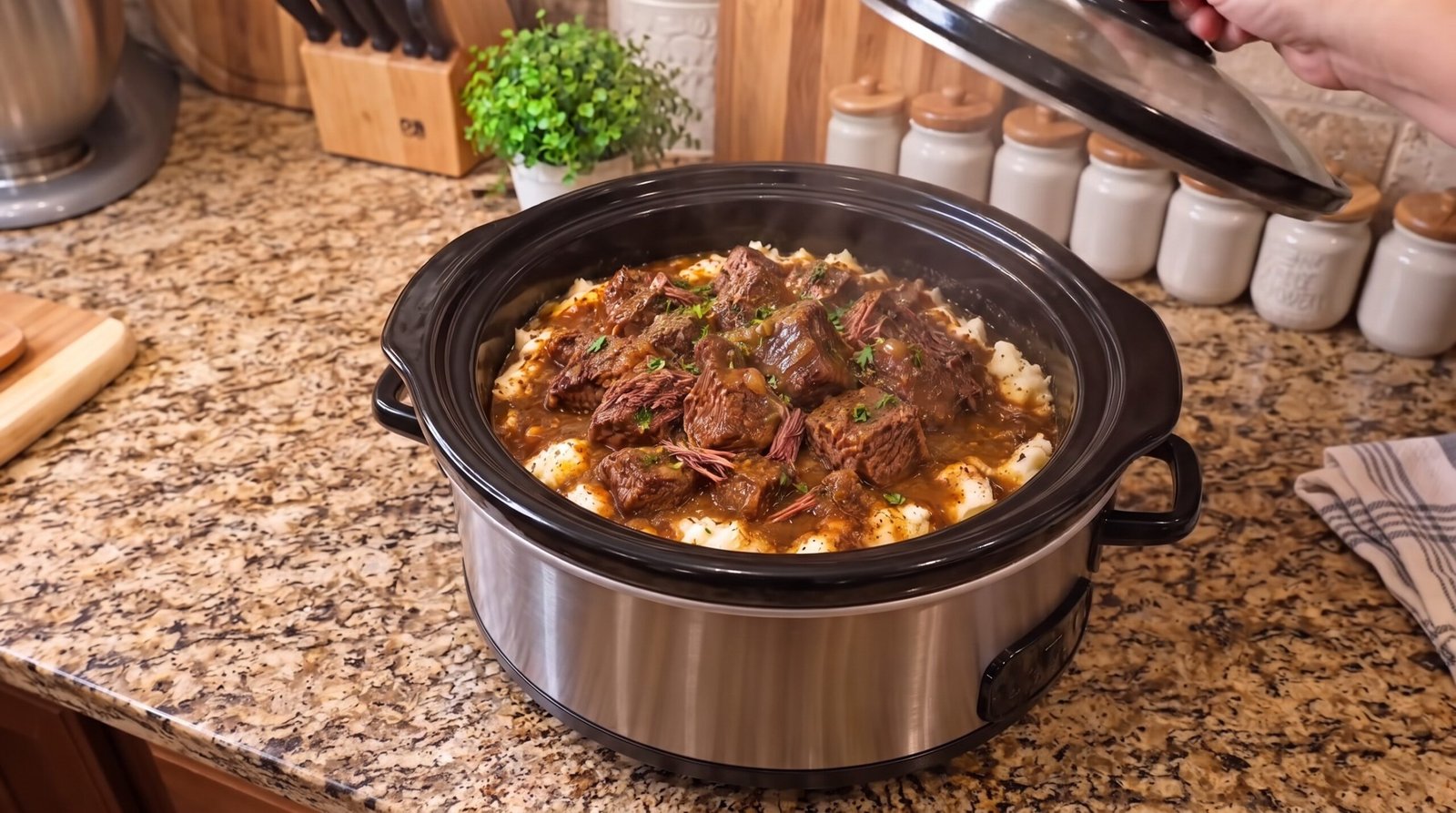
I remember the first time I tried making this beef dinner on a rainy Tuesday evening. I was exhausted from work and really did not want to stand over a hot stove for hours. I had a piece of chuck roast in the fridge that needed to be used, and a bag of potatoes sitting in the pantry. I decided to toss everything into my slow cooker, hoping for the best. The result was a tender, comforting meal that filled the whole house with a deep, savory aroma. Since that night, this has become my go-to recipe whenever I need a reliable, hearty meal that feeds my family without any extra stress or fuss.
Making this Slow Cooked Beef Chuck Roast with Mashed Potatoes is straightforward and avoids the need for constant monitoring. You get a rich sauce from the beef juices that pairs perfectly with soft, creamy mashed potatoes. Whether it is a busy weeknight or a slow weekend, this approach provides a satisfying meal that feels like it took all day to prepare, even though the hands-on time is very minimal.
Why This Recipe Works
This recipe succeeds because it uses the slow cooking method to break down the tough fibers in the beef chuck. Chuck roast is a cut that benefits from long, low heat, which renders the fat and turns the meat into something very tender. Unlike higher heat methods, the slow cooker maintains a steady, moderate temperature, which ensures the meat does not toughen up during the process. You are left with chunks of beef that pull apart with just a fork.
The flavor profile is built through layers. By searing the meat first in a skillet, you create a base of flavor that carries throughout the entire dish. This is a step you should never skip, even if you are tempted to just dump everything into the cooker. That initial browning provides a depth that you simply cannot get otherwise. Once you move the beef to the slow cooker, the juices combine with the herbs and broth, resulting in a sauce that is balanced and rich.
Finally, serving this over mashed potatoes creates a complete dinner in one bowl. The potatoes act as a sponge for the beef juices, which adds flavor to every bite. Since you cook the beef until it is tender and the sauce has reduced slightly, the texture contrast between the fork-tender meat and the smooth, creamy potatoes is satisfying. This is a dependable dish that does not rely on complicated techniques or fancy ingredients, just patience and good quality staples.
Ingredient Notes
The Beef
For this dish, you need a high-quality beef chuck roast. This is a shoulder cut that is known for its marbling, which is essential for slow cooking. When buying, look for a piece with plenty of white fat throughout the muscle. If the roast is very large, cut it into two-inch pieces before you start. This size ensures the beef cooks evenly and is easy to serve once it is done. Do not remove all the fat, as it provides the moisture needed during the long cooking time.
The Aromatics and Liquid
You will need a mix of standard aromatics. Yellow onions are best here because they soften and sweeten as they cook. Garlic, when crushed and tossed in, mellows out and adds an earthy base. For the liquid, use a low-sodium beef broth so you can control the saltiness of the final sauce. A splash of Worcestershire sauce helps deepen the flavor. Do not forget a few sprigs of fresh thyme or rosemary, which add a light herbaceous note that lifts the heavier flavor of the beef.
The Potatoes
Yukon Gold potatoes are my favorite choice for this. They have a naturally buttery flavor and a creamy texture that holds up well after being boiled and mashed. If you cannot find Yukon Gold, Russets will work, though they are a bit more starchy. When mashing, use warm milk and a good knob of butter to get the right consistency. Always season your mash with salt and pepper to taste before serving it under the beef.
| Ingredient | Amount | Notes |
|---|---|---|
| Beef chuck roast | 3 pounds | Cut into 2-inch chunks |
| Olive oil | 2 tablespoons | For searing the beef |
| Yellow onions | 2 large | Roughly chopped |
| Garlic cloves | 4 pieces | Smashed |
| Beef broth | 2 cups | Low sodium preferred |
| Worcestershire sauce | 2 tablespoons | Adds depth |
| Fresh thyme | 3 sprigs | Left whole |
| Potatoes | 3 pounds | Yukon Gold or Russet |
| Butter | 4 tablespoons | For the mash |
| Whole milk | 1/2 cup | Warm, for the mash |
The Recipe
- Prep Time: 20 minutes
- Cook Time: 7 hours
- Total Time: 7 hours 20 minutes
- Servings: 6
- Difficulty: Easy
Equipment needed:
– Large skillet
– Slow cooker (6-quart capacity)
– Large pot for boiling potatoes
– Potato masher
– Tongs
– Chef knife and cutting board
Step-by-Step Instructions
Step 1: Sear the Beef
Start by cutting your chuck roast into 2-inch cubes. Pat each piece dry with paper towels to ensure a good sear. Heat the olive oil in a large skillet over medium-high heat. Working in batches to avoid crowding the pan, place the beef into the hot oil. Let each side cook for about 2 to 3 minutes until you see a dark brown crust on the meat. You are not cooking it through at this stage, just creating flavor.
Once each batch is browned, transfer the beef pieces directly into your slow cooker. If you notice any burnt bits in the skillet, you can leave them; they add flavor. Keep the pan out to use for the next step. If your pan looks very dry after searing, you can add a tiny bit more oil, but usually, the fat from the beef is enough.
Step 2: Prepare the Base
In that same hot skillet, add your chopped onions. Cook them for about 5 minutes over medium heat until they start to look translucent and pick up the brown bits from the beef. Add the smashed garlic cloves and cook for another minute until fragrant. Do not let the garlic brown too much, as it can turn bitter.
Pour in a splash of the beef broth to deglaze the skillet. Use a wooden spoon to scrape up all those flavorful bits stuck to the bottom of the pan. This is called the fond, and it is where a lot of the sauce flavor lives. Pour this onion and broth mixture over the beef in the slow cooker.
Step 3: Add Liquid and Herbs
Pour the remaining beef broth into the slow cooker. Add the Worcestershire sauce and the fresh thyme sprigs. You do not need to chop the thyme; leaving the sprigs whole makes them easy to fish out at the end. Gently stir the contents of the slow cooker so that the beef is mostly submerged in the liquid.
Place the lid on the slow cooker and set it to low. Let the beef cook for 7 hours. Do not lift the lid during the first 6 hours, as you want to keep all the heat and steam trapped inside. After 7 hours, the meat should be very tender and pull apart easily when you press it with a fork. Check the internal temperature if you are unsure; it should be well over 165 degrees Fahrenheit.
Step 4: Boil the Potatoes
About 45 minutes before the beef is finished, start the potatoes. Peel the potatoes and cut them into even, 1-inch chunks. Place them in a large pot and cover with cold, salted water by about an inch. Bring the water to a boil over high heat, then reduce to a simmer.
Cook the potatoes for about 20 minutes or until they are tender enough to be pierced easily with a fork. Drain the potatoes well in a colander. Return the drained potatoes to the hot, empty pot to let any extra moisture evaporate. This step ensures your mashed potatoes are fluffy and not watery.
Step 5: Mash and Serve
Add the butter and warm milk to the potatoes. Using a potato masher, press down firmly until the potatoes reach your preferred consistency. I like mine slightly rustic, but you can go very smooth if you prefer. Taste a small amount and add more salt or pepper if needed.
To serve, scoop a large portion of mashed potatoes into a shallow bowl. Use a slotted spoon to lift the beef chunks from the slow cooker and place them on top of the potatoes. Ladle some of the sauce from the slow cooker over the beef. The heat from the sauce will soak into the potatoes, creating a wonderful combination.
Mistakes I Made (So You Don't Have To)
Overcrowding the Skillet
In my early attempts, I would try to sear all the beef at once to save time. The meat ended up steaming in its own juices instead of browning, which meant the final dish lacked that deep, savory base flavor. Now, I always brown in two or three batches. It takes an extra 5 minutes, but it makes a world of difference in the final taste. If your pan is too full, the beef will stay gray instead of getting that rich, dark color.
Removing All the Fat
I used to trim every bit of white fat from the beef chuck before putting it in the slow cooker. I thought I was being healthier, but the result was dry, tough meat that had no silkiness. The fat is what keeps the beef moist during those 7 hours of cooking. Now, I trim only the very large, hard pieces of gristle and leave the rest of the marbling. The fat renders down, which keeps the beef tender and creates a luscious sauce.
Boiling Potatoes Too Early
I once made the mistake of finishing the mashed potatoes while the beef still had two hours left on the timer. By the time I sat down to eat, the potatoes were cold and gummy. Now, I make sure to time the potatoes so they are finished just as the beef is ready. If you are worried about timing, you can keep the potatoes warm in a heat-proof bowl set over a pot of simmering water, but fresh is definitely best.
Not Using Enough Liquid
Early on, I did not add enough beef broth because I thought the meat would release plenty of water. It did, but it wasn't enough to keep the onions and garlic from slightly burning at the edges of the slow cooker. Now, I make sure the beef is at least partially covered with liquid. This ensures that the sauce stays consistent and nothing sticks or burns to the bottom of the ceramic insert.
Variations and Tips
Add Root Vegetables
If you want to make this a one-pot meal without the separate mashed potatoes, you can add large chunks of carrots and parsnips to the slow cooker about 2 hours before the beef is done. They will absorb the beef juices and become very soft and flavorful. This is a great time-saving trick if you have a busy day and do not want to boil potatoes. Just make sure the pieces are large so they do not turn into mush after 2 hours.
The Red Wine Option
For a more complex flavor, you can replace half of the beef broth with a dry red wine like a Cabernet or Merlot. Pour the wine into the skillet after searing the beef and let it simmer for 3 minutes before scraping up the brown bits. Most of the alcohol cooks off during the long, 7-hour process, leaving behind a deep, slightly acidic undertone that cuts through the richness of the beef perfectly.
Herb Infusion
If you do not have fresh thyme, you can use dried herbs. A teaspoon of dried thyme or rosemary works fine, but add it during the searing step so it has time to bloom in the heat. Fresh herbs are always better for the final flavor, but dried herbs are a reliable substitute. Just remember that dried herbs are more potent, so you do not need as much as the fresh variety.
Make Ahead Tip
This dish actually tastes better the next day because the flavors have more time to meld. You can cook the beef completely, let it cool, and store it in the fridge in an airtight container. When you are ready to eat, reheat the beef and the sauce in a saucepan over medium heat until it is steaming hot, which is at least 165 degrees Fahrenheit. While the beef is reheating, you can whip up a fresh batch of mashed potatoes.
Storage and Reheating
If you have leftovers, store the beef and sauce in an airtight container in the refrigerator within 2 hours of cooking. It will stay fresh for up to 3 days. I do not recommend freezing this dish, as the texture of the mashed potatoes can become grainy and watery after being frozen and thawed. If you really want to freeze the beef, do it without the potatoes and prepare a fresh batch when you are ready to serve.
When reheating, always ensure the beef reaches 165 degrees Fahrenheit to be food-safe. A saucepan over medium heat is the best way to do this. If the sauce has thickened too much in the fridge, add a tablespoon of water or broth to loosen it up as it heats. Avoid reheating in the microwave if possible, as it can cause the beef to become chewy and the sauce to splatter.
Frequently Asked Questions
Can I use a different cut of beef?
While chuck roast is the gold standard for this slow cooking method, you can use beef brisket or beef shank. Both of these cuts have plenty of connective tissue that breaks down during long, low-temperature cooking, which is exactly what you want for a tender result. Avoid lean cuts like sirloin, as they will dry out and become tough after 7 hours in a slow cooker.
Why is my sauce watery?
If your sauce looks too thin at the end of the cooking time, you can remove the beef and set it on a plate. Crank the slow cooker to high and let the sauce bubble for 20 minutes to reduce it. Alternatively, whisk a tablespoon of cornstarch with a tablespoon of cold water and stir it into the sauce. Let it cook for another 10 minutes until it thickens to your liking.
Is it necessary to sear the meat?
Yes, it really is. Searing provides the Maillard reaction, which is a chemical process that creates the deep, browned flavor profiles necessary for a rich sauce. Without searing, the beef will still be cooked, but the sauce will taste like boiled beef broth rather than a deep, savory stew. The extra 10 minutes of work is worth the difference in final flavor.
My potatoes turned out lumpy, what happened?
Lumpy mashed potatoes usually happen because the potatoes were not cooked all the way through, or the butter and milk were too cold when added. Always make sure your potato pieces are tender to the core before draining. Using warm milk and room-temperature butter helps them incorporate smoothly into the potato flesh, resulting in a consistent, creamy texture every time.
Can I leave the slow cooker on for longer than 7 hours?
If you are away for 8 or 9 hours, the beef will likely still be fine, but the texture might start to fall apart too much. Most slow cookers on the low setting will not overcook the meat significantly in that extra hour or two. However, I prefer to stick to the 7-hour mark to ensure the meat stays in distinct, fork-tender chunks rather than shredded beef.
Final Thoughts
Cooking for yourself or your family does not have to be a complicated production. By choosing ingredients that benefit from simple, long-term heat, you can produce a meal that feels like a labor of love with very little effort. I hope this beef and potato dinner becomes a staple in your kitchen just as it has in mine.
Remember to take your time with the initial sear and enjoy the process of letting the ingredients come together slowly. Once you pull that first forkful of tender beef from the slow cooker and nestle it into a bowl of fluffy mashed potatoes, you will see why this method is worth the wait. Enjoy your meal and happy cooking.