
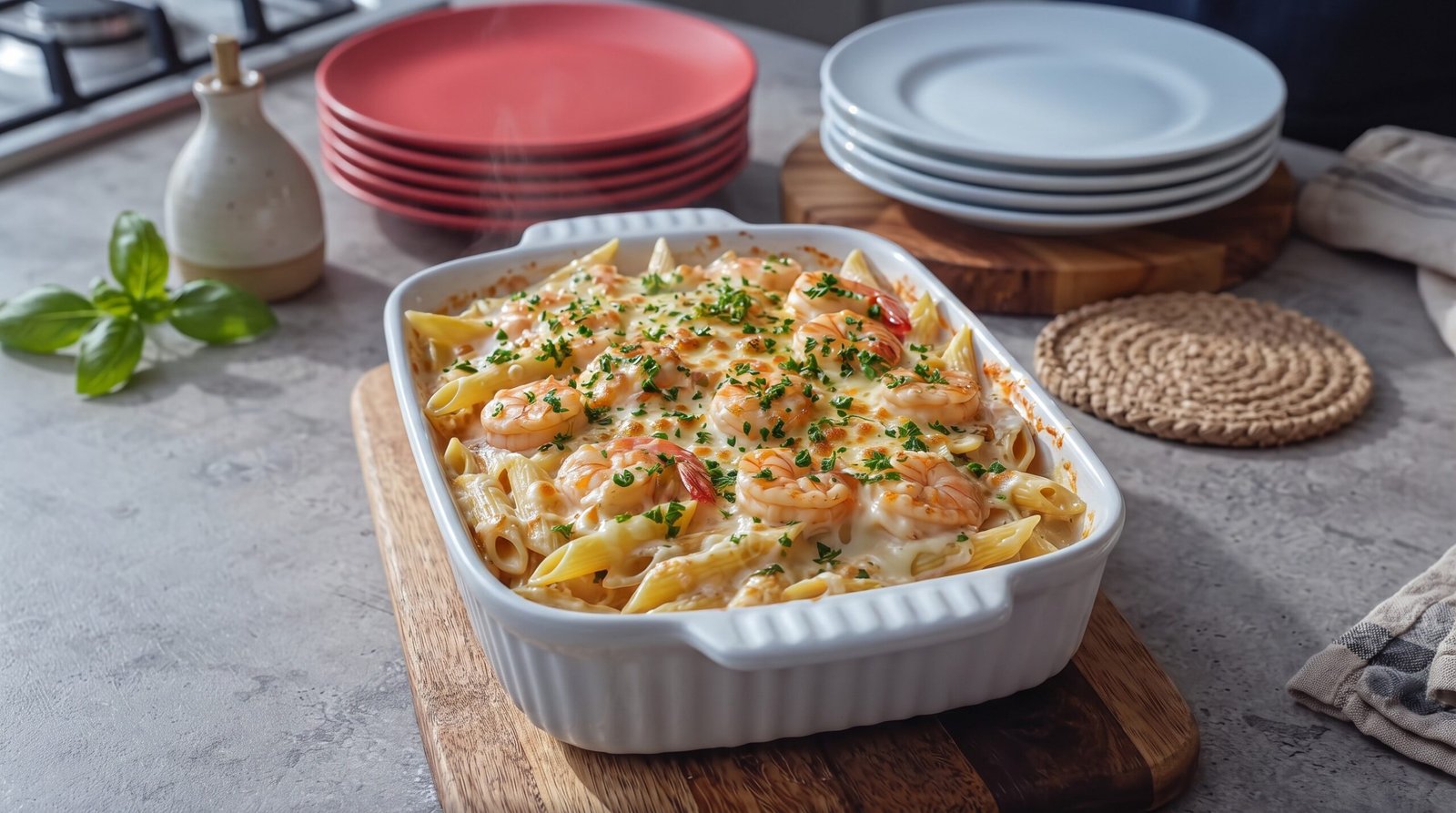
I often find myself standing in the kitchen on a Thursday evening, tired from a long day and staring at a mostly empty refrigerator. The last thing I want to do is spend an hour washing dishes or managing a complicated multi-course meal. This creamy baked shrimp pasta has become my go-to solution for those nights when I need something filling, warm, and comforting. It is a straightforward dish that relies on the contrast between the tender, cooked pasta and the bubbly, toasted cheese topping.
The beauty of this meal lies in how it pulls together simple pantry items with a few fresh components. When the aroma of bubbling cream and cheese fills the kitchen, it reminds me that home cooking does not have to be an elaborate production to be satisfying. By using a single baking dish for the final step, you save yourself some cleanup time while ensuring every bite is heated through. It is a practical, honest dinner that delivers consistent results without requiring any professional training or special techniques.
Why This Recipe Works
This baked shrimp pasta is effective because it balances textures and temperatures. By parboiling the pasta, you ensure it maintains its structure during the final baking phase. If you cooked it completely in the sauce, it might become too soft or soak up too much liquid, leading to a mushy texture. Instead, by leaving the pasta slightly firm, it absorbs the creamy sauce during the time in the oven, achieving a uniform consistency that feels cohesive. The shrimp are folded in toward the end, which prevents them from turning rubbery or tough.
Another reason this recipe is a staple in my rotation is the control it gives you over the final flavor. The sauce is a blend of heavy cream, garlic, and parmesan, which creates a rich base that does not overpower the seafood. Because the ingredients are simple, they do not compete with each other. The heat from the oven toasts the top layer of cheese, providing a slight resistance that breaks up the softness of the pasta. This tactile experience is what makes a baked dish feel more comforting than a stovetop version.
Efficiency is also a major factor. While the oven preheats, you can boil the pasta and whip up the cream sauce on the stove. This parallel processing means the active time is minimized. You are not waiting for one stage to finish before starting the next. It is a reliable method that has never failed me, even when I am rushing to get dinner on the table. The result is a consistent, reliable meal that everyone expects to be good every time it lands on the table.
Ingredient Notes
The Seafood
You should look for medium-sized shrimp for this dish because they fit nicely on a fork with a piece of pasta. I prefer using peeled and deveined shrimp with the tails removed to save time. If you buy frozen shrimp, make sure to thaw them completely in a bowl of cold water and pat them dry with paper towels before adding them to your sauce. Excess moisture can thin out your cream sauce, making it watery rather than thick and luscious. If you cannot find medium shrimp, large shrimp can be cut into two pieces.
The Pasta
Penne is the standard here because the hollow center of the pasta tube catches the creamy sauce. The ridges on the outside also help the cheese and cream cling to the surface. You can use ziti or rigatoni as alternatives, as they offer similar benefits. Avoid using long pasta like spaghetti or linguine, as they tend to tangle in a baking dish and become difficult to serve once the cheese sets. Stick to short, sturdy shapes that hold their own under the heat of the oven.
The Dairy and Aromatics
Heavy cream is essential because it provides the fat necessary for a stable, velvety sauce that does not break when baked. Milk or half-and-half will likely curdle or separate under high heat. For the cheese, freshly grated parmesan is significantly better than the pre-grated kind in a green shaker bottle. Pre-grated cheese is coated in starches to prevent clumping, which interferes with how it melts into the sauce. Freshly grated cheese creates a smooth, stretchy pull that ties the pasta together. Garlic should be fresh, minced finely so it distributes evenly through the sauce without leaving large, pungent chunks.
| Ingredient | Amount | Notes |
|---|---|---|
| Penne pasta | 1 pound | Dry, uncooked |
| Medium shrimp | 1 pound | Peeled and deveined |
| Heavy cream | 2 cups | Room temperature |
| Parmesan cheese | 1.5 cups | Freshly grated |
| Garlic | 4 cloves | Minced |
| Butter | 2 tablespoons | Unsalted |
| Parsley | 2 tablespoons | Chopped fresh |
| Salt | 1 teaspoon | To taste |
| Black pepper | 0.5 teaspoon | Ground fresh |
The Recipe
- Prep Time: 15 minutes
- Cook Time: 25 minutes
- Total Time: 40 minutes
- Servings: 4 to 6
- Difficulty: Easy
Equipment needed:
– Large stockpot for pasta
– Large skillet for the sauce
– 9×13 inch baking dish
– Colander
– Chef knife and cutting board
Step-by-Step Instructions
Step 1: Prepare the Pasta
Bring a large pot of water to a boil. Add a generous tablespoon of salt to the water, as this is your only chance to season the pasta itself. Add the penne and cook it for about two minutes less than the package instructions suggest for al dente. You want the center to still feel firm when you bite into it, as it will continue to cook in the oven later. Once the time is up, drain the pasta in a colander and set it aside. Do not rinse the pasta, as the starch on the surface helps the sauce adhere.
Step 2: Preheat and Prep
Turn your oven to 375 degrees Fahrenheit. Set your baking dish on the counter. Take your shrimp and ensure they are dry. If they are wet, they will release water into your skillet and create a steamed texture instead of a properly cooked one. Mince the garlic finely and measure out your cream and cheese so everything is ready to go. Having your ingredients prepared before you turn on the stove prevents the garlic from burning while you are scrambling to find your measuring spoons.
Step 3: Create the Sauce
Place your large skillet over medium heat and melt the butter. Once the butter is bubbling but not browned, add the minced garlic. Sauté the garlic for about 60 seconds until it is fragrant. Be careful not to let it turn dark brown, as burnt garlic will introduce a bitter taste to the entire sauce. Pour in the heavy cream and bring it to a gentle simmer. Do not let it reach a rapid boil, as the high heat can cause the cream to foam over the sides of the skillet.
Step 4: Combine the Ingredients
Whisk in one cup of the parmesan cheese until it is fully incorporated into the cream. Add the salt and black pepper. Stir in the drained penne and the raw shrimp. Keep the mixture on the heat for about two minutes, just until the shrimp start to turn pink. The shrimp should still be slightly translucent in the center, as they will finish cooking in the oven. Turn off the heat and stir in half of your fresh parsley. This method ensures the shrimp stay tender and the sauce is perfectly seasoned.
Step 5: Bake the Pasta
Pour the entire mixture into your 9×13 inch baking dish. Spread the pasta out evenly so it is not piled too high in the center. Sprinkle the remaining half cup of parmesan cheese over the top. Place the dish in the middle rack of your oven and bake for 15 to 18 minutes. You are looking for the cheese on top to turn a golden, bubbly brown and for the sauce to be bubbling around the edges of the dish. The internal temperature of the shrimp should reach 145 degrees Fahrenheit when checked with a food thermometer.
Step 6: Serve the Dish
Remove the dish from the oven and let it sit for five minutes before serving. This resting period allows the sauce to thicken slightly and makes it easier to portion out without it falling apart on the plate. Sprinkle the remaining fresh parsley over the top just before bringing it to the table. The parsley adds a bright contrast to the rich, creamy sauce and makes the dish look finished. Serve it while it is hot.
Mistakes I Made (So You Don't Have To)
Overcooking the Pasta
Early on, I used to cook the pasta until it was perfectly tender on the stovetop. By the time it came out of the oven, the noodles were swollen and soft, losing their distinct texture. The fix is simple: cook the pasta until it is just under the al dente mark. It needs that extra room to absorb the liquid from the cream sauce without turning into a mushy pile. If you are unsure, pull a noodle out and check that the very center still has a tiny bit of resistance when you bite down.
Burning the Garlic
I once turned my heat too high when sautéing the garlic, which caused it to turn dark brown in seconds. Garlic has a very low burn point, and once it is bitter, there is no way to fix the sauce. Now, I always keep my burner at medium and keep a close eye on the pan. If the garlic starts to look like it is changing color too quickly, I move the skillet off the heat immediately to cool it down. It is better to take an extra minute to cook it gently than to start over.
Using Pre-Grated Cheese
I learned the hard way that the pre-grated cheese in bags does not melt the same way as a fresh block. It often stays in little shreds and creates a gritty texture in the sauce because of the anti-caking additives. Now, I always take the extra two minutes to grate my own parmesan. The result is a smooth, creamy sauce that holds together well. If you are in a rush, buy the wedges and use a box grater, but avoid the pre-shredded variety if you want that professional, consistent sauce consistency.
Crowding the Baking Dish
One time, I used a dish that was too small, which meant the pasta was piled high. The edges burnt before the center was even hot. Now, I stick to a standard 9×13 inch dish for one pound of pasta. This allows for a shallow, even layer that cooks at the same rate. If your dish is too deep, you might find the bottom is still lukewarm while the top is overdone. Spreading the ingredients out is the best way to ensure uniform heat distribution and the right texture in every bite.
Variations and Tips
Adding Vegetables
For a bit of color and texture, you can fold in some fresh baby spinach when you add the shrimp. It wilts quickly and pairs well with the creamy sauce. Just make sure to pat the spinach dry if you wash it, as extra water will dilute the sauce. You could also add sun-dried tomatoes, which provide a chewy, acidic contrast to the rich cream. Add these along with the pasta to ensure they are evenly distributed throughout the baking dish before it goes into the oven.
A Kick of Heat
If you like a little warmth in your food, add a half teaspoon of red pepper flakes when you are sautéing the garlic. This infuses the butter with a subtle heat that cuts through the richness of the heavy cream. It does not make the dish spicy, but it adds a nice depth of flavor that changes the profile of the meal. If you prefer it stronger, you can sprinkle more on top after the dish comes out of the oven, but adding it to the base allows the flavor to permeate the entire sauce.
Make-Ahead Strategy
You can assemble the pasta up to four hours before you want to bake it. Simply prepare the sauce, mix it with the pasta and shrimp, and put it in your baking dish. Cover it with plastic wrap and keep it in the refrigerator. When you are ready to eat, take it out of the fridge and let it sit on the counter while the oven preheats to 375 degrees Fahrenheit. You will likely need to add an extra five minutes to the baking time to ensure the center is piping hot.
The Crusty Topping
If you prefer a crunchy top rather than just melted cheese, you can mix a quarter cup of breadcrumbs with your parmesan before sprinkling it over the dish. Use panko for the best results, as it provides a lighter, crispier finish. This adds a nice contrast to the soft pasta. Mix the breadcrumbs with a small amount of melted butter before putting them on top to ensure they get golden brown during the bake. This is a nice way to change the texture if you are serving this for guests.
Storage and Reheating
If you have leftovers, store them in an airtight container in the refrigerator within two hours of cooking. This dish contains seafood and dairy, so it is important to keep it cold. It will stay good in the fridge for up to two days. When you are ready to reheat, use an oven-safe dish and cover it with foil. Bake it at 350 degrees Fahrenheit until it is steaming hot throughout, or about 165 degrees Fahrenheit. I do not recommend freezing this dish, as the cream sauce will likely separate and become grainy once thawed.
Frequently Asked Questions
Can I use cooked shrimp instead of raw?
You can, but I highly recommend using raw shrimp. Raw shrimp finish cooking in the oven at the same time the sauce bubbles, which keeps them juicy. If you use pre-cooked shrimp, they will dry out and turn rubbery while the pasta bakes. If you must use cooked shrimp, add them only in the final five minutes of the oven time, but the texture will not be as good as the raw version.
Why is my sauce watery?
This usually happens if the shrimp were not dried properly or if you used milk instead of heavy cream. Heavy cream has the necessary fat content to thicken as it reduces and bakes. If your sauce looks thin, it might be because the pasta was still very wet when you added it to the sauce. Always make sure to drain the pasta thoroughly in a colander before mixing it into the sauce to keep the consistency thick.
How do I know when the shrimp are done?
You can use a food thermometer to check the internal temperature, which should be 145 degrees Fahrenheit. If you do not have one, look for the color. The shrimp should be opaque and bright pink with no gray or translucent spots left in the center. They should also curl into a loose C-shape. If they are curled into tight O-shapes, they have been overcooked and will likely have a tough, rubbery texture.
Can I substitute a different cheese?
Parmesan is the best choice because it melts into a smooth consistency and has a salty, sharp flavor that cuts through the cream. If you want a different flavor, you could use Pecorino Romano, but it is saltier, so you should reduce the added salt in the recipe. Avoid using soft cheeses like brie or camembert, as they will overwhelm the dish and create a texture that is too heavy and oily for this type of pasta.
Should I cover the dish while baking?
No, do not cover the dish. You want the top to get golden and the cheese to toast slightly. Covering it will trap steam, which makes the top layer of pasta and cheese soft rather than nicely browned. The heat from the oven should be enough to cook the shrimp and thicken the sauce without drying out the edges, provided you have enough sauce to begin with.
Final Thoughts
Making this creamy baked shrimp pasta at home has taught me that simple meals are often the most rewarding. It does not require a long list of ingredients or complex kitchen equipment, just a bit of care with the timing and the quality of your components. When the cheese is bubbly and golden, you know it is time to take it out and enjoy the comfort of a warm meal.
I hope this recipe finds its way into your regular routine. It is a reliable dish that makes the most of a simple set of ingredients, proving that you do not need much to make a meal that satisfies. Keep the techniques in mind, and you will find that it becomes just as easy to prepare on a busy weeknight as it is to serve to friends on the weekend.