
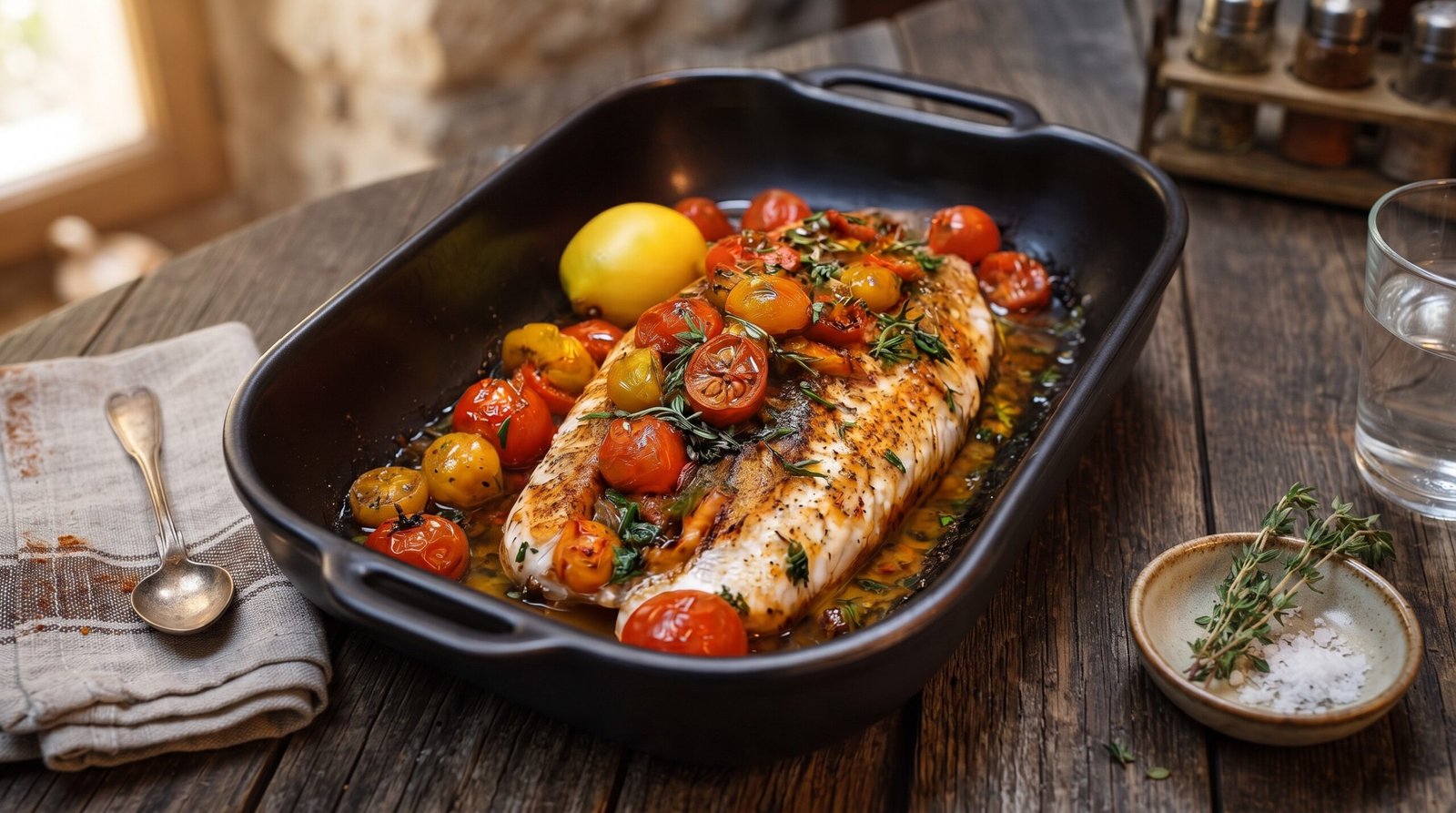
I remember the first time I stood in my kitchen after a long day, staring at a piece of white fish and wondering how to turn it into something worth eating without spending an hour at the stove. Most weeknight dinners feel like a chore, but this roasted white fish has become my go-to because it asks so little of me while delivering a dinner that actually feels special. It is one of those meals that relies on just a handful of fresh ingredients, relying on the oven to do the heavy lifting while I take a moment to breathe. The way the tomatoes burst into a jammy, concentrated sauce that coats the flaky fish is the kind of simple kitchen magic that keeps me coming back to this dish season after season. You do not need a culinary degree or a fancy kitchen setup to pull this together. It is straightforward, honest food that respects the quality of the fish and the natural sweetness of the tomatoes.
Why This Recipe Works
This dish works because it respects the delicate nature of white fish. Many people struggle with fish because they treat it like a steak, searing it at high heat until it dries out or falls apart in the pan. By using an oven roasting method at a moderate temperature, the heat surrounds the fish evenly. This ensures that the fillet stays moist and tender, reaching that opaque, flaky state exactly when the edges start to look set. The fish essentially poaches in its own juices and the savory liquid released by the tomatoes as they blister.
The flavor profile is balanced by the natural acidity of the cherry tomatoes. When tomatoes are roasted, their sugars concentrate, and their skins pop open to create a rustic, shallow sauce. This juice acts as a natural basting agent for the fish, keeping the top from drying out even without a lid. The addition of fresh thyme provides an earthy, aromatic backbone that bridges the gap between the sweetness of the tomatoes and the mild flavor of the fish. Because the thyme cooks with the fish and tomatoes, it infuses the oil and juice with a fragrant, woodsy scent that reminds me of summer gardens.
From a practical standpoint, this recipe is a lifesaver for busy evenings because the prep is minimal. You are essentially arranging items in a single dish and sliding it into the oven. There are no complex sauces to whisk or constant monitoring of temperatures. It creates its own serving dish, which means cleanup is manageable. The ingredients are accessible, and if you have leftovers, they reheat better than most seafood dishes because the tomato liquid helps retain moisture. It is a reliable, fuss-free meal that delivers consistently high-quality results for anyone who appreciates the simplicity of good ingredients cooked well.
Ingredient Notes
The Fish
You want a firm, white-fleshed fish for this recipe. Cod, halibut, or sea bass are my top choices because they hold their shape during the roasting process. Stay away from very thin, delicate fillets like sole, which might cook too quickly and turn mushy before the tomatoes have a chance to blister. If you can, look for fillets that are at least one inch thick; this thickness helps the fish cook through evenly without drying out. If you buy frozen, make sure to thaw it completely in the refrigerator overnight and pat it very dry with paper towels before placing it in the baking dish. Excess moisture on the surface of the fish will cause it to steam rather than roast, preventing that nice, concentrated flavor development.
The Tomatoes
The star of the show here is the cherry tomato. You can use standard cherry tomatoes, grape tomatoes, or a mix of heirloom varieties. The color variety adds a beautiful visual element to the pan, but the most important thing is flavor. Use tomatoes that are firm and bright, not soft or wrinkly. I like to leave them whole, as they pop in the oven and release their juices at the perfect time. If you use larger cherry tomatoes, you can halve some of them, but keeping the majority whole keeps the pan from becoming too watery.
The Aromatics and Seasoning
Thyme is essential here. Its woody notes are subtle enough that they do not overpower the fish but strong enough to stand up to the oven heat. You can use lemon thyme if you want a brighter citrus hit, but regular garden thyme is perfect. Olive oil acts as the fat base, helping conduct heat and creating the sauce along with the tomato juices. Use a good-quality extra virgin olive oil if possible, as it will be the base of your sauce. For the lemon, thin slices are best. They infuse the fish with a clean, acidic brightness as they roast. Seasoning with salt and black pepper should be done right before it goes into the oven to ensure the fish stays firm and the juices remain balanced.
| Ingredient | Amount | Notes |
|---|---|---|
| White fish fillets | 1.5 lbs | Cod, halibut, or sea bass works best |
| Cherry tomatoes | 2 cups | Keep them whole for the best sauce |
| Fresh thyme | 5-6 sprigs | Woody stems are fine |
| Lemon | 1 whole | Sliced into thin rounds |
| Extra virgin olive oil | 3 tablespoons | For drizzling over everything |
| Sea salt | 1 teaspoon | Plus more to taste |
| Black pepper | 0.5 teaspoon | Freshly cracked is best |
The Recipe
- Prep Time: 10 minutes
- Cook Time: 20 minutes
- Total Time: 30 minutes
- Servings: 3-4
- Difficulty: Easy
Equipment needed:
– A shallow baking dish or heavy-duty roasting pan (around 9×13 inches)
– A sharp knife for slicing the lemon
– A kitchen timer
– A meat thermometer to check for doneness
Step-by-Step Instructions
Step 1: Prepare the Oven and Pan
Start by preheating your oven to 400 degrees Fahrenheit. It is important to let the oven reach the full temperature before putting the fish inside, as this ensures the tomatoes begin to blister and release their juices quickly. While the oven heats, take a moment to look at your baking dish. You want one that is shallow enough so the fish is not hidden at the bottom, but large enough to hold all the tomatoes in a single layer around the fish. Do not grease the pan heavily; the olive oil you add later will do that for you.
Step 2: Arrange the Fish and Tomatoes
Pat the fish fillets dry with paper towels. Placing wet fish in the pan leads to a watery sauce that tastes more like boiled fish than roasted fish. Place the fillets in the center of the baking dish. Scatter the cherry tomatoes all around the fish, packing them close but not stacking them too high. You want the tomatoes to touch the hot surface of the pan, as this is what gives them that beautiful blistered texture. Arrange the lemon slices around the fish, tucking a few right up against the fillets.
Step 3: Seasoning the Dish
Drizzle the olive oil evenly over the fish and the tomatoes. Make sure every tomato gets a light coating of oil, which helps the skins pop and creates that savory liquid base. Sprinkle the salt and black pepper over the entire dish. Lay the fresh thyme sprigs across the top of the fish and around the tomatoes. You can tear the leaves off if you want, but keeping the sprigs intact makes it easier to remove them after cooking, and they look lovely on the serving plate.
Step 4: Roasting
Slide the baking dish into the center rack of the oven. Bake for 18 to 22 minutes. The exact time depends on the thickness of your fish fillets. You are looking for the fish to turn opaque throughout and feel firm to the touch. A kitchen thermometer inserted into the thickest part of the fillet should register 145 degrees Fahrenheit, which is the recommended internal temperature for white fish. While it cooks, you will hear the tomatoes starting to burst and sizzle. If you look into the oven, you should see the juices starting to pool at the bottom of the dish.
Step 5: Checking for Doneness
Avoid the temptation to open the oven door too often, as this drops the heat and slows down the cooking process. Once you hit the 18-minute mark, take a quick peek. If the fish flakes easily when you gently press it with a fork and the tomatoes are soft and shriveled, it is ready. If it still looks slightly translucent in the center, give it another two or three minutes. Do not worry about overcooking it slightly; the liquid from the tomatoes provides a buffer that keeps the fish from turning into shoe leather.
Step 6: Finishing Touches
Remove the dish from the oven and let it sit for about two minutes before serving. This brief rest allows the juices to settle and thicken just slightly. Use a large spatula to carefully transfer the fillets to individual plates. Spoon the blistered tomatoes, the pan juices, and the roasted lemon slices over the top of each piece. Serve immediately while everything is hot and fragrant. The pan will be very hot, so be careful when handling it.
Mistakes I Made (So You Don't Have To)
Overcrowding the Pan
My first time making this, I used a pan that was way too small. I packed the tomatoes in so tightly that they ended up steaming each other rather than blistering. The result was a pale, watery mess that lacked the intense flavor I wanted. The fix is simple: use a larger baking dish. If you do not have one, it is better to roast in two separate, smaller dishes so everything has room to breathe and heat. You want the heat to reach every tomato evenly.
Not Drying the Fish
I used to think that as long as the fish was cleaned, it was ready for the oven. I learned the hard way that moisture is the enemy of flavor. If the fish is wet, it releases water as it cooks, turning the nice olive oil and tomato juices into a thin, flavorless broth. Now, I always take a few extra seconds to pat the fish thoroughly dry with paper towels. It makes a significant difference in how the seasoning adheres and how the fish textures itself in the oven.
Using Pre-Sliced or Old Lemons
I once tried using lemons that had been sitting in my fridge for weeks. They were dry and did not release any juice, leaving the dish tasting a bit one-dimensional. Using a fresh, plump lemon is necessary to get that bright acidity that cuts through the mild flavor of the fish. Also, keep the slices thin. Thick, chunky slices of lemon do not soften properly and can become bitter when baked for 20 minutes. Thin, uniform slices look better and impart flavor more efficiently.
Skipping the Resting Time
I used to be so hungry that I would pull the dish out of the oven and serve it immediately. Because the fish is so delicate, trying to move it from the pan to the plate when it is piping hot can cause it to break apart. Giving it two minutes to rest doesn't just make the fish easier to handle; it lets the juices stabilize. If you serve it right out of the oven, the sauce is very thin and watery. That quick rest creates a slightly more cohesive, flavorful juice that coats the fish much better on the plate.
Variations and Tips
Add a Crunch
If you love a bit of texture, you can sprinkle some toasted panko breadcrumbs over the top of the fish during the last five minutes of baking. Toss the breadcrumbs with a little melted butter and garlic powder before adding them. This adds a lovely, slightly salty crunch that contrasts nicely with the flaky fish and jammy tomatoes. It is a simple addition that changes the whole feel of the meal if you are serving it to guests.
Herb Swaps
While thyme is my favorite, you can absolutely play with other herbs. Fresh oregano works beautifully if you want a slightly more Mediterranean flavor profile. If you have rosemary, use it sparingly, as it is much stronger than thyme; just one small sprig is enough. You could even add some fresh parsley at the very end after the fish comes out of the oven to add a bright, fresh green color and a clean, peppery finish.
Incorporate Olives or Capers
For those who like a bolder, saltier flavor, toss a handful of pitted Kalamata olives or a tablespoon of rinsed capers into the pan with the tomatoes. These additions bring a salty, briny kick that pairs perfectly with white fish. Just be careful with the extra salt you add, as both olives and capers can be quite salty on their own. Taste the sauce at the end and adjust your seasoning accordingly.
The Time-Saving Trick
If you are really in a rush, you can prep the entire pan of fish and tomatoes earlier in the day and keep it in the refrigerator covered with plastic wrap. When you are ready to eat, simply take it out, let it sit on the counter for about 10 minutes to take the chill off, and pop it directly into the preheated oven. This is a great way to handle busy workdays without resorting to takeout. Do not let it sit out for more than an hour, and make sure it goes straight from the fridge to the oven.
Storage and Reheating
If you have leftovers, they should be stored in the refrigerator within two hours of cooking. Place the fish and the tomatoes in an airtight container, making sure to include as much of the pan juices as possible. The juice is what keeps the fish from drying out in the fridge. You can safely store this for up to two days. I don't recommend keeping it longer than that because seafood quality drops quickly once cooked.
When you are ready to reheat, use a microwave-safe dish and cover it loosely. Reheat at 50% power in 30-second increments until the fish is steaming hot. You want to aim for an internal temperature of 165 degrees Fahrenheit to ensure it is thoroughly heated. Using a lower power setting is key; if you blast the fish on high, the edges will become tough while the center stays cold. It does not freeze well, as the texture of the white fish becomes very mushy upon thawing, so I suggest enjoying it freshly prepared or as chilled leftovers within that two-day window.
Frequently Asked Questions
What other types of fish can I use?
You can use any firm, white-fleshed fish. Tilapia is a popular, affordable option, though it is thinner and will cook slightly faster, so keep a close eye on it at the 15-minute mark. Snapper or sea bass are excellent if you want something a bit more premium. The main rule is to avoid oily fish like salmon or mackerel, as they have a stronger flavor that might clash with the delicate acidity of the roasted cherry tomatoes.
Should I cover the baking dish while it cooks?
No, do not cover it. You want the top of the fish to roast and the tomatoes to blister. Covering the dish will create a steaming environment, which makes the fish soft and prevents the tomato skins from popping properly. The open air in the oven is what gives you that beautiful, rustic look and concentrated flavor.
My tomatoes didn't blister, what happened?
This usually means your oven was not hot enough or the tomatoes were stacked too deep. Ensure your oven is fully preheated to 400 degrees Fahrenheit before putting the dish in. Also, spread the tomatoes out so they are in a single layer around the fish. If they are piled on top of each other, they will just get warm instead of developing that intense, roasted flavor.
Can I add other vegetables to the pan?
You certainly can, but keep the cooking time in mind. Zucchini rounds or thin slices of bell pepper work well because they cook in about the same time as the fish. If you want to add harder vegetables like potatoes or carrots, they will need to be pre-roasted or sliced paper-thin, otherwise they will still be raw when the fish is finished. Stick to vegetables that soften quickly for the best results.
Is it safe to eat the lemon slices?
Yes, the lemon slices are safe to eat, and once roasted, they become quite mellow. They lose a lot of their sharp, acidic bite and take on a soft, slightly caramelized texture. Many people enjoy the contrast of the soft peel with the fish. If you prefer, you can use the lemon slices just for the juice and aroma, then discard them before you serve, but there is no safety reason to remove them.
Final Thoughts
Making this roasted white fish has taught me that the best meals often come from letting good ingredients do their own work. There is something really satisfying about putting a simple, colorful dish into the oven and knowing that in twenty minutes, I will have a dinner that tastes thoughtful and fresh. It is not about overcomplicating things; it is about paying attention to the details like patting the fish dry and giving the tomatoes room to blister.
I hope this recipe finds a home in your weekly routine. Whether you are cooking for a quiet dinner at home or trying to impress without spending the whole evening tied to the stove, this dish is a reliable partner in the kitchen. Enjoy the process of roasting, the smell of the thyme filling your home, and that first bite of tender, flaky fish with the sweet, burst tomatoes. It really is that simple.