
I will never forget the chilly November afternoon that almost made me swear off making vegetable and grain soups in a single pot forever.
I was coming down with a miserable head cold, the wind was rattling the kitchen window panes, and all I wanted was a steaming, restorative bowl of Mediterranean-style vegetable soup: tender white beans, sweet coin-sliced carrots, juicy cherry tomatoes, wilted greens, and fluffy rice suspended in a fragrant, golden-red herbal broth.
I had a giant blue enameled Dutch oven sitting on the stove, and in my feverish exhaustion, I made the classic “dump-it-all” mistake.
I chopped up a bunch of root vegetables, dumped in two cans of cannellini beans, poured in a carton of broth, threw in two cups of raw long-grain white rice, turned the flame to medium, clamped down the heavy lid, and went to take a thirty-minute nap on the sofa.
When I walked back into the kitchen, the soup I had dreamed about was gone.
Instead of a brothy, vibrant vegetable soup, I was staring at a thick, gelatinous porridge. The raw rice had sucked up every drop of aromatic broth like a sponge, swelling into bloated, waterlogged grains that crushed the delicate white beans into paste.
Worse, the trapped starch had sunk straight to the bottom of the cast iron, scorching into a bitter, blackened layer that perfumed the entire pot with the smell of burnt toast. When I tried to spoon some into a bowl, it sloshed like wet cement. I ended up choking down two spoonfuls of salty, mushy rice paste and threw the rest straight into the compost bin.
That failure stung, but hearty vegetable bean soups are the soul of rustic peasant cooking. When done with care, this dish is pure comfort in a bowl: naturally creamy from the beans, sweet from slow-sweated carrots and caramelized tomatoes, bright with garlic and olive oil, and textured with separate, tender grains of rice that hold their bite.
After dozens of batches, tweaking starch management, discovering the power of a parmesan rind, and learning the exact order of vegetable additions, I cracked the sequence.
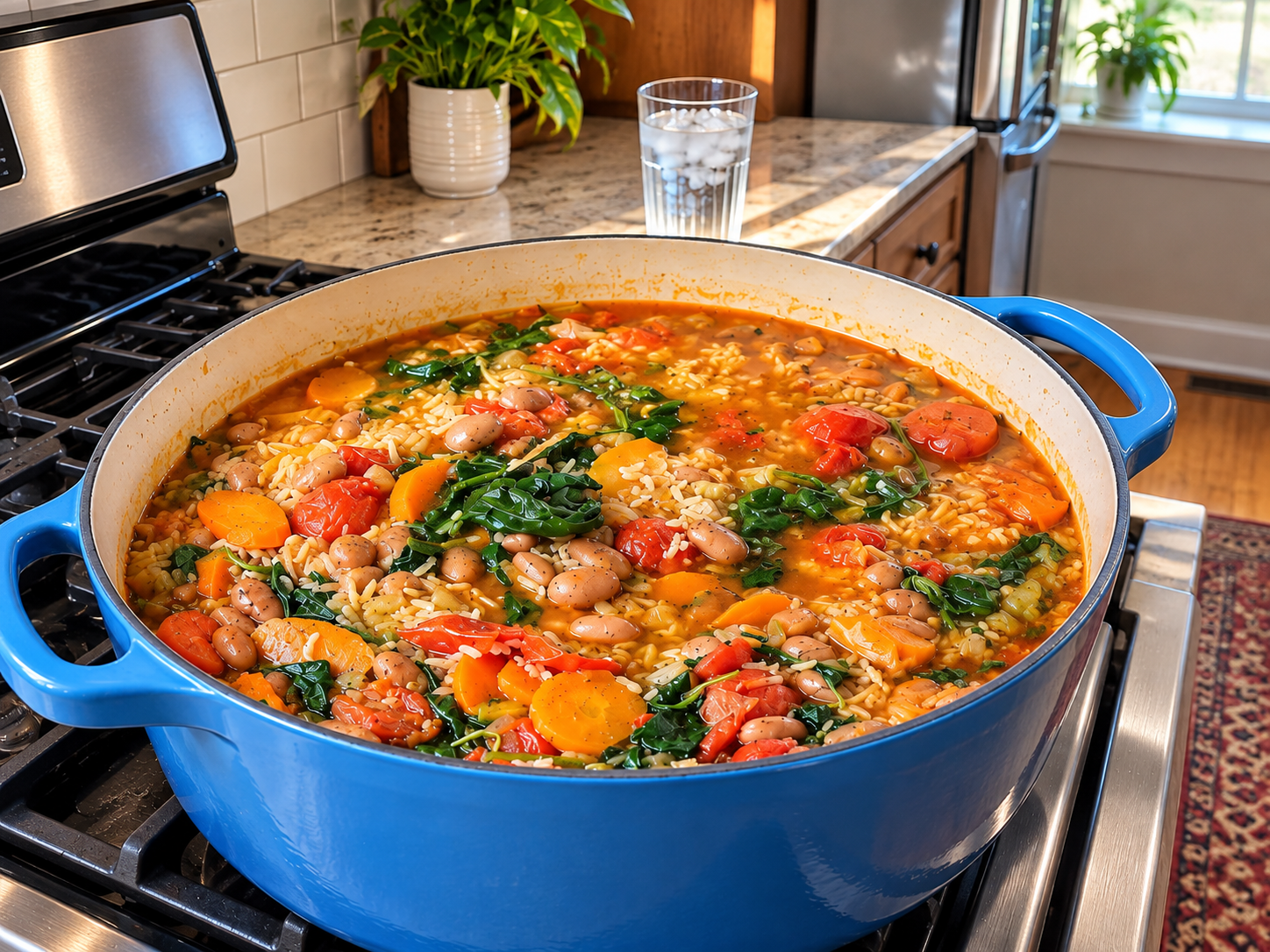
The photo above is the hard-earned victory sitting on my stovetop: a steaming, vibrant, blue Dutch oven filled with plump pinto or white beans, sweet tender carrot rounds, burst sweet tomatoes, tender wilted baby spinach, and fluffy, separate grains of rice bathed in a deeply seasoned, shimmering golden broth.
Here is how you make this nourishing pot of Tuscan-inspired vegetable, bean, and rice soup without turning it into a pot of scorched mush.
Why Rice and Bean Soups Turn into Porridge (The Starch Science)
Combining dry grains and tender legumes in a vegetable broth is a delicate balancing act of liquid absorption and heat timing. When soups like this go wrong, it usually comes down to three common traps:
1. The Raw Grain Sponge Effect
Uncooked white or brown rice drinks up roughly three times its volume in liquid. If you dump raw rice directly into a pot of soup and let it simmer without adjusting your broth volume, the rice will drink every drop of cooking liquid, leaving you with dry stew instead of soup. More importantly, as rice boils, it continuously sheds surface amylose starch into the broth. That free starch turns a clear, glistening broth cloudy and gummy. Par-cooking your rice separately—or rinsing it thoroughly and adding it only during the final 15 minutes of simmering—keeps the broth vibrant and the grains perfectly tender.
2. Adding Delicate Greens and Canned Beans Too Early
Canned beans (cannellini, great northern, or cranberry/borlotti beans) are already fully cooked. If you let them boil hard for forty minutes with tough root vegetables, their skins split and the creamy interiors dissolve completely into mush. Similarly, tender greens like baby spinach or chard turn olive-drab and stringy if boiled too long. Adding your beans and leafy greens during the last 5 to 7 minutes preserves the creamy, whole texture of the beans and the bright, emerald color of the greens.
3. Missing the Acid and Umami Boosters
Vegetable soups often taste “flat” or watery even when loaded with herbs. Vegetables alone lack the deep glutamates found in meat bones. Simmering a parmesan cheese rind directly in the broth infuses the liquid with rich, savory umami without making the soup heavy. Finishing the pot with a squeeze of fresh lemon juice or a splash of red wine vinegar wakes up the sweet carrots and rich beans, turning a boring soup into a restaurant-worthy dish.
Ingredients & Tools You’ll Need
Essential Kitchen Gear
- 6- to 7.5-Quart Enameled Cast-Iron Dutch Oven: (A heavy, wide Dutch oven—like the vibrant blue pot in the photo—distributes heat evenly across the base, preventing starches from scorching on the bottom).
- Flat Wooden Spatula: Essential for scraping the fond off the bottom of the pot while sweating the mirepoix.
- Large Soup Ladle: For serving generous portions packed with vegetables, beans, and glistening broth.
- Fine-Mesh Colander: For thoroughly rinsing the rice and canned beans.
The Ingredient Breakdown
| Component | Ingredient | Quantity | Practical Role |
| The Star Legume | Cannellini, Great Northern, or Borlotti Beans | 2 cans (15 oz each, rinsed and drained) | Creamy, tender protein backbone that holds its shape. |
| The Hearty Grain | Long-Grain White Rice (Jasmine or Basmati) | 1 cup (uncooked, thoroughly rinsed) | Adds comforting body without turning the broth gummy. |
| Sweet Root Veggie | Fresh Carrots | 3 large (peeled and sliced into ⅓-inch coins) | Brings vibrant color, sweetness, and tender bite. |
| Aromatic Base | Sweet Yellow Onion | 1 large (finely diced) | Sweated in olive oil to build the savory foundation. |
| Aromatic Base | Celery Ribs | 2 stalks (sliced) | Classic mirepoix element that adds earthy herbal backbone. |
| Aromatic Punch | Fresh Garlic | 5 cloves (thinly sliced or minced) | Delivers robust aromatic warmth throughout the broth. |
| Juicy Sweetness | Cherry or Campari Tomatoes | 1.5 cups (halved or whole) | Bursts into sweet, acidic, jammy pockets of tomato. |
| Tomato Body | Tomato Paste | 2 tbsp | Concentrated tomato umami that deepens the golden broth color. |
| The Leafy Green | Fresh Baby Spinach or Tuscan Kale | 3 cups (packed, rough chopped) | Wilted right at the end for color, iron, and fresh texture. |
| The Liquid Base | Rich Vegetable or Chicken Bone Broth | 6 to 7 cups (low-sodium) | High-quality stock ensures rich flavor down to the last spoonful. |
| The Secret Weapon | Aged Parmigiano-Reggiano Cheese Rind | 1 piece (approx. 2-3 inches) | Melts savory glutamates into the broth as it simmers. |
| Cooking Fat | Extra Virgin Olive Oil | 3 tbsp | Used to sweat the mirepoix and enrich the final broth sheen. |
| Herbal Bouquet | Fresh Thyme & Rosemary | 2 sprigs thyme, 1 small sprig rosemary | Woodsy, traditional rustic Italian aromatics. |
| Warm Spices | Smoked Paprika & Italian Herb Blend | 1 tsp Italian seasoning, ½ tsp paprika | Adds gentle warmth and a subtle amber glow to the soup. |
| Seasoning | Coarse Kosher Salt & Black Pepper | 1.5 tsp salt, 1 tsp cracked black pepper | Crucial seasoning across the vegetables, beans, and grains. |
| Acid Finish | Fresh Lemon Juice | 1 to 2 tbsp (to taste) | Stirs in right before serving to brighten the rich broth. |
Step-by-Step Cooking Instructions
Step 1: Sweat the Mirepoix Foundation
Set your large enameled Dutch oven over medium heat with 3 tablespoons of good extra virgin olive oil.
Once the oil shimmers, add the finely diced yellow onion, sliced celery, and coin-sliced carrots.
Season with 1 teaspoon of kosher salt and ½ teaspoon of coarse black pepper.
Cook gently for 8 to 10 minutes, stirring frequently with a wooden spoon.
You do not want these vegetables to brown or fry!
You want them to “sweat”—releasing their natural moisture, softening, and turning the oil fragrant and golden.
Add the minced garlic and 2 tablespoons of tomato paste.
Stir constantly for 2 minutes, coating the vegetables in the paste.
Cooking the tomato paste directly in the hot oil cooks out the raw, metallic tin flavor and caramelizes the tomato sugars into a deep, fragrant brick-red base.
Step 2: Bloom the Herbs and Add the Broth
Toss in your fresh halved cherry tomatoes, Italian seasoning, smoked paprika, fresh thyme sprigs, and the rosemary sprig.
Cook for 2 minutes until the tomato skins begin to wrinkle and soften.
Pour in the 6 to 7 cups of low-sodium vegetable or chicken broth, scraping along the bottom of the Dutch oven to ensure no caramelized tomato paste is stuck to the enamel.
Drop the parmesan cheese rind directly into the center of the pot.
Crank the burner to high and bring the liquid up to a vigorous, rolling boil.
Step 3: Rinse and Add the Rice (The Non-Mush Technique)
While the broth comes to a boil, place your 1 cup of long-grain white rice in a fine-mesh strainer.
Run cold tap water over the grains for 60 seconds, agitating with your fingers until the cloudy water draining out turns completely crystal clear.
Cook’s Real-Life Tip: That cloudy water is loose surface starch. Rinsing it away ensures your soup broth stays clean, glistening, and clear, rather than turning into thick, cloudy gruel as the rice cooks.
Once the pot is boiling, dump the rinsed rice directly into the bubbling broth.
Stir well once to ensure the grains don’t clump at the bottom.
Turn the heat down to medium-low, cover the pot partially with the lid (leaving a slight crack for steam to escape), and let it simmer gently for 12 to 14 minutes.
Give the pot a gentle stir halfway through to keep any rice grains from settling on the bottom.
Step 4: Add the Creamy Beans and Burst Tomatoes
At the 12-minute mark, check a grain of rice: it should be plump and tender with just a faint al dente bite in the center.
The carrot coins should be tender when pierced with a fork.
Now, dump your rinsed and drained white beans into the pot.
Stir gently to distribute the beans evenly among the rice and carrot rounds.
Let the soup simmer uncovered for another 4 to 5 minutes.
This allows the beans to heat through to the center and drink in the savory garlic-herb broth without overcooking or bursting their delicate skins.
Step 5: Fold in the Greens and Brighten
Turn the burner heat down to low.
Fish out the woody thyme stems, the rosemary sprig, and what remains of the melted parmesan rind (it will be soft and rubbery; discard it—its rich umami is now part of the broth).
Add the 3 cups of fresh baby spinach (or chopped kale) directly on top of the steaming soup.
Using your wooden spoon, gently fold the greens down into the hot broth.
They will wilt into tender, emerald ribbons in less than 60 seconds under the residual heat.
Turn off the burner completely.
Squeeze 1 to 2 tablespoons of fresh lemon juice into the pot and stir.
Taste the broth with a spoon: it should be vibrant, deeply savory, sweet from the carrots and burst tomatoes, and perfectly seasoned.
Add another pinch of kosher salt or cracked black pepper if needed.
Step 6: Rest and Serve
Let the Dutch oven sit off the heat for 5 minutes before ladling into bowls.
This brief rest allows the boiling turbulence to settle, giving the rice grains a chance to relax into the broth without drinking up excess liquid.
Ladle deep into the pot, scooping up equal portions of tender beans, sweet carrot coins, burst tomatoes, emerald spinach, and fluffy rice.
Finish each bowl with a drizzle of your best peppery extra virgin olive oil and a generous shower of freshly grated Parmigiano-Reggiano cheese.
Practical Troubleshooting & Common Mistakes
- “My soup got too thick and turned into risotto.”
This happens if you let the soup simmer covered for too long, or if you used sticky short-grain sushi/arborio rice. Stick with long-grain white rice, and don’t let it cook past the 14-minute mark before adding the beans and greens. If it thickens up too much, simply stir in an extra cup of warm broth or water to loosen the liquid back into a glistening soup. - “The rice burned to the bottom of the pot.”
Heavy starches naturally sink. If your burner flame is too high while the rice simmers, those grains will stick to the metal and scorch. Keep the flame at medium-low so the broth is gently murmuring, not violently boiling, and give the bottom of the pot a gentle sweep with a flat wooden spatula every five minutes. - “The beans turned to mush.”
Never add canned beans at the very beginning of a long simmer! Canned beans are already fully cooked inside the can. Adding them during the final 5 minutes of cooking ensures they stay plump, whole, and creamy.
Delicious Upgrades & Variations
- The Protein Boost (Italian Sausage): Brown half a pound of mild or hot Italian pork sausage in the olive oil before adding the onions and carrots. The rendered spiced fat creates an unforgettable base for the broth.
- The Hearty Winter Kale & Cabbage Twist: Swap the baby spinach for ribbons of hearty Lacinato (dino) kale or chopped savoy cabbage. Add the kale at the same time as the rice so its sturdy leaves have enough time to braise into velvety tenderness.
- The Pesto Swirl: Instead of plain olive oil at the end, stir a generous tablespoon of fresh basil pesto directly into each steaming bowl right before serving.
What to Serve with It & Handling Leftovers
This rustic pot is a hearty, nourishing meal all on its own, but nothing completes a bowl of Tuscan soup like great rustic accompaniments:
- Crusty Sourdough or Garlic Toast: Thick slices of toasted bread rubbed with a raw garlic clove and drizzled with olive oil are mandatory for dipping into that golden, tomato-flecked broth.
- A Peppery Arugula Salad: Baby arugula tossed with shaved parmesan, toasted pine nuts, and lemon juice provides a crisp, peppery contrast to the warm, comforting soup.
- A Dry Italian White Wine: A crisp Pinot Grigio, Vermentino, or Sauvignon Blanc cuts cleanly through the rich, starchy beans and olive oil.
The Leftover Reality: How to Reheat Properly
If you have leftover soup, store it in an airtight glass container in the refrigerator for up to 4 days.
Here is the honest truth about rice soups: as the soup sits in the fridge overnight, the cooked rice will continue to slowly absorb liquid.
By the next day, your soup will look more like a thick, rich stew.
Do not microwave it cold!
To bring it back to its original silky soup consistency:
- Scoop your desired portion into a small saucepan over medium-low heat.
- Pour in ¼ to ½ cup of water or vegetable broth to replenish the liquid absorbed by the rice.
- Heat gently, stirring occasionally, until hot and simmering.
- Finish with an extra pinch of salt and a fresh squeeze of lemon juice to revive the flavors. It will taste just as fresh, fragrant, and restorative as the day you made it.