
I will never forget the summer evening I almost ruined my first date night dinner on our back patio.
The sun was golden, the breeze through the porch doors was gorgeous, and I wanted to make something that felt effortlessly Italian: long strands of al dente spaghetti twirled with sweet, blistered cherry tomatoes, fragrant thinly sliced garlic, fresh torn basil leaves, and a glossy olive oil emulsion.
I figured it was so simple I could just wing it.
I dumped two pints of whole, cold cherry tomatoes straight into a pan of hot olive oil, tossed in pre-minced jarred garlic, boiled my pasta until it was completely soft, drained it through a colander directly into the sink, and dumped the dry noodles into the skillet.
The result was an absolute kitchen heartbreak.
The tomatoes hadn’t caramelized into a silky sauce; their skins had burst and dumped thin, watery, sour fruit juice into the pan. The jarred garlic had scorched into bitter, metallic specks. And because I had poured every drop of starchy pasta water straight down the drain, the olive oil and tomato liquid refused to combine.
When I plated the pasta, the olive oil slid to the bottom of the bowl in a greasy puddle, leaving the dry noodles naked and pale on top. My date was polite enough to twirl a few mouthfuls, but every forkful tasted either like plain oiled noodles or a mouthful of sour, acidic tomato seeds. We ended up filling up on the garlic bread and laughing it off, but I was secretly mortified.
That failure sent me down a deep rabbit hole of classic Italian pasta mechanics.
When you strip away heavy cream, canned tomato pastes, and ground meats, an authentic Spaghetti al Pomodoro Fresco has nowhere to hide. You cannot rush the caramelization of summer tomatoes, and you cannot skip the physical emulsion that turns pasta water and extra virgin olive oil into that glossy, restaurant-style coating that clings to every strand.
After dozens of test runs, perfecting the gentle blister, and learning how starch bonds fat and water, I cracked the code.
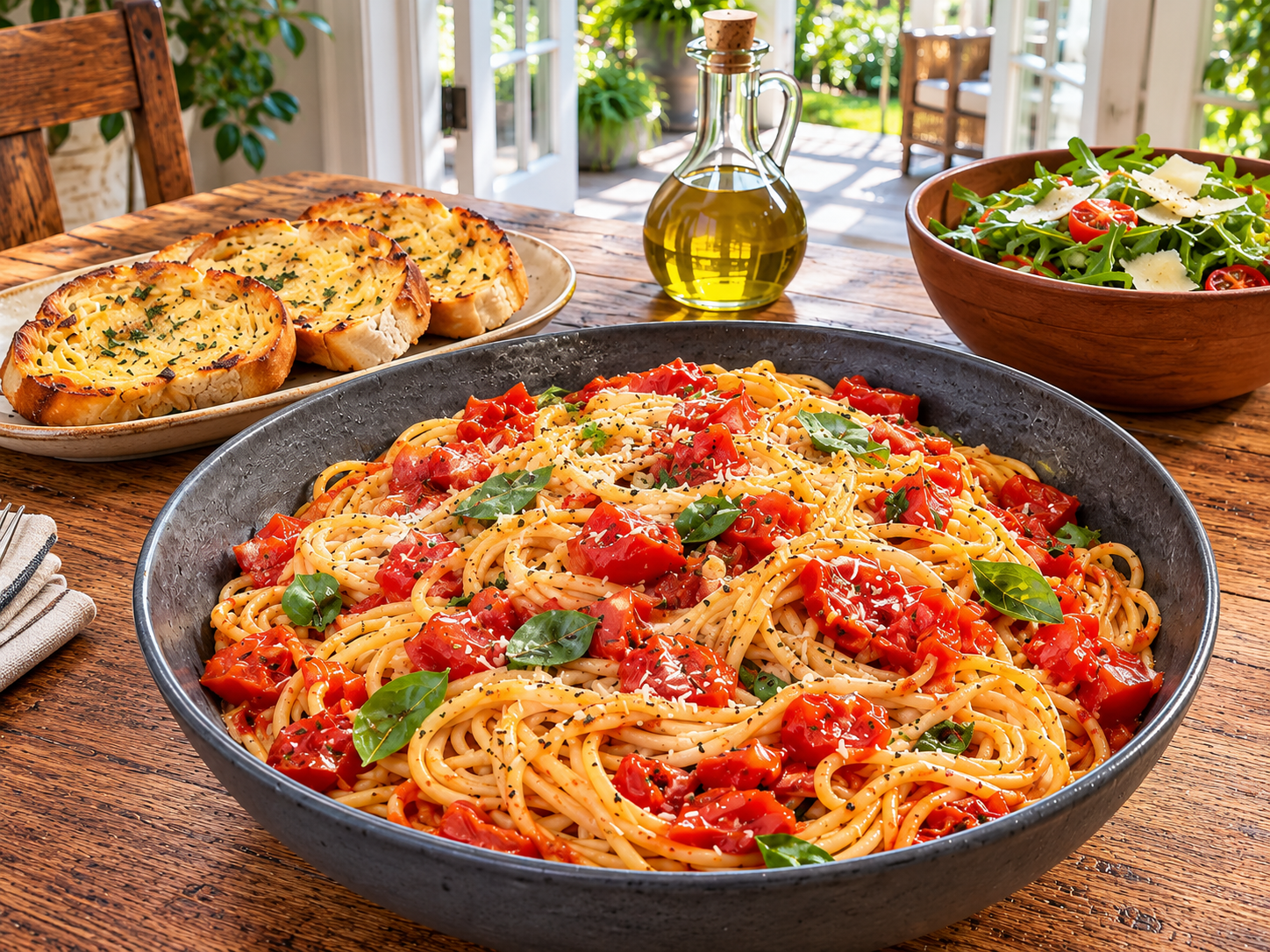
The photo above is the weekly gold standard at our dining table: a wide ceramic bowl of tender, al dente spaghetti coated in a rich, orange-tinted pan emulsion, studded with sweet, caramelized blistered tomato chunks, fresh green basil, and salty Pecorino Romano, flanked by crispy garlic crostini and an arugula side salad on the sunlit table.
Here is how you make this vibrant, restaurant-quality burst tomato pasta at home without ending up with an oily, acidic disaster.
Why Simple Fresh Tomato Pasta Often Fails (The Starch & Acid Chemistry)
When a recipe only has five or six primary ingredients, technique is everything. Here are the three reasons simple fresh tomato pastas turn into watery disappointments:
1. Draining the “Liquid Gold” Down the Sink
If you pour all your pasta cooking water down the drain, you are tossing out the single most important ingredient for your sauce. As dry wheat pasta boils, it sheds amylose starch into the salted water. When you combine that starchy, hot pasta water with hot olive oil and vigorously swirl or toss them in the skillet, the starch acts as a natural culinary bridge. It binds the oil and watery tomato juices into a creamy, glossy emulsion (a pan glaze) that hugs the noodles instead of sliding off to the bottom of the bowl.
2. Under-Cooking the Tomatoes (The Acid Trap)
Cherry and grape tomatoes are naturally sweet, but raw tomato juice is also packed with sharp citric and malic acids. If you only warm the tomatoes in oil for three minutes, their cell walls burst, but their natural sugars never have time to caramelize. Cooking whole cherry tomatoes gently in fragrant olive oil until their skins blister, wrinkle, and collapse allows their juices to reduce down into a concentrated, naturally sweet, jammy pan sauce.
3. Burning the Garlic
Pre-minced garlic from a jar or paper-thin garlic bits tossed into smoking hot oil will scorch in less than twenty seconds. Burned garlic turns bitter and ruins the sweet, fresh flavor of the entire pan. The secret is gently sweating thinly sliced fresh garlic cloves in warm (not smoking) extra virgin olive oil over medium-low heat, letting the allium infuse the oil with perfume without ever turning dark brown.
Ingredients & Kitchen Tools
Essential Gear
- 12-Inch Wide Skillet or Sauté Pan: (Stainless steel or heavy enameled cast iron gives all the tomatoes enough surface contact to blister without steaming each other).
- 6- to 8-Quart Large Stockpot: For boiling the spaghetti in ample salted water.
- Metal Pasta Tongs or Spider Strainer: For transferring the al dente noodles directly from the boiling water into the skillet.
- Large Wide Serving Bowl: (A rustic, wide ceramic pasta bowl, like the dark bowl pictured on the table, keeps the pasta warm and makes twirling effortless).
The Ingredient Breakdown
| Component | Ingredient | Quantity | Practical Role |
| The Star Pasta | High-Quality Bronze-Die Spaghetti | 1 lb (450g) | Bronze-cut pasta has a rough, chalky surface that grabs onto sauce. |
| The Sweet Fruit | Ripe Cherry, Grape, or Campari Tomatoes | 2 lbs (approx. 4 cups, whole) | Blisters into sweet, jammy, concentrated pockets of sauce. |
| The Emulsion Fat | High-Quality Extra Virgin Olive Oil | ½ cup (divided) | Infuses with garlic, coats the noodles, and forms the sauce base. |
| Aromatic Backbone | Fresh Garlic Cloves | 6 to 7 cloves (thinly sliced) | Sweetens in the olive oil to build authentic Italian aroma. |
| Gentle Heat | Crushed Red Pepper Flakes | ¼ to ½ tsp (to taste) | Adds a subtle warmth at the back of the throat. |
| The Secret Binder | Starchy Pasta Water | 1 to 1.5 cups (reserved while boiling) | Emulsifies the olive oil and tomato juices into a glossy glaze. |
| Herbal Freshness | Fresh Sweet Basil Leaves | 1 cup (packed, hand-torn) | Stirred in off the heat so the floral oils don’t turn bitter. |
| Salty Finish | Fresh Parmigiano-Reggiano or Pecorino | ¾ cup (freshly grated) | Adds salty, nutty sharpness that seasons every forkful. |
| Finishing Touch | Flaky Sea Salt & Coarse Black Pepper | 1.5 tsp coarse salt, 1 tsp cracked pepper | Balances the sweet tomato juices and rich olive oil. |
| Pasta Water Salt | Coarse Kosher Salt | 2 tbsp (for the boiling water) | Seasons the pasta strands from the core outward. |
Step-by-Step Cooking Instructions
Step 1: Infuse the Olive Oil and Garlic
Place your 12-inch wide skillet over medium-low heat.
Pour in ⅓ cup of the extra virgin olive oil (reserve the remaining splash for finishing).
Add your thinly sliced fresh garlic cloves and the crushed red pepper flakes into the cold oil.
Let the garlic slowly warm up with the oil over 3 to 4 minutes.
You want to see tiny, gentle bubbles forming around the garlic edges.
The moment the garlic turns pale blonde and smells intoxicatingly fragrant, do not let it brown any further! Swirl the pan to distribute the infused oil.
Step 2: Blister the Cherry Tomatoes
Crank the skillet heat up to medium-high.
Add your 2 pounds of whole, dry cherry tomatoes directly into the garlic-scented oil.
Season with 1 teaspoon of coarse kosher salt and ½ teaspoon of freshly cracked black pepper.
Let the tomatoes sit untouched for 2 to 3 minutes so the bottoms develop blistered, blistered brown spots against the hot pan.
Give the skillet a firm shake.
Continue cooking for another 6 to 8 minutes, stirring occasionally with a wooden spoon.
As the heat builds, the tomatoes will begin popping and hissing.
Use the back of your wooden spoon or a potato masher to press down gently on about two-thirds of the tomatoes, crushing them so their sweet juices release and mingle with the warm olive oil.
Leave the remaining one-third of the tomatoes whole or in large chunks for juicy texture in the final bowl (just like the gorgeous, chunky texture seen in the reference photo).
Turn the heat down to low and let the tomato sauce simmer gently into a glossy, thick compote while you cook the pasta.
Step 3: Boil the Pasta to True “Al Dente”
Bring your large stockpot of water to a vigorous, rolling boil over high heat.
Add the 2 tablespoons of coarse kosher salt. (The water should taste pleasantly seasoned, like clean ocean water; this is your only chance to flavor the inside of the pasta strands).
Drop the 1 pound of spaghetti into the boiling water.
Stir immediately with tongs to prevent the strands from sticking together.
Look at the cooking time printed on the pasta box: set your kitchen timer for 2 minutes LESS than the lowest recommended time.
Cook’s Real-Life Tip: The pasta must finish cooking directly inside the tomato sauce, not in the water! If you cook the spaghetti until fully soft in the water, it will turn mushy and break apart when tossed in the skillet.
Step 4: Capture the Starchy Pasta Water
When your timer rings, dip a heatproof measuring cup or mug into the boiling pasta pot and scoop out at least 1.5 cups of the cloudy, bubbling pasta water.
Set it right next to your skillet. Do not dump the water out!
Step 5: The “Mantecatura” (The Glossy Pan Emulsion)
Turn the heat under your tomato skillet back up to medium-high.
Using your metal tongs, lift the dripping-wet al dente spaghetti directly out of the boiling stockpot and transfer it straight into the bubbling tomato pan.
Pour in ½ cup of the reserved starchy pasta water immediately.
Now comes the magic move: Using your tongs in one hand and the skillet handle in the other, vigorously toss and swirl the spaghetti strands through the bubbling tomato sauce and hot starchy water.
Keep the pasta moving rapidly for 2 full minutes.
As the noodles absorb the liquid and cook to perfect al dente tenderness, the starch from the pasta water, the pectin from the reduced tomatoes, and the olive oil will emulsify.
The sauce will transform from a thin, watery liquid into a luxurious, shiny, orange-hued glaze that clings tightly to every single strand of spaghetti.
If the pan starts looking too dry, splash in another 2 to 3 tablespoons of hot pasta water until the texture is silky and fluid.
Step 6: The Off-Heat Cheese and Basil Finish
Turn the burner off completely and slide the skillet off the heat source.
Important Cook’s Rule: Never add fresh basil or delicate hard cheeses over direct boiling heat! Boiling heat bruises fresh basil (turning it black and bitter) and causes aged cheese to seize into rubbery clumps.
Add your hand-torn fresh sweet basil leaves directly into the warm pasta.
Sprinkle half of the freshly grated Parmigiano-Reggiano or Pecorino Romano over the noodles.
Drizzle the remaining 2 tablespoons of fresh, peppery extra virgin olive oil over the top.
Toss the spaghetti gently one last time with your tongs. The cheese will melt into the emulsified sauce, giving it body and a rich, savory backbone.
Step 7: Plating and Table Presentation
Transfer the steaming spaghetti into your wide, shallow serving bowl.
Use your tongs to twirl the pasta into generous nests, and spoon any sweet, chunky burst tomatoes that settled at the bottom of the skillet right over the top (exactly like the beautiful bowl pictured on the wooden table).
Scatter a few whole fresh baby basil leaves and a final dusting of grated cheese and cracked black pepper over the dish.
Bring the bowl straight to the table alongside a basket of toasted garlic bread, a fresh green salad, and a bottle of good olive oil for drizzling.
Practical Troubleshooting & Common Mistakes
- “My sauce stayed watery and separated from the oil.”
This happens if you didn’t cook down the tomatoes long enough in Step 2, or if you failed to toss the pasta vigorously over medium-high heat with pasta water. The emulsion requires active mechanical agitation (tossing/stirring) and heat to bond the water, tomato juices, and olive oil into a silky coating. - “The pasta was dry and sticky by the time we sat down.”
Pasta continues to drink up moisture even after leaving the skillet. If you let the pasta sit in the pan for ten minutes before serving, it will drink all the glaze. Always plate immediately, and keep a half-cup of hot pasta water on hand to splash in and loosen the noodles if they begin to tighten. - “The tomatoes taste too sour or sharp.”
If your grocery store tomatoes were picked under-ripe, they will carry excess citric acid. While simmering in Step 2, taste a spoonful of the crushed tomato juices: if they taste sharp, stir in a tiny pinch of granulated sugar (about ¼ teaspoon) or a tablespoon of unsalted butter to mellow the acidity naturally.
The Complete Patio Dinner Menu
This vibrant pasta is light, fragrant, and celebrates fresh ingredients, making it the ideal centerpiece for a relaxed dinner with family and friends:
- Toasted Garlic Herb Crostini: Thick slices of country Italian bread rubbed with raw garlic, brushed with olive oil, and toasted until golden and crisp (just like the plate in the background).
- A Peppery Arugula Salad: Baby arugula, halved cherry tomatoes, and shaved parmesan tossed in fresh lemon juice and sea salt to provide a clean, crunchy, acidic counterpoint.
- A Crisp, Mineral-Driven White Wine: A chilled glass of Italian Pinot Grigio, Vermentino, or Sauvignon Blanc cuts through the olive oil and highlights the sweet tomatoes.
Handling Leftovers (The Stovetop Reheat Trick)
Fresh tomato pasta is always best eaten straight from the pan, but leftovers keep well in an airtight glass container in the refrigerator for up to 3 days.
Do not reheat leftover pasta in the microwave on high power! The microwave will break the delicate olive oil emulsion, leaving you with dry noodles in a pool of separated grease.
Instead, use the classic Italian skillet technique:
- Melt a teaspoon of butter or a splash of olive oil in a nonstick skillet over medium-low heat.
- Add your cold leftover spaghetti.
- Splash in 2 to 3 tablespoons of water or chicken broth.
- Toss gently with tongs for 3 to 4 minutes as the pan warms up.
The water will recreate steam, reviving the starchy emulsion and restoring that glossy, restaurant-style coating without turning your noodles mushy. Top with a fresh pinch of sea salt, extra cheese, and fresh basil for a next-day lunch that tastes just as magical as night one.