
I will never forget the date-night dinner four years ago that nearly caused me to retire salmon from my kitchen permanently.
I had been daydreaming all afternoon about a restaurant-caliber seafood centerpiece: thick, center-cut Atlantic salmon fillets seared to a golden, crackling crisp on the outside, flaking gently into tender coral ribbons inside, and stuffed with a rich, garlicky sauteed spinach filling bound with molten, gooey cheese. In my mind, I was going to set a pristine white platter on the table, slice into the fillet, and watch rich, melted white cheese cascade into a pool of glistening lemon butter pan sauce.
I figured it was as simple as cutting a slit in raw fish, cramming it full of ingredients, and throwing it into a hot pan.
I thawed a bag of frozen chopped spinach, gave it a half-hearted squeeze with my bare hands, stirred in cold shredded mozzarella, stuffed the icy mixture into raw salmon fillets, and laid them straight into a screaming-hot nonstick skillet.
Within ninety seconds, dinner turned into an absolute nightmare.
The wet spinach dumped a massive wave of green liquid directly into the skillet. The intense steam completely suffocated the sear, turning the exterior of the fish into a pale, rubbery grey skin instead of a golden crust. Worse yet, because the cold cheese and wet spinach took forever to warm up in the middle, I had to keep the fillets in the pan far too long.
White albumin (coagulated protein) began violently oozing out of the fish like white foam, while the cheese liquified and leaked straight into the watery pan, scorching into burnt dairy residue. When my partner cut into their fillet with a fork, the meat was dry, chalky, and overcooked on the edges, while the center was a soggy, lukewarm sludge. We ended up eating scrambled eggs and toast at 9:00 PM, and my kitchen smelled of burnt fish and scorched dairy for two full days.
That flop drove me to master seafood moisture mechanics.
Salmon is a delicate, fatty fish with tender muscle sheets called myotomes. It requires high radiant heat for a fast, crispy exterior, but its proteins tighten and dry out the moment the internal temperature passes 135°F. Spinach, on the other hand, is practically a sponge full of water. If you don’t manage the moisture in the filling, you are effectively boiling your fish from the inside out.
The secret comes down to three repeatable kitchen rules: sauteing fresh baby spinach and wringing it bone-dry in a clean kitchen towel, creating an insulated cheese pocket using a blend of cream cheese and low-moisture mozzarella, and using a high-heat pan sear finished with a gentle basting of garlic lemon butter.
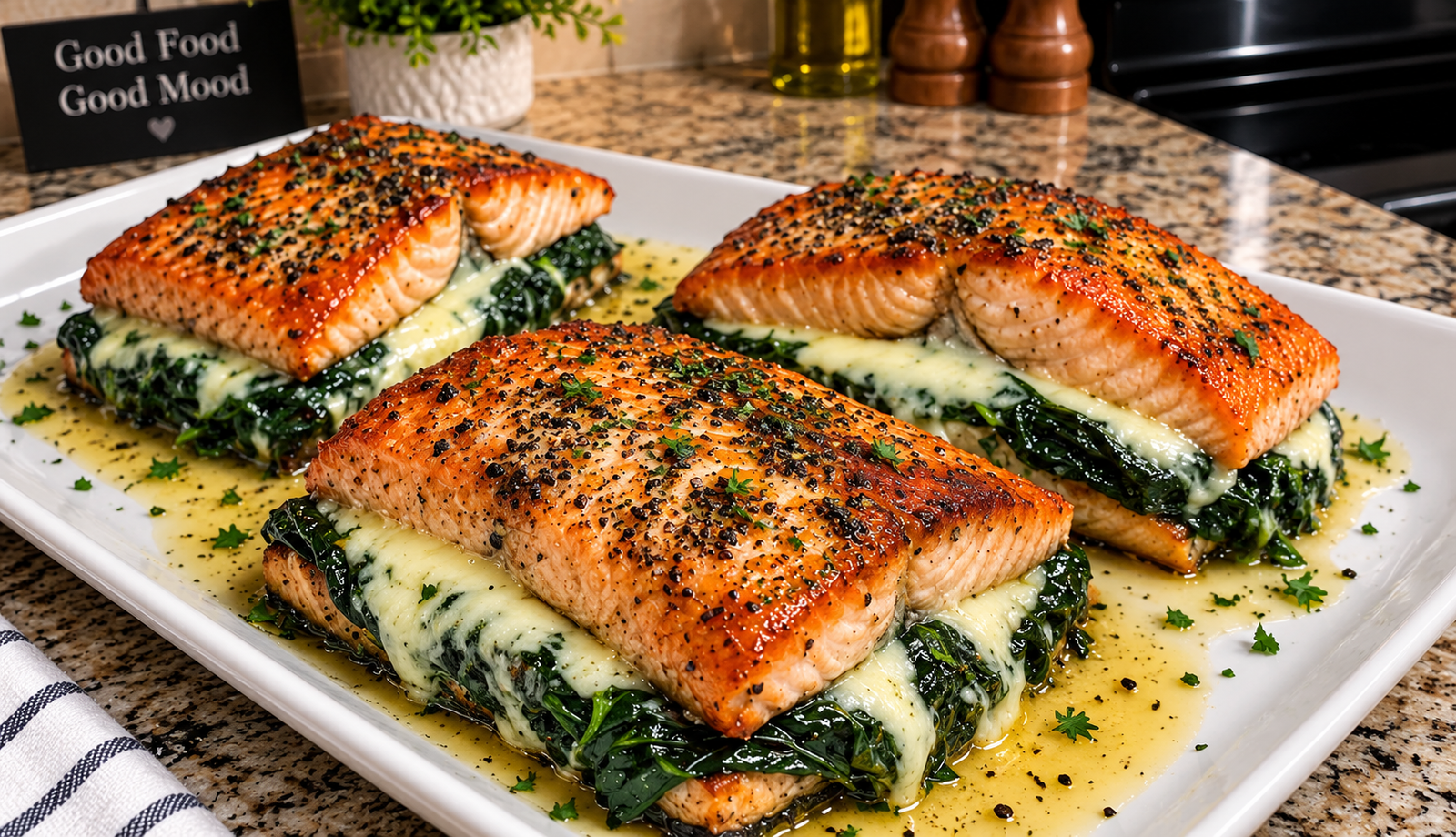
The photo above is the hard-won standard sitting on my granite counter: three thick, perfectly seared stuffed salmon fillets served on a white platter. Each fillet boasts a deeply caramelized, black-pepper-crusted crust, stuffed with vibrant emerald garlic spinach and molten, stretchy melted cheese oozing gracefully into a sizzling pool of lemon-garlic butter sauce.
Here is how you recreate these restaurant-quality Pan-Seared Spinach and Cheese Stuffed Salmon Fillets at home without ever facing a soggy center or dry, chalky fish again.
Why Stuffed Salmon Goes Wrong (The Protein & Water Science)
Salmon and cheese may seem like an unconventional pair to kitchen traditionalists, but when executed with proper technique, the rich dairy fat coats the flaky fish fibers into pure luxury. Here is why standard attempts fail:
1. The Spinach Sponge Trap
Fresh spinach is over 91% water by weight. If you stuff raw spinach or insufficiently drained cooked spinach into a fillet, the heat of the pan forces that water out instantly. That moisture turns to trapped steam inside the pocket, boiling the interior salmon flesh and washing away your seasonings. Sauteing the spinach with garlic first, letting it cool, and wringing it out inside a clean flour-sack towel or paper towels until not a single drop of green liquid remains ensures your filling stays rich and creamy rather than soupy.
2. The Cheese Separation and Leakage
High-moisture cheeses (like fresh mozzarella in brine) or cheap pre-shredded cheeses coated in potato starch will split under skillet heat. The milk fat separates into an oily yellow puddle, while the starches turn grainy. Using a combination of softened cream cheese (which acts as a high-fat stabilizer) and block low-moisture mozzarella or fontina creates a velvety binder that holds the spinach together and melts into luscious, stretchy ribbons without blowing out of the fillet.
3. The Albumin Eruption (Overcooking)
Have you ever noticed white, spongy stuff bubbling out of salmon as it cooks? That is albumin—a soluble protein liquid inside the muscle fibers. When salmon is subjected to sudden, violent heat or cooked past medium doneness, the muscle fibers contract like clenched fists, squeezing out the albumin, which then coagulates on the surface. Searing the exterior quickly, basting with warm butter, and pulling the salmon off the heat when the internal temperature reads 125°F to 130°F allows carryover heat to finish the fish gently, keeping the flesh moist, flaky, and completely free of rubbery white curd.
Ingredients & Tools You’ll Need
Essential Kitchen Gear
- 12-Inch Heavy Cast-Iron or Stainless Steel Skillet: Cast iron holds heat evenly, allowing you to achieve that deep, crackling golden-mahogany crust without dropping pan temperature.
- Razor-Sharp Boning or Paring Knife: Essential for carving a deep, clean horizontal pocket into the side of the fillet without cutting through the back or sides.
- Thin Metal Fish Spatula: A flexible slotted fish spatula is non-negotiable for sliding under delicate salmon fillets and flipping them gently without tearing the seared crust.
- Clean Flour-Sack Towel or Cheesecloth: For squeezing every drop of water out of the cooked spinach.
- Digital Instant-Read Meat Thermometer: (A ThermoWorks ThermoPop or similar probe ensures you hit the exact flaking point without overcooking).
The Ingredient Breakdown
| Component | Ingredient | Quantity | Practical Role |
| The Star Fish | Center-Cut Fresh Salmon Fillets (Skin-On or Skinless) | 3 large fillets (approx. 7–8 oz each, 1.5 inches thick) | Thick center-cut portions provide enough height to carve deep pockets. |
| The Green Core | Fresh Baby Spinach | 5 cups (approx. 5 oz raw) | Sauteed and wrung dry; brings earthy balance and vibrant color. |
| The Cheese Binder | Full-Fat Cream Cheese (Softened) | 3 tbsp | The culinary stabilizer; keeps the stuffing cohesive and prevents blowouts. |
| The Molten Melt | Whole-Milk Low-Moisture Mozzarella or Fontina | ¾ cup (freshly shredded) | Melts into that gooey, stretchy white mantle seen cascading from the fillets. |
| The Sharp Umami | Aged Parmigiano-Reggiano | ¼ cup (freshly grated) | Adds salty, nutty depth to cut through the mild spinach. |
| Aromatic Core | Fresh Garlic Cloves | 5 cloves (minced, divided) | 2 cloves for the spinach filling, 3 cloves for the lemon butter pan sauce. |
| The Searing Fat | High-Smoke-Point Oil | 2 tbsp (avocado or olive oil) | Promotes a blistering, golden crust without smoking. |
| The Sauce Engine | High-Fat Unsalted European Butter | 4 tbsp (half a stick) | Melts with lemon and garlic to create the rich pan jus at the bottom. |
| Acid Balance | Fresh Lemon Juice & Zest | 2 tbsp juice, ½ tsp zest | Cuts through the heavy butterfat and brightens the seafood. |
| Dry Fish Rub | Garlic Powder, Onion Powder, Smoked Paprika | 1 tsp garlic powder, ½ tsp onion powder, ½ tsp paprika | Builds a savory, caramelized bark on the salmon surface. |
| Base Seasoning | Coarse Kosher Salt & Coarse Black Pepper | 1.5 tsp salt, 1.5 tsp coarse cracked black pepper | Creates that pebbled, savory black pepper crust visible on the fillets. |
| Fresh Finish | Fresh Italian Flat-Leaf Parsley or Dill | 2 tbsp (finely chopped) | Sprinkled over the hot fish and butter sauce for herbal lift. |
Step-by-Step Cooking Instructions
Step 1: Cook and Wring the Garlic Spinach Filling
Place a medium skillet over medium heat on your stovetop with 1 teaspoon of olive oil.
Add 2 cloves of minced fresh garlic and cook for 30 seconds until fragrant.
Add the 5 cups of fresh baby spinach in two batches, tossing with tongs until completely wilted—about 2 minutes.
Transfer the wilted spinach to a plate and let it cool for 5 minutes.
Now comes the critical step: transfer the cooled spinach onto the center of a clean flour-sack towel, cheesecloth, or a triple layer of heavy paper towels.
Gather the corners of the cloth to form a bundle, twist the top tightly, and squeeze with both hands over your sink.
Keep twisting and squeezing until no more dark green water drips out.
You should be left with a dense, compact, bone-dry puck of cooked spinach.
Roughly chop the dried spinach on a cutting board.
In a small mixing bowl, combine the chopped spinach, 3 tablespoons of softened cream cheese, ¾ cup of shredded mozzarella, ¼ cup of freshly grated parmesan, a pinch of kosher salt, and a pinch of black pepper.
Mash and stir with a fork until you have a thick, cohesive, creamy spinach-cheese filling.
Divide into three equal portions.
Step 2: Prep and Pocket the Salmon Fillets
Take your three center-cut salmon fillets out of the refrigerator 15 to 20 minutes before cooking to take the chill off.
Pat each fillet completely bone-dry on all sides with paper towels.
Moisture on the fish will steam in the pan rather than developing that deep golden sear.
Lay one salmon fillet flat on your cutting board.
Place your non-dominant hand flat across the top of the fillet to steady it.
Using your sharp boning or paring knife, slice a horizontal pocket into the thickest side edge of the salmon fillet, cutting roughly three-quarters of the way through the flesh.
Cook’s Real-Life Tip: Do not cut all the way through to the back, and do not cut through the ends! You want a deep envelope or cavern that cradles the stuffing securely. Repeat carefully with the remaining two fillets.
Season the exterior of the salmon fillets generously with 1 teaspoon of coarse kosher salt, coarse black pepper, garlic powder, onion powder, and smoked paprika.
Be sure to press the coarse black pepper into the top flesh to build that rustic steakhouse crust shown in the photo.
Step 3: Stuff the Salmon Pockets
Using a spoon or clean fingers, pack one portion of the spinach-cheese mixture deep into the interior pocket of each salmon fillet.
Press the filling firmly toward the back of the pocket so it fills the cavity completely from end to end.
Smooth the exposed filling along the seam edge so it sits flush with the salmon flesh.
A tight, well-packed pocket keeps the cheese anchored inside during the sear.
Step 4: The Searing Sizzle
Set your 12-inch heavy cast-iron skillet over medium-high heat on the stovetop.
Add the 2 tablespoons of high-smoke-point oil.
Let the skillet heat up for 3 full minutes until the oil is shimmering and you see a faint wisp of heat rising from the pan.
Using your metal fish spatula, gently lay the three stuffed salmon fillets into the skillet, presentation-side (top flesh side) down first.
You should hear an immediate, confident, loud sizzle.
The Golden Rule of Searing Salmon: Leave them completely untouched for 3.5 to 4 minutes!
Do not nudge, shake, or slide the fillets.
Let the high radiant heat of the cast iron caramelize the fish proteins and toast the cracked black pepper into a deep, mahogany crust.
If you try to lift the fish too early, the delicate flesh will stick and tear. When the sear is complete, the fish will release naturally from the pan.
Slide your thin fish spatula carefully underneath the first fillet, supporting the top with a fork or tongs, and gently flip the fillet over onto its back.
Repeat with the remaining fillets.
You should see a glorious, golden-brown crust flecked with cracked pepper across the top of every piece.
Step 5: Baste with Garlic Lemon Butter
Turn the skillet heat down to medium-low.
Drop the 4 tablespoons of unsalted butter directly into the skillet between the salmon fillets.
Toss in the remaining 3 cloves of minced garlic, the ½ teaspoon of fresh lemon zest, and 2 tablespoons of fresh lemon juice.
As the butter melts and foams, tilt the skillet slightly toward you.
Use a large metal spoon to scoop up the bubbling, foaming garlic-lemon butter, spooning it continuously over the tops and into the stuffed seams of the salmon fillets for 2 to 3 minutes.
Watch the stuffing: the mozzarella and cream cheese will begin to melt, turning glossy, gooey, and slowly oozing past the edges of the salmon into the butter bath (exactly like the irresistible melt shown in the reference photo).
Insert your digital instant-read thermometer into the salmon flesh just above the filling:
- Target Reading: 125°F to 130°F (52°C to 54°C) for a tender, flaky medium.
Remove the skillet from the heat source immediately.
Step 6: Rest and Platter Presentation
Let the salmon rest directly in the warm skillet off the heat for 3 full minutes.
During this short pause:
- Carryover heat gently finishes cooking the salmon to an ideal, succulent 135°F.
- The relaxed muscle fibers reabsorb their internal juices, guaranteeing a buttery, flaky texture.
- The melted cheese stabilizes from runny liquid into a rich, velvety blanket that holds its shape when plated.
Slide your thin metal fish spatula under each stuffed fillet and transfer them side-by-side onto a wide, heated white serving platter (as pictured in the reference photo).
Spoon the remaining bubbling lemon-garlic pan butter from the skillet all around the base of the salmon fillets.
Scatter fresh chopped Italian flat-leaf parsley and a light pinch of flaky sea salt across the golden crusts.
Serve hot straight to the table!
Practical Troubleshooting & Common Mistakes
- “My salmon stuck to the pan and tore when I flipped it.”
This happens if your pan wasn’t hot enough, or if the fish surface was damp. Make sure the skillet is shimmering hot before adding the fish, pat the fillets bone-dry with paper towels, and don’t try to flip until the natural crust releases from the metal. - “All the cheese melted out and burned in the skillet.”
This is the hallmark of using high-moisture fresh mozzarella or cutting the pocket too wide. Always use low-moisture block mozzarella combined with softened cream cheese, and ensure your knife cuts a pocket rather than slicing all the way through the sides. - “The salmon turned chalky and white foam bubbled out.”
You overcooked the fish! That white foam is albumin escaping from contracting muscle fibers. Pull the salmon when your thermometer registers 125°F to 130°F, and let the 3-minute rest bring it up to safe, flaky perfection.
Delicious Upgrades & Variations
While this garlic spinach and mozzarella combination is restaurant-grade comfort food, you can easily tweak the flavors to your preference:
- The Sun-Dried Tomato & Feta Twist: Fold 2 tablespoons of finely chopped oil-packed sun-dried tomatoes and 2 tablespoons of crumbled feta into the spinach-cream cheese mixture for a tangy Mediterranean punch.
- The Cajun Crab-Stuffed Salmon: Add 4 ounces of lump crab meat, a teaspoon of Cajun seasoning, and a dash of hot sauce to the cheese filling for an upscale steakhouse-style seafood feast.
- The Crispy Panko Crust: Press a tablespoon of pre-toasted garlic panko breadcrumbs over the exposed cheese seam right before serving to add an extra layer of shatteringly crisp texture.
What to Serve with Stuffed Salmon
This dish is rich, savory, and rests in a pool of bright lemon-garlic butter sauce, making it the perfect partner for simple, elegant sides:
- Garlic Butter Jasmine Rice or Quinoa: Fluffy rice drinks in every drop of the lemony pan butter pooling on the platter.
- Roasted Asparagus or Charred Green Beans: Tossed in olive oil, sea salt, and a squeeze of fresh lemon juice, snappy green vegetables offer a crisp, clean counterpoint to the rich, cheesy filling.
- Creamy Garlic Mashed Cauliflower or Potatoes: A velvety mound of mashed potatoes or cauliflower creates a luxurious bed for the seared fish.
- A Crisp, High-Acid White Wine: Pour a chilled glass of Sauvignon Blanc, Pinot Grigio, or an un-oaked Chardonnay. The citrus acidity in the wine cuts cleanly through the rich salmon fat and melted cheese.
Storing and Reheating Leftovers
Salmon is undeniably at its peak fresh out of the skillet, but leftovers can still be enjoyed without ruining the texture.
Store any leftover stuffed fillets in an airtight glass container in the refrigerator for up to 2 days.
Never reheat stuffed salmon in the microwave! The microwave’s intense, uneven radiation will cook the delicate fish past its moisture threshold in seconds, turning the salmon rubbery and causing the cheese to separate into clear grease.
Instead, use your Toaster Oven or Conventional Oven:
- Preheat your oven to 325°F (165°C).
- Place the leftover stuffed salmon on a small rimmed baking sheet lined with foil.
- Spoon a tablespoon of water or broth around the base to generate gentle steam.
- Cover loosely with aluminum foil and warm for 8 to 10 minutes just until the fish is warm to the touch and the cheese softens.
- Remove the foil for the final 60 seconds to refresh the seared crust.
The salmon will stay moist and tender, the garlic spinach and cheese center will melt back into luscious creaminess, and you get to enjoy an elegant seafood dinner all over again with zero effort!