
I will never forget the birthday dinner party four years back that nearly caused me to swear off making stuffed pasta at home for good.
I had been planning what was supposed to be the ultimate Italian-coastal showstopper: tender lasagna noodles wrapped around a rich, garlicky ricotta and herb filling, loaded with plump, succulent jumbo shrimp, topped with a velvety Alfredo glaze, and blanketed under a bubbling, golden-blistered crust of melted mozzarella and parmesan. In my mind, I was going to carry a steaming white ceramic baker straight to the table, and everyone would marvel at the neat, picture-perfect pasta rolls showing pink, juicy shrimp peeking out from the ends.
I figured it was as simple as boiling noodles, tossing everything together, and baking it.
I bought a bag of frozen, pre-cooked salad shrimp, thawed them quickly in warm water, gave them a careless stir into watery supermarket tub ricotta, rolled them raw inside limp lasagna sheets, buried the whole dish in a heavy jar of store-bought Alfredo sauce, and baked it in a 375°F oven for forty minutes.
When the timer went off, dinner was an unmitigated culinary catastrophe.
The wet, watery ricotta combined with the thawing shrimp had dumped nearly two cups of thin, milky liquid straight into the bottom of the dish. Instead of holding their tight, elegant cylindrical shapes, the lasagna rolls had completely collapsed and unraveled into a soggy pasta swamp.
Worse, because the shrimp had baked inside the casserole for forty minutes, they had shriveled into dense, rubbery pencil-eraser pellets that squeaked horribly between your teeth. The top layer of cheese was pale and greasy, while the bottoms of the pasta sheets were mushy and falling apart. My friends politely ate half a roll with forks while quietly pushing the rubbery shrimp to the rims of their plates. I spent the remainder of the evening scrubbing burnt, curdled dairy scum off my ceramic dish, feeling utterly humiliated by seventy dollars’ worth of wasted ingredients.
That disaster forced me to take a hard look at the thermodynamics of delicate seafood pasta.
Shrimp have virtually zero fat and are composed of delicate proteins that seize into rubber past 140°F. Ricotta cheese is notorious for holding excess whey, which turns into an unappealing puddle under oven heat. And lasagna noodles need to be cooked just past firm so they can absorb sauce without disintegrating.
The secret comes down to three repeatable kitchen rules: draining whole-milk ricotta through cheesecloth and binding it with an egg and parmesan, par-searing large colossal shrimp in garlic butter for just sixty seconds before rolling, and using a high-heat, two-stage bake under a direct broiler so the cheese blisters into a golden crown while the shrimp finish to tender, juicy perfection in under fifteen minutes.
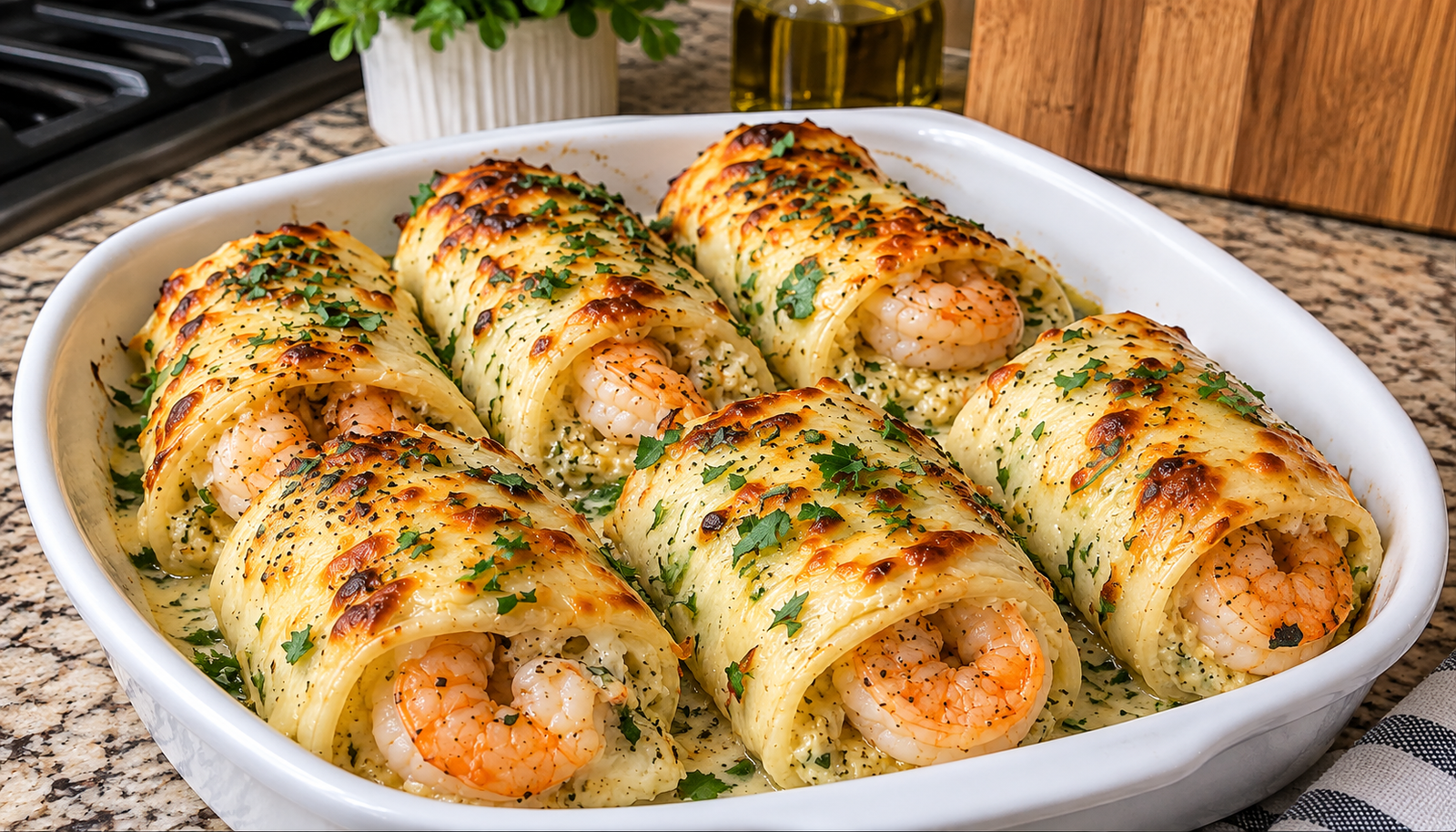
The photo above is the hard-won standard on my granite counter: six plump, perfectly rolled lasagna cylinders nestled side-by-side in a white oval baking dish, filled with fluffy, herb-flecked garlic ricotta and whole pink jumbo shrimp, blanketed in a bubbly, golden-brown blistered cheese mantle and finished with fresh parsley.
Here is how you make these luxurious Garlic Butter Shrimp Lasagna Roll-Ups at home without a single drop of watery mess or rubbery shrimp.
Why Seafood Stuffed Pasta Fails (The Starch & Moisture Science)
Combining delicate crustaceans with dairy-filled pasta sheets inside an oven requires careful moisture control:
1. The Watery Ricotta Swamp Trap
Commercial whole-milk ricotta contains a surprising amount of loose whey liquid. When baked inside an enclosed pasta roll, that whey separates from the milk curd and pools into the dish, washing away seasonings and softening the pasta sheets into mush. Scooping your ricotta into a fine-mesh strainer lined with paper towels or cheesecloth for 20 to 30 minutes drains out that excess water. Whisking in an egg yolk and grated aged parmesan creates a luscious, creamy matrix that puffs up and sets like a savory soufflé rather than weeping water.
2. Pre-Cooked vs. Par-Seared Shrimp
Never use tiny, pre-cooked cocktail shrimp! Pre-cooked shrimp are already at their maximum heat limit; baking them inside hot pasta turns them chalky and stringy. On the other hand, rolling completely raw, cold shrimp directly into the pasta risks undercooking the center while over-baking the noodles. The sweet spot is using large, raw colossal shrimp (16/20 count). Giving them a lightning-fast 60-second sear in a hot skillet with garlic butter builds a savory fond and jumpstarts the cooking, so they finish to tender, snappy perfection in the oven without releasing cold juices into the ricotta.
3. Noodle Hydration and The Rolling Break
If you boil lasagna sheets until fully soft, they become fragile, slippery, and tear down the center the second you try to roll them around heavy shrimp. Boiling the noodles for 2 to 3 minutes LESS than the package al dente time leaves them pliable yet sturdy. Laying the drained noodles flat on parchment paper lightly brushed with olive oil prevents them from sticking together into a ruined clump while you prep your filling.
Ingredients & Tools You’ll Need
Essential Kitchen Gear
- Oval or Rectangular Ceramic Baking Dish (10×14-inch): (A sturdy white ceramic dish, like the one in the photo, distributes heat gently and cradles the pasta rolls snugly side-by-side so they support each other).
- Large 8-Quart Stockpot: For boiling the wide lasagna noodles in plenty of salted water so they do not tear or stick.
- 12-Inch Cast-Iron or Stainless Skillet: For par-searing the garlic butter shrimp.
- Fine-Mesh Sieve & Cheesecloth (or Paper Towels): For straining excess whey from the ricotta.
- Rimmed Baking Sheet Lined with Parchment Paper: For laying out the cooked noodles flat before rolling.
The Ingredient Breakdown
| Component | Ingredient | Quantity | Practical Role |
| The Pasta Ribbons | Traditional Ruffled or Flat Lasagna Sheets | 8 to 10 noodles (boil a couple extra) | Sturdy pasta wraps that roll into neat, individual portion cylinders. |
| The Star Seafood | Raw Jumbo Shrimp (16/20 count, peeled and deveined) | 1 to 1.25 lbs (approx. 16 to 18 shrimp) | Sweet, meaty protein; large enough to remain plump and juicy. |
| The Searing Fat | Unsalted European Butter & Olive Oil | 2 tbsp butter, 1 tbsp olive oil | Sizzles the shrimp and forms the savory garlic pan drippings. |
| Aromatic Core | Fresh Garlic Cloves | 6 cloves (minced, divided) | Infuses sweet, pungent bistro aroma into both the shrimp and cheese. |
| The Creamy Core | Whole-Milk Ricotta Cheese | 15 oz (drained of excess whey) | Rich, velvety cheese foundation that cradles the shrimp. |
| The Structure Binder | Large Egg Yolk | 1 whole yolk | Binds the ricotta and prevents it from weeping liquid during the bake. |
| The Savory Umami | Aged Parmigiano-Reggiano | ½ cup (freshly grated, divided) | Adds salty, nutty sharpness that balances the sweet seafood. |
| The Molten Crown | Low-Moisture Whole-Milk Mozzarella | 1.5 cups (freshly shredded) | Melts into that bubbly, golden-blistered crust across the rolls. |
| The Sauce Cushion | Heavy Whipping Cream or Alfredo Base | ½ cup (drizzled at base) | Creates a shallow moisture cushion in the dish to keep pasta tender. |
| Herbal Lift | Italian Seasoning & Dried Oregano | 1 tsp Italian blend, ½ tsp oregano | Earthy, woodsy herbs that season the ricotta filling. |
| Citrus Balance | Fresh Lemon Zest | ½ tsp (finely grated) | Tiny citrus spark that cuts through the rich dairy fats. |
| Base Seasoning | Coarse Kosher Salt & Black Pepper | 1.5 tsp salt, 1 tsp coarse cracked pepper | Crucial seasoning across the pasta water, shrimp, and cheese. |
| Fresh Finish | Fresh Italian Flat-Leaf Parsley | 2 tbsp (finely chopped) | Sprinkled over the blistered cheese for vibrant green contrast. |
Step-by-Step Cooking Instructions
Step 1: Drain the Ricotta and Mix the Filling
Start this step first so the cheese has time to drain.
Place a fine-mesh sieve over a bowl and line it with a double layer of paper towels or cheesecloth.
Spoon the 15 ounces of whole-milk ricotta into the strainer and let it sit for 20 minutes.
You will be amazed to see nearly a quarter-cup of cloudy whey drain out!
Discard the drained liquid.
Transfer the thickened ricotta to a medium mixing bowl.
Add:
- 1 large egg yolk
- ¼ cup of freshly grated Parmigiano-Reggiano
- 2 cloves of finely minced fresh garlic
- ½ tsp fresh lemon zest
- 1 tsp Italian seasoning blend
- ½ tsp dried oregano
- 1 tsp coarse kosher salt
- ½ tsp coarse cracked black pepper
Use a sturdy silicone spatula to mix the filling vigorously for 60 seconds until smooth, thick, and fluffy.
Cover the bowl and keep it chilled in the refrigerator while you prep the remaining components.
Step 2: Boil the Lasagna Sheets to Firm Al Dente
Bring your large 8-quart stockpot of water to a rolling boil over high heat.
Add 2 tablespoons of coarse kosher salt.
Drop in 8 to 10 lasagna noodles one by one, stirring gently with tongs so they do not overlap and fuse together.
Set your kitchen timer for 2 minutes LESS than the lowest recommended package cooking time (usually around 8 to 9 minutes).
You want the pasta pliable and bendable, but with a firm, sturdy bite in the center.
Drain the noodles into a colander, but do not rinse them with cold tap water!
Rinsing removes the natural surface starches that help the melted cheese and ricotta adhere to the pasta.
Instead, lay the warm noodles flat in a single layer across a parchment-lined baking sheet, brushing the tops with a faint sheen of olive oil so they do not stick to each other.
Step 3: The 60-Second Garlic Butter Shrimp Sear
Take your peeled, deveined jumbo shrimp and pat them completely bone-dry with paper towels.
Moisture is the enemy of a fast sear.
Season the shrimp lightly with ½ teaspoon of kosher salt and ¼ teaspoon of cracked black pepper.
Set your 12-inch heavy skillet over medium-high heat on the stovetop.
Add 1 tablespoon of olive oil and 2 tablespoons of unsalted butter.
Once the butter melts and foams, toss in the remaining 4 cloves of minced fresh garlic.
Sauté for 30 seconds until fragrant—do not let the garlic brown!
Add the seasoned jumbo shrimp to the skillet in a single layer.
Sear for just 45 to 60 seconds on the first side, then flip and sear for another 30 seconds.
The Non-Negotiable Seafood Rule: Do NOT cook them through! The shrimp should still be partially translucent in the center, curled into loose C-shapes, and blushing bright coral-pink on the outside. They will finish cooking to succulent tenderness inside the oven.
Remove the skillet from the heat immediately.
Transfer the par-seared shrimp to a plate, reserving all the fragrant garlic butter pan drippings in the skillet.
Step 4: Assemble and Roll the Lasagna Cylinders
Preheat your oven to 400°F (200°C).
Take your white ceramic baking dish.
Pour the reserved garlic butter pan drippings and the ½ cup of heavy cream directly into the bottom of the dish, swirling it around to coat the bottom in a shallow, savory bath.
This liquid prevents the pasta bottoms from drying out or sticking to the ceramic.
Now, assemble the rolls on your cutting board:
- Lay a cooked lasagna noodle flat on your clean workspace.
- Spoon roughly 2.5 to 3 tablespoons of the chilled ricotta filling down the entire length of the noodle, spreading it into an even layer while leaving a half-inch border at one short end.
- Place two to three par-seared jumbo shrimp along the noodle: position one whole shrimp right at the front edge so its pink curved tail peeks out of the cylinder once rolled, and tuck the others across the filling (exactly like the gorgeous presentation pictured in the reference photo).
- Starting from the short end with the exposed shrimp, roll the pasta sheet up snugly into a compact cylinder.
- Repeat with the remaining noodles and shrimp until you have six to eight uniform rolls.
Nestle the assembled lasagna roll-ups seam-side down in your prepared ceramic baking dish, packing them side-by-side in a neat, snug arrangement.
Packing them close together keeps the pasta wraps upright and prevents them from unrolling as they bake.
Step 5: Blanket with Mozzarella and Parmesan
Scatter your freshly shredded whole-milk mozzarella evenly over the tops of the lasagna rolls—about 1.5 cups total.
Make sure the cheese blankets the pasta rolls from shoulder to shoulder, but leave the very ends slightly open so those succulent pink shrimp tails remain proudly visible.
Sprinkle the remaining ¼ cup of grated Parmigiano-Reggiano across the mozzarella layer.
Dust the top with a pinch of coarse cracked black pepper and dried oregano.
Step 6: The Fast Hot Bake & Broiler Char
Slide the ceramic baking dish onto the center rack of your preheated 400°F (200°C) oven.
Bake uncovered for 12 to 14 minutes.
Watch closely through the oven window:
- The cream and butter in the bottom of the dish will bubble actively around the base of the pasta rolls.
- The mozzarella will melt into a glossy, gooey, molten blanket draped across the rolls.
- The par-seared shrimp inside will gently finish cooking in the trapped steam of the ricotta, turning pearlescent white and tender.
Now, switch your oven setting to BROIL (High) for 2 to 3 minutes.
Keep your eyes glued to the oven door!
The direct radiant heat from the broiler will cause the mozzarella to bubble violently, puff up, and toast into those gorgeous, savory, dark-golden blisters seen in the reference photo.
The second the cheese is toasted, bronzed, and bubbly, pull the baking dish out immediately using heavy heatproof mitts.
Step 7: Garnish, Rest, and Platter Service
Set the hot white ceramic baking dish onto a wooden cutting board or heatproof trivet on your kitchen counter.
Immediately scatter finely chopped fresh Italian flat-leaf parsley across the golden, blistered cheese crust.
Cook’s Real-Life Tip: Do not attempt to scoop or serve these roll-ups right now!
Straight out from under the broiler, the melted cheese is molten liquid, and the ricotta core is boiling hot.
If you try to lift a roll immediately, the filling will slide out and the pasta cylinder will collapse.
Let the baking dish rest undisturbed on the counter for 5 to 7 full minutes.
During this short pause:
- The ricotta filling sets into a creamy, pillowy matrix that holds its shape when cut.
- The molten mozzarella stabilizes from runny liquid into a rich, stretchy blanket that anchors the pasta.
- The pasta sheets reabsorb the bubbling garlic butter and cream from the bottom of the dish, becoming completely fork-tender.
Using a flat metal spatula, slide underneath an individual roll-up and lift it cleanly out of the dish, spooning a drizzle of the savory garlic butter pan juices from the base over the top.
Serve hot straight to the table alongside fresh lemon wedges and crusty garlic bread!
Practical Troubleshooting & Common Mistakes
- “The bottom of the baking dish was flooded with watery liquid.”
This happens if you skipped draining the ricotta cheese, or if you used frozen shrimp without drying them thoroughly. Always strain whole-milk ricotta in a lined sieve for 20 minutes, pat the raw shrimp bone-dry with paper towels, and bind the cheese with an egg yolk. - “The shrimp turned out rubbery and tough.”
This is the hallmark of overcooking. Colossal shrimp only need 60 seconds in the skillet and 12 minutes in the oven. If you pre-cook them completely before rolling, or bake the casserole for 30 to 40 minutes, the delicate seafood proteins will tighten into rubber pellets. - “The lasagna sheets tore when I rolled them.”
You either overboiled the noodles or let them cool stacked on top of each other. Boil the noodles 2 minutes shy of al dente, drain without rinsing, and lay them flat on parchment paper with a light brush of olive oil so they remain pliable and intact.
Delicious Upgrades & Variations
While this classic garlic butter, ricotta, and mozzarella combination is the gold standard for coastal Italian comfort food, you can easily customize the filling:
- The Crab & Spinach Stuffed Roll: Fold ½ cup of lump crab meat and ½ cup of well-drained, sautéed baby spinach directly into the ricotta mixture alongside the shrimp.
- The Spicy Calabrian Chili Alfredo: Whisk 1 tablespoon of crushed Calabrian chili paste directly into the bottom cream sauce and ricotta for a smoky, fiery Southern Italian kick that balances the sweet seafood.
- The Garlic Herb Pesto Twist: Swirl 2 tablespoons of basil pesto into the ricotta filling before rolling, and finish the baked dish with a drizzle of warm marinara along the sides.
What to Serve with Baked Shrimp Lasagna Rolls
This dish is rich, cheesy, and delivers both protein and pasta in an elegant package, making it the perfect centerpiece for bright, refreshing sides:
- Crisp Caesar or Italian Chopped Salad: Romaine lettuce, cherry tomatoes, and shaved parmesan tossed in a sharp lemon-dijon vinaigrette provide a cool, crunchy contrast that cleanses the palate between rich, cheesy bites.
- Warm Garlic Bread or Herb Focaccia: Mandatory for mopping up every drop of that bubbling garlic butter and cream pan sauce left at the bottom of the white ceramic baker.
- Roasted Asparagus or Broccolini: Simply seasoned with olive oil, sea salt, and a squeeze of fresh lemon juice, snappy green vegetables offer a clean counterpoint to the rich dairy.
- A Crisp, High-Acid White Wine: Pour a chilled glass of Italian Pinot Grigio, Gavi di Gavi, or an un-oaked Sauvignon Blanc. The bright citrus acidity cuts cleanly through the butterfat and highlights the sweet, succulent shrimp.
Storing and Reheating Leftovers (The Non-Rubbery Method)
Seafood pasta is undeniably best enjoyed fresh from the oven, but leftovers can still be revived with the right technique.
Store leftover lasagna roll-ups in an airtight glass container in the refrigerator for up to 2 days.
Never reheat shrimp pasta in the microwave on high power! The microwave’s intense, uneven radiation will heat the delicate shrimp past its moisture threshold in seconds, turning them into rubber while causing the mozzarella to separate into clear oil.
Instead, use your Toaster Oven or Conventional Oven:
- Place the leftover roll-ups into a small oven-safe dish.
- Splash 2 tablespoons of milk, heavy cream, or chicken broth around the base to generate steam.
- Cover loosely with aluminum foil to protect the blistered cheese topping.
- Warm at 350°F (175°C) for 12 to 14 minutes until the pasta and ricotta are heated through and the cheese softens.
- Remove the foil for the final 60 seconds to refresh the blistered crust.
The shrimp will stay tender and juicy, the ricotta will remain pillowy and light, and you get to enjoy a restaurant-caliber seafood dinner all over again with zero effort!