
The first time I tried making meatloaf for family Sunday dinner, it turned out like a dry, dense brick of seasoned cardboard. Everyone was polite about it—my brother even drowned his slice in plain ketchup to make it swallowable—but we all knew the truth. It was a complete disaster.
For years after that, I avoided making meatloaf altogether. It had this reputation for being boring cafeteria food or something you only made when you ran out of better dinner ideas. But a couple of winters back, I was craving pure, unadulterated comfort food on a freezing rainy Tuesday. I wanted something warm, savory, and cozy that filled the whole house with incredible aromas. I decided to give meatloaf another chance, but this time, I approached it differently.
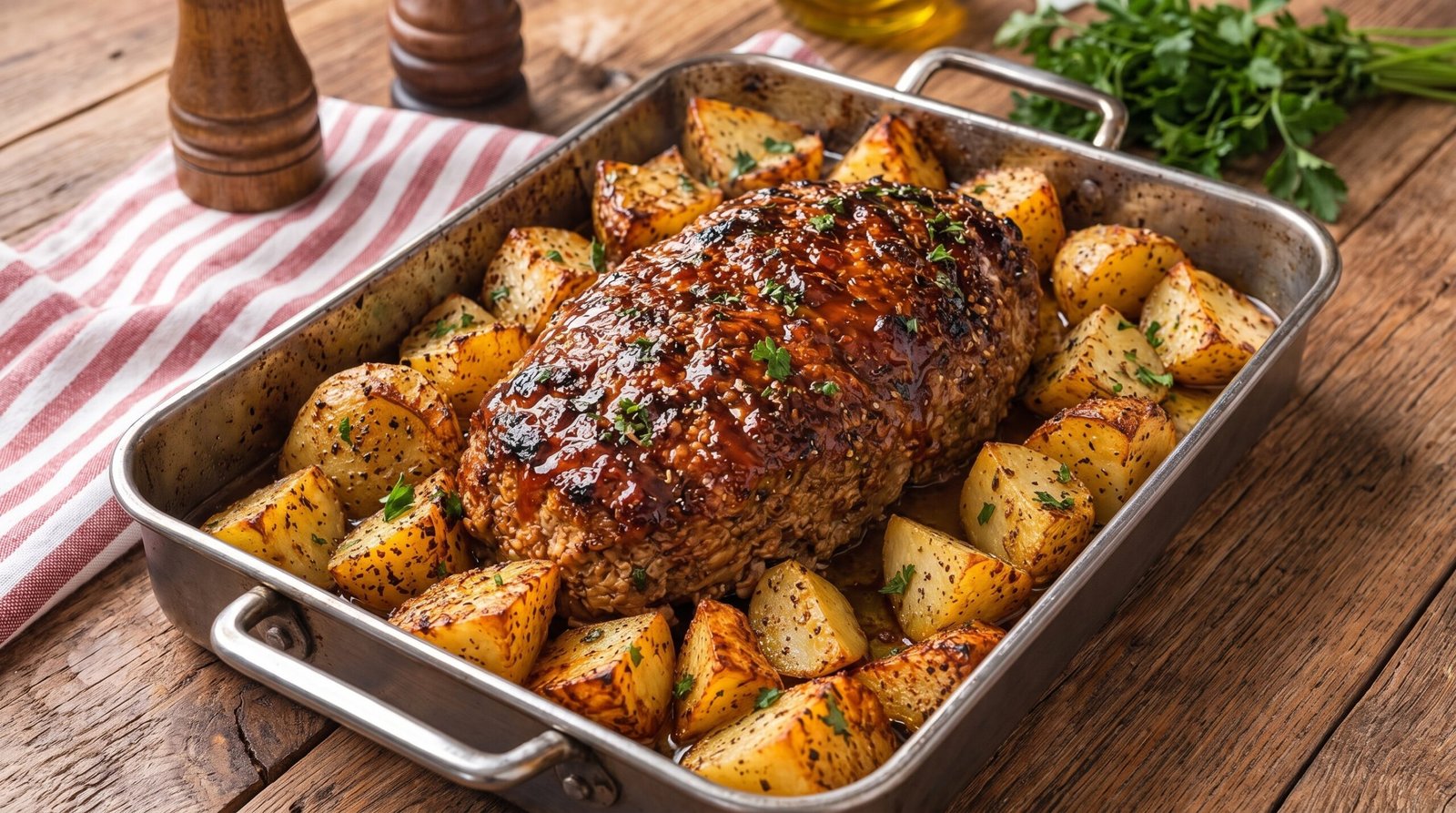
After plenty of testing, tweaking, and a few minor blunders along the way, I finally cracked the code to a meatloaf that is ridiculously tender, bursting with flavor, and coated in a sticky, caramelized glaze that makes everyone reach for seconds. Plus, baking it right alongside golden, crispy herb-roasted potatoes in a single metal roasting pan makes it a hassle-free meal that practically cooks itself.
If you’ve ever ended up with a dry meatloaf, a soggy mess, or potatoes that turned out mushy instead of crispy, stick around. Here is everything I learned the hard way so you can get it right on the very first try.
Why Most Meatloaf Turns Out Dry (And How to Fix It)
Before we dive into the recipe, let’s talk about what actually goes wrong in the oven. Meatloaf fails usually come down to three big mistakes:
- Using meat that is too lean: Extra-lean ground beef (like 90/10 or 93/7) sounds healthier, but fat equals moisture and tenderness. If you use super lean beef, your meatloaf will inevitably dry out. Aim for an 80/20 ground chuck blend. The rendered fat keeps the loaf juicy as it bakes.
- Over-mixing the ground meat: Treat ground meat gently! The moment you squeeze, pack, and knead the meat mixture like bread dough, you force out air pockets and compact the proteins. That’s how you get a dense, heavy brick. Mix everything else together first, then gently fold in the meat until just combined.
- Skipping the panade: A panade is simply a mixture of starch (like breadcrumbs or fresh bread pieces) and liquid (milk, broth, or cream). The starch absorbs the liquid and creates a gel-like barrier that traps moisture inside the meatloaf while it cooks.
The Recipe: Glazed Meatloaf with Crispy Roasted Potatoes
Prep time: 20 minutes | Cook time: 1 hour | Servings: 5–6
The Ingredients You’ll Need
For the Meatloaf:
- 2 lbs Ground Beef (80/20 blend): Ground chuck works best.
- ¾ cup Panko Breadcrumbs: Panko yields a lighter texture than fine Italian breadcrumbs, but regular breadcrumbs work if that’s what you have in your pantry.
- ⅓ cup Whole Milk: To hydrate the breadcrumbs.
- 1 medium Yellow Onion: Very finely diced or grated.
- 3 cloves Garlic: Minced finely.
- 2 large Eggs: Beaten, to bind the mixture together.
- 2 tablespoons Worcestershire Sauce: Adds that rich, savory umami depth.
- 1 tablespoon Dijon Mustard: Gives a nice tangy backbone.
- ¼ cup Fresh Parsley: Chopped finely (plus extra for garnish).
- 1 teaspoon Salt & ½ teaspoon Freshly Cracked Black Pepper
For the Sweet & Savory Glaze:
- ½ cup Ketchup: The classic base.
- 2 tablespoons Brown Sugar: Packed, for caramelization.
- 1 tablespoon Apple Cider Vinegar: Cuts through the richness with a touch of brightness.
- 1 teaspoon Garlic Powder
For the Herb-Roasted Potatoes:
- 2 lbs Yukon Gold or Red Potatoes: Cut into 1-inch bite-sized chunks.
- 2½ tablespoons Olive Oil: To get those edges nice and crispy.
- 1 teaspoon Dried Thyme or Italian Seasoning
- 1 teaspoon Garlic Powder
- Salt and Black Pepper: To taste.
Step-by-Step Cooking Instructions
Step 1: Prep Your Oven and Pan
Preheat your oven to 375°F (190°C). Take a large, rimmed baking dish or metal roasting pan. Lightly grease the bottom with a splash of olive oil or non-stick spray.
Pro Tip: Avoid using a high-walled loaf pan if you want crispy edges on your potatoes and meatloaf! High walls trap steam, leaving your potatoes soft and wet instead of roasted. A open rimmed roasting pan lets the hot air circulate properly.
Step 2: Make the Panade & Sauté the Aromatics
In a small bowl, combine the panko breadcrumbs and milk. Let it sit for about 5 to 7 minutes until the breadcrumbs absorb all the liquid and turn into a soft paste.
While that rests, quickly sauté your diced onion in a skillet over medium heat with a drop of oil for 4–5 minutes until soft and translucent. Add the garlic and cook for another 30 seconds until fragrant. Let them cool for a few minutes. (Adding hot onions straight to raw eggs can start cooking the eggs prematurely!)
Step 3: Combine the Meatloaf Mixture
In a large bowl, whisk together the eggs, sautéed onion and garlic mixture, hydrated breadcrumb paste (panade), Worcestershire sauce, Dijon mustard, chopped parsley, salt, and black pepper.
Add the ground beef. Using clean hands, gently mix everything together just until evenly blended. Remember: do not over-work or compress the meat!
Step 4: Shape the Loaf and Toss the Potatoes
Transfer the meatloaf mixture to the center of your prepared roasting pan. Shape it with your hands into an oval loaf roughly 9×5 inches and about 2 inches thick.
In a separate bowl, toss your potato chunks with olive oil, dried thyme, garlic powder, salt, and pepper. Arrange the seasoned potatoes in a single layer around the meatloaf in the roasting dish.
Step 5: Whisk and Apply Half the Glaze
In a small cup or bowl, whisk together the ketchup, brown sugar, apple cider vinegar, and garlic powder until smooth. Brush about half of this glaze generously over the top and sides of the meatloaf. Keep the remaining half for later.
Step 6: Bake and Glaze Again
Place the roasting pan in the preheated oven and bake for 40 minutes.
After 40 minutes, carefully pull the pan out. Brush the remaining glaze all over the top of the meatloaf. Use a spatula to give the potatoes a gentle stir so they brown evenly on all sides.
Return the pan to the oven and cook for another 15 to 20 minutes. The meatloaf is done when an instant-read digital meat thermometer inserted into the center reads 160°F (71°C), and the potatoes are fork-tender with golden brown edges.
Step 7: Rest, Garnish, and Serve!
This step is non-negotiable: let the meatloaf rest for at least 10 minutes before slicing. If you slice into it straight out of the oven, all those glorious juices will pool out onto the cutting board, leaving you with dry meat. Resting allows the juices to redistribute throughout the loaf.
Garnish with fresh parsley, slice into thick slabs, and serve right alongside those crispy roasted potatoes.
Rookie Mistakes I Learned the Hard Way
- Dicing onions too coarsely: I used to rush through chopping onions, leaving chunky pieces. As the meatloaf cooks, big raw onion chunks prevent the meat from holding together, causing the slice to break apart on your plate. Finely dice them or grate them on a box grater!
- Using raw onions without sautéing: Sautéing draws out sweetness and removes that harsh bite. Raw onions won’t fully cook inside a dense meatloaf in 50 minutes.
- Cutting potatoes into uneven sizes: If your potato chunks vary wildly in size, the small ones will burn while the large ones remain rock hard in the middle. Take a few extra seconds to cut them into uniform 1-inch pieces.
Helpful Kitchen Tools for Success
You don’t need fancy gear to make a great meal, but a couple of basic tools make a world of difference:
- Digital Instant-Read Meat Thermometer (like a ThermoPro or Meater): Cooking by time alone is risky because oven temperatures vary. A cheap digital thermometer takes out all the guesswork so you never end up with raw center or overcooked leather.
- Large Rimmed Baking Sheet or Metal Roaster: A heavy-duty stainless steel or enamel roasting tray gives you plenty of surface area so potatoes roast instead of steam.
Leftover Ideas (If There’s Any Left!)
If you happen to have leftovers, count yourself lucky. Cold meatloaf actually tastes incredible the next day as flavors continue to meld together in the fridge.
My absolute favorite way to use leftovers is making a Classic Meatloaf Sandwich:
- Slice a piece of cold meatloaf about ½-inch thick.
- Sear it in a skillet with a butter knob for 2 minutes per side until heated through and crisp on the edges.
- Place it between two thick slices of toasted sourdough or brioche with melted cheddar cheese, a touch of mayo, and crisp lettuce.
Wrapping Up
Cooking at home shouldn’t be stressful or complicated. This single-pan glazed meatloaf and potato dinner is proof that simple, honest ingredients—prepared with just a few proper techniques—can create a restaurant-worthy meal. Give it a shot this week, take your time with the prep, and don’t forget to let it rest before digging in!