
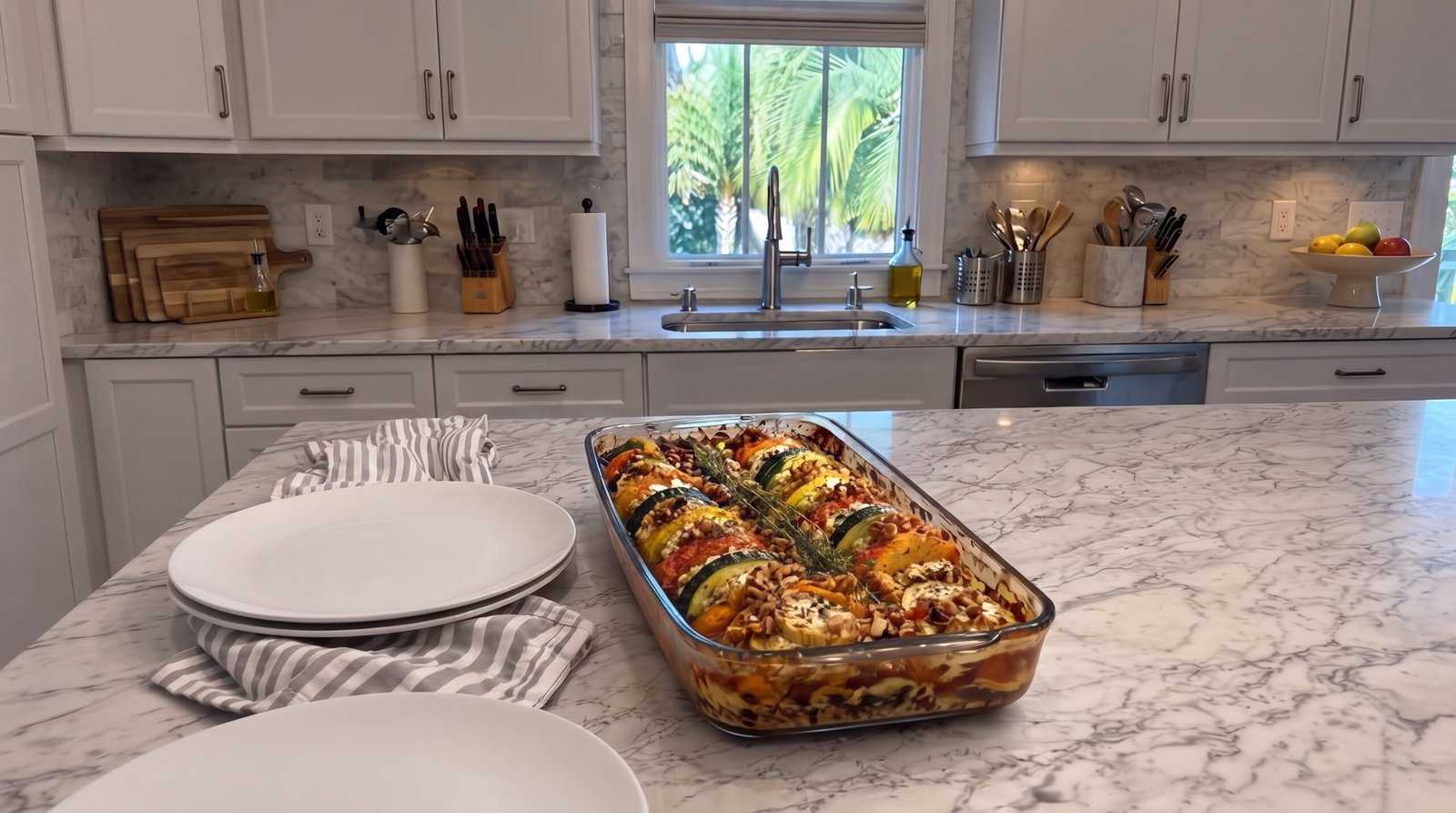
I remember the first time I stood in my kitchen on a Tuesday evening, staring at a pile of summer produce that I bought on impulse. My fridge was full of zucchini, yellow squash, and tomatoes, and I needed something that would turn them into a dinner worth eating. I did not want a stir-fry or a standard salad. I wanted something that took those beautiful colors and textures and turned them into a cohesive, warm dish. That is when I landed on this vegetable tian. It is one of those meals that looks like you spent hours on it, but the reality is much simpler. You are essentially slicing vegetables into rounds and arranging them tightly in a baking dish. The magic happens in the oven, where everything softens and the juices from the tomatoes mingle with the oil and herbs to create a light sauce. If you want a reliable Vegetable Tian with Walnuts and Thyme that works as a centerpiece or a hearty side, this is how I have learned to make it over the years.
Why This Recipe Works
This dish works because it relies on the natural properties of the vegetables. Zucchini and squash have high water content. When you slice them thinly and pack them upright in a dish, they release their moisture slowly as they bake. This prevents the vegetables from drying out. Instead, they braise in their own liquids combined with the olive oil you brush on top. The tomatoes provide the acidity, which cuts through the richness of the oil and balances the sweetness of the squash.
The flavor profile is simple but effective. I use fresh thyme because it is woody and holds up well to the heat of the oven. It infuses the oil and the vegetables without being overpowering. The addition of walnuts is something I started doing a few years ago. I found that while the vegetables become soft, the dish lacked a contrasting bite. Walnuts add a mild earthy flavor and a needed texture. They toast slightly on the surface of the vegetables, which adds a layer of depth that is missing in versions without a crunchy component.
Ease of preparation is another reason this is a staple in my kitchen. You do not need to pre-cook anything. You do not need to boil, sauté, or blanch your vegetables before they go into the oven. The assembly process is rhythmic and quiet. It is a slow, methodical task that I find relaxing after a long day. Because all the vegetables are cut to a similar thickness, they bake at the same rate. This consistency is the secret to a successful tian. You get soft, tender bites that do not fall apart into mush. It is a humble, honest way to eat seasonally.
Ingredient Notes
The Core Vegetables
The foundation of a good tian is the quality of your produce. I look for zucchini and yellow squash that are relatively uniform in diameter. If the squash is huge, the slices will be difficult to layer properly. You want firm, blemish-free skin. For the tomatoes, I prefer Roma tomatoes because they are dense and have less liquid than heirloom or vine-ripened varieties. This prevents the dish from becoming a watery soup while it bakes.
Herbs and Seasonings
Fresh thyme is non-negotiable for me in this specific recipe. The stems soften during the forty-five minutes of baking, and the leaves release an aroma that defines the final taste. If you cannot find fresh thyme, dried thyme can be used but reduce the amount by half as it is more concentrated. Sea salt is essential for drawing out the moisture from the squash. It helps season the dish from the inside out. I also use freshly cracked black pepper. It provides a sharp contrast to the sweetness of the roasted vegetables.
Fats and Texture
Good olive oil is the only fat I use here. Since there are so few ingredients, the quality of the oil matters. Use an extra virgin variety that you enjoy the taste of on its own. For the walnuts, raw walnut halves are best. They will toast just enough in the oven to lose their raw bitterness without burning. If you buy pre-toasted walnuts, they will likely turn too dark by the time the vegetables are finished, so stick to raw ones.
| Ingredient | Amount | Notes |
|---|---|---|
| Zucchini | 3 medium | Slice into 1/4 inch rounds |
| Yellow Squash | 3 medium | Slice into 1/4 inch rounds |
| Roma Tomatoes | 4 large | Slice into 1/4 inch rounds |
| Extra Virgin Olive Oil | 4 tablespoons | Use a high-quality oil |
| Fresh Thyme | 4 sprigs | Remove woody stems if desired |
| Raw Walnuts | 1/2 cup | Roughly chop before adding |
| Sea Salt | 1 teaspoon | Adjust based on preference |
| Black Pepper | 1/2 teaspoon | Freshly cracked is best |
The Recipe
- Prep Time: 20 minutes
- Cook Time: 45 minutes
- Total Time: 1 hour 5 minutes
- Servings: 4 to 6
- Difficulty: Simple
Equipment Needed:
– Chef knife
– Cutting board
– Mandoline or sharp knife
– Rectangular baking dish (approx 9×13)
– Small pastry brush
– Measuring spoons and cups
Step-by-Step Instructions
Step 1: Prep the Ingredients
Begin by washing all the vegetables thoroughly under cool running water. Pat them dry with a clean towel. Drying them is important because any excess water on the skin will prevent them from browning slightly at the edges. Using a sharp knife or a mandoline, slice the zucchini, yellow squash, and tomatoes into rounds that are exactly one-quarter inch thick. Consistency is key here. If the slices are too thick, they will not be tender enough; if they are too thin, they will disintegrate.
As you slice, keep your fingers safe. Once all the vegetables are sliced, place them in separate piles. This makes the assembly process much faster. Set your oven to 375 degrees Fahrenheit. Ensure your rack is in the center position so the heat circulates evenly around the baking dish. If the oven is too crowded or the dish is too high up, the top might brown too quickly while the centers remain raw.
Step 2: Layering the Vegetables
Take your baking dish and brush the bottom with about one tablespoon of olive oil. Start at one end of the dish and begin arranging the vegetable slices in an alternating pattern. I do one zucchini, one yellow squash, and one tomato slice. Repeat this sequence, packing them tightly upright against each other. The tighter you pack them, the better they will stand up.
Continue this pattern until the entire dish is full. It is okay if you have to squeeze them in slightly. The vegetables will shrink as they release water during the baking process, so a tight fit is a good thing. Once the dish is completely filled, go back and tuck in a few more slices if there are large gaps. The arrangement should look like a mosaic of green, yellow, and red.
Step 3: Seasoning and Oiling
Once the dish is full, use your pastry brush to coat the tops of the vegetables with the remaining olive oil. You want a thin, even layer that reaches all the slices. Sprinkle the sea salt and the black pepper evenly across the top. The salt is crucial because it pulls the moisture out of the zucchini and squash, which allows them to soften efficiently.
Take your sprigs of fresh thyme and lay them across the top of the vegetables. You can leave the sprigs whole, or pull the leaves off and sprinkle them over the dish. I like to keep the sprigs whole so that I can remove them before serving, as the stems can be a bit woody. If you prefer, scatter the leaves so they stick to the oiled vegetables.
Step 4: Adding the Walnuts
Roughly chop the raw walnuts until you have a mix of small and medium-sized pieces. Sprinkle them evenly over the arranged vegetables. Ensure they are distributed so that every serving will have a bit of crunch. Press down lightly on the walnuts to ensure they are touching the oiled surfaces of the vegetables. This helps them stick and prevents them from falling to the bottom of the dish.
Place the dish in the preheated 375 degree oven. Set your timer for forty-five minutes. Do not cover the dish. Leaving it uncovered allows the steam to escape, which is how we get the concentrated flavor. If you cover it, you will end up with a watery, steamed vegetable dish rather than a nicely roasted one.
Step 5: Checking for Doneness
After forty-five minutes, take a look at the dish. The vegetables should be tender when pierced with a fork. The tomatoes should have collapsed slightly and released their juices, and the walnuts on top should be lightly toasted. If the vegetables still feel firm, give them another five to ten minutes.
The edges of the vegetables should look soft and slightly wilted, which is a sign they are fully cooked through. The juices at the bottom of the pan should be bubbling. Once done, remove the dish from the oven and let it sit for ten minutes before serving. This resting time allows the juices to thicken slightly and makes it much easier to scoop the vegetables out without them falling apart completely.
Mistakes I Made (So You Don't Have To)
Slicing Irregularly
Early on, I did not pay attention to the thickness of my slices. I would have some thick pieces and some paper-thin pieces. The result was a mess: some vegetables were raw and crunchy, while others had turned into mush. The fix is to use a mandoline if you have one. If you use a knife, just take your time. If a slice is too thick, trim it down before you add it to the dish.
Using Too Much Water
One time, I tried to add a splash of vegetable broth to the bottom of the pan, thinking it would keep things moist. It did the opposite. The vegetables were basically boiling in liquid, and the flavor was diluted. The vegetables already have plenty of moisture. Skip the extra liquid; just stick to the olive oil and salt.
Overcrowding the Dish
I once tried to fit too many vegetables into a dish that was too small. The center did not cook evenly, and the top burned because it was too close to the heating element. Make sure your baking dish is the right size so that the vegetables fit in a nice, snug arrangement but still have room for the air to circulate.
Serving Immediately
I used to rush to the table the second the timer went off. The problem is that the dish is so hot and full of steam that it just turns into a pile when you try to serve it. Letting it rest for ten minutes is not optional. It allows the temperature to stabilize, and the juices settle, which helps the slices hold their shape when you lift them out with a spatula.
Variations and Tips
Using Different Herbs
While thyme is my favorite, you can definitely mix it up. Rosemary is a strong herb, so use it sparingly if you go that route. A combination of parsley and basil added right after taking the dish out of the oven can also brighten the flavors. If you want a bit of heat, add a pinch of red pepper flakes before you put the dish in the oven.
Adding Cheese
Sometimes I like to sprinkle a little grated Parmesan or crumbled feta over the dish during the last ten minutes of baking. It creates a salty, savory crust that pairs well with the squash. Just watch it closely, as cheese can burn quickly if left under high heat for too long. If you use cheese, add it only when the vegetables are nearly tender.
Make-Ahead Tip
You can assemble the entire dish up to four hours before you plan to bake it. Keep it covered in the refrigerator. When you are ready, bring the dish to the counter while the oven preheats. This takes the chill off and ensures that the baking time remains consistent. If you pull it straight from a cold fridge into a hot oven, you might need to add five minutes to the total time.
Serving Suggestions
This tian is excellent alongside a simple grilled piece of protein. I often serve it with roasted chicken or a piece of white fish. It also works as a standalone meal if you serve it with a slice of toasted crusty bread to soak up the juices at the bottom of the pan. It is a flexible dish that adapts well to whatever else you are putting on the table.
Storage and Reheating
If you have leftovers, do not let them sit out on the counter. Put them in an airtight container and store them in the refrigerator within two hours of cooking. They will stay good for up to three days. I find that this dish tastes even better the next day, as the flavors have more time to meld together.
To reheat, the best method is the oven. Preheat your oven to 350 degrees Fahrenheit and place the leftovers in a baking dish. Cover it with foil to prevent the vegetables from drying out and heat it for about fifteen to twenty minutes until it is steaming hot. You can also use a microwave, but the texture will be softer. If you reheat in the microwave, use a medium power setting so you do not blast the vegetables into total mush. I do not recommend freezing this dish. The high water content in the squash and tomatoes means the structure will collapse completely once thawed, resulting in a watery, unpleasant texture.
Frequently Asked Questions
Can I use sweet potatoes instead of squash?
You can use sweet potatoes, but they take longer to cook than zucchini and squash. If you want to use them, slice them much thinner than the other vegetables—about an eighth of an inch—or blanch them for two minutes in boiling water before layering them in the dish. Otherwise, the squash will be overcooked before the sweet potatoes are tender.
Why do my vegetables get watery at the bottom?
The vegetables release water as they cook. This is normal. To minimize the pool of liquid, make sure you use firm tomatoes and do not add any extra liquids like broth or water to the dish. Also, do not cover the dish while baking. Keeping the top open allows the excess moisture to evaporate, concentrating the flavor of the juices left in the pan.
Can I prepare this in an air fryer?
Yes, you can, provided you have a dish that fits inside your air fryer basket. Follow the same assembly instructions, but keep in mind that air fryers are much more powerful and have a fan that circulates air intensely. Reduce the temperature to 350 degrees Fahrenheit and check for doneness after thirty minutes. The walnuts might toast faster, so keep an eye on them.
What is the best way to slice the vegetables evenly?
A mandoline is the most reliable tool for this. It allows you to set a specific thickness so that every slice is identical. If you are using a chef knife, practice makes perfect. Focus on your knife technique and move slowly. If you make a slice that is significantly off-thickness, just set it aside and use it for something else, like a soup or a salad, to keep the tian consistent.
Should I peel the vegetables?
For zucchini and yellow squash, I never peel them. The skin adds color and helps the slices hold their shape during the baking process. If you peel them, they will break down much faster and turn into a soft casserole instead of a layered tian. Just make sure you wash them thoroughly before slicing to remove any dirt or wax that might be on the exterior.
Final Thoughts
Making this vegetable tian has become a rhythm in my home, a simple way to celebrate the produce I have on hand without overcomplicating things. It is a dish that rewards patience, from the slow slicing of the vegetables to the gentle roasting in the oven. The result is always a plate that feels like a home-cooked meal should: honest, colorful, and satisfying.
I hope you enjoy putting this together as much as I do. It is one of those reliable recipes that does not require fancy techniques, just a little bit of time. Whether you are making it for a weeknight dinner or as a side for a larger meal, I know it will find a permanent place in your kitchen rotation.