
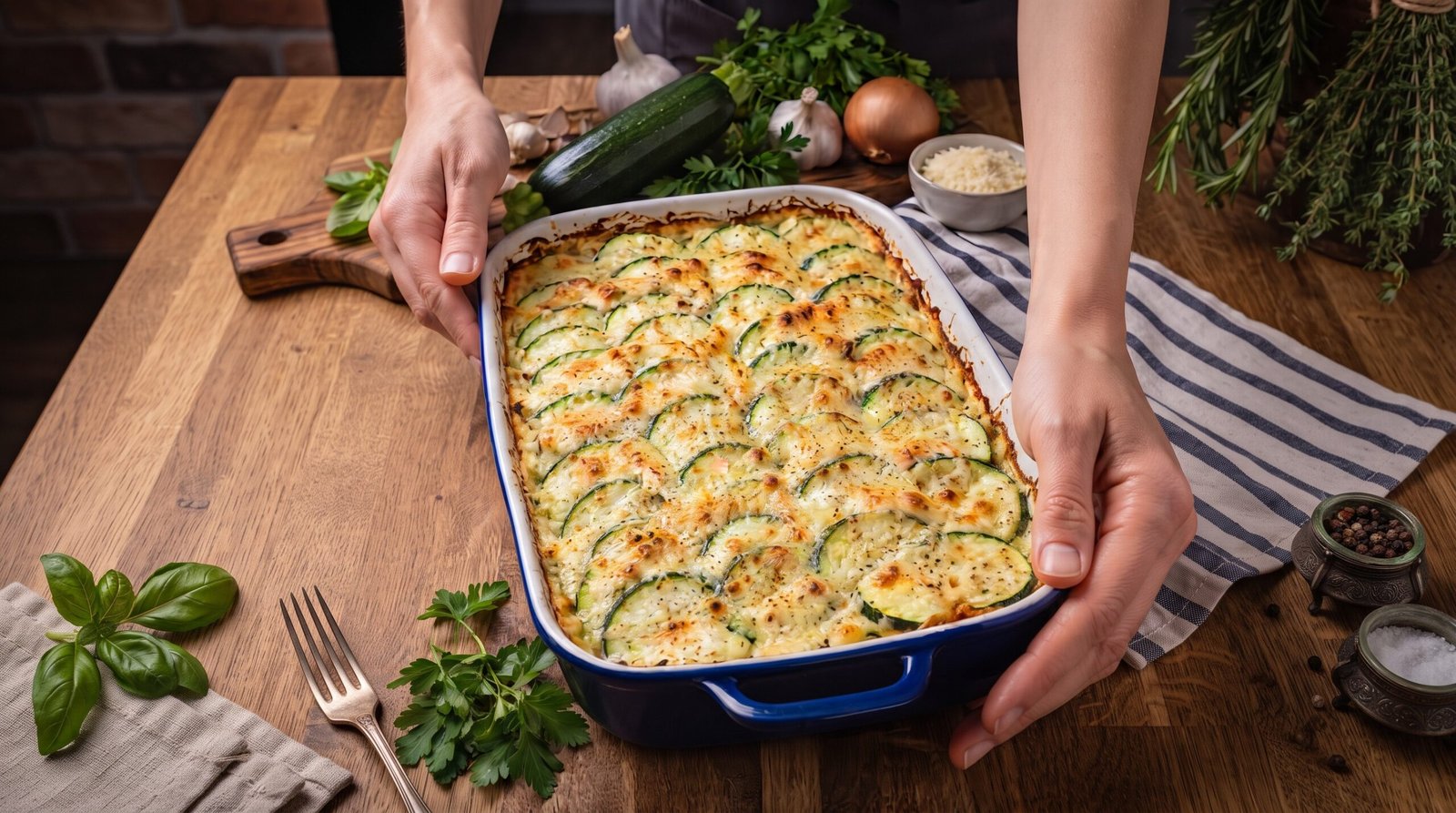
I often find myself with more zucchini than I know what to do with when the garden starts producing in earnest. If you are anything like me, you probably have a drawer full of green squash and a need for something satisfying to serve alongside a simple roast or grilled protein. This zucchini gratin has become my go-to solution. It takes those simple, humble vegetables and turns them into a rich, comforting dish that even the picky eaters in my house ask for repeatedly.
The process is fairly straightforward, though it does require a little patience while you slice and assemble the layers. You are essentially creating a scalloped vegetable dish where the zucchini acts as the base. Because zucchini contains a fair amount of water, the key to a good gratin is allowing it to soften and release that moisture before it gets buried under a layer of cheese and cream. This recipe ensures you end up with a tender, flavorful side dish that complements almost any meal.
Why This Recipe Works
This recipe relies on the simple interaction between the mild, earthy flavor of the summer squash and the savory punch of aged cheese. Zucchini is a blank canvas, and it absorbs the seasonings and the richness of the dairy beautifully. When you layer thin slices and bake them at a moderate temperature, the vegetables cook through until they are soft but not mushy, while the top develops a crust that adds a nice texture to every bite.
One of the reasons I gravitate toward this preparation is the ease of assembly. You do not need any special culinary skills to make this happen. A sharp knife or a mandoline works fine for the slicing, and once the vegetables are in the baking dish, the oven does all the heavy lifting. The combination of cream, garlic, and cheese creates a sauce that coats every slice, ensuring that no bite is dry or uninteresting. It is a reliable dish that looks impressive coming out of the oven even though the components are quite basic.
I also appreciate how this dish handles leftovers. Because it is essentially a vegetable bake held together by a simple custard-like sauce, it keeps well in the refrigerator for a few days. The flavors actually meld and deepen over time, which makes it just as good the next day when reheated. It is a practical choice for meal planning because you can prepare it in advance and just pop it into the oven when you are ready to serve. It avoids the stress of last-minute vegetable preparation during a busy week.
Finally, the versatility of this gratin is a major bonus. While I prefer a classic preparation with plenty of herbs and garlic, you can easily tweak the aromatics to suit what you have on hand. If you want to add a bit of heat with red pepper flakes or incorporate some sautéed leeks, the structure of the recipe remains stable. It is a forgiving dish that allows for small adjustments without compromising the final result.
Ingredient Notes
The Squash
You need fresh, firm zucchini for the best texture. Look for medium-sized squash that feel heavy for their size and have smooth, bright green skin. If the zucchini are too large, they tend to have larger, tougher seeds and more water content, which can make the finished gratin a bit watery. If you must use large ones, scoop out the watery centers before slicing.
The Dairy and Cheese
Whole milk or heavy cream provides the base for the sauce. I use a mix of both for a balance of lightness and richness. For the cheese, you want something that melts well and offers a savory note. Parmesan is essential for that salty, umami kick, while a milder cheese like Gruyere or a good quality white cheddar provides the gooey, stretchy quality that makes a gratin feel indulgent. Always grate your cheese fresh from a block; pre-shredded bags are coated in starch that prevents proper melting.
Aromatics and Seasoning
Garlic is non-negotiable here. Freshly minced garlic adds a depth that powder just cannot replicate. I like to keep the seasoning simple with kosher salt and black pepper, but adding a bit of fresh thyme or oregano brings a bright, earthy contrast to the cream and cheese. Since the cheese is naturally salty, be careful not to over-salt the sauce before you taste it.
| Ingredient | Amount | Notes |
|---|---|---|
| Zucchini | 3 pounds | Sliced into 1/8 inch rounds |
| Heavy cream | 1 cup | For richness |
| Whole milk | 1/2 cup | To thin the sauce |
| Gruyere cheese | 1.5 cups | Freshly grated |
| Parmesan cheese | 1/2 cup | Freshly grated |
| Garlic | 3 cloves | Finely minced |
| Fresh thyme | 1 tablespoon | Leaves only |
| Kosher salt | 1 teaspoon | Adjust to taste |
| Black pepper | 1/2 teaspoon | Freshly cracked |
| Butter | 1 tablespoon | For greasing the dish |
The Recipe
- Prep Time: 20 minutes
- Cook Time: 45 minutes
- Total Time: 1 hour 5 minutes
- Servings: 6 servings
- Difficulty: Easy
- Equipment: 9×13 inch baking dish, mandoline or sharp knife, large mixing bowl, whisk, grater.
Step-by-Step Instructions
Step 1: Prep the Squash
Begin by washing your zucchini thoroughly and patting them dry. Using a mandoline set to about 1/8 inch thickness, slice all the zucchini into even rounds. If you do not have a mandoline, use a sharp chef's knife to create slices that are as uniform as possible. Uniformity is important here because it ensures the vegetables cook at the same rate. Place the slices in a colander and sprinkle lightly with salt. Let them sit for about 15 minutes to draw out excess moisture. After they sit, pat them dry with a clean kitchen towel.
Step 2: Prepare the Sauce
In a large mixing bowl, whisk together the heavy cream, milk, minced garlic, thyme, salt, and pepper. You want to make sure the garlic and seasonings are well distributed throughout the dairy. Fold in about half of the grated Gruyere and half of the Parmesan. The mixture should look slightly thick and fragrant. Taste the liquid carefully; it should be well-seasoned because the zucchini will absorb quite a bit of that flavor during the baking process.
Step 3: Assemble the Layers
Preheat your oven to 375 degrees Fahrenheit. Grease your 9×13 inch baking dish with the tablespoon of butter, making sure to coat the corners well. Begin layering the zucchini slices in the dish, overlapping them slightly like shingles. I usually do about two layers of zucchini, then drizzle a small amount of the cream mixture over them, followed by a sprinkle of the remaining cheese. Repeat this until all the zucchini is used up, finishing with a generous layer of the remaining cheese on top.
Step 4: The Initial Bake
Cover the baking dish tightly with aluminum foil. This step is crucial because it allows the zucchini to steam and soften properly in the liquid without drying out. Place the dish in the center rack of your preheated oven and bake at 375 degrees Fahrenheit for 25 minutes. You want to keep the heat consistent so the liquid comes to a gentle simmer, which cooks the vegetables through without breaking the cream sauce.
Step 5: Final Browning
Remove the foil from the baking dish. You should see the liquid bubbling at the edges and the zucchini should be fork-tender. Increase the oven temperature to 400 degrees Fahrenheit or switch to the broiler setting for 5 to 7 minutes. Watch the dish very closely during this time. The goal is to get the top golden brown and slightly bubbly. Once it reaches that color and the sauce has reduced slightly, remove it from the oven and let it stand for 10 minutes before serving.
Mistakes I Made (So You Don't Have To)
Too Much Water
My first attempt at this resulted in a soup rather than a gratin. I skipped the step of salting the zucchini and letting it sit in a colander. Zucchini is mostly water, and if you do not remove that moisture first, it will release into your baking dish and dilute the cream sauce. Always take the time to salt the slices and pat them dry. It makes a world of difference in the final texture.
Uneven Slicing
I once tried to slice the zucchini by hand when I was in a rush, and the pieces were all different thicknesses. The thin ones turned to mush, while the thicker ones were still crunchy when I pulled the dish out. Consistency is the most important part of this recipe. If you are not confident with a knife, use a mandoline to keep the slices perfectly uniform. It also speeds up the prep work significantly.
Burning the Top
I used to set the broiler and walk away to clean the kitchen, only to return to a burnt, black layer of cheese. The broiler is intense and can go from golden to charred in seconds. Now, I always set a timer and stay right in the kitchen whenever the dish is under direct heat. Watching the transition from pale to golden brown is the best way to avoid ruined dinner plans.
Not Resting
It is tempting to dive into a warm gratin right out of the oven, but that is a mistake. The sauce needs those 10 minutes of rest time to thicken up and stabilize. If you serve it immediately, it will be runny and the layers will fall apart on the plate. Waiting those few minutes allows the cream and cheese to set properly, ensuring you get a nice, clean portion when you scoop it out.
Variations and Tips
Add Some Texture
If you want a bit of crunch on top, you can mix a quarter cup of panko breadcrumbs with a little melted butter and sprinkle it over the cheese before the final browning step. It adds a nice contrast to the soft, creamy zucchini. Just watch the oven closely, as breadcrumbs can burn even faster than cheese.
Use Other Vegetables
You can easily incorporate yellow summer squash along with the zucchini. It provides a beautiful color contrast and tastes almost identical. Just make sure the squash is similar in size so the cooking time remains consistent. Sometimes I add a layer of thinly sliced potatoes, but if you do that, you must slice the potatoes very thin to ensure they soften in the same amount of time as the zucchini.
Herb Infusions
While I stick to thyme, you can experiment with fresh herbs like rosemary or basil. If you use rosemary, chop it very finely as the needles can be tough. Fresh basil is better added after the dish comes out of the oven, as the heat can dull its flavor. A little bit of lemon zest mixed into the cream before pouring can also add a nice, bright note that cuts through the richness of the dairy.
Make-Ahead Tip
This is a great dish to prep ahead of time. You can assemble the layers and keep it in the refrigerator for up to 24 hours before baking. If you are baking it straight from the fridge, you will need to add about 10 minutes to the initial covered bake time to ensure the center reaches the proper temperature. It saves me so much stress on busy weeknights to have the prep already done.
Storage and Reheating
Keeping Leftovers
If you have leftovers, let the dish cool to room temperature within two hours of baking. Transfer the remaining gratin into an airtight container. It will keep well in the refrigerator for up to 3 days. I do not recommend freezing this dish, as the high water content of the zucchini and the dairy-based sauce leads to a grainy texture and significant separation once thawed. It is best enjoyed fresh or from the fridge.
Reheating
To reheat, I prefer using the oven. Place a portion in an oven-safe dish and cover it with foil. Heat at 350 degrees Fahrenheit until it is heated through and steaming hot. If you are in a rush, you can use the microwave, but it tends to make the zucchini texture less pleasant. Always ensure the center is steaming hot, around 165 degrees Fahrenheit, before serving.
Frequently Asked Questions
Can I use low-fat milk instead of heavy cream?
You can, but the sauce will be much thinner and less rich. The heavy cream is what gives the gratin its body. If you want to use milk, I suggest whisking in a teaspoon of cornstarch to help thicken the sauce as it bakes. It will not be as decadent as the original version, but it will still be tasty.
Do I have to peel the zucchini?
Absolutely not. The skin of the zucchini is very thin and adds a lovely color and texture to the dish. Just make sure you wash the outside thoroughly before slicing. The skin also helps the rounds hold their shape better during the baking process, preventing them from turning into complete mush.
My dish has a lot of liquid at the bottom, what did I do wrong?
This happens if you do not properly remove the moisture from the zucchini before assembling. Even if you skip the salting step, you can try to remedy this by baking it for an extra 10 minutes uncovered to allow some of the liquid to evaporate. Next time, be sure to let the slices sit in the colander for the full 15 minutes.
What kind of cheese works best if I cannot find Gruyere?
A good quality Swiss cheese or a sharp white cheddar are excellent substitutes for Gruyere. You want a cheese that has a good melting point and a strong enough flavor to stand up to the cream and garlic. Avoid using pre-grated cheeses, as they do not melt into a smooth sauce and can leave the gratin feeling a bit powdery.
Is it necessary to cover the dish with foil?
Yes, the foil is essential for the first part of the cooking process. Without it, the cheese on top would burn long before the zucchini inside is cooked through. Covering the dish creates a steam environment that softens the vegetable perfectly. Only remove the foil when you are ready to brown the top layer.
Final Thoughts
Making this zucchini gratin is a simple way to bring a bit of comfort to the dinner table. It is one of those reliable dishes that I know will come out well every time, regardless of how busy the day has been. I hope you find it as useful and satisfying as I do when you have a surplus of squash.
Once you have mastered the basic technique, you will find it easy to adapt the seasoning or the cheese to suit whatever you have in your kitchen. Whether you serve it alongside a simple roast chicken or as the main star of a meatless meal, it is sure to be a welcomed addition to your cooking repertoire.