
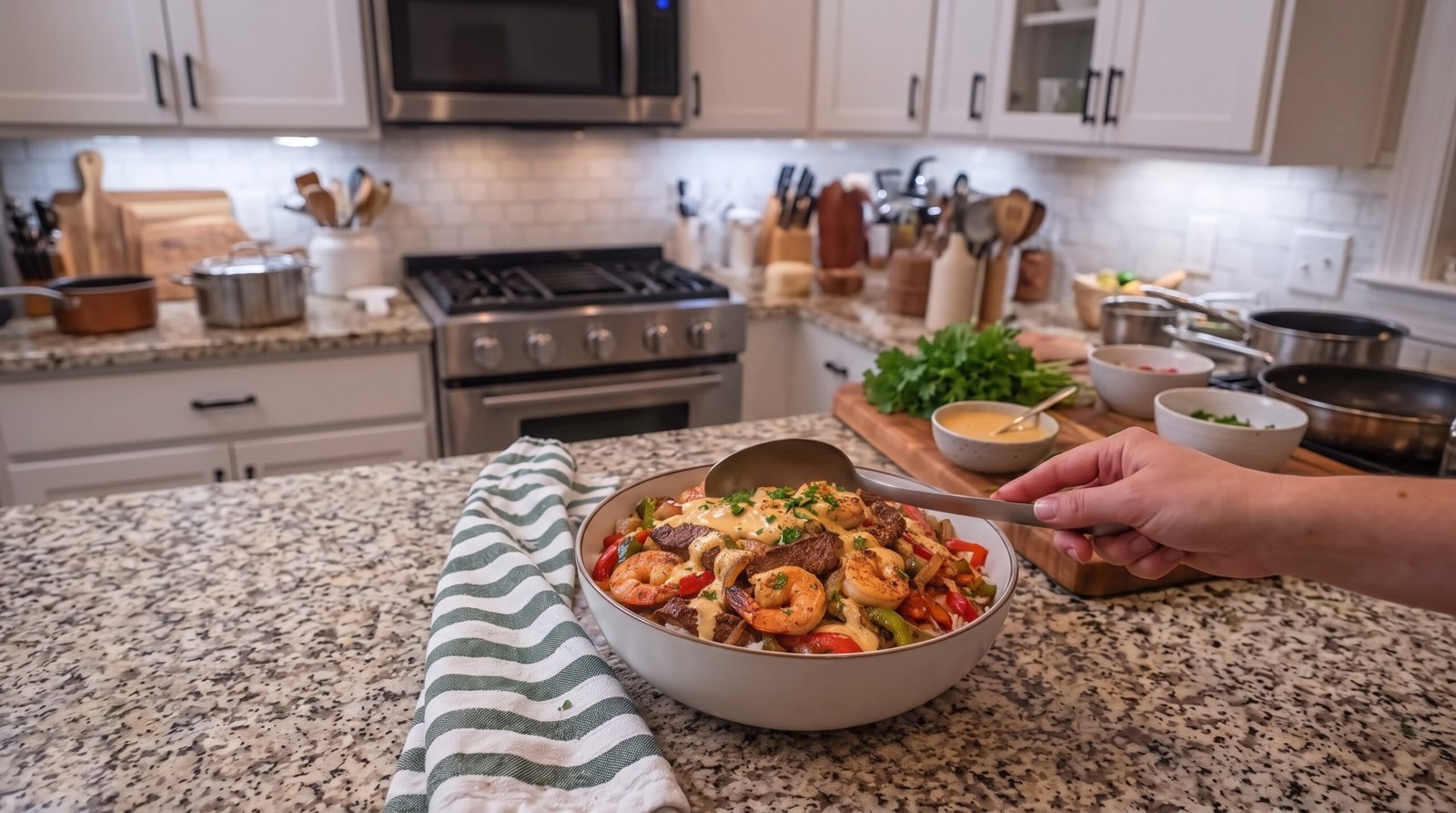
It happens to all of us. You get home after a long afternoon, look in the fridge, and realize you have a mix of ingredients that do not immediately look like a cohesive dinner. I often find myself staring at a small portion of steak and a bag of frozen shrimp, wondering how to make them feel like a proper meal rather than just two separate sides on a plate. This steak and shrimp surf and turf bowl is my go-to answer for that specific problem. It brings together seared protein and colorful vegetables over a bed of fluffy rice, tied together with a simple creamy sauce. It is the kind of dinner that feels like a treat without requiring hours of kitchen labor.
By keeping the prep simple and moving through the cooking stages in a logical order, you can have this on the table in under forty minutes. It is a hearty way to satisfy different cravings at once. I usually prepare the rice first so it is ready to go, then focus on getting a good sear on the steak before finishing with the shrimp and vegetables. The result is a satisfying bowl that combines textures and flavors in a way that feels intentional and balanced.
Why This Recipe Works
This bowl works because it respects the different cooking needs of each ingredient. Steak needs high heat to get a crust, while shrimp cooks in just a couple of minutes and can easily turn rubbery if left too long. By searing the beef first and resting it, you allow the juices to redistribute, ensuring every bite is tender. The shrimp are then added to the same pan, picking up the flavor from the steak juices.
The vegetables, usually bell peppers and onions, add a necessary crunch and sweetness. I find that cooking them just until they are tender-crisp keeps the bowl from feeling mushy. The rice acts as a neutral base that soaks up the creamy sauce, which is the final component that brings everything together. It is a simple mixture, often just a base of mayonnaise or sour cream with a few seasonings, but it adds that bit of richness that completes the dish.
Another reason this recipe is a favorite is the cleanup. Because you are using the same large skillet for the steak, shrimp, and vegetables, you are not left with a mountain of pans to scrub. This efficiency is important for a weeknight. You can also vary the vegetables based on what you have on hand. If you do not have peppers, snap peas or broccoli florets work well too. The key is to keep the pieces uniform so they cook at a consistent rate.
Ultimately, this dish succeeds because it is highly customizable. You can control the heat of the sauce, the type of grain you use, and the specific cut of beef. It is an honest meal that relies on good technique rather than complicated ingredients. Once you get the timing down, you will find yourself reaching for this combination whenever you need a reliable, filling dinner that feels a bit elevated.
Ingredient Notes
The Proteins
The beef is the star of this bowl. I prefer using a cut like sirloin or strip steak because it is tender enough to be sliced into strips and cooks quickly. You want the steak to be about an inch thick so it develops a crust on the outside while staying pink and juicy on the inside. Before cooking, I always let the steak come to room temperature for about twenty minutes to ensure even cooking.
For the shrimp, I always buy them peeled and deveined to save time. If you use frozen shrimp, make sure they are completely thawed and patted very dry with a paper towel. If they are wet when they hit the hot pan, they will steam instead of searing, and you will lose out on that savory exterior that makes surf and turf so enjoyable.
The Vegetables and Aromatics
Bell peppers are my primary choice here. I like using a mix of red, yellow, and orange for the visual appeal, but any bell pepper works. I cut them into long, thin strips so they cook quickly and maintain their shape. They add a natural sweetness that balances the savory, slightly salty taste of the steak.
The aromatics are simple but essential. I use garlic and a small amount of onion. When sautéing these, watch the heat carefully. Garlic can go from aromatic to burnt in a matter of seconds, which will turn your entire dish bitter. I usually add the garlic toward the end of the vegetable cooking time to ensure it toasts without burning.
The Rice Base
I usually stick with jasmine or long-grain white rice for these bowls. It provides a light, fluffy foundation that does not overpower the other components. You can certainly use brown rice or even quinoa, but keep in mind that those will take longer to cook and have a nuttier flavor profile that shifts the overall feel of the dish.
The Creamy Sauce
This sauce is what ties the surf and turf together. It is usually based on mayonnaise, a touch of mustard for acidity, and some herbs. I like to keep it creamy but balanced. You can add a splash of lemon juice to brighten the flavors, especially if you have had a heavy week of comfort food. Make sure your sauce ingredients are well-blended so it drizzled easily over the bowl.
| Ingredient | Amount | Notes |
|---|---|---|
| Sirloin Steak | 1 pound | Cut into thin strips |
| Large Shrimp | 1/2 pound | Peeled and deveined |
| Bell Peppers | 2 units | Sliced into strips |
| Onion | 1 medium | Thinly sliced |
| Jasmine Rice | 1.5 cups | Cooked according to package |
| Olive Oil | 2 tablespoons | For searing |
| Garlic | 3 cloves | Minced |
| Mayonnaise | 1/4 cup | For the sauce base |
| Dijon Mustard | 1 teaspoon | Adds a tangy bite |
| Fresh Parsley | 1 tablespoon | For garnish |
The Recipe
- Prep Time: 15 minutes
- Cook Time: 20 minutes
- Total Time: 35 minutes
- Servings: 2 to 3
- Difficulty: Easy
Equipment:
– Large heavy-bottomed skillet or cast iron pan
– Sharp chef knife
– Cutting board
– Tongs
– Sauce whisk
– Small mixing bowl
Step-by-Step Instructions
Step 1: Prepare the Rice
Start by cooking your rice according to the instructions on the package. I find that using a simple stovetop method with a ratio of two parts water to one part rice works best. Once the water is boiling, reduce the heat to low, cover the pot tightly, and let it simmer for about eighteen minutes. Remove the pot from the heat and let it sit covered for another five minutes. This creates a fluffy texture that is ideal for holding the protein and sauce.
Step 2: Prep the Protein and Vegetables
While the rice is cooking, prepare your ingredients. Slice your steak against the grain into strips that are about a half-inch thick. Pat the shrimp dry. Slice your peppers and onions into thin, uniform strips. Mince the garlic cloves. Having everything prepped before you turn on the stove is essential because once you start the searing process, things move quickly. If you try to chop while you cook, you risk overcooking the meat or burning the garlic.
Step 3: Sear the Steak
Heat one tablespoon of olive oil in your large skillet over medium-high heat. Once the oil begins to shimmer, add the steak strips in a single layer. Do not crowd the pan, or the meat will steam instead of brown. Cook for about three to four minutes, flipping once, until the steak reaches an internal temperature of 135 degrees Fahrenheit for medium-rare, or 145 degrees Fahrenheit for medium. Use an instant-read thermometer to check the thickest piece. Remove the steak from the pan and set it aside on a plate.
Step 4: Cook the Shrimp and Vegetables
Using the same skillet, add the remaining tablespoon of olive oil. Add the peppers and onions, cooking them over medium heat for about five minutes until they are tender but still have a slight snap. Add the minced garlic during the last minute of cooking. Push the vegetables to the side of the pan and add the shrimp. Cook the shrimp for about two minutes per side, just until they turn opaque and pink. They should be firm to the touch.
Step 5: Combine and Create the Sauce
Return the steak and any accumulated juices on the plate back into the skillet with the shrimp and vegetables. Give everything a quick toss to warm it through for thirty seconds. In your small bowl, whisk together the mayonnaise, mustard, and a splash of water or lemon juice until smooth. Divide the cooked rice into bowls, top with the steak and shrimp mixture, and drizzle the sauce over the top. Garnish with chopped fresh parsley before serving.
Mistakes I Made (So You Don't Have To)
Crowding the Pan
Early on, I used to try to fit all the steak and shrimp into the skillet at once to save time. This is a common error. When the pan is overcrowded, the temperature drops rapidly, and instead of a savory sear, you get gray, watery meat. The solution is simple: cook the steak in two batches if your pan is not large enough to hold it in a single layer. It adds an extra minute or two but makes a massive difference in flavor.
Overcooking the Shrimp
Shrimp are incredibly delicate. I once got distracted by a phone call and left them in the skillet for an extra three minutes. They turned into rubbery, tiny circles that were impossible to enjoy. Now, I set a timer. The moment the shrimp turn from translucent to opaque and start to curl into a loose C-shape, they are done. If they curl into a tight O-shape, you have already gone too far.
Ignoring the Grain of the Meat
I did not realize how much cutting against the grain mattered until I tried to eat a bowl where the steak felt like chewing on leather. Always look at the direction the muscle fibers are running in your steak. You want to slice perpendicular to those fibers. This shortens the fibers, making each bite significantly more tender. If you slice with the grain, those long fibers stay intact and make the meat feel tough.
Adding the Sauce Too Early
One time I poured the creamy sauce into the hot pan thinking it would create a pan sauce. Instead, the mayonnaise separated and turned into a pool of oily liquid. Keep the sauce separate until the very end. The residual heat from the food is plenty to warm it through, but it should be drizzled on top or stirred in gently just before eating to maintain that thick, creamy consistency.
Variations and Tips
Vegetable Swaps
If you are not a fan of peppers, you can swap them out for snap peas or zucchini slices. These vegetables also cook quickly, which is key for this method. Just make sure they are cut into similar sizes so they are done at the same time as the shrimp. You can also use thinly sliced carrots if you like that extra crunch, but make sure they are very thin so they soften in time.
Spice It Up
If you prefer a bit of heat, add a pinch of red pepper flakes to the oil before you add the vegetables. You can also mix a small amount of chili paste or sriracha into the mayonnaise-based sauce. This changes the profile of the bowl entirely and makes it feel a bit more like a takeout dish. Start with a small amount and taste as you go.
The Prep Ahead Method
If you know you have a busy week, you can prep the steak and veggies the night before. Keep the steak in the fridge, but make sure to bring it out thirty minutes before you start cooking. Store the peppers and onions in a container. This makes your actual cooking time feel like a breeze and helps you get dinner on the table much faster when you are tired.
Sauce Alternatives
While I love the creamy mayo-based sauce, you can also use a simple balsamic glaze or even a soy-ginger dressing. If you use soy sauce, just be careful with the added salt in the rest of the dish, as the soy sauce will add plenty of sodium on its own. A splash of lime juice instead of lemon also works well if you want a more Southeast Asian flair.
Storage and Reheating
If you have leftovers, they should be stored in an airtight container in the refrigerator within two hours of cooking. Seafood does not keep as well as chicken or beef, so try to eat these leftovers within two days for the best experience. Always ensure the container is sealed well to keep the rice from drying out.
When you are ready to reheat, the best way to keep the steak and shrimp from getting tough is to use a pan on the stove over medium-low heat. Add a tiny splash of water to the pan to create a bit of steam, which helps rehydrate the rice and keeps the protein from drying out. Heat until the mixture reaches 165 degrees Fahrenheit. I do not recommend freezing this dish, as the texture of the shrimp and the creamy sauce will break down significantly once thawed and reheated.
Frequently Asked Questions
Can I use a different cut of beef?
Yes, absolutely. While sirloin is my favorite for these bowls, flank steak or skirt steak are also excellent choices. Just remember that flank and skirt steak are thinner and cook even faster than sirloin, so watch your timing closely. They also benefit from being marinated for a few hours beforehand to help tenderize them, but that is optional if you are in a rush.
What if I do not have a thermometer?
If you do not have a meat thermometer, you can judge doneness by the touch method. For medium-rare, the steak should feel soft and have a little bit of bounce to it, similar to the fleshy part of your palm below the thumb. If you prefer it more well-done, it will feel firmer. However, for the most consistent results, a small, inexpensive instant-read thermometer is worth having in your kitchen.
How do I stop my rice from getting mushy?
The secret to fluffy rice is to rinse it thoroughly under cold water before cooking until the water runs clear. This removes excess starch that makes rice stick together. Also, once it is finished cooking, do not skip the five-minute resting period with the lid on. That allows the moisture to distribute evenly throughout the pot, resulting in individual grains rather than a clump.
Is this dish healthy?
This dish offers a balanced mix of protein, vegetables, and carbohydrates. Using fresh ingredients and keeping the sauce simple allows you to control exactly what goes into your meal. However, health is subjective, so if you are watching your intake, you can adjust the portion size of the rice or use a lighter dressing based on your own needs. Always check your product labels if you have specific dietary restrictions.
Can I use frozen vegetables?
You can use frozen vegetables, but you must thaw and drain them thoroughly before adding them to the pan. If you add them frozen, they will release a lot of water as they cook, which will steam your meat and make the vegetables mushy. It is better to use fresh vegetables for this specific recipe to get that nice texture, but if you have a bag of frozen mix, just make sure they are dry.
Final Thoughts
Making a meal like this at home is a reminder that you do not need fancy equipment or hard-to-find ingredients to enjoy a good bowl of food. It is all about the steps you take and respecting the ingredients you have on hand. Whether you are cooking for one or a small group, this surf and turf bowl provides a satisfying and straightforward way to end the day.
I hope this becomes a staple in your rotation whenever you have a bit of steak and shrimp in the freezer. It is a forgiving, flexible dish that adapts to whatever produce is in your drawer and whatever time you have available. Grab your pan, get your ingredients ready, and enjoy the process of bringing it all together.