
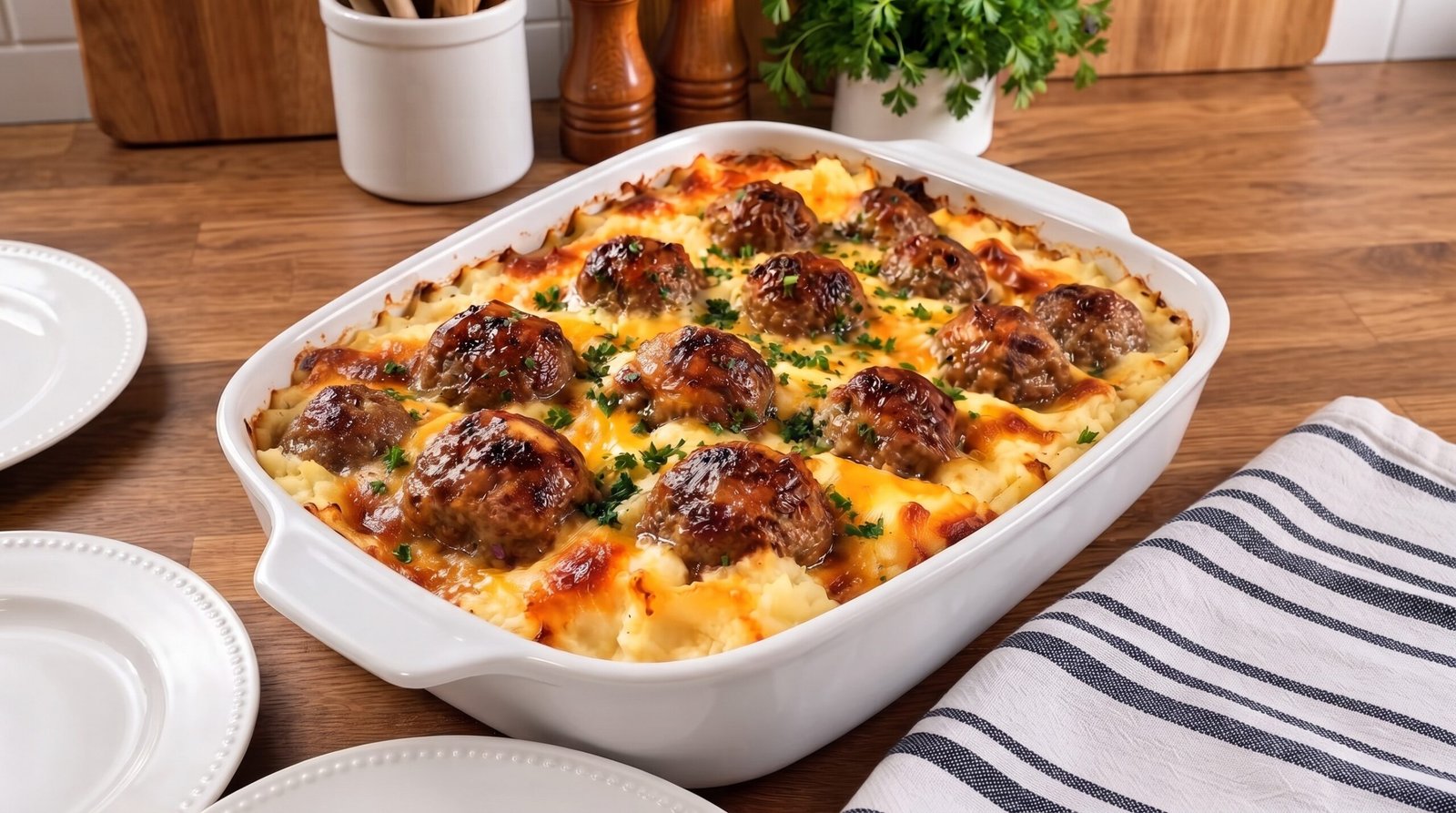
After a long shift at the office, the last thing I want to do is spend hours standing over the stove for several different pots and pans. I usually crave something comforting, something that feels like home without needing a massive cleanup process afterward. This meatball and mashed potato casserole has become my go-to solution on those nights when my energy levels are low but my hunger for a hearty meal is high. It brings together two classic components into one dish that bakes up bubbly and satisfying.
What I love about this meal is that it takes the basic concept of comfort food and turns it into a one-dish wonder. You get the savory, tender bite of seasoned meatballs nestled into a bed of creamy, fluffy mashed potatoes, all topped with melted cheese. It is the kind of dinner that provides a bit of warmth when the weather turns cold or when the day has been particularly taxing. I have made this countless times for my family and friends, and it consistently hits the spot without being complicated or fussy.
Why This Recipe Works
This casserole works because it relies on textures that complement each other. The meatballs provide a dense, savory protein, while the mashed potatoes act as a smooth, buttery canvas. When they are baked together, the juices from the meatballs seep into the potatoes, giving them an extra depth of flavor that you just do not get when serving them separately. The cheese on top creates a layer that holds everything together and provides a salty, melted finish that makes the whole plate feel complete.
Ease of preparation is another major factor in why this recipe stays in my weekly rotation. Because you can prepare the mashed potatoes while the meatballs are browning in the pan, you are not waiting around for long stretches of time. It is a straightforward process that does not require fancy equipment or advanced techniques. Most of the work is just basic prep, and the oven does the heavy lifting for the final stage, allowing you to clean your prep area while the smell of roasting meat fills the house.
Flavor-wise, this dish is approachable. It uses standard pantry staples like breadcrumbs, garlic, and fresh herbs to elevate the meat, while the potatoes provide a neutral base that carries the flavor of the butter and seasonings beautifully. You can easily adjust the intensity of the seasoning in the meatballs to suit your own taste, whether you like a bit of heat or prefer a more savory, herbal profile. It is a reliable dish that rarely disappoints because it hits those fundamental comfort food cravings with consistency and balance every time you bake it.
Ingredient Notes
Meatball Ingredients
- Ground beef: I prefer a mix that has a bit of fat, usually 80/20, because the fat keeps the meatballs from drying out in the oven. If you use lean ground beef, they may turn out a bit firmer.
- Breadcrumbs: Plain or seasoned breadcrumbs work fine here. They help bind the meat together and keep the texture tender.
- Garlic: Freshly minced garlic is always better than the jarred stuff. It gives the meatballs a nice punch of flavor that permeates the dish.
- Herbs: Dried parsley or oregano works well, but if you have fresh herbs, finely chopping them adds a brightness that cuts through the richness of the beef.
- Egg: This acts as the glue to hold the meatballs together so they do not fall apart when you move them from the skillet into the casserole dish.
Mashed Potato Ingredients
- Russet potatoes: These are my favorite for mashing because they are starchy and fluff up better than waxy potatoes like Yukon Golds, which can turn gummy.
- Butter: Use unsalted butter so you can control the saltiness of the potatoes yourself. The fat makes the potatoes velvety and rich.
- Milk or cream: Whole milk or heavy cream gives the best consistency. Pour it in slowly while mashing so you can stop once you reach your preferred texture.
- Salt and pepper: Keep it simple. Potatoes need a good amount of salt to really bring out their natural flavor.
Assembly Ingredients
- Shredded cheese: Sharp cheddar is a classic choice for this because it provides a bold flavor that holds up against the beef. You can use mozzarella if you prefer something that melts and stretches more.
- Garnish: Chopped fresh parsley adds a pop of color at the end. It makes the dish look finished and professional when you bring it out of the oven.
| Ingredient | Amount | Notes |
|---|---|---|
| Ground beef | 1.5 pounds | 80/20 fat content is ideal |
| Russet potatoes | 2.5 pounds | Peeled and cut into chunks |
| Breadcrumbs | 0.5 cups | Plain or seasoned |
| Garlic | 3 cloves | Minced finely |
| Egg | 1 large | Lightly beaten |
| Butter | 4 tablespoons | Unsalted and softened |
| Milk | 0.5 cups | Whole milk or heavy cream |
| Cheddar cheese | 1.5 cups | Shredded from a block |
| Salt | 1 teaspoon | Plus more for pasta water |
| Pepper | 0.5 teaspoon | Freshly cracked |
| Parsley | 2 tablespoons | Freshly chopped |
The Recipe
- Prep Time: 20 minutes
- Cook Time: 40 minutes
- Total Time: 60 minutes
- Servings: 4 to 6
- Difficulty: Easy
- Equipment: Large skillet, potato masher, large stockpot, 9×13 inch baking dish, meat thermometer.
Step-by-Step Instructions
Step 1: Prep the Potatoes
Start by peeling your potatoes and cutting them into uniform chunks, about one inch in size. Put them into a large stockpot and cover them with cold water by about an inch. Add a generous pinch of salt to the water. Place the pot on the stove over high heat and bring it to a boil. Once it reaches a rolling boil, reduce the heat to medium-low and let them simmer for about 15 to 20 minutes. You know they are ready when you can easily pierce a piece with a fork and it slides off without resistance.
Step 2: Prepare the Meatballs
While the potatoes are simmering, place the ground beef, breadcrumbs, minced garlic, herbs, egg, salt, and pepper into a large mixing bowl. Use your hands to mix everything until just combined. Be careful not to overwork the meat, or the meatballs will turn out tough. Shape the mixture into small, even balls, roughly one and a half inches in diameter. You should get about 18 to 20 meatballs from this amount of meat.
Step 3: Sear the Meatballs
Heat a tablespoon of oil in your large skillet over medium-high heat. Once the oil shimmers, place the meatballs in the pan in a single layer. You do not need to cook them through at this stage, just get a nice deep brown color on the outside. This usually takes about 6 to 8 minutes. Rotate them gently so all sides are browned. Once browned, remove them from the pan and set them aside on a plate lined with paper towels.
Step 4: Mash the Potatoes
Drain the potatoes well and return them to the empty pot. Place the pot back on the burner for about one minute on low heat to evaporate any extra water. Add the butter and half of the milk. Use your potato masher to break them down until they are smooth. Add the remaining milk slowly, mashing until they reach a creamy, fluffy consistency. Season with salt and pepper to taste.
Step 5: Assemble and Bake
Preheat your oven to 400 degrees Fahrenheit. Spread the mashed potatoes into the bottom of your 9×13 inch baking dish, smoothing out the top with a spatula. Nestle the browned meatballs into the potato bed, pressing them down slightly. Sprinkle the shredded cheddar cheese over the entire top, focusing on the spaces between the meatballs. Bake for 20 to 25 minutes until the cheese is bubbling and has turned a light golden brown. Before serving, verify with a meat thermometer that the meatballs have reached an internal temperature of 160 degrees Fahrenheit.
Mistakes I Made (So You Don't Have To)
Using Waxy Potatoes
Early on, I tried using red-skinned or waxy potatoes because they looked nice. This was a mistake because they did not absorb the butter and milk properly, leading to a lumpy and somewhat gluey mash. Stick to high-starch varieties like Russets or Yukon Golds to ensure a light, fluffy bed for your meatballs.
Overworking the Meat Mixture
I used to knead the meatball mixture like I was making bread dough. This resulted in dense, chewy meatballs. The trick is to combine the ingredients just until you don't see any dry breadcrumbs left. Gentle hands yield a much better texture in the final dish.
Not Draining the Potatoes Well
I once poured the water off the potatoes and immediately started mashing without letting the steam evaporate. The extra moisture made the potato base way too runny, and the casserole became soupy in the oven. Always let the potatoes sit in the hot pot for a minute to steam dry after draining.
Crowding the Skillet
I thought I could save time by putting all the meatballs in the pan at once. They ended up steaming in their own juices rather than browning, which ruined the flavor profile. Browning is essential for that savory crust. Work in two batches if your skillet is on the smaller side; it only adds a few minutes of work.
Variations and Tips
Adding Vegetables
You can easily mix in some frozen peas or corn into the mashed potatoes before spreading them in the dish. It adds a bit of texture and a burst of color. Just make sure they are thawed and drained well so they do not add excess moisture to the mash.
Making Ahead
If you have a busy week ahead, you can make the mashed potatoes and form the meatballs a day in advance. Keep them in separate containers in the fridge. Assemble and bake the dish when you are ready to eat. Just keep in mind that the cook time might increase by 5 minutes if the ingredients are cold going into the oven.
Herb Infusion
For a more herbal flavor, try adding finely chopped fresh rosemary or thyme to the potato mixture. Just a teaspoon goes a long way. It pairs beautifully with the beef and adds a sophisticated note that makes the meal feel special even on a Tuesday night.
Crispy Top Tip
If you want the cheese to get even more golden, turn on the broiler for the last 60 seconds of baking. Watch it very closely, though, as cheese can go from perfect to burnt in a heartbeat. The broiler provides that slightly charred look that many people find appetizing.
Storage and Reheating
If you have leftovers, they keep well in the refrigerator for up to 3 days when stored in an airtight container. Because this dish contains dairy and meat, you must ensure it reaches the refrigerator within two hours of coming out of the oven. Letting it sit out too long is a safety risk that is not worth taking.
When reheating, I find the microwave works, but the oven is better for maintaining the texture of the meatballs. If using the oven, cover the dish with foil and heat at 350 degrees Fahrenheit until it is steaming hot throughout. The internal temperature of the meat should reach 165 degrees Fahrenheit for safety. I do not recommend freezing this casserole, as the potatoes tend to lose their fluffy texture and become watery after being thawed, making for an unpleasant result.
Frequently Asked Questions
Can I use ground turkey instead of ground beef?
Yes, you can certainly swap the beef for ground turkey. Keep in mind that turkey is leaner, so the meatballs might be slightly less moist. You may want to add a tablespoon of olive oil to the meat mixture to compensate for the lower fat content of the poultry.
Is it necessary to brown the meatballs before baking?
While it might seem like an extra step, I highly recommend browning them first. This step builds the savory flavor and ensures the meatballs stay intact while baking. If you skip this, they will be cooked, but they will lack that deep, toasted exterior that really elevates the entire dish.
What should I do if my potatoes turn out too thick?
If your mash is too thick after adding the butter and milk, just add a splash more milk or a small amount of warm chicken broth, one tablespoon at a time. Mash again until you reach the desired consistency. It is better to go slow with the liquid so you do not overshoot it.
Can I add a sauce to the casserole?
You can definitely add a little gravy or a tomato-based sauce to the bottom of the dish before adding the potatoes. Just ensure it is not too thin, or the whole casserole will end up soggy. A thick mushroom gravy works exceptionally well with the beef and potatoes.
How do I know when the meatballs are fully cooked?
The best way to be certain is to use an instant-read meat thermometer inserted into the center of one of the largest meatballs. You are looking for a reading of 160 degrees Fahrenheit. This ensures the meat is safe to eat while remaining juicy and tender to the bite.
Final Thoughts
This meatball and mashed potato casserole is one of those reliable recipes that keeps things simple without sacrificing flavor. It relies on the basics, allowing the quality of your ingredients to shine through in a way that feels intentional and well-balanced. Every time I prepare this for dinner, it reminds me that you do not need complex techniques to put together a hearty meal.
I hope this dish finds its way into your regular rotation on those busy days when you need something solid and reliable. It is meant to be enjoyed, shared, and tweaked to fit whatever you happen to have in your pantry. Enjoy the process of pulling it together, and even more, enjoy the quiet moment of sitting down to a warm plate at the end of the day.