
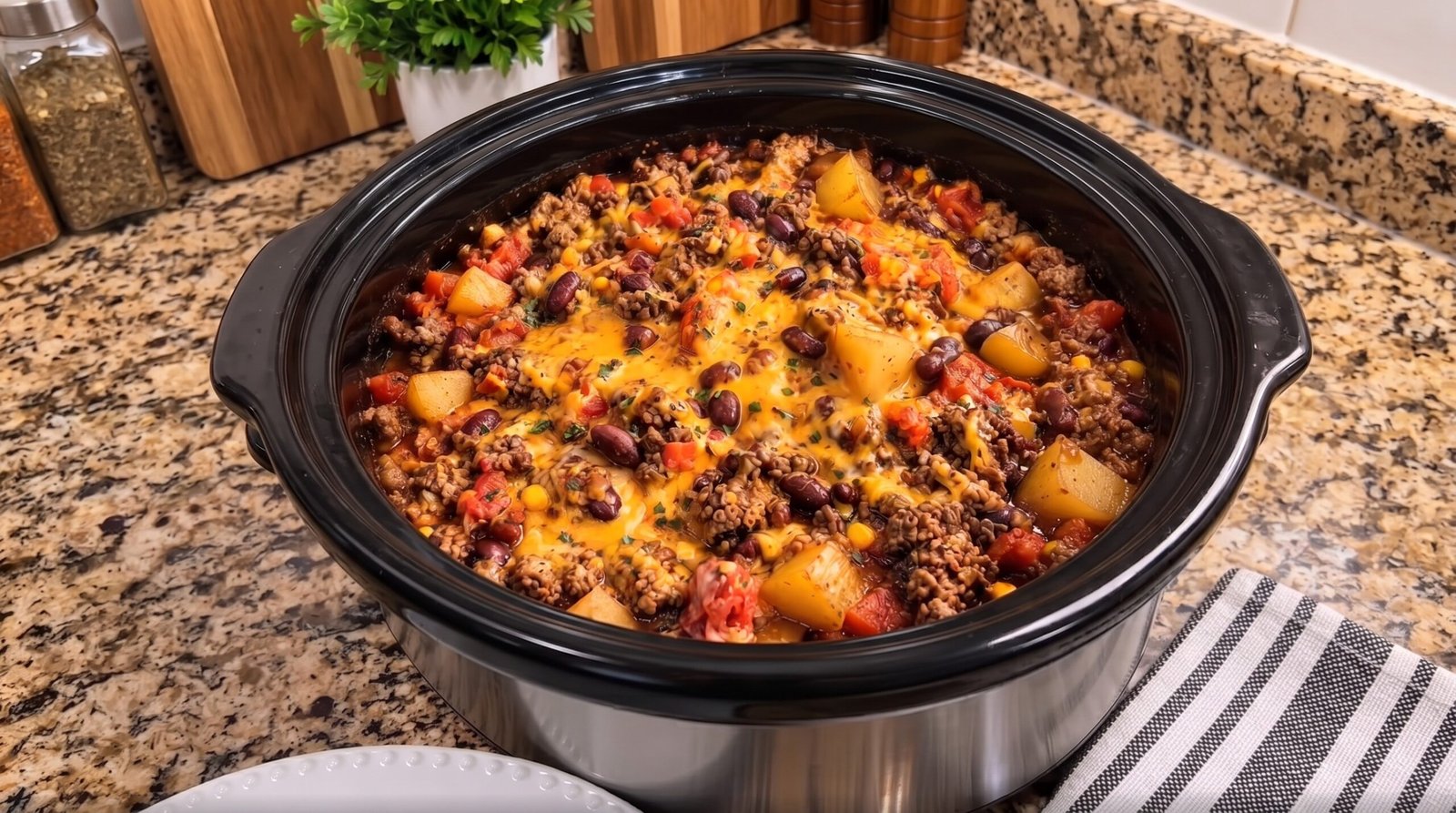
When the weather turns chilly and my schedule gets packed with errands, I often find myself searching for a dinner that requires very little active time but still feels substantial. I used to rely on pre-made meals, but I eventually learned that a simple combination of ground meat, starchy vegetables, and canned beans cooked low and slow creates a much more satisfying result. This Slow Cooker Ground Beef and Potato Chili has become my go-to for those busy days when I need a warm bowl of food waiting for me by evening. It is a hearty meal that relies on basic pantry staples and requires only one pot for the final cooking process, which makes cleanup feel manageable. I love how the potatoes soften while soaking up the juices from the meat and tomatoes, turning the entire dish into a thick, comforting stew. You will find that this preparation method offers a reliable way to get a full dinner on the table without constant monitoring or frequent trips to the stove.
Why This Recipe Works
The primary reason this slow cooker ground beef and potato chili works is the way the ingredients interact during the long, gentle cooking cycle. By browning the meat before putting it into the slow cooker, you start with a depth of flavor that would be missing otherwise. The ground beef releases its fats and juices into the mixture, which then get absorbed by the cubed potatoes. Because potatoes are starchy, they help thicken the sauce naturally as they soften, creating a texture that feels substantial and rich. You do not need to add thickeners like flour or cornstarch because the potatoes handle that job on their own during the four to six hours of cooking time.
Another aspect is the balance of acid and savory notes. The crushed or diced tomatoes provide the necessary acidity to cut through the richness of the beef, while the beans add a pleasant creaminess that contrasts with the firm, tender chunks of potato. The seasoning is straightforward, relying on standard chili spices that permeate the entire pot. Because the slow cooker maintains a consistent, low temperature, the flavors have time to meld together in a way that quick stovetop cooking often misses. You end up with a cohesive dish where every bite contains a bit of meat, a bit of potato, and a hint of bean. It is a forgiving recipe, so if you happen to leave it on the setting a bit longer, the worst that happens is the potatoes get even softer. It serves as a reliable base that you can customize with your favorite toppings once you get it into a bowl.
Ingredient Notes
The Protein Base
For this dish, I always look for ground beef that has about fifteen to twenty percent fat. If the beef is too lean, it can become dry or crumbly when cooked for several hours. The fat is what carries the flavor and keeps the meat tender within the tomato-based sauce. If you prefer a different kind of meat, ground turkey or pork can be used as a substitute, but keep in mind that these lean versions might need a little extra seasoning to make up for the lower fat content. Always make sure to brown the meat thoroughly in a skillet before adding it to the slow cooker to ensure the texture is right.
The Starchy Foundation
Russet or Yukon Gold potatoes are the best choices here. Russets break down slightly more and help thicken the sauce, while Yukon Golds hold their shape better if you prefer distinct chunks. I recommend cutting them into one-inch cubes. If the pieces are too small, they will turn into mush during the long cook time, and if they are too large, they might not cook through evenly by the time the rest of the meal is finished. Scrub the potatoes well, but you can choose to peel them or leave the skins on, depending on your preference for texture.
The Pantry Staples
Canned beans are essential for the texture of this chili. Kidney beans or pinto beans work well because they stand up to the heat without losing their shape. Make sure to drain and rinse the beans thoroughly under cold water before adding them to the pot to remove excess salt and the metallic taste often found in canning liquid. Canned tomatoes, either diced or crushed, provide the base for the liquid. If you like a thicker chili, use crushed tomatoes; for more texture, stick with diced. Do not forget a bit of tomato paste, which provides a concentrated flavor boost and helps deepen the color of the final dish.
| Ingredient | Amount | Notes |
|---|---|---|
| Ground beef | 2 pounds | 80/20 fat content is best |
| Potatoes | 3 large | Russet or Yukon Gold, cubed |
| Kidney beans | 2 cans | 15 ounces each, drained |
| Diced tomatoes | 1 can | 28 ounces, undrained |
| Tomato paste | 2 tablespoons | Adds depth to the sauce |
| Chili powder | 3 tablespoons | Adjust for heat preference |
| Cumin | 1 teaspoon | For a smoky undertone |
| Salt | 1 teaspoon | Plus more to taste |
| Beef broth | 1 cup | Helps keep things moist |
The Recipe
- Prep time: 20 minutes
- Cook time: 5 hours (on high) or 7 hours (on low)
- Total time: 5 hours 20 minutes to 7 hours 20 minutes
- Servings: 6 to 8 servings
- Difficulty: Easy
- Equipment needed: Skillet, slow cooker, knife, cutting board, measuring spoons, wooden spoon
Step-by-Step Instructions
Step 1: Prep the Ingredients
Start by washing and scrubbing your potatoes. I prefer to leave the skins on for a rustic feel, but you can peel them if you like. Use a sharp chef’s knife to cut the potatoes into uniform, one-inch cubes. Aim for a size that is small enough to cook through but large enough to stand up to several hours in the slow cooker. Once chopped, set the potatoes aside in a large bowl. Open the cans of beans and pour them into a colander. Rinse them under cold running water until the water runs clear, which helps remove the starch and excess salt from the canning liquid.
Step 2: Brown the Beef
Place a large skillet over medium-high heat. Add the two pounds of ground beef to the pan. Use a wooden spatula to break the meat into smaller pieces as it cooks. You want the beef to be thoroughly browned, meaning there should be no pink visible. This step is vital because it develops flavor and allows you to drain away excess grease. Once the meat is browned, remove it from the skillet and drain the fat. If you leave too much fat in the skillet, the chili might end up tasting overly greasy.
Step 3: Combine in the Slow Cooker
Transfer the browned ground beef into the basin of your slow cooker. Add the cubed potatoes, the drained and rinsed beans, the can of diced tomatoes with their juices, and the tomato paste. Pour in the cup of beef broth. This liquid is necessary to ensure the ingredients cook evenly and don't dry out. Add your spices—the chili powder, cumin, and salt—directly on top of the mixture. Use a large spoon to stir everything together until the tomato paste is dissolved and the spices are evenly distributed throughout the other ingredients.
Step 4: The Slow Cook Process
Cover the slow cooker with its lid. Set the device to the low setting if you have about seven hours before you need to eat, or to the high setting if you have about five hours. The goal here is for the potatoes to become fork-tender and for the beef to absorb the flavors of the tomatoes and spices. Avoid opening the lid during the first few hours, as this releases heat and moisture, which will significantly increase the cooking time. If you use the high setting, you can check the potatoes after four hours to see how they are progressing.
Step 5: Check and Adjust
Once the cooking time is complete, use a fork to test the largest piece of potato. It should be tender all the way through, with no hard resistance. The liquid in the slow cooker should be thick and fragrant. Give the chili a good stir. Taste a small spoonful and add more salt or a pinch of extra chili powder if you feel it needs more depth. If the chili seems a little too thick for your preference, you can stir in a splash of water or more broth, but usually, the natural starches from the potatoes make it just right.
Step 6: Serve
When you are ready to serve, ladle the hot chili into bowls. Because this dish is quite heavy, I like to serve it with simple toppings like shredded sharp cheddar cheese, a dollop of sour cream, or even some fresh cilantro if I have it on hand. The internal temperature of the beef should be well over 165 degrees Fahrenheit after this length of cooking, ensuring it is safe and ready to eat. If you are serving this to a crowd, setting out a variety of toppings allows everyone to customize their bowl.
Mistakes I Made (So You Don't Have To)
Overloading the Potatoes
The first time I made this, I added way too many potatoes, thinking more starch would be better. It ended up absorbing all the liquid, leaving me with a dry, clumpy mess that was hard to stir. I learned that three large potatoes are plenty for this amount of beef. If you accidentally add too many, the best fix is to stir in an extra half-cup of beef broth during the last hour of cooking to rehydrate the sauce.
Skipping the Browning Step
I once tried putting the raw ground beef directly into the slow cooker, thinking it would save time and dishwashing. The resulting chili was bland and the texture of the meat was strange—almost boiled rather than savory. Browning the meat in a pan first is not optional if you want a good final product. If you ever skip this, the fat won't render properly, and you will lose the deep, rich flavor that defines a good chili.
Cutting Vegetables Too Large
I once cut my potato cubes about two inches wide because I was in a rush. By the time the meat was cooked, the potatoes were still hard in the center. I had to continue cooking for another two hours, which caused the rest of the ingredients to lose their texture. Always aim for consistent, one-inch cubes to ensure everything finishes cooking at the same time. If you realize your chunks are too large, you can fish them out, slice them smaller, and put them back in, but it is easier to be precise at the start.
Not Rinsing the Beans
Early on, I dumped the beans straight from the can into the pot without rinsing them. The starch from the can caused the sauce to become gummy and gave the chili a slightly metallic, bitter edge. Now, I always take the time to rinse the beans until the water is completely clear. It makes a significant difference in the clarity and flavor of the sauce. If you forget this step, you can try to balance the flavor with an extra teaspoon of tomato paste or a touch of sugar, but prevention is much better.
Variations and Tips
Spicing It Up
If you enjoy more heat, replace the standard chili powder with a blend that includes chipotle powder or cayenne. You can also add a finely minced jalapeño pepper to the slow cooker at the beginning. Just be careful, as the heat intensifies over the long cooking period. Always start with a little and taste at the end before adding more.
Adding Vegetables
You can easily incorporate more vegetables into this dish to make it heartier. Bell peppers, carrots, or even celery work well. If you choose to add these, chop them into sizes similar to your potatoes so they cook evenly. Add them at the same time as the potatoes. This is a great way to use up whatever is left in your refrigerator crisper drawer.
Time-Saving Prep
To save time on a busy day, brown the ground beef the night before. Let it cool completely, store it in the refrigerator in an airtight container, and then just dump it into the slow cooker with the other ingredients in the morning. This saves you from having to clean a skillet before work or during a hectic evening prep session.
The Make-Ahead Advantage
This chili honestly tastes better the next day because the spices have more time to meld with the starch and meat. If you have the time, make it a day in advance, let it cool, and reheat it slowly on the stove or in the microwave. It is the perfect meal to have ready when you know you will be coming home late and just need something satisfying to eat.
Storage and Reheating
If you have leftovers, allow the chili to cool to room temperature, but never leave it out on the counter for longer than two hours. Once cooled, store it in an airtight container in the refrigerator. It will stay good for up to three days. I find that the texture holds up well, and the flavors often improve as it sits in the fridge.
When you are ready to eat the leftovers, reheat them until they reach an internal temperature of at least 165 degrees Fahrenheit. You can do this on the stovetop over low heat, stirring occasionally to ensure even heating, or in the microwave. If you use the microwave, heat in short intervals and stir in between to avoid hot spots. This dish does not freeze well because the potatoes become mealy and soft after thawing, so I recommend only making as much as you can eat within a few days.
Frequently Asked Questions
Can I leave the slow cooker on all day while I am at work?
Yes, this recipe is perfect for that. As long as your slow cooker has a reliable low setting, you can safely leave it to cook for seven to eight hours. The potatoes will become very soft, which many people find comforting. Just make sure you are not using a delay-start function that leaves the raw meat sitting at room temperature for several hours before the heat turns on.
Is it necessary to use beef broth, or can I use water?
Beef broth adds a depth of flavor that water lacks, especially since you are using ground beef as the main protein. If you do not have broth, you can use water, but I would recommend adding a little extra salt or a bouillon cube to keep the flavor profile robust. Using water alone might leave the dish tasting a bit diluted.
What should I do if the chili is too thick after cooking?
If the sauce becomes too thick for your liking, simply stir in a quarter-cup of water or broth at a time until you reach your desired consistency. The potatoes continue to absorb liquid even after the heat is turned off, so it is normal for the chili to thicken up further once it sits in the bowl or in the fridge.
Can I substitute sweet potatoes for regular potatoes?
You certainly can. Sweet potatoes add a different flavor profile, making the chili slightly sweeter. Keep in mind that sweet potatoes tend to break down faster than russet potatoes, so check on them a little earlier to ensure they do not dissolve into the sauce. The cooking time remains the same, but the final texture will be slightly creamier.
Why does my chili taste bland even after adding the spices?
If the chili tastes bland, it usually needs more salt or acidity. Salt is a flavor enhancer, and a small amount can wake up all the other ingredients. If salt doesn't fix it, try a small squeeze of lime juice or a teaspoon of vinegar right before serving. The acid brightens the heavy flavors and makes the chili taste fresh again.
Final Thoughts
Making this slow cooker ground beef and potato chili is a straightforward process that rewards you with a very comforting meal. By paying attention to the initial browning of the meat and the size of the potato cubes, you ensure that the texture is exactly where it needs to be. It is a hearty dish that serves well for dinner and leaves you with leftovers for the following days.
I hope this recipe becomes a regular part of your rotation when you need something reliable and filling. It does not require complex techniques or fancy ingredients, just a little patience as the slow cooker does the hard work. Enjoy the process of putting it together and the warmth it brings to your table.