
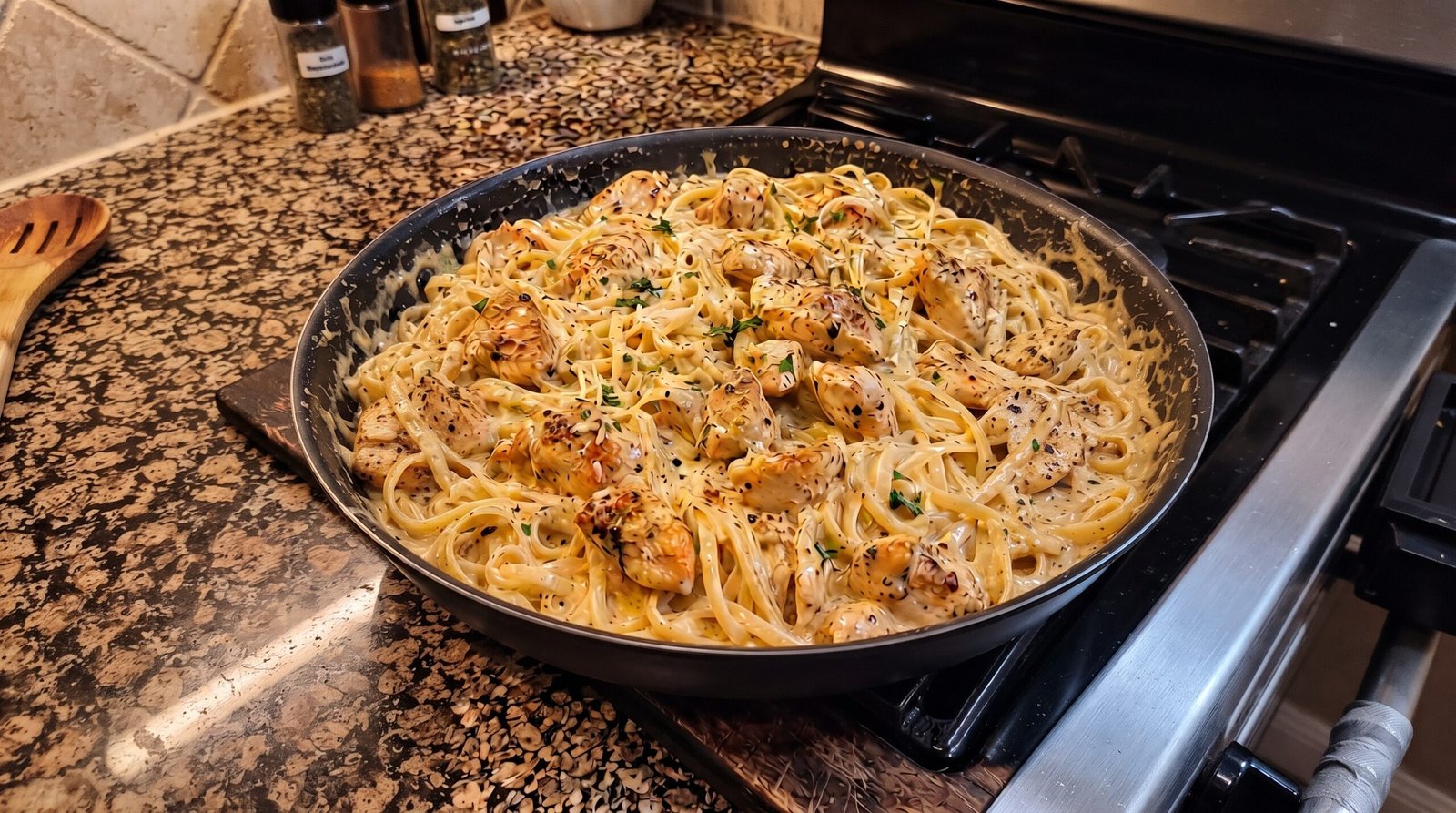
It usually happens on a Tuesday around five in the evening when the fridge looks mostly empty and the clock is ticking toward dinner time. I have been there many times, staring at a package of chicken breast and a lonely box of pasta, wondering how to turn those items into something satisfying without spending all night cleaning pots and pans. This Creamy Garlic Chicken Linguine is the answer I return to more than any other because it relies on staples I keep in my pantry and the prep is straightforward enough that I can chat with my family while I work at the stove. You end up with a pan of pasta coated in a sauce that clings to every strand, with savory pieces of chicken scattered throughout. It is one of those meals that feels like it took a lot of effort, but really, it just comes down to paying attention to the heat and the timing.
Why This Recipe Works
This recipe succeeds because it focuses on a single pan, which minimizes cleanup and keeps the flavor concentrated. When you cook the chicken in the same vessel where you build your sauce, all the small, browned bits left in the bottom of the skillet become part of the flavor profile. These bits, often called fond, add a depth that you simply cannot get if you cook the components separately. By using heavy cream and reducing it slightly, you create a natural thickness that does not rely on flour or cornstarch, keeping the texture smooth and velvety.
The use of linguine is a deliberate choice for this dish. Its shape is wider and flatter than spaghetti, which allows it to hold onto the heavy, garlicky sauce much better. Spaghetti often lets the sauce slide right off, leaving you with a pool of liquid at the bottom of the bowl. With linguine, the surface area is enough to ensure every bite is coated evenly. Furthermore, the timing of the pasta is synced with the cream reduction. By the time your cream has reached the right thickness, your pasta is usually ready to join the party.
Another reason this works is the simplicity of the seasoning. We are relying on garlic, salt, pepper, and perhaps a touch of dried herbs. Because there are no competing bold flavors, the richness of the cream and the savory nature of the chicken stay at the forefront. It is a reliable dish that behaves the same way every time you make it, provided you keep an eye on the heat level so the garlic does not scorch. It provides a consistent, filling meal that satisfies without feeling overly complicated or fussy.
Ingredient Notes
The Poultry
You want to use boneless, skinless chicken breasts for this recipe. Because they are lean, they cook through quickly, which is necessary for a fast dinner. I find that cutting the breast into bite-sized pieces about one inch in size is the secret to getting an even sear. If the pieces are too large, they stay raw in the center while the outside gets too dark. If you prefer, you could use chicken thighs, though you will need to add about two minutes to the total cooking time because thighs are slightly denser and take longer to reach the safe internal temperature of 165 degrees Fahrenheit.
The Pasta and Liquid
Linguine is the star here, but if you only have fettuccine in your pantry, it works exactly the same. The key is to boil the pasta in salted water until it is just slightly shy of done. It should have a tiny bit of resistance when you bite into it. When it finishes in the sauce, it will reach that ideal texture. For the liquid, use high-quality heavy cream. Do not reach for half-and-half or milk, as they lack the fat content needed to thicken properly when heated. If you try to swap these, the sauce will stay thin and watery, no matter how long you let it bubble in the pan.
The Aromatics and Seasonings
Garlic is the heart of this dish. You want to mince it finely so it distributes throughout the sauce rather than appearing as large, overpowering chunks. I always suggest using fresh cloves. Jarred minced garlic often has a slight vinegar taste that changes the flavor profile of the cream sauce. For the seasoning, kosher salt and freshly cracked black pepper are enough. If you want a little color or a slight earthy note, a teaspoon of dried parsley or thyme works beautifully when stirred into the cream. Always add your herbs toward the end so they do not lose their color or flavor.
| Ingredient | Amount | Notes |
|---|---|---|
| Chicken breast | 1.5 pounds | Cut into 1-inch cubes |
| Linguine | 12 ounces | Dry pasta |
| Heavy cream | 1.5 cups | Room temperature if possible |
| Garlic | 5 cloves | Finely minced |
| Olive oil | 2 tablespoons | For the pan |
| Salt | 1 teaspoon | Plus more for pasta water |
| Black pepper | 0.5 teaspoon | Freshly cracked |
| Parmesan cheese | 0.5 cup | Freshly grated |
| Dried parsley | 1 teaspoon | Optional for garnish |
The Recipe
- Prep Time: 10 minutes
- Cook Time: 15 minutes
- Total Time: 25 minutes
- Servings: 4 servings
- Difficulty: Easy
Equipment:
– Large skillet with deep sides
– Large pot for boiling water
– Colander
– Tongs
– Wooden spoon
– Chef knife and cutting board
Step-by-Step Instructions
Step 1: Prepare the Boiling Water
Start by bringing a large pot of water to a boil. Use a generous amount of salt in the water, as this is your only chance to season the pasta itself from within. When the water reaches a rolling boil, add the linguine. Follow the package instructions for cooking time, but subtract one minute from the recommended time. You want the pasta to finish cooking inside the sauce later, so it should be slightly firm when you drain it.
Step 2: Sear the Chicken
While the water heats up, prepare your chicken. Pat the pieces dry with a paper towel, which helps them develop a better color in the pan. Season the pieces with half of your salt and pepper. Heat the olive oil in your large skillet over medium-high heat. Once the oil shimmers, add the chicken in a single layer. Do not crowd the pan, or the chicken will steam rather than brown. Cook the chicken for about 5 to 6 minutes, turning occasionally with tongs. Ensure the internal temperature reaches 165 degrees Fahrenheit using a meat thermometer. Once cooked through, remove the chicken from the pan and set it aside on a plate.
Step 3: Develop the Garlic Base
Using the same skillet, turn the heat down to medium. You should see some small brown bits stuck to the bottom of the pan from the chicken. Add the minced garlic. Stir it constantly with a wooden spoon for about 30 to 45 seconds. The smell should become very fragrant, and the garlic should turn a light golden color. Be very careful here, as garlic burns in seconds. If you smell anything acrid or notice the garlic turning dark brown, take the pan off the heat immediately.
Step 4: Create the Cream Sauce
Pour the heavy cream into the skillet, scraping the bottom with your wooden spoon to lift all those flavorful brown bits into the liquid. Bring the cream to a gentle simmer. Do not let it boil violently, or it may separate. Let it simmer for about 3 to 4 minutes. You are looking for the cream to reduce slightly and thicken enough to coat the back of your spoon. This is the moment the magic happens, as the cream takes on the flavor of the chicken and the garlic.
Step 5: Combine and Finish
Lower the heat to low. Add the cooked chicken back into the skillet along with its resting juices. Toss everything together, then add the cooked linguine directly into the pan. Pour the grated Parmesan cheese over the top. Use your tongs to mix the pasta and sauce vigorously. The heat from the pasta and the remaining heat in the sauce will melt the cheese and help the sauce bind to the strands of linguine. If the sauce seems too thick, you can add a tablespoon or two of the pasta cooking water to loosen it up. Taste and add any remaining salt or pepper if needed. Sprinkle with parsley before serving.
Mistakes I Made (So You Don't Have To)
Overcrowding the Skillet
In my early attempts, I would dump all the chicken into the pan at once. This caused the temperature to drop and the chicken to release all its moisture, resulting in pale, rubbery pieces. Now, I always cook the chicken in two batches if I have to. It takes an extra minute or two, but the difference in texture and color is significant. If you notice your chicken looks grey rather than golden, your pan was likely too crowded.
Burning the Garlic
I once walked away to grab a drink while the garlic was supposed to be softening. When I returned, it was dark brown and tasted bitter. Because minced garlic is small, it cooks incredibly fast. I have learned to have my heavy cream measured and ready right next to the stove. As soon as the garlic hits the golden stage, I immediately pour in the cream. This stops the cooking process instantly and prevents that bitter, burnt flavor from ruining the whole sauce.
Boiling the Pasta Too Long
I used to follow the package instructions for the pasta time exactly. By the time I added the cooked pasta to the cream sauce, it would end up mushy and start breaking apart. Now, I always test the pasta a minute before the package says it is done. It should feel firm to the tooth. Since it finishes in the hot cream, it reaches the perfect state of doneness just before I serve it. It is much better to have slightly firm pasta than overcooked, mushy noodles.
Adding Cold Cream
I once poured cold heavy cream straight from the fridge into a hot pan. The temperature difference made the cream react strangely and it took longer to start simmering, which risked overcooking the garlic. Now, I pull the cream out of the fridge when I start prepping the chicken. It only needs to sit on the counter for ten minutes to take the chill off. This small step ensures the sauce comes to a simmer much faster and stays more stable while it reduces.
Variations and Tips
Adding Vegetables
If you want to add some color or texture, you can toss in a handful of fresh baby spinach during the final step. Just add the leaves to the skillet when you add the chicken and pasta. The residual heat will wilt the spinach in about thirty seconds. It does not change the flavor much, but it adds a nice pop of color and some extra volume to the dish.
Making It Ahead
You can cook the chicken and boil the pasta ahead of time. Store them in separate containers in the fridge. When you are ready to eat, make the sauce fresh in the skillet, then add the chicken and pasta to reheat them in the cream. Do not try to store the whole finished dish for too long, as the pasta will soak up the sauce and become bloated. Fresh sauce is always superior.
Adjusting the Consistency
Sometimes, the sauce might thicken up too much while you are tossing everything together. This often happens if the pasta is very starchy. I keep a mug near the stove to scoop out about half a cup of the pasta cooking water before I drain the noodles. If the sauce is too thick for your liking, just add a splash of that water. The starch in the water helps keep the sauce silky and prevents it from clumping.
A Note on Heat
If you enjoy a bit of spice, add a pinch of red pepper flakes when you add the garlic to the skillet. It provides a subtle warmth that cuts through the richness of the heavy cream. Only use a small amount, as the heat can intensify quickly in the cream sauce. You can always add more at the end, but you cannot take it out once it is in there.
Storage and Reheating
If you have leftovers, they should be stored in an airtight container in the refrigerator. You must move the food to the fridge within two hours of cooking to keep it safe. Cream-based sauces do not have a long shelf life, so I recommend eating these leftovers within two days. Do not try to freeze this dish. The heavy cream will separate and turn grainy when it thaws, and the texture of the pasta will break down entirely, resulting in a dish that is unappealing once reheated.
When you are ready to reheat, use the stove. Place the pasta in a small skillet over low heat. Add a tiny splash of water or a little more cream to help loosen the sauce as it warms up. Stir constantly to ensure the heat is distributed evenly. Do not use the microwave if you can avoid it, as it tends to heat unevenly and can cause the cream to break or the chicken to become tough. Heat until the dish is steaming hot throughout, aiming for an internal temperature of 165 degrees Fahrenheit.
Frequently Asked Questions
Can I use chicken thighs instead of breasts?
Yes, absolutely. Chicken thighs are actually quite forgiving because they have a bit more fat. They stay tender even if you accidentally cook them for a minute or two too long. Just remember that they are slightly thicker, so keep an eye on your thermometer to ensure they reach the 165 degree mark.
Why is my sauce oily?
This usually happens if you use too much oil to cook the chicken or if you do not mix the Parmesan cheese in properly. When the cheese melts, it releases fat, and if the cream is not emulsified well, it can look greasy. Make sure you use just enough oil to coat the bottom of the pan and whisk the sauce well when adding the cheese to bring everything together.
What if I do not have a meat thermometer?
I highly recommend getting one. It is the only way to know for sure if your chicken is cooked. However, if you are in a pinch, check for color. The chicken should be white all the way through, and the juices should run clear. Never rely on just the timer, as the heat of the stove can vary significantly from one kitchen to another.
Can I use dried garlic powder instead of fresh?
It is not recommended for this specific recipe. The fresh garlic provides a base flavor that defines the sauce. If you must use powder, it will not have the same punchy, aromatic quality. If you are stuck with powder, add it to the cream, but do not expect the same result. Fresh is always the way to go for this dish.
Does the alcohol in the sauce cook off?
There is no alcohol in this recipe. I prefer to keep the ingredients simple and focused on the garlic and cream. If you see other recipes calling for white wine, know that most of the alcohol cooks off, but the acidity remains. This version is intentionally mild and relies on the garlic for its flavor profile.
Final Thoughts
Making this Creamy Garlic Chicken Linguine is one of my favorite ways to spend a short amount of time in the kitchen. It is reliable, satisfying, and uses ingredients that I almost always have on hand. It reminds me that you do not need a list of twenty items to put a good meal on the table. Sometimes, a few quality ingredients and a bit of focus are all it takes.
I hope this becomes a staple in your home just as it has in mine. Remember to keep your heat in check, take care of your garlic, and enjoy the process of watching that sauce come together. Cooking should feel like a relief at the end of the day, and I hope this dish brings a little bit of that comfort to your table tonight.