
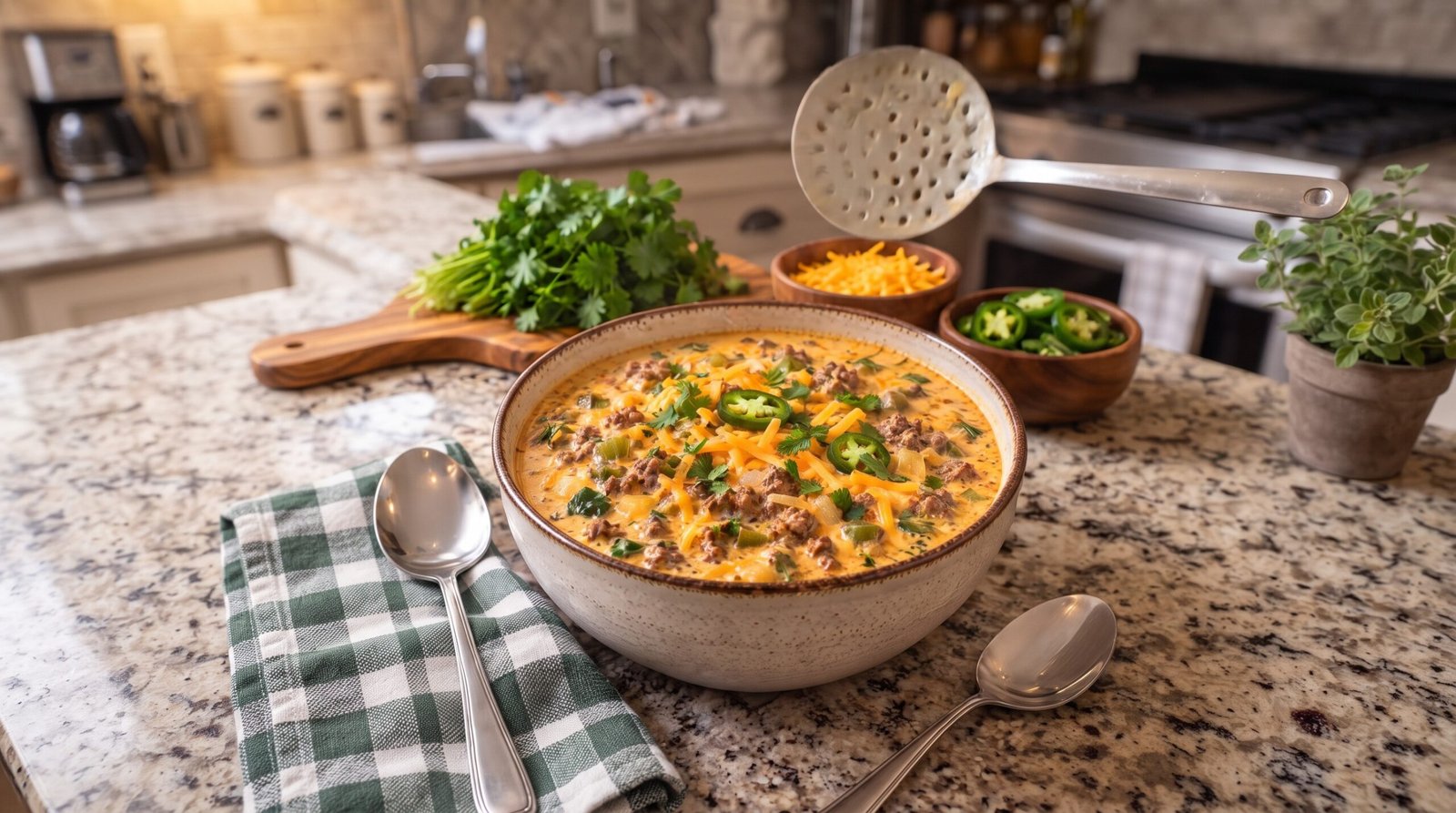
I used to think that queso was strictly for dipping chips during a game, but a few years ago, I started experimenting with turning those flavors into a full meal. There is something satisfying about a bowl of rich, savory soup that combines ground meat with melted cheese and fresh peppers. It has become my go-to when the weather turns cold or when I want a meal that feels indulgent without having to order takeout. This beef and cheese queso soup comes together quickly, making it a reliable choice for a busy evening when you have limited time but still want something hearty for your family.
You are going to get a creamy, flavorful bowl of comfort food that balances the saltiness of the beef with the tang of fresh cheddar and the heat of jalapeños. It is filling enough to serve as a standalone main course, though it also works well when paired with some crusty bread or extra garnishes.
Why This Recipe Works
The main reason I reach for this recipe again and again is how well the textures complement each other. By browning the ground beef first, you create a depth of flavor that carries through the base of the soup. The fat from the meat helps sauté the aromatics, meaning you do not need to add extra oil or butter to the pot. This creates a foundation that is rich but not heavy.
Another reason this dish succeeds is the use of fresh ingredients versus processed ones. While some recipes rely on pre-packaged cheese sauces, using high-quality sharp cheddar melted into a creamy base provides a cleaner taste. The jalapeños add a bright, sharp heat that cuts through the richness of the cheese. This prevents the soup from feeling one-dimensional on the palate.
Simplicity is also a major factor. The process is straightforward, requiring only one large pot and about thirty minutes of active effort. You are not spending hours watching a stove or waiting for flavors to meld over a long simmer. Because the ingredients are simple, the quality of what you buy matters. Fresh cilantro, fresh peppers, and a good block of cheese make a difference that you can taste in every spoonful.
It is also a practical meal for feeding a group. If you are having friends over, it is easy to scale up the ingredients without complicating the cooking process. Everyone can customize their bowl with extra cilantro or more heat if they prefer. It is a reliable, crowd-pleasing option that does not require fancy equipment or advanced techniques to pull off successfully.
Ingredient Notes
The Beef and Aromatics
The ground beef is the anchor of this soup. I prefer using an 80/20 or 85/15 mix because the fat provides flavor and keeps the meat tender during the browning process. You do not want it too lean or it can become grainy when stirred into the cheese. I also use a standard white or yellow onion for the base, diced finely so it softens quickly without leaving large, crunchy bits.
The Cream and Cheese
For the liquid base, I combine a good quality beef broth with heavy cream. The broth adds a savory depth that water simply cannot provide, while the cream gives the soup its velvet texture. When it comes to the cheese, always buy it in a block and grate it yourself. Pre-shredded bags are coated in cellulose, which prevents them from melting smoothly. This can leave your soup with a gritty texture instead of a silky one. A sharp cheddar provides the best contrast to the richness of the cream.
The Fresh Elements
The heat in this soup comes from fresh jalapeños. I prefer to remove the seeds if I want a milder experience, or leave them in if I am cooking for people who enjoy a bit of spice. The fresh cilantro added at the end provides a necessary herbal pop that lifts the heavy flavors. It acts like a bright accent note in a song, balancing the richness of the dairy.
| Ingredient | Amount | Notes |
|---|---|---|
| Ground beef | 1 pound | Use 80/20 for best flavor |
| Onion | 1 medium | Diced into small, even pieces |
| Jalapeños | 2 to 3 | Remove seeds for less heat |
| Beef broth | 3 cups | Low sodium allows for better salt control |
| Heavy cream | 1.5 cups | Room temperature helps it incorporate better |
| Sharp cheddar | 8 ounces | Grate it fresh from a block |
| Garlic | 3 cloves | Minced fresh |
| Cilantro | 0.5 cup | Roughly chopped for garnish |
| Salt | 0.5 teaspoon | Adjust to your preference |
| Black pepper | 0.25 teaspoon | Freshly cracked if possible |
The Recipe
- Prep Time: 10 minutes
- Cook Time: 25 minutes
- Total Time: 35 minutes
- Servings: 4 servings
- Difficulty: Easy
Equipment needed:
– One large heavy-bottomed pot or Dutch oven
– A wooden spoon or spatula
– A cheese grater
– A sharp kitchen knife and cutting board
– A measuring cup for liquids
Step-by-Step Instructions
Step 1: Brown the Beef
Start by placing your large pot over medium-high heat. Once the pot is hot, add the ground beef. Break it apart with your wooden spoon as it cooks. You want to cook it until no pink remains and it is well-browned. This browning stage is where the base flavor is established. Do not rush this; you want the beef to develop a deep color. Once finished, use a slotted spoon to remove the meat, leaving about one tablespoon of fat in the pot. If the meat was very lean and there is no fat left, add a tiny splash of oil.
Step 2: Sauté the Aromatics
Add the diced onions and the minced jalapeños to the pot with the reserved beef fat. Lower the heat to medium. Sauté these for about five to seven minutes, stirring occasionally. You are looking for the onions to turn translucent and slightly golden. If they start to brown too quickly, turn the heat down a bit further. Finally, stir in the minced garlic and cook for just sixty seconds until it becomes fragrant. Keep a close eye on the garlic because it burns very easily and can turn bitter.
Step 3: Create the Soup Base
Once the aromatics are softened, pour in the beef broth. Use your spoon to scrape up any browned bits from the bottom of the pot, as these contain a lot of flavor. Bring the broth to a gentle simmer. Once it is simmering, return the cooked beef to the pot. Let this mixture simmer for about ten minutes. This allows the flavors to meld together and ensures the onions are completely soft.
Step 4: Add the Cream and Cheese
Lower the heat to low. This is the most important step to prevent the cheese from splitting. Slowly stir in the heavy cream. Let it warm through for a minute or two, but do not let it reach a hard boil. Gradually add the grated cheddar, one handful at a time, stirring constantly in a figure-eight motion. Wait for each handful to melt fully before adding the next. If the cheese gets too hot, the oil will separate from the protein, resulting in a greasy texture.
Step 5: Final Seasoning and Garnish
Once all the cheese is incorporated and the soup is smooth, taste it. Add salt and pepper carefully, keeping in mind that the beef broth and cheese already contain salt. Turn off the heat. Stir in half of the chopped fresh cilantro. The residual heat of the soup will wilt the cilantro and release its aromatic oils.
Step 6: Serve
Ladle the hot soup into bowls immediately. Top each serving with the remaining fresh cilantro and a few extra slices of jalapeño if you like it spicy. Serve it while it is hot, as the texture is at its best right after it is finished.
Mistakes I Made (So You Don't Have To)
Using Pre-shredded Cheese
My first attempt at this resulted in a grainy mess. I learned the hard way that bags of shredded cheese contain potato starch or cellulose to keep the shreds apart. When you melt these into a liquid, the starch prevents the cheese from becoming a smooth sauce. Always buy a solid block and grate it yourself. It takes an extra minute, but the result is silky and smooth.
Boiling the Cheese
I once let the soup come to a rolling boil after adding the cheddar. The cheese separated, and a pool of orange oil formed on top. The soup was still edible, but it lacked that creamy, uniform texture. Once you add the dairy, you must keep the heat at the lowest setting and never let it boil. If you accidentally get it too hot, remove the pot from the heat immediately and stir vigorously to try and bring the emulsion back together.
Not Browning the Meat Enough
I used to rush the browning process because I was hungry. I realized that if the beef is just gray and steamed, the flavor of the soup is bland. You need the beef to have actual brown bits on it. These bits provide the savory foundation that defines the taste of the broth. Take your time to get a good color on the meat before moving on to the onions.
Over-salting the Broth
Since I use beef broth and cheddar cheese, both of which are naturally salty, I often added extra salt without tasting first. I ended up with a soup that was almost too salty to finish. Now, I always wait until the very last step to adjust the seasoning. Taste the soup after everything is melted and combined. You will likely find that it needs very little, if any, additional salt.
Variations and Tips
Adding Roasted Peppers
If you have time, roast the jalapeños or even some bell peppers before adding them to the soup. Roasting adds a smoky dimension that pairs well with the sharp cheddar. You can place the peppers under a broiler until the skins char, then peel them, chop them, and proceed with the recipe as written. This adds a depth that is subtle but very effective.
Making it Ahead
This soup is great for batch cooking. If you prepare it ahead of time, let it cool completely before putting it in the fridge. When reheating, do it slowly on the stovetop over low heat. If the soup seems too thick after being in the fridge, add a splash of beef broth to loosen it up. Do not reheat it in the microwave, as this can cause the cheese to separate even after it has already been properly emulsified.
Protein Substitutions
While I prefer ground beef, you can use ground turkey or chicken if you prefer. Just be aware that these meats have less fat, so you might need to add a teaspoon of butter or oil when sautéing the onions to ensure the aromatics cook through properly. The flavor profile will change slightly, so you may need to adjust your seasonings.
Adding Bulk
If you want a heartier soup, consider adding some canned black beans or corn. Drain and rinse the beans thoroughly before adding them in step three when you return the beef to the pot. The beans add texture and make the meal go a bit further. Just remember that adding more solids will mean you might need a little extra broth to keep the right consistency.
Storage and Reheating
If you have leftovers, store them in an airtight container in the refrigerator. It is important to get the soup into the fridge within two hours of cooking to keep it safe. You can keep it for up to three days. Dairy-based soups like this one generally do not freeze well, as the cream and cheese tend to separate and become grainy once thawed.
To reheat, put the soup in a saucepan over low heat. Stir frequently. If you notice the texture is becoming stiff or the fats are starting to pool, keep stirring continuously. Once the soup is steaming hot, it is ready to eat. If you are serving it for lunch the next day, a gentle reheat on the stove is much better than using the microwave, as it prevents the cheese from scorching or separating.
Frequently Asked Questions
Can I use a different type of cheese?
You can use a blend, but ensure that at least half of it is a sharp cheddar for the best flavor. Monterey Jack is a great addition because it melts very easily and contributes to that smooth, creamy consistency. Avoid using pre-packaged processed cheese slices, as they contain additives that alter the flavor significantly and do not offer the same quality as a block of natural cheese.
Why does my soup keep separating?
Separation usually happens because the heat is too high or the cheese was added too quickly. When the cheese proteins get too hot, they shrink and squeeze out the fat, which is the oil you see on top. Always keep the heat on low when adding cheese and add it in small, manageable amounts. If it does separate, turn off the heat and stir quickly to try and re-emulsify the sauce before it cools down too much.
What should I serve with this soup?
Because this is a rich, cheesy dish, I like to balance it with something fresh or crunchy. A side of toasted sourdough bread or even some corn chips works well for dipping. You could also serve a simple salad with a light vinaigrette on the side to provide a crisp contrast to the warm, creamy soup. Keep the side dishes simple so they do not compete with the bold flavors of the main bowl.
Can I make this soup spicy?
To increase the heat, leave the seeds and ribs in the jalapeños when you dice them. You could also add a pinch of cayenne pepper or a teaspoon of hot sauce when you sauté the onions. Taste your jalapeños before you add them to the pot, as their heat can vary wildly from one pepper to the next. If you want a controlled heat, add a little at a time and taste the soup as you go.
Is this dish gluten-free?
This recipe as written does not call for any flour or thickeners, so it should be gluten-free, provided you check the labels on your beef broth and any other packaged ingredients. Sometimes commercial broths can contain hidden wheat or yeast extracts. Always verify the ingredients on your specific products to be certain. If you want to thicken the soup, use cornstarch rather than flour, but usually, the natural fat and cheese give it enough body without any extra thickeners.
Final Thoughts
Making this beef and cheese queso soup has taught me that the best comfort food often relies on just a few fresh, quality ingredients. You do not need to overcomplicate things with long lists of spices or intricate steps. By focusing on the basics—browning the meat, softening the aromatics, and melting the cheese gently—you get a fantastic meal every single time.
It is a simple recipe that feels special because of the textures and the fresh heat from the peppers. I hope you find this as comforting as I do on a cold evening or whenever you need a hearty meal that comes together quickly in your own kitchen. Enjoy your cooking and the good food that follows.