
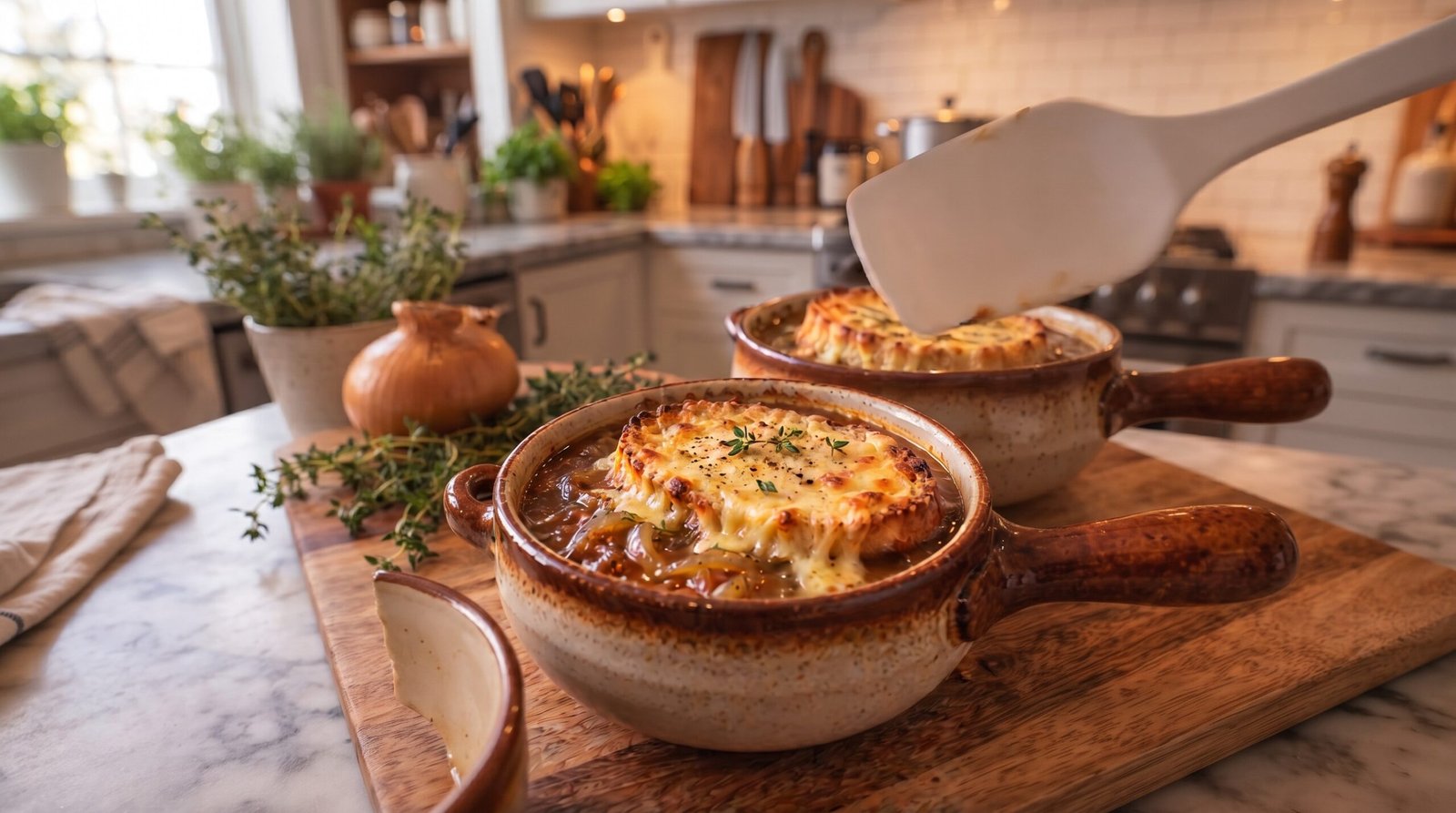
I used to think that making a bowl of restaurant-quality French onion soup required a culinary degree or an entire day spent hovering over the stove. I would order it out, savoring that deep, dark broth and the bubbling cheese cap, but I never dared attempt it at home. Then one rainy Tuesday, when the pantry felt empty, I decided to tackle the onions. It turns out, the secret is not skill or expensive equipment, but simply patience. When you give the onions enough time to break down, they transform from sharp and white into something jammy, sweet, and rich. Once you master the technique for these deep, complex flavors, you will find yourself reaching for this recipe whenever the weather turns cold or you need a meal that feels like a project worth finishing. It is a slow process, but the final result is a bowl of pure comfort.
Why This Recipe Works
This recipe relies on the natural chemistry of the onion. By cooking them low and slow, we allow the moisture to evaporate and the natural sugars to concentrate. There is no shortcutting this process. If you try to turn up the heat, the onions will burn on the edges while staying raw in the center, and you lose that sweet, mellow flavor that defines the base of this soup. The goal is to reach a uniform, mahogany color. When they get there, they provide a depth that makes the entire soup taste like it has been simmering for days, even if you only have a few hours of total time.
The choice of bread and cheese also plays a vital role. Using a crusty baguette that is toasted until it is firm ensures that the bread does not dissolve into a mushy clump the moment it hits the broth. It holds its structure, acting as a sturdy platform for the cheese. Speaking of cheese, a blend that melts well, like Gruyere, brings that characteristic stretch and savory saltiness. Because we are broiling the tops, the cheese develops little charred spots that add a slightly smoky note to every bite. The interaction between the crunch of the bread, the gooey cheese, and the intense, salty beef-based broth makes this a complete experience in a single bowl. It is simple, humble food that relies on quality ingredients and steady heat.
Ingredient Notes
The Onion Base
The foundation of the soup is clearly the onion. I recommend using large yellow onions. They are the standard for a reason. They have a high sugar content which helps them caramelize well. Avoid red onions if possible, as they turn an unappealing color when cooked down for this long. You will need about three pounds of them. Do not worry about them looking like an overwhelming pile in your pot; they reduce significantly.
The Liquid and Deglazing
For the broth, use a high-quality beef stock or broth. If you can find a bone broth with a high gelatin content, use it. It adds a wonderful body to the soup that keeps it from feeling thin or watery. We also need a splash of dry white wine to deglaze the pot. The acidity of the wine helps pull up all those browned bits stuck to the bottom of the Dutch oven. This is where a lot of the flavor lives. You do not need anything expensive, just something you would actually drink.
The Toppings
For the bread, look for a classic French baguette. Slice it into one-inch thick rounds. If you have stale bread, that is even better, as it holds up even more firmly in the liquid. For the cheese, Gruyere is the gold standard. It is nutty and melts into a lovely, stretchy blanket. If you find it too expensive, a mix of shredded Swiss and a little bit of sharp provolone works in a pinch to provide that same gooey texture.
| Ingredient | Amount | Notes |
|---|---|---|
| Yellow Onions | 3 pounds | Peeled and thinly sliced |
| Unsalted Butter | 4 tablespoons | Adds richness to the onions |
| Olive Oil | 2 tablespoons | Prevents butter from burning |
| Beef Stock | 6 cups | Good quality, preferably low sodium |
| Dry White Wine | 1/2 cup | Such as Pinot Grigio or Sauvignon Blanc |
| Fresh Thyme | 4 sprigs | For an herbal base note |
| Baguette | 1 loaf | Sliced into 1-inch thick rounds |
| Gruyere Cheese | 8 ounces | Freshly shredded for best melt |
| Salt and Pepper | To taste | Adjust at the very end |
The Recipe
- Prep Time: 20 minutes
- Cook Time: 1 hour 45 minutes
- Total Time: 2 hours 5 minutes
- Servings: 4 to 6 servings
- Difficulty: Moderate
- Large heavy-bottomed Dutch oven
- Sharp chef’s knife
- Large wooden spoon
- Oven-safe soup crocks or bowls
- Baking sheet
Step-by-Step Instructions
Step 1: Preparing the Onions
Start by peeling your three pounds of yellow onions and slicing them into thin, uniform half-moons. Consistency matters here, so take your time with the knife. If the slices vary wildly in size, some will turn to mush while others remain firm, which ruins the texture of the finished soup. Once sliced, set them aside in a large bowl.
Step 2: The Caramelization Process
Heat your Dutch oven over medium-low heat. Add the butter and olive oil. Once the butter is melted and bubbling, add all the sliced onions at once. Stir them until they are coated in the fat. Let them cook, stirring every ten minutes, for about 60 to 75 minutes. You are looking for a deep, rich brown color. Do not rush this. If you see the onions starting to stick or blacken on the bottom of the pot, add a tiny splash of water to loosen the bits and turn your heat down slightly.
Step 3: Deglazing and Simmering
Once the onions are a deep, uniform mahogany color, increase the heat to medium-high. Pour in the white wine. Use your wooden spoon to scrape the bottom of the pot, releasing all those flavorful, dark bits that have accumulated. Let the wine bubble for about three minutes until the harsh smell of alcohol has faded. Pour in the beef stock and add the fresh thyme sprigs. Bring the soup to a gentle simmer, then reduce the heat to low. Let it cook for another 30 minutes to allow all the flavors to meld together perfectly.
Step 4: Toasting the Bread
While the soup simmers, turn your oven to 400 degrees Fahrenheit. Arrange your baguette slices on a baking sheet. Toast them for about 8 to 10 minutes until they are golden brown and firm to the touch. You want them to have a noticeable crunch so they do not instantly dissolve in the bowl. Remove from the oven and set aside.
Step 5: Assembling the Bowls
Preheat your oven broiler to high. Ladle the hot soup into individual oven-safe crocks, leaving about an inch of room at the top. Place two or three slices of toasted bread on top of the liquid in each bowl. Pile a generous amount of the shredded Gruyere cheese over the bread and extend it slightly over the edges of the bowl.
Step 6: Broiling to Perfection
Place the bowls on a baking sheet to catch any drips and slide them into the oven under the broiler. Watch them closely. This part only takes 3 to 5 minutes. You are looking for the cheese to be melted, bubbly, and spotted with deep brown charred bits. Remove carefully from the oven. Let the bowls cool for at least five minutes before serving, as the broth and cheese will be extremely hot.
Mistakes I Made (So You Don't Have To)
Using the Wrong Pot
Early on, I tried making this in a thin-walled stainless steel pot. Because the onions need to cook for over an hour, a thin pot creates hot spots. My onions ended up burning in the center of the pot while the outer edges remained pale. The fix is using a heavy-bottomed Dutch oven. The cast iron or thick-bottomed steel holds the heat evenly, which is critical for gentle, consistent caramelization.
Adding Liquid Too Early
I used to be impatient and add the stock when the onions were just golden yellow. This resulted in a soup that tasted like boiled onions rather than the deep, rich French onion soup I wanted. If the onions are not a deep mahogany brown, they have not developed enough flavor. The fix is to be patient. Wait for that dark color, even if it feels like you are taking too long. It is the color that creates the flavor.
Soggy Bread
I once used soft, fresh bread without toasting it first. The bread absorbed the broth instantly and turned into a heavy, unappetizing paste at the bottom of the bowl. The fix is to toast the bread slices in the oven until they are quite hard. That extra crispiness creates a barrier that keeps the bread intact for the entire duration of your meal.
Forgetting to Salt Correctly
Because beef stock can be salty, I was often afraid to add salt until the very end. The result was a flat-tasting soup. However, you need salt to help draw the moisture out of the onions during the long cooking process. The fix is to add a pinch of salt early when you add the onions to the pot, then wait until the very end to taste and adjust the final seasoning.
Variations and Tips
Using a Mix of Onions
While yellow onions are the standard, you can add a large shallot or even one red onion to the mix. It adds a subtle complexity to the flavor profile. Just ensure the bulk of the weight remains yellow onions to maintain that necessary sweetness.
The Herb Twist
Instead of just thyme, try adding a small bay leaf to the pot during the simmering stage. It adds an earthy note that pairs wonderfully with the beef stock. Remember to fish it out before you ladle the soup into the bowls.
Make-Ahead Strategy
This soup is actually better the next day. You can make the entire base, let it cool completely, and store it in the refrigerator. When you are ready to eat, simply reheat the soup on the stove until simmering, then proceed with toasting the bread and melting the cheese under the broiler. This is a huge time-saver for busy evenings.
Avoiding Stains
When you broil the cheese, it often drips down the sides of the bowl. Place the oven-safe crocks on a rimmed baking sheet before putting them in the oven. This prevents you from having to scrub the bottom of your oven later. It also makes it much easier to transfer the hot bowls out of the oven in one go.
Storage and Reheating
If you have leftovers, let the soup cool completely before moving it to an airtight container. It will keep in the refrigerator for up to three days. Do not store the bowls with the bread and cheese already on top, as the bread will turn into mush. Store the broth base separately. When you want to serve it again, heat the soup in a pot on the stovetop until it reaches a simmer. Toast fresh bread and melt fresh cheese at that time for the best experience. The soup base freezes quite well for up to one month. Thaw it overnight in the refrigerator before reheating. When reheating from frozen, ensure it is brought to a boil so it is steaming hot throughout before serving.
Frequently Asked Questions
Can I use a slow cooker for the onions?
You can use a slow cooker to caramelize the onions, but it takes a very long time, often upwards of 8 to 10 hours on low. You must stir them occasionally to ensure even cooking. Even then, the color might not get quite as dark as it does in a Dutch oven on the stove. I prefer the stovetop method because you have more control over the final texture and color.
What if I cannot find Gruyere?
Gruyere is ideal because of its specific melting properties and nutty flavor, but it is not the only option. A combination of Swiss cheese and a bit of sharp provolone will give you a very similar result. You want a cheese that melts without becoming oily. Avoid pre-shredded cheese from the bag, as it contains anti-caking agents that prevent it from melting into that smooth, gooey consistency you want for the crust.
Do I really need to use white wine?
The wine adds a bright acidity that cuts through the richness of the onions and the saltiness of the beef stock. It is a key part of the flavor balance. If you really prefer not to use alcohol, you can replace it with a splash of apple cider vinegar or even a squeeze of fresh lemon juice at the end. It will not taste exactly the same, but it will provide the necessary lift.
Why is my soup bitter?
Bitterness usually happens if the onions have been cooked too quickly and have charred rather than caramelized. If you see black bits forming, your heat was likely too high. Once the onions have turned bitter, it is very difficult to fix the flavor. You can try adding a tiny bit of brown sugar, but it is better to watch the heat carefully from the start to prevent it.
How do I stop the cheese from burning?
The broiler is very powerful, and cheese burns in seconds. Always keep your oven light on and watch the bowls constantly while they are under the broiler. If you notice the cheese browning too quickly, move the baking sheet to a lower rack in the oven. You want a golden, bubbly top, not an incinerated crust.
Final Thoughts
Making this soup at home has changed my perspective on what it means to cook something truly classic. It takes time, yes, but the work is quiet and steady. There is a sense of satisfaction in watching a pot of raw, white onions slowly melt into a deep, dark, and fragrant base that fills the entire kitchen with a savory aroma. It reminds me that some things simply cannot be rushed, and that the best flavors often come from the simplest ingredients.
Whenever I serve this to friends or just make it for a quiet night in, it always feels special. It is a bowl of history, technique, and patience all in one. I hope you take the time to really watch those onions turn color and enjoy the process as much as the result. There is truly nothing else quite like it on a cold day.