
My family used to have an unspoken running joke whenever meatloaf made an appearance on the weekly dinner rotation. My partner would discreetly pour an extra ladle of gravy onto their plate, and my kids would spend twenty minutes chewing a single mouthful like it was leather jerky.
They weren’t wrong. For years, every meatloaf I pulled from the oven turned out dry, tight, and dense—more like a building material than comfort food. I was doing what my parents always did: tossing extra-lean beef into a bowl with dry breadcrumbs, packing it as tightly as wet sand into a standard metal bread loaf pan, and smothering it in plain ketchup before baking it until it surrendered completely.
The turning point happened about five years ago on a rainy Tuesday. I had pulled yet another greasy, grey-edged block from a pool of murky rendered fat at the bottom of a bread tin. I took one bite, pushed the plate away, and swore I would either figure out the science of a genuinely tender, deeply savory meatloaf with a sticky, caramelized glaze, or take it off my menu forever.
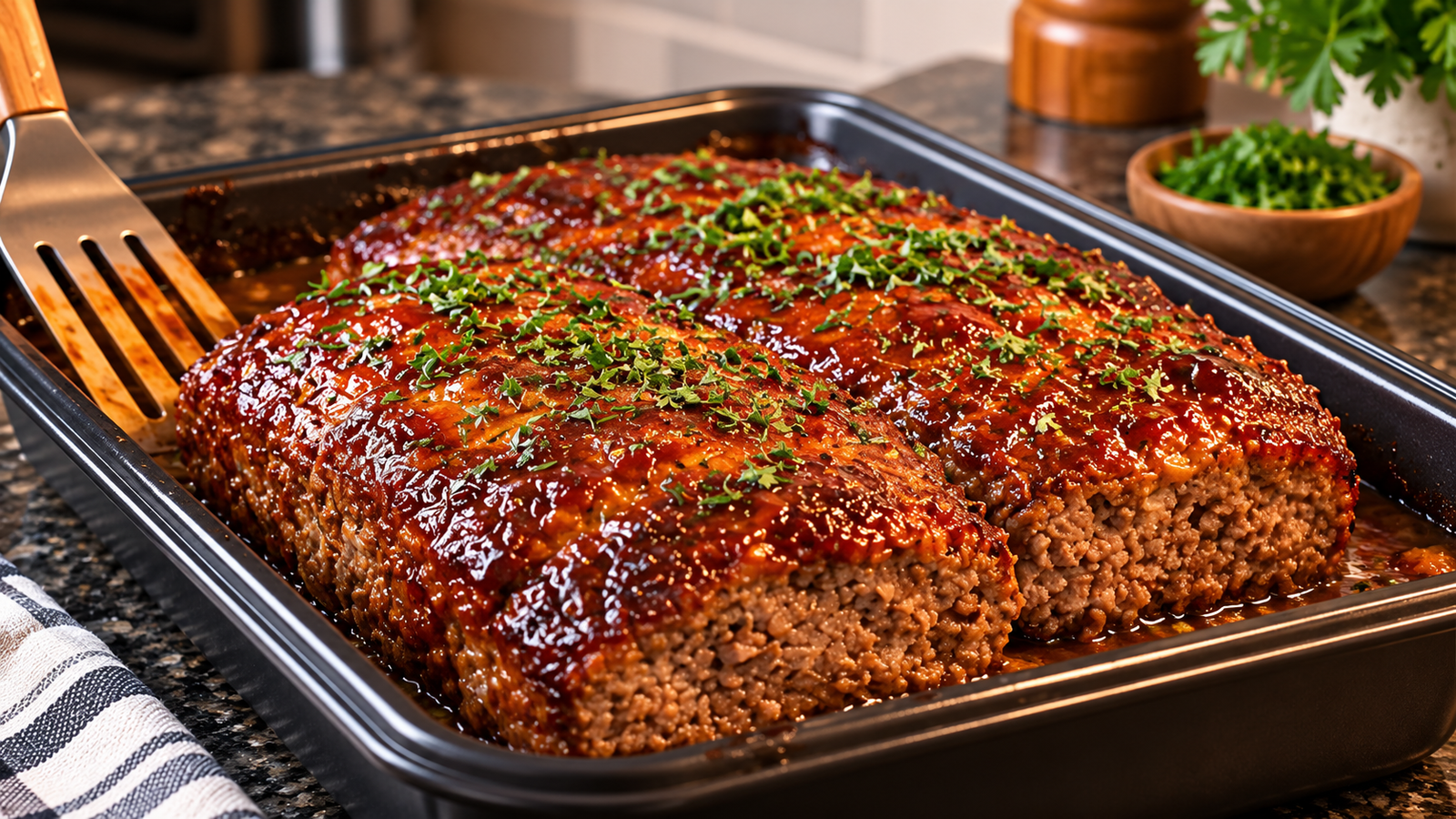
After dozens of tests, swaps, and a few messy grease fires in my toaster oven, I finally cracked the code. The photo above shows the exact result: a fork-tender, juicy loaf with an edge-to-edge glossy tomato glaze that cooks directly on a flat sheet or baking pan—never trapped inside a narrow bread tin.
Here is everything I learned the hard way, so you never have to serve a dry dinner brick again.
Why Most Meatloaf Turns Out Terribly (The Real Culprits)
Before diving into the recipe, we have to look at the three classic mistakes that doom most home cooks.
1. The Bread Pan Trap
Shoving ground meat into a deep loaf pan forces the meat to boil in its own rendered water and fat. You end up with a grey exterior, soggy bottom, and no Maillard browning. Free-forming your loaf on a rimmed baking sheet or roasting dish lets the hot air circulate around all four sides, creating a savory crust while the excess grease drains naturally away.
2. The Lean Meat Fallacy
Using 90/10 or 93/7 extra-lean ground sirloin will guarantee a dry loaf every single time. Fat equals moisture and tenderness. An 80/20 ground chuck is your baseline, but an equal mix of beef and ground pork yields an unbeatable texture and flavor profile.
3. Dry Breadcrumbs Act Like Sponges
Dumping dry breadcrumbs straight into raw meat pulls moisture directly out of the beef as it bakes. The professional solution is a panade: soaking breadcrumbs in whole milk or stock before mixing them into the meat. It forms an emulsion that cushions the meat fibers against heat contraction, locking in juices.
Ingredients & Equipment
The Kitchen Tools You’ll Need
- Rimmed Quarter-Sheet Pan or Baking Dish: (A 9×13-inch rimmed metal pan or baking dish lined with heavy-duty foil keeps cleanup painless).
- Large Mixing Bowl: Roomy enough to combine ingredients without squishing them.
- Fish Spatula or Wide Offset Spatula: The best tool for cleanly serving thick slices without crumbling.
- Instant-Read Digital Thermometer: (I use a ThermoWorks ThermoPop or Dot; guessing internal doneness by eye is why meatloaf dries out).
The Ingredient Breakdown
| Component | Ingredient | Quantity | Practical Purpose |
| Meat Blend | 80/20 Ground Chuck | 1.5 lbs (680g) | Provides beefy depth and essential rendered fat. |
| Meat Blend | Ground Pork | 0.5 lb (225g) | Adds delicate fat and prevents the beef from tightening into a dense block. |
| The Panade | Plain Panko Breadcrumbs | ¾ cup | Light, airy texture that won’t make the mixture heavy. |
| The Panade | Whole Milk (or Beef Bone Broth) | ½ cup | Hydrates the crumbs to trap internal moisture. |
| Binders & Aromatics | Large Eggs | 2 whole | Structural binder; whisk lightly before adding. |
| Binders & Aromatics | Yellow Onion | 1 medium (finely minced) | Adds sweetness; must be cooked first to release water. |
| Binders & Aromatics | Fresh Garlic | 3 cloves (grated) | Pungent backbone flavor. |
| Binders & Aromatics | Unsalted Butter | 1 tbsp | For softening the aromatics. |
| Flavor Boosters | Worcestershire Sauce | 2 tbsp | Delivers savory, fermented umami. |
| Flavor Boosters | Tomato Paste | 1.5 tbsp | Adds concentrated acidity and color to the meat mix. |
| Flavor Boosters | Kosher Salt | 1.5 tsp | Essential seasoning (Diamond Crystal preferred; reduce slightly for Morton’s). |
| Flavor Boosters | Freshly Ground Black Pepper | 1 tsp | Peppery warmth. |
| Flavor Boosters | Dried Thyme or Oregano | ½ tsp | Subtle earthy aroma. |
| The Sticky Glaze | Ketchup | ½ cup | Classic tangy base. |
| The Sticky Glaze | Dark Brown Sugar | 2 tbsp | Caramelizes under oven heat into a tacky coating. |
| The Sticky Glaze | Apple Cider Vinegar | 1 tbsp | Balances the sweet ketchup with a crisp bite. |
| The Sticky Glaze | Dijon Mustard | 1 tsp | Adds subtle depth and keeps the sauce balanced. |
| Finishing Touch | Fresh Flat-Leaf Parsley | 2 tbsp (finely chopped) | Adds clean herbal freshness right before carving. |
Step-by-Step Method
1. Build the Moisture Core (The Panade)
In a small bowl, stir together the ¾ cup panko breadcrumbs and ½ cup whole milk. Set it aside on your counter for 8 to 10 minutes. The breadcrumbs will absorb the liquid entirely, transforming into a thick, paste-like slurry.
2. Sauté Your Aromatics (Never Put Raw Onions in Meatloaf)
Melt 1 tablespoon of butter in a small skillet over medium-low heat. Add your finely minced yellow onion and a pinch of salt. Cook gently for 6 to 8 minutes until soft, translucent, and sweet. Stir in the grated garlic and cook for another 60 seconds just until fragrant.
Cook’s Mistake to Avoid: Never toss raw diced onions straight into the ground meat. Raw onions release water while baking, creating pockets of steam that make the loaf fall apart, while the onion bits themselves remain crunchily undercooked. Let them soften in the pan, then let them cool for 5 minutes before mixing.
3. Whisk the Flavor Base
In your large mixing bowl, beat the 2 eggs lightly with a fork. Whisk in the softened panade, cooled cooked onions and garlic, 2 tablespoons Worcestershire sauce, 1.5 tablespoons tomato paste, kosher salt, black pepper, and dried thyme. Whisk until it looks like a uniform, thick batter.
Doing this ensures all seasonings and binders are completely integrated before the raw meat touches the bowl, saving you from over-mixing later.
4. Combine with a Light Hand
Add the ground chuck and ground pork to the bowl.
Remove any rings, wash your hands, and use your fingers like open rakes to gently combine the meat with the flavor base. Fold and toss lightly until just combined.
Stop the second you no longer see separate streaks of meat or panade. If you pack, squeeze, or knead the meat like bread dough, you will break down the protein structures, turning the finished dish chewy and bouncy instead of crumbly and tender.
5. Shape for Maximum Glaze Surface Area
Line a rimmed baking sheet or baking dish with heavy-duty aluminum foil and mist it lightly with nonstick spray.
Turn the meat mixture out onto the center of the pan. Using damp hands (which prevents sticking), shape the mixture into a uniform oblong loaf roughly 9 inches long, 4.5 inches wide, and about 2 inches tall.
Taper the sides slightly so it has a rounded top. A flatter, wider loaf cooks more evenly and gives you a much larger surface area for that glossy glaze to adhere to.
6. Whisk the Sticky Tangy Glaze
In a small bowl, stir together the ketchup, dark brown sugar, apple cider vinegar, and Dijon mustard until the sugar dissolves.
Spoon about one-third of this glaze directly over the raw loaf, using the back of a spoon or a pastry brush to coat the top and long sides evenly. Keep the remaining two-thirds of the glaze handy for later.
7. The Two-Stage Bake
Slide the tray into an oven preheated to 350°F (175°C) on the center rack.
- Stage 1 (Initial Bake): Bake untouched for 40 minutes.
- Stage 2 (The Glaze Coat): Pull the baking dish out. Brush the remaining two-thirds of the glaze generously over the loaf. Pop it back into the oven for another 15 to 20 minutes.
Baking the final portion of glaze for just 15 minutes prevents the brown sugar from scorching, allowing it to bubble into a thick, glossy lacquer that clings to every slice.
8. Use a Probe, Not a Clock
Slide the probe of your digital instant-read thermometer into the thickest center of the loaf. You are aiming for 160°F (71°C) for beef/pork blends. As soon as it reads 158°F to 160°F, pull it out immediately.
9. The Golden Rule: The 15-Minute Rest
Do not cut into the meatloaf immediately. If you slice it right out of the oven, the muscle fibers will push all the trapped juices straight onto the pan, leaving the interior dry and causing the slices to crumble.
Let the meat rest uncovered on the counter for 12 to 15 minutes. The internal pressure drops, allowing moisture to reabsorb into the proteins. Scatter your fresh minced parsley over the glistening glaze right before you slice and serve.
Practical Troubleshooting & Common Mistakes
- “My meatloaf collapsed into a messy mound.”
This usually means the binder was too wet, or you omitted the eggs. Stick to the milk-to-breadcrumb ratio above. Also, make sure your sautéed onions have cooled; adding piping hot onions directly to raw meat starts melting the animal fat before it ever hits the oven. - “There is grease floating all around the base.”
That is completely normal with an 80/20 chuck blend cooked free-form. Use your fish spatula to lift the loaf directly off the baking pan onto a warm platter or wooden carving board before slicing. - “The center is still pink—is it undercooked?”
Because of the nitrates in ground pork and the acidity from tomato paste, seasoned ground meat can hold onto a slightly rosy hue even when fully cooked. Trust your digital thermometer reading of 160°F (71°C), not the color alone.
Leftovers: The Next-Day Secret
If you happen to have a slice or two left over, cover it tightly in the fridge. Cold meatloaf slices firm up overnight into the ultimate sandwich filling.
Reheat a thick slice in a cast-iron skillet with a dab of butter over medium heat until both sides are browned and crisped, then slide it onto toasted sourdough with a layer of sharp cheddar and extra hot mustard. It might honestly be better than the original dinner.
recipe pls