
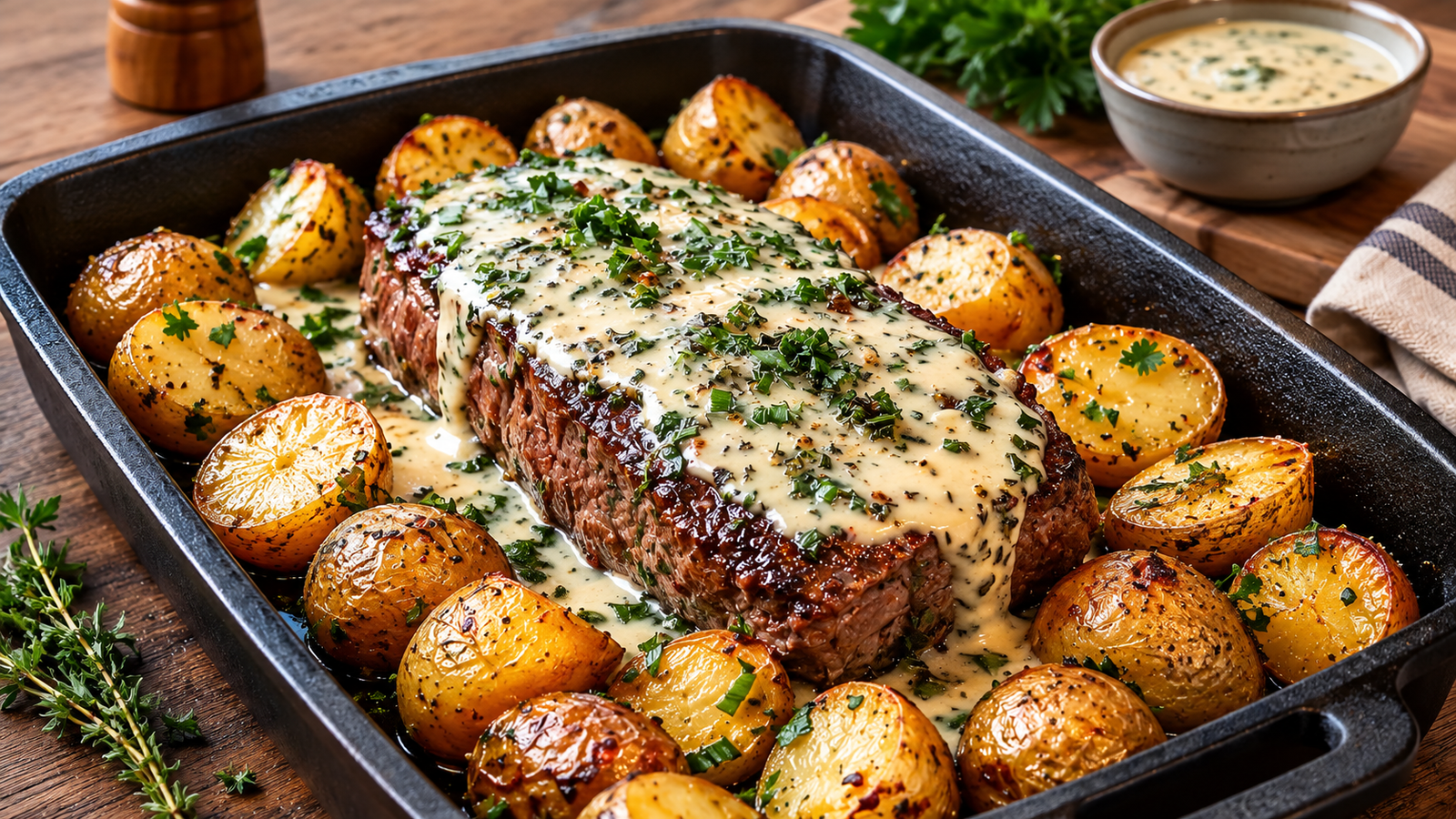
You know that feeling when you’re craving a serious comfort meal, but the thought of juggling multiple hot pans makes you want to just order pizza instead? I’ve been there. My first-ever attempt at a “proper” roasted dinner—picture me back in my tiny university kitchen, circa 2012—was a legendary disaster.
I tried to follow some complex online recipe involving timing everything perfectly across different oven racks and burners. The result? Grey, overcooked steak, potatoes that were somehow simultaneously burnt on the bottom and chalky on top, and a kitchen that smelled like a smoke bomb. It was humbling, to say the least. My friend just smiled politely, ate a potato, and then quietly suggested we order takeout. Lesson learned: complexity does not guarantee deliciousness, especially when you’re still mastering the basics.
Since that epic fail, I’ve spent years tinkering, burning, and perfecting my approach. And let me tell you, I’ve finally found the holiest of holies: the one-pan (well, mostly one-pan, if you don’t count the sear) roasted steak and potato dinner. It delivers everything you want—that perfect crispy-golden skin on the potatoes, a tender, caramelized crust on the steak, and zero fuss. It’s now my absolute go-to for weeknights when I want to feel a little fancy without the stress, and it’s a total crowd-pleaser for weekend guests.
The best part? It’s surprisingly forgiving. Let me walk you through how I make it, and more importantly, what I learned along the way so you don’t repeat my mistakes. This recipe isn’t just a list of steps; it’s a distillation of years of trial, error, and a whole lot of delicious dinners.
Forget the Fanciness: My Go-To Ingredients
This list isn’t fancy. Most of this stuff is probably already in your pantry or fridge. And that’s the beauty of it.
| Component | Ingredient | Why it Matters (From Experience!) |
| The Star | Thick-Cut Sirloin or Ribeye Steak | A good thick cut (1.5-2 inches) is non-negotiable for getting that gorgeous char on the outside without overcooking the center. Trust me, thin steaks turn into hockey pucks. |
| The Sidekick | Baby Gold or Red Potatoes | I use baby golds because their skin is thinner, which means more surface area gets super crispy without all that starchiness. They hold their shape beautifully. |
| Flavor Base | Olive Oil or Neutral Oil (like Avocado Oil) | Use an oil with a high smoke point (avocado is great!). My mistake in my early days was using fancy extra virgin olive oil for roasting. Big error. It burned, tasted bitter, and just made the whole kitchen smokey. |
| Aromatic Bliss | Fresh Rosemary and Thyme | Don’t skimp here. The way these herbs crisp up and perfume the potatoes is simply magical. It makes you feel like you’ve spent hours on flavor development when really, it’s just nature doing its thing. |
| All-Star S&P | Flaky Sea Salt & Coarse Black Pepper | Regular table salt just doesn’t cut it. Flaky salt gives you these little pockets of texture and flavor, and cracked pepper is miles better than the pre-ground dust. Seriously. |
| The Bonus Level | 3-4 Cloves Garlic (Smashed but with Skin On) | Okay, this is my big secret. Tossing a few smashed cloves in with the potatoes gets you incredible garlic flavor, but without the risk of the garlic burning to a bitter crisp. Trust the process. |
| Finish Line | Fresh Chopped Chives (for garnish) | Gives it a pop of color and a fresh, onion-y bite right at the end. |
My Journey: The Mistakes and Magic of the Roast
Getting to this perfect one-pan roast was not easy. For the longest time, I was trying to roast the steak and potatoes in separate dishes, or even worse, all together on one baking sheet. That last one was a catastrophic mistake. The moisture from the potatoes just made the steak steam instead of sear. It was sad.
So, here’s my proven method, born from a lot of trial, error, and some genuinely questionable meals.
The “Aha!” Moment: The Secret to Golden, Not Soggy, Potatoes
My biggest breakthrough was figuring out how to get that potato texture right. I used to just toss raw potatoes with oil and hope for the best. Big mistake. They’d be oily and soft. The game-changer? Par-boiling.
I know, it sounds like an extra step. But hear me out. Boiling them just enough to soften the outside allows you to “fluff” them up. When you drain the potatoes and give them a good, aggressive shake in the colander, you create a roughened, starchy surface. This rough surface is what absorbs the oil and herbs and turns into that insanely crispy-golden exterior in the oven. It is an absolute, non-negotiable step for truly great roasted potatoes. No shortcuts!
The Battle of the Sear: Why Your Skillet is Your Friend
Okay, let’s talk about the steak. For the longest time, I tried to get a good crust just in the oven. But you can never achieve that beautiful, dark, Maillard reaction char without serious heat. My mistake was being afraid of my cast iron skillet. It felt intimidating and smoky. But now, it’s my best friend.
A good, hot cast iron (or stainless steel) pan creates that deep, flavor-packed crust that no oven can match. You just sear it for a few minutes on each side before it finishes roasting in the oven, and that step alone changes the game entirely. Yes, your kitchen will get a little smoky. Crack a window, turn on the fan, but don’t be afraid. It’s the smell of success (and deliciousness).
The Method: Making It All Happen (My Tested & True Steps)
This process is about flow, not perfection. Get a feel for it and adjust to your own kitchen.
Step 1: Prep and the Potato Par-Boil (Don’t Skip!)
Start by getting your potatoes ready. I wash them thoroughly, and if they’re particularly large, I cut them in half. Smaller ones can stay whole. Place them in a pot and cover with cold water—this helps them cook more evenly. Bring it to a boil and let them simmer for about 8-10 minutes. You’re just softening them up, not turning them into mashed potatoes. Test with a fork; it should go in with only a little resistance.
Meanwhile, this is also when I take my steak out of the fridge. For a while, I thought you had to cook steak straight from cold. Nope! Letting it come up closer to room temperature for about 30 minutes ensures it cooks more evenly and you get that beautiful, juicy center.
Step 2: The Potato Roast & That Glorious Herb Mash
Drain the potatoes thoroughly. Now for the secret move: give that colander a good, rough shake. You want those potatoes to look fluffed and kind of scuffed up on the outside. Transfer them directly to your large roasting dish.
Drizzle generously with your high-smoke-point oil (avocado is great!). Toss in your chopped fresh rosemary and thyme, flaky salt, coarse pepper, and those smashed cloves of garlic (keep the skin on!). Use your hands (yes, get in there) to toss and coat every single potato. This ensures even seasoning and crispiness. Spread them out in a single layer. Don’t overcrowd them, or they’ll steam. Slide the dish into your oven, preheated to about 400°F (200°C), and let them start their magic for 20-25 minutes.
Step 3: The Sizzle & the Final Roast
While the potatoes are roasting, it’s time to prepare the steak. I used to be haphazard with seasoning, but now I’m a stickler. Pat your steak bone dry with paper towels. I cannot stress this enough. If it’s wet, it won’t sear. Rub a tiny bit of oil over the steak and season aggressively (it’s thick, it can take it!) with salt and pepper on all sides.
Now, get your skillet SCREAMING hot over high heat. Add a splash of oil. Carefully place the steak in the pan. Don’t touch it! Let it sear for 2-3 minutes until you have that dark, beautiful crust. Flip it and sear the other side for another 2-3 minutes. This is where the magic (and a little smoke) happens.
Once seared, it’s time for the final assembly. Take the roasting dish with the partially-cooked potatoes out of the oven. Make a space in the center, nestled right among the potatoes, and place your seared steak there. Put the whole thing back into the oven.
Step 4: The Rest & The Reward
Here’s the trickiest part: timing. For a medium-rare finish (around 130-135°F internal temperature), it usually takes about 10-15 minutes in the oven, but it depends wildly on your oven and the thickness of the steak. My early mistake was just guessing. The solution? Get an instant-read meat thermometer. They are cheap (like $15 on Amazon) and a complete game-changer. It’s the single best tool for perfect steak. No more guessing, no more dry, overcooked disappointment.
Once it hits your target temperature, take the dish out. Now, the hardest part: let it rest. For at least 10 minutes. Place the steak on a cutting board and loosely tent it with foil. This resting time is crucial; it lets the juices redistribute back into the meat, so they don’t all run out when you slice it. While the steak is resting, your potatoes are continuing to finish in the slightly warm roasting pan, soaking up all those delicious herb-and-garlic flavors.
When It All Comes Together: Final Thoughts
There’s something incredibly satisfying about pulling that beautiful, bubbling pan out of the oven. All the aromas of rosemary, garlic, and seared meat just fill the air. Then, you slice into that steak to find it perfectly juicy and pink, and serve it up with a pile of those golden, herb-dusted potatoes. It’s simple, yes, but after all the trials and mistakes, it feels like a culinary victory every single time. This dinner isn’t just a meal; it’s a testament to the power of learning from your mistakes and embracing the delicious journey. Enjoy every single bite!