
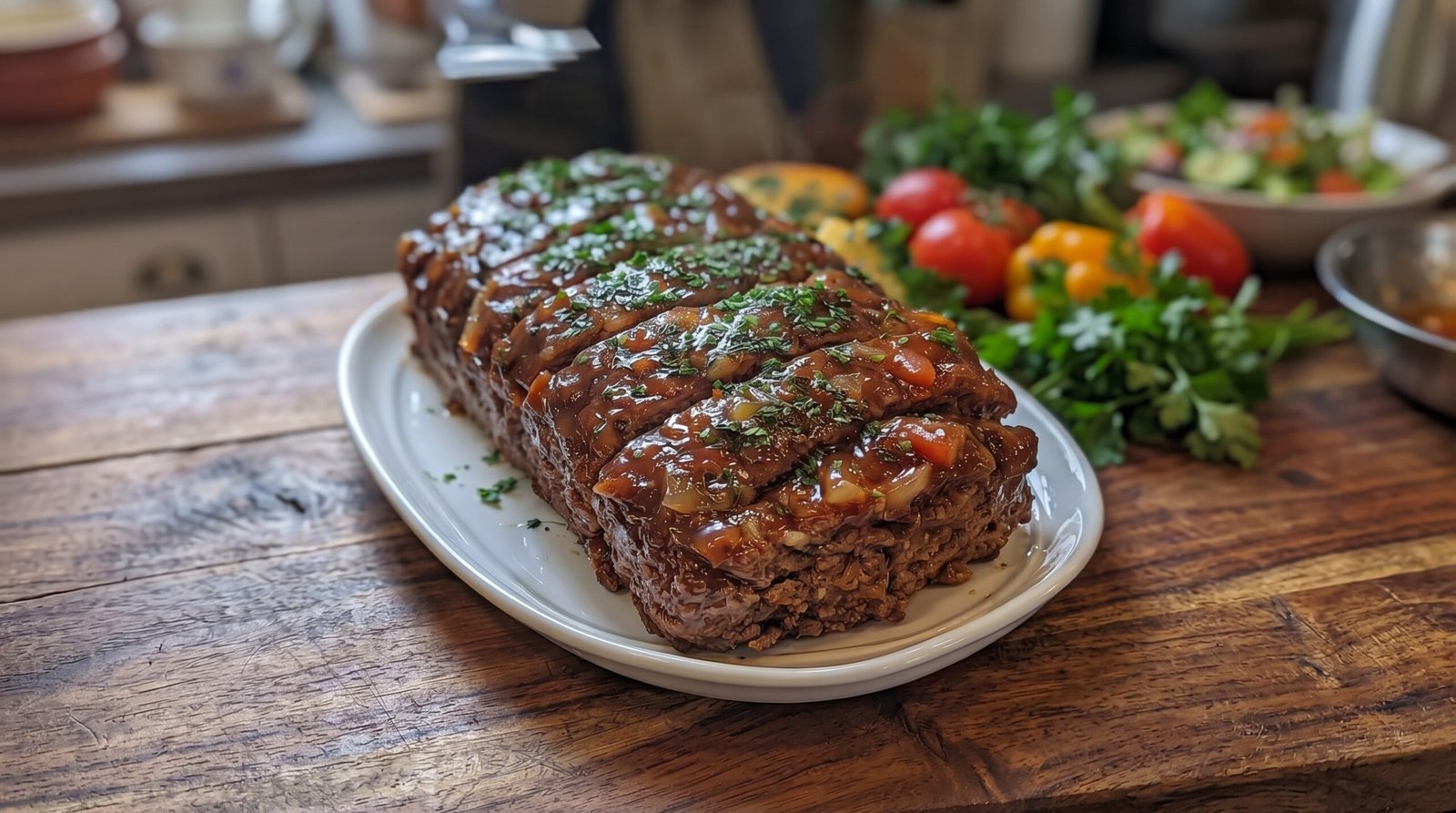
My kitchen feels like home when a loaf of meatloaf is baking in the oven. It is one of those meals that brings everyone together without needing a special occasion. There is something comforting about a well-made beef meatloaf that holds its shape, stays moist, and has that signature tangy glaze on top. If you are struggling with a dinner idea that is both hearty and reliable, this classic beef meatloaf might be the solution you need. I have spent many years fine-tuning the ratios in my kitchen to ensure the center gets fully cooked while the edges stay firm. The process is straightforward, requiring mostly pantry staples and a good quality ground beef. In this guide, I share my personal routine for getting the seasoning right, how to mix the meat without turning it into a dense brick, and the proper way to glaze it for the best result. You will find that this dish fits well into a busy schedule, especially since the prep work can be done earlier in the day. By the time the kitchen smells like roasted beef and herbs, you will have a meal ready to slice and serve for your household.
Why This Recipe Works
This recipe works because it relies on a balance of moisture and structure. A common problem with meatloaf is that it ends up either falling apart on the plate or feeling dry and crumbly in the mouth. I use a combination of breadcrumbs and a touch of milk to act as a binder, which keeps the interior soft. The meatloaf needs enough structure so you can lift a slice with a spatula without it crumbling into a pile of loose ground beef.
The flavor profile is another reason for its success. Using fresh herbs mixed with a savory glaze ensures that the outside is just as flavorful as the inside. I prefer to glaze the loaf halfway through the cooking time to allow the sugars in the sauce to set without burning. If you add the glaze too early, it can become overly dark, but adding it at the right moment creates a nice, sticky coating that sticks to every slice.
Ease of preparation is also a big factor. You do not need any fancy equipment to get this done. Everything is mixed by hand in one bowl, shaped on a standard baking sheet, and left to cook at a steady temperature. Because the loaf shape is uniform, the cooking time remains consistent, which makes it easier to plan your other side dishes. You can rely on this method every time you make it, and the results will remain the same. It is a no-fuss meal that provides good leftovers, which is a bonus for a busy household.
Ingredient Notes
The Meat Base
When selecting ground beef, aim for an 80/20 mix. This ratio provides enough fat to keep the meatloaf tender while it bakes. If you use lean ground beef, the finished product will likely be too dry because there is not enough fat to render out and keep the meat moist. If you find 80/20 is too rich, you can swap half of the beef for ground pork. Pork adds a bit more tenderness and a different depth of flavor that works well with the beef. Always keep the meat cold until you are ready to mix it with the other ingredients, as this helps the fat stay suspended in the meat rather than melting out too early.
The Binder and Aromatics
The binder is what prevents your meatloaf from becoming a dense, hard block. I use panko breadcrumbs or regular dried breadcrumbs. Panko gives a slightly lighter texture, but standard crumbs work just as well. I soak them in a bit of milk for five minutes before mixing them with the meat; this is a step I never skip because it ensures the breadcrumbs are hydrated and won't draw moisture away from the beef while it cooks. For aromatics, I use finely diced onions and fresh herbs. The onions need to be minced quite small so they cook through during the time the loaf is in the oven. If the pieces are too large, you will end up with crunchy onions in a soft loaf, which isn't the texture you want.
The Glaze Ingredients
The glaze is essentially the face of the meatloaf. It is a mix of ketchup, a splash of apple cider vinegar, and a little brown sugar. The vinegar cuts through the richness of the beef and balances the sweetness of the sugar. You can substitute the vinegar with Worcestershire sauce if you want a deeper, more savory punch. Make sure the glaze is smooth before you brush it on.
| Ingredient | Amount | Notes |
|---|---|---|
| Ground beef | 2 pounds | Use 80/20 lean to fat ratio |
| Breadcrumbs | 1 cup | Panko or regular dry crumbs |
| Whole milk | 1/2 cup | To soak the breadcrumbs |
| Onion | 1 medium | Finely minced |
| Eggs | 2 large | Lightly beaten |
| Fresh parsley | 1/4 cup | Chopped finely |
| Salt | 1.5 teaspoons | Adjust to taste |
| Black pepper | 1 teaspoon | Freshly ground |
| Ketchup | 3/4 cup | For the glaze base |
| Brown sugar | 2 tablespoons | Light or dark sugar |
| Apple cider vinegar | 1 tablespoon | Adds necessary tang |
The Recipe
- Prep time: 20 minutes
- Cook time: 60 minutes
- Total time: 80 minutes
- Servings: 6 servings
- Difficulty: Easy
Equipment:
– Large mixing bowl
– Baking sheet
– Parchment paper
– Pastry brush
– Meat thermometer
Step-by-Step Instructions
Step 1: Prep the Oven and Pan
Start by preheating your oven to 375 degrees Fahrenheit. It is important to let the oven reach this temperature fully before you put the meatloaf inside. While the oven heats, line a standard baking sheet with a piece of parchment paper. This makes cleanup much easier and prevents the meatloaf from sticking to the tray. Do not use wax paper, as it can smoke or burn at these temperatures. Make sure your workspace is clear and you have all your ingredients measured and ready to go.
Step 2: Prepare the Binder
In your large mixing bowl, combine the breadcrumbs and the milk. Use a fork to stir them together until the milk is fully absorbed. Let this sit for about 5 to 7 minutes. This soaking step is crucial because it ensures that the breadcrumbs distribute moisture throughout the beef as it cooks. If you skip this, the breadcrumbs will soak up moisture from the meat, potentially leaving the loaf dry. You want a soft, consistent texture, and this is the best way to achieve it.
Step 3: Mix the Meat Base
Add the ground beef, the beaten eggs, the finely minced onions, the chopped parsley, the salt, and the pepper into the bowl with the soaked breadcrumbs. Use your hands to mix everything together, but be gentle. You do not want to overwork the meat, as this will lead to a tough and dense meatloaf. Mix just until the ingredients are evenly distributed throughout the beef. The color should look uniform, with the onion and parsley specs spread evenly.
Step 4: Shape the Loaf
Transfer the mixture onto your prepared baking sheet. With your hands, shape the beef into a loaf that is about 9 inches long and 5 inches wide. It should be roughly 2 to 3 inches tall. Avoid making it too thick in the middle, as that will make it harder to cook through without drying out the edges. If you notice any deep cracks while shaping, smooth them out with your fingers to ensure it stays in one piece while it cooks.
Step 5: Bake and Glaze
Place the baking sheet in the center of the preheated oven. Bake for 40 minutes. While it bakes, stir the ketchup, brown sugar, and apple cider vinegar together in a small bowl. After 40 minutes, take the meatloaf out of the oven. Brush the glaze evenly over the top and sides of the loaf. Place it back in the oven and bake for another 20 minutes. Use a meat thermometer to check that the internal temperature has reached 160 degrees Fahrenheit. This is the safe temperature for ground beef, and you should not guess based on time alone.
Step 6: Rest Before Serving
Once the meatloaf reaches 160 degrees Fahrenheit, remove it from the oven. Let it rest on the baking sheet for at least 10 to 15 minutes before you try to slice it. Resting is very important because it allows the juices to redistribute throughout the meat. If you slice it immediately, all the juices will run out onto the board, and the meat will dry out significantly. Use a sharp serrated knife to cut into slices about one inch thick for serving.
Mistakes I Made (So You Don't Have To)
Overworking the Mixture
Early on, I used to think the more I kneaded the meat, the better it would hold together. I was wrong. Overworking the beef makes the final texture firm and rubbery rather than tender. The trick is to fold the ingredients together just until they are combined. Think of it like mixing a cake batter; you want to be gentle. If you feel the beef starting to get tacky or sticky like glue, stop immediately. It will hold its shape just fine without extra force.
Skipping the Rest Time
I have definitely tried to slice a meatloaf right out of the oven because I was hungry and in a hurry. This is a classic mistake. When you slice it too soon, the loaf just falls apart. The structure needs to settle as the temperature drops slightly after coming out of the oven. Always aim for that 10-15 minute window. Use the time to prepare a simple side dish like mashed potatoes or steamed green beans, and you will have a much easier time serving clean slices.
Not Using a Thermometer
For the longest time, I relied on the look of the meat to tell me when it was done. This is risky with meatloaf, as the exterior can look perfectly browned while the center stays raw. I learned the hard way that one time I served a loaf that was pink in the middle. Now, I always use a digital meat thermometer. It takes the guesswork out of the process and ensures that the meat is safe to eat every single time. It is a small tool that saves a lot of stress.
Ignoring the Onion Size
One of the first meatloaves I ever made had big, chunky pieces of onion. I thought it added texture, but it ended up being a distraction. The onions did not cook down enough, so I had crunchy raw onion bites inside a soft loaf. Now, I make sure to mince my onions very finely. If you have a food processor, use it to get them uniform and small. If not, take your time with your knife. The goal is for the onions to blend into the meat, not to stand out as separate bites.
Variations and Tips
Swapping the Meat
If you want a change from pure beef, try a 50/50 blend of beef and ground pork. The pork adds a bit of fat and richness that keeps the loaf very moist. Some people even like to include a small amount of ground veal, which makes the loaf lighter. You can adjust the ratio to suit what you have in the fridge, but keep the total weight at two pounds for the cooking times listed in this recipe.
Adding Herbs
I love using fresh parsley, but you can definitely experiment with other herbs. Fresh thyme or rosemary works well if you chop it very finely. Do not use too much, as woody herbs can be overpowering. About a teaspoon of fresh chopped thyme is plenty. If you are using dried herbs, reduce the amount by half because dried herbs are more concentrated.
Make-Ahead Strategy
This recipe is great for planning ahead. You can mix all the ingredients and shape the loaf on your baking sheet earlier in the day. Cover it tightly with plastic wrap and keep it in the refrigerator until you are ready to bake. When you are ready to cook, just take it out of the fridge about 15 minutes before putting it in the oven. This saves you the mess of prep work during the busy dinner hour.
Leftover Uses
If you have slices left over, do not just reheat them in the microwave. They can get a bit rubbery. Instead, try crumbling the cold meatloaf into a pan and frying it with some diced potatoes for a breakfast hash. Or, place a slice of leftover meatloaf between two pieces of toasted bread with a little mustard. It makes a great sandwich that tastes better the next day after the flavors have melded together in the fridge.
Storage and Reheating
If you have leftovers, allow the meatloaf to cool completely before storing it. Wrap the slices in plastic wrap or place them in an airtight container. You can keep it in the refrigerator for up to 3 days. When you are ready to eat, the best way to reheat it is in the oven at 350 degrees Fahrenheit. Place the slices on a small baking sheet, cover them with foil to prevent them from drying out, and heat until they reach an internal temperature of 165 degrees Fahrenheit. This ensures the center is steaming hot and safe to eat.
Freezing meatloaf is also possible, though the texture might soften slightly once thawed. For best results, slice the meatloaf after it has cooled and wrap each slice individually in plastic wrap, then place them in a freezer-safe bag. This way, you can pull out just one slice at a time. It will stay good in the freezer for up to one month. When you want to eat it, let it thaw in the refrigerator overnight before reheating it in the oven.
Frequently Asked Questions
Why does my meatloaf always fall apart?
There are two main reasons for this. First, you might not be using enough binder, like breadcrumbs or eggs, which help hold the proteins together. Second, and more likely, you are slicing it while it is still piping hot. You must allow it to rest for at least 15 minutes after baking so the structure can firm up. If you skip the rest, it will crumble every single time.
Can I cook this in a loaf pan?
Yes, you can. If you prefer the shape of a loaf pan, just press the mixture into a standard 9×5 inch pan. Keep in mind that the sides of the pan will cook the edges faster, but the middle might take longer to heat through. You may need to increase the cooking time by 10 to 15 minutes. Always check the internal temperature with a thermometer to be sure it hits 160 degrees Fahrenheit regardless of the shape.
Is the glaze necessary?
The glaze provides essential moisture to the top of the loaf, which can dry out during the long baking time. It also adds a nice flavor that balances the savory beef. If you do not like ketchup, you can mix barbecue sauce with a little vinegar or even use a thick tomato paste thinned with honey. I would not recommend skipping the glaze entirely, as the top will likely dry out without that protective coating.
Should I cover the meatloaf while it bakes?
I do not cover the meatloaf while it bakes because I want the glaze to set and develop a nice texture. If you cover it with foil, it will essentially steam the loaf, which prevents the glaze from getting that slightly tacky, set consistency. If you find the outside is browning too quickly, you can tent a piece of foil loosely over it for the last 15 minutes, but leave the sides open.
Can I use turkey instead of beef?
You can use ground turkey, but keep in mind that turkey is much leaner than beef. It will be much easier to dry out. If you go this route, consider adding a little bit of grated onion or even some finely grated zucchini to the mix to provide extra moisture. You should still cook it to 160 degrees Fahrenheit, but keep a close eye on it toward the end of the baking time so it does not overcook.
Final Thoughts
Making a classic beef meatloaf is one of those skills that feels good to master. It is a reliable recipe that tastes like home and fills the house with a comforting scent. By focusing on the temperature, the resting time, and the balance of ingredients, you can turn a simple pile of ground beef into something everyone at the table will enjoy.
Do not stress if your first attempt isn't exactly how you imagined. Cooking is a practice, and this recipe is meant to be flexible enough for you to adjust based on your personal taste. Once you get the hang of the basic technique, you will find yourself coming back to this meal whenever you need something filling and satisfying. Enjoy the process of creating something simple and tasty in your own kitchen.