
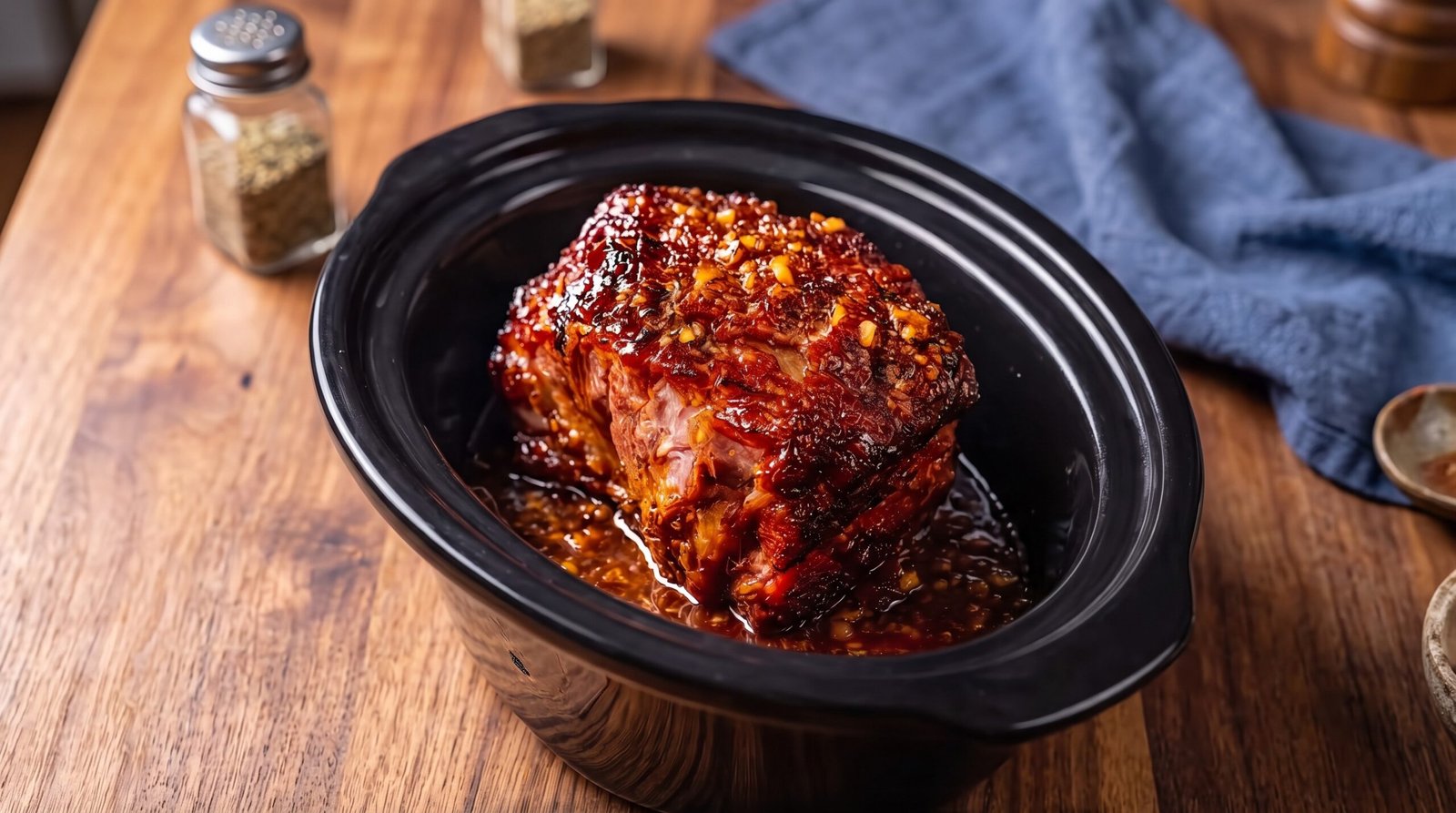
It is five o’clock on a Tuesday, and I am staring at the kitchen counter wondering how I managed to lose track of the entire afternoon. The kids need help with their homework, the laundry is piling up in the hallway, and the idea of standing over a stove for an hour sounds like a chore I just cannot handle. When I feel this overwhelmed, I reach for my slow cooker. A Slow Cooker Garlic Honey Glazed Pork Roast is one of those meals that feels like it took all day to prepare, even though I actually spent less than ten minutes getting it ready earlier that morning. There is something deeply satisfying about coming home to the smell of sweet garlic and savory pork filling the house. This dish has become a staple for my family because it is consistent, filling, and requires very little active time once the prep is finished. If you are looking for a reliable dinner that does not require you to hover, this is the one to keep in your back pocket.
Why This Recipe Works
The primary reason this recipe stays in my rotation is how the slow cooking process changes the texture of the pork roast. A lean cut of meat can easily become tough if you try to cook it quickly in a pan, but when it sits in the low, humid environment of a slow cooker, the connective tissues break down slowly. This results in a roast that you can pull apart with a fork, which is exactly what I want after a long day. The glaze is the second reason for its success. By combining honey with minced garlic and a few savory components, the liquid in the pot turns into a thick, syrupy sauce that clings to the meat. You are not just cooking the pork; you are simmering it in a liquid that builds flavor over several hours.
Ease of use is another factor. I do not have to worry about flipping the meat or checking it every twenty minutes. Once it is in the pot, it takes care of itself. The cleanup is also manageable, which is a major win for me. Since I am only using one appliance, I do not have to wash multiple pots or pans. The flavor profile is balanced because the sugar in the honey cuts through the saltiness of the soy sauce, and the garlic adds a punch that keeps it from feeling one-dimensional. It is a hearty meal that feels intentional but does not demand a high level of technical skill. It is a reliable way to make sure there is food on the table without feeling like I have spent the entire night in the kitchen.
Ingredient Notes
The Pork
When buying pork, I always look for a pork shoulder or a pork butt. These cuts have enough fat marbling to stay tender during the long cooking time. If you use a very lean loin, the meat will likely turn dry and stringy long before the four-hour mark. I usually aim for a three-pound roast because it fits well in a standard-sized slow cooker. Look for a roast that is somewhat uniform in shape so it cooks evenly from all sides. If the butcher offers a boneless or bone-in option, both work fine here. The bone can add a bit of extra flavor, but it also takes up more space in the pot. If I have a choice, I pick boneless for ease of serving.
The Glaze Components
The glaze is where the magic happens. I use real honey, not a substitute, because it provides the right thickness and caramelization effect during the final stage of cooking. For the savory base, I stick with soy sauce. It adds a deep, salty foundation that balances the sweetness. I always use a lot of garlic for this recipe. Freshly minced garlic is much better than the jarred stuff because it has a sharper, more pungent bite that stands up to the long heat. You can adjust the amount based on how much you love garlic, but I find that a full head of cloves, minced finely, provides the best results for a three-pound roast. A splash of apple cider vinegar helps brighten the heavy sauce, cutting through the richness of the pork fat.
| Ingredient | Amount | Notes |
|---|---|---|
| Pork Shoulder Roast | 3 pounds | Trim excess fat if desired |
| Honey | 1/2 cup | Use clover or wildflower |
| Soy Sauce | 1/3 cup | Low sodium works best |
| Garlic | 8 cloves | Minced very small |
| Apple Cider Vinegar | 2 tablespoons | Adds necessary acidity |
| Black Pepper | 1 teaspoon | Freshly cracked is best |
| Cornstarch | 1 tablespoon | For thickening the sauce |
The Recipe
- Prep Time: 10 minutes
- Cook Time: 4 to 5 hours on high or 7 to 8 hours on low
- Total Time: 4 to 8 hours depending on setting
- Servings: 6 to 8 people
- Difficulty: Easy
- Equipment: Slow cooker, small whisk, meat thermometer
Step-by-Step Instructions
Step 1: Prep the Roast
Start by taking your pork roast out of the packaging and patting it dry with paper towels. Removing the extra surface moisture helps the meat sear a little better if you choose to brown it first, though it is not strictly necessary for the final result. If your roast has a thick layer of fat on one side, I usually trim it down until there is only about a quarter-inch left. This prevents the sauce from becoming overly greasy. Place the roast into the basin of your slow cooker. If the roast is very tall, you might need to turn it so it lies on its widest, flattest side to ensure it is as submerged as possible in the later stages.
Step 2: Whisk the Glaze
In a small bowl, whisk together the honey, soy sauce, minced garlic, apple cider vinegar, and black pepper. Do not worry if it looks like there is not enough liquid to cover the roast. The pork will release its own juices as it warms, which will mix with your glaze to create a generous amount of cooking liquid. Pour this mixture over the top of the roast. Use a spoon to spread the garlic evenly across the surface of the meat. Make sure you get all the bits of garlic out of the bowl, as those are the pieces that will toast and flavor the sauce most effectively during the long cook.
Step 3: Set and Forget
Cover the slow cooker with the lid. I recommend cooking on the low setting for 7 to 8 hours if you have the time, as this results in the most tender meat. If you are in a hurry, you can set it to high for 4 to 5 hours. Avoid the temptation to lift the lid and peek during the first few hours. Every time you lift the lid, heat escapes and the cooking time needs to be extended. Trust the process. The smell of the honey and garlic will begin to fill your home about two hours in, which is a good sign that things are moving along correctly.
Step 4: Check for Doneness
The meat is ready when it is falling apart at the touch of a fork. If you have a digital meat thermometer, check the thickest part of the roast. You are looking for an internal temperature of at least 145 degrees Fahrenheit, but for this type of slow-cooked roast, you will often find it reaches 190 to 200 degrees Fahrenheit. At this point, the meat will be exceptionally tender. If it feels firm or resists the fork, give it another hour on low. It is almost impossible to overcook this cut in a slow cooker unless you leave it for way too long.
Step 5: Thicken the Sauce
Once the pork is finished, carefully lift it out of the slow cooker and onto a cutting board. It will be fragile, so use two large spatulas to prevent it from breaking apart prematurely. While the meat rests, take a half cup of the warm liquid from the pot and whisk it with the tablespoon of cornstarch in a small bowl until smooth. Pour this mixture back into the slow cooker basin and stir it into the remaining juices. Turn the setting to high for about 10 minutes until the sauce bubbles and thickens into a glaze. Shred the pork with two forks, discarding any large pieces of fat, and toss it back into the thickened sauce to coat every piece.
Mistakes I Made (So You Don't Have To)
Adding Too Much Liquid
Early on, I thought the pot looked dry, so I added an entire cup of chicken broth. I ended up with a soup instead of a glaze. The pork produces a massive amount of water as it cooks, and when you combine that with the honey and soy, you have plenty of liquid. Stick to the recipe measurements. The goal is a concentrated sauce that clings to the meat, not a thin broth that drowns it. If you find the liquid level is too high, you can carefully pour some out before you thicken the final sauce.
Skipping the Rest Time
I used to rush to shred the pork the second I pulled it out of the pot. Because the meat is so hot and tender, it ends up losing a lot of moisture if you pull it apart immediately. Let the roast rest on a cutting board for at least 15 minutes before you take the forks to it. This allows the juices to redistribute through the fibers, ensuring that the meat stays succulent and flavorful. If you shred it immediately, it can feel slightly dry regardless of how long it cooked.
Using Pre-minced Garlic
I once tried using the stuff that comes in a jar thinking it would save time. It was a mistake. The jarred garlic is usually packed in an acidic solution that changes the flavor profile when combined with honey and vinegar. It ended up tasting metallic and weak. Fresh garlic is vital here. It has the strength to stand up to the long cooking time and creates that deep, savory base that makes the glaze taste like it came from a professional kitchen. It takes two extra minutes to peel and chop, but it is worth it.
Not Trimming the Fat
I once left a massive layer of fat on the top of the roast thinking it would melt away into the sauce. Instead, it sat there like a greasy blanket and made the entire batch feel heavy and oily. Trimming that excess fat is important because it lets the garlic and honey flavor penetrate the meat rather than just sliding off the top. A little bit of fat is good for moisture, but too much is overwhelming. Take a moment to trim the roast before it goes into the pot.
Variations and Tips
Adding Root Vegetables
If you want a one-pot meal, you can add chunks of carrots or potatoes to the bottom of the slow cooker before putting the pork in. I recommend cutting them into large, uniform pieces so they do not turn into mush over the long cooking period. They will absorb the honey-garlic juices and become delicious side dishes without any extra effort. Just make sure the roast is sitting on top of the vegetables so it still cooks properly in the heat.
Adding Heat
If your family likes spice, add a teaspoon of red pepper flakes or a tablespoon of sriracha to the glaze mixture. The sweetness of the honey provides a great balance for the heat, creating a flavor that reminds me of takeout pork dishes. I usually add this during the initial whisking step so the spice has plenty of time to mellow and distribute through the meat during the slow cooking phase.
Broiling for Texture
If you like a bit of texture on the outside of your pork, you can take the whole roast out of the slow cooker once it is cooked, place it on a baking sheet, brush it with some of the juices, and put it under the oven broiler for 3 to 5 minutes. Keep a close eye on it because the honey will burn quickly. This gives you a slightly caramelized exterior that contrasts beautifully with the soft, shredded interior.
Make Ahead Tip
This dish actually tastes better the next day. If you have time, cook it the day before, let the meat cool, and store it in the fridge overnight. The flavors have time to marry and settle. When you are ready to serve, just reheat it gently in a pan or back in the slow cooker with the sauce. It makes for a very stress-free dinner when you know the main course is already done and just needs a quick warm-up.
Storage and Reheating
If you have leftovers, store them in an airtight container in the refrigerator within two hours of cooking. The meat will stay good for up to three days. I find that keeping the shredded meat in the leftover sauce helps it stay moist while it sits in the fridge. Do not try to freeze this dish with the sauce unless you plan to use it within a month, as the sauce can sometimes separate or become grainy after thawing. To reheat, place the pork and sauce in a saucepan over medium-low heat and cook until the center is steaming hot, reaching an internal temperature of at least 165 degrees Fahrenheit. You may need to add a tablespoon of water if the sauce has become too thick during storage.
Frequently Asked Questions
Can I use a different cut of meat?
You can use a pork loin, but be careful. Loin is much leaner than shoulder or butt and will likely dry out if cooked for the full 7 to 8 hours on low. If you use loin, check the meat after 3 or 4 hours and pull it out as soon as it reaches 145 degrees Fahrenheit to ensure it stays tender.
Why is my sauce thin?
The sauce often starts out thin because of the water released by the pork. Using the cornstarch slurry as described in the final step is essential for thickening it into a glaze. Make sure the liquid is actually bubbling when you add the slurry, as the heat is what activates the cornstarch to thicken the sauce properly.
Do I need to brown the meat first?
You do not have to. While some recipes call for searing the meat in a pan first, I find the slow cooker does a fine job on its own for this specific dish. If you have an extra ten minutes and really want that deep, browned flavor, you can sear it, but it is not necessary for a great result.
Can I cook this on high if I am in a hurry?
Yes, you can cook it on high for 4 to 5 hours. Just remember that high heat can sometimes cause the meat to toughen slightly compared to the long, low-and-slow method. If you use the high setting, check the meat at the 4-hour mark to see if it is fork-tender.
What if I don't have honey?
Maple syrup is the best substitute for honey in this recipe. It offers a similar sweetness and consistency that works well with the soy sauce and garlic. Avoid using refined white sugar, as it will not provide the same thickness and can sometimes result in a grainy texture for the sauce.
Final Thoughts
Making this pork roast has changed how I approach my weekday evenings. It gives me the satisfaction of a home-cooked meal without the stress of constant monitoring or complex techniques. Knowing I have something warm and flavorful waiting for me at the end of the day makes everything else seem a little more manageable.
I hope you find this recipe as reliable as I do. It is a simple way to bring a bit of comfort to your dinner table, even when your schedule feels full. Just follow the timing, keep an eye on your heat settings, and enjoy the process of letting the slow cooker handle the hard part for you.