
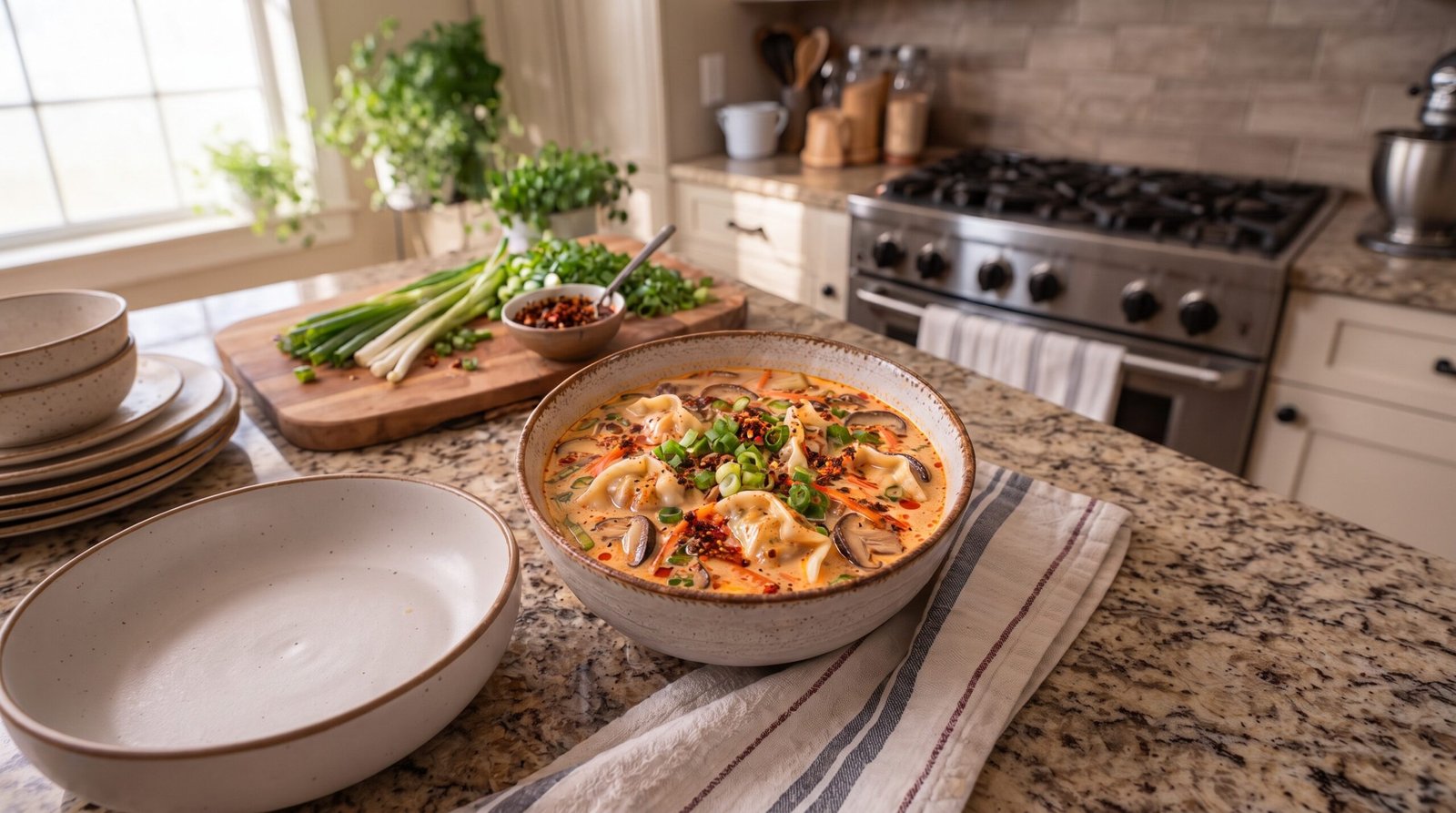
I used to think making wonton soup at home was a project that required hours in the kitchen and specialized skills. A few years ago, after a long day at the office, I found myself craving something comforting but vibrant. I had a package of frozen pork wontons and a few staple aromatics in my pantry. By experimenting with a creamy, spicy broth base instead of the traditional clear stock, I created this spicy creamy wonton soup. It hits that balance of rich, savory, and warming sensations that feels like a full meal in a single bowl.
This recipe is designed for those busy nights when you want to bypass takeout but still want a bowl of something steaming and flavorful. The broth comes together in the time it takes to boil the dumplings, making it a reliable option for any weeknight dinner. You will find that the textures work together to create a satisfying experience, with the tender dumplings nestled in a sauce that clings to them just enough to be flavorful without being heavy.
Why This Recipe Works
The primary reason this dish succeeds is the combination of textures. You have the soft, silky exterior of the wontons contrasting with the chewiness of the sliced shiitake mushrooms. The broth provides a velvety mouthfeel thanks to the creamy base, which carries the spice and umami notes of the chili oil and soy sauce directly to the palate. Unlike a watery clear soup, this version has a bit of body, which makes it feel substantial and satisfying as a main course rather than just an appetizer.
Simplicity is another key factor here. Many Asian-inspired soups rely on long-simmered broths that need hours to develop depth. This recipe uses ingredients that are already packed with flavor, such as soy sauce, ginger, garlic, and chili oil, to build a complex taste profile in under twenty minutes. You are not waiting for flavors to meld over a long boil. Instead, you are layering them quickly so that the ginger remains bright and the garlic stays punchy.
The ease of preparation also means you are more likely to make it again. Using high-quality store-bought frozen wontons is completely acceptable and saves significant time without sacrificing much quality. You can keep a bag in the freezer for months, meaning this meal is always accessible. The cooking method is straightforward—everything happens in one pot, which keeps cleanup minimal. You boil the soup base, add the dumplings until they float, and finish with fresh garnishes.
Ingredient Notes
The Main Components
The foundation of this soup relies on store-bought frozen wontons. Look for pork, shrimp, or vegetable varieties in your local Asian market or the freezer aisle of the grocery store. I prefer the smaller, thinner-skinned wontons because they absorb the flavor of the broth better than the thicker, doughy varieties. You will also need a base of ginger and garlic. Fresh is non-negotiable here, as powdered versions just do not provide that sharp, clean bite that the broth requires.
The Broth Base
The creamy element comes from a mixture of coconut milk and a splash of soy milk or plain unsweetened almond milk. Full-fat coconut milk works best to provide that luxurious consistency. You will need a quality soy sauce for the saltiness and savory depth. To get that signature heat, you need a decent chili oil or chili crisp. I look for brands that have a good balance of fried garlic, chili flakes, and oil. The chili crisp adds a subtle crunch that enhances the overall eating experience.
Mushrooms and Vegetables
Shiitake mushrooms provide a meaty, earthy flavor that is essential for this soup. If you cannot find fresh shiitakes, cremini mushrooms are a decent backup, though they lack the unique woodsy aroma of the shiitake. For the greens, use scallions or green onions. They provide a necessary crunch and freshness at the end of the cooking process. You can also add thin strips of carrot for color, but keep them very thin so they soften quickly in the hot broth.
| Ingredient | Amount | Notes |
|---|---|---|
| Frozen Wontons | 12-15 pieces | Keep frozen until ready to cook |
| Coconut Milk | 1 cup | Full-fat canned coconut milk |
| Vegetable Broth | 2 cups | Low sodium preferred |
| Soy Sauce | 2 tablespoons | Light or all-purpose |
| Chili Oil or Crisp | 1-2 tablespoons | Adjust based on heat preference |
| Garlic | 2 cloves | Minced finely |
| Ginger | 1 tablespoon | Grated or minced |
| Shiitake Mushrooms | 4-5 medium | Thinly sliced |
| Scallions | 3 stalks | Thinly sliced for garnish |
| Carrots | 1 small | Cut into matchsticks |
The Recipe
- Prep Time: 10 minutes
- Cook Time: 15 minutes
- Total Time: 25 minutes
- Servings: 2
- Difficulty: Easy
Equipment:
– Medium saucepan or soup pot
– Sharp knife and cutting board
– Grater for ginger
– Ladle
– Serving bowls
Step-by-Step Instructions
Step 1: Prep the Aromatics
Start by cleaning your vegetables and preparing your aromatics. Finely mince the garlic cloves and grate the fresh ginger. It is helpful to have these ready because once the cooking starts, things move quickly. Slice the shiitake mushrooms into thin strips, ensuring you discard the tough stems. Wash the scallions and slice them on a bias, keeping the white parts separate from the green parts, as you will cook the whites and use the greens for garnish later.
Step 2: Sauté the Base
Place your medium saucepan over medium heat. Add a splash of neutral oil, such as avocado or canola. Once the oil shimmers, add the garlic, ginger, and the white parts of the scallions. Sauté these for about sixty seconds until they are fragrant. Be careful not to let the garlic brown too much, as burnt garlic can introduce a bitter taste that will ruin the delicate balance of the creamy broth. You want them just softened and aromatic.
Step 3: Create the Broth
Add the sliced mushrooms and the carrot matchsticks to the pot. Stir them for two minutes until they start to soften slightly. Pour in the vegetable broth, the full-fat coconut milk, and the soy sauce. Whisk gently to combine everything into a smooth, light orange-colored liquid. Bring this mixture to a gentle simmer, but avoid bringing it to a rolling boil, as the coconut milk can sometimes separate if heated too aggressively.
Step 4: Add the Wontons
Once the broth is simmering steadily, gently drop in the frozen wontons. Do not crowd the pot. If the pot is small, you might need to do this in two batches. Let the wontons cook in the broth for five to seven minutes. You will know they are finished when they become translucent around the edges and float to the surface of the broth. The internal temperature of the filling should reach 165 degrees Fahrenheit. Test one to ensure it is cooked through if you are unsure.
Step 5: Finish and Serve
Once the wontons are cooked, stir in your desired amount of chili oil or chili crisp. Taste the broth carefully. If it needs more salt, add a tiny splash of soy sauce. If it needs more heat, add another spoonful of chili oil. Ladle the soup into bowls, ensuring each serving gets a generous amount of wontons and mushrooms. Sprinkle the reserved green parts of the scallions over the top before serving while the soup is steaming hot.
Mistakes I Made (So You Don't Have To)
Mistake 1: Crowding the Pot
Early on, I tried to cook too many wontons at once. They ended up sticking together and tearing, which caused the filling to leak out and make the broth cloudy and messy. The fix is simple: cook your wontons in batches if your pot is not large enough to hold them in a single layer. You want each wonton to have space to swim and cook evenly without bumping into its neighbor.
Mistake 2: Boiling the Broth Too Hard
I once thought that a high, rolling boil was necessary to cook the wontons quickly. This resulted in the coconut milk separating, which gave the soup an unappealing, oily texture rather than a creamy one. Always keep the heat at a gentle simmer once you add the coconut milk. This preserves the silky quality of the liquid and prevents the fats from breaking away from the base, which is crucial for the mouthfeel.
Mistake 3: Neglecting the Ginger
I used to be lazy with the ginger and just chopped it into large pieces. It left the broth tasting a bit flat, and I ended up biting into unpleasant chunks of raw ginger. Now, I always grate the ginger finely. This distributes the flavor evenly throughout the broth and ensures that you get that sharp, spicy warmth in every spoonful without any woody surprises. It makes a significant difference in the final flavor profile.
Mistake 4: Overcooking the Mushrooms
I once left the mushrooms in the broth for the entire duration of the cooking time, and they turned mushy and lost their pleasant texture. Now, I sauté them only for a couple of minutes before adding the liquid, or I add them right at the beginning of the simmer. They only need about five to seven minutes to become tender but still retain a bit of a bite. Do not let them sit for too long, or you lose the contrast they provide.
Variations and Tips
Using Different Proteins
If you do not have pork wontons, you can easily use shrimp or vegetable dumplings. Shrimp wontons pair beautifully with the coconut milk base because the flavors are naturally complementary. For a vegetable version, make sure they are well-sealed so they do not fall apart in the liquid. You can also add extra protein by poaching a few thin slices of raw chicken breast in the broth, but ensure it reaches an internal temperature of 165 degrees Fahrenheit before serving.
Making it Extra Creamy
If you really enjoy a thick, rich broth, you can whisk in a teaspoon of cornstarch mixed with a tablespoon of cold water into the broth during the final two minutes of cooking. This acts as a thickener and gives the soup a restaurant-style consistency. Just make sure to whisk it well to prevent lumps. It is a small step, but it completely changes how the soup coats the back of a spoon and makes it feel much more indulgent.
The Time-Saving Trick
If you are short on time, you can prep the aromatics and slice the mushrooms the night before. Keep them in a sealed container in the fridge. This way, dinner is just a matter of boiling the broth and dropping in the wontons. I also like to keep a jar of pre-mixed ginger and garlic in the freezer, which I can just pop into the pan. It saves precious minutes when I am hungry and just want to get to the table.
Adjusting the Spice Level
Chili crisp varies widely in heat. Some are very spicy, while others are mostly savory. I recommend adding your chili crisp one teaspoon at a time. Taste the broth after every addition until you reach your comfort level. Remember that the heat can build as you eat the bowl, so it is better to start conservative and add extra on top of the bowl at the end if you find you want more of a kick.
Storage and Reheating
If you have leftovers, store them in an airtight container in the refrigerator within two hours of cooking. This soup stays good for up to three days. Note that the wonton skins will continue to absorb the broth over time and may become quite soft. Because of this, it is best to store the wontons separately from the broth if you think you will have leftovers, though I understand this is not always practical in a busy home kitchen.
When you are ready to eat again, pour the soup into a saucepan and reheat it over medium heat until it is steaming hot. You want to reach a temperature of 165 degrees Fahrenheit to ensure safety. Avoid using the microwave if possible, as it can make the wonton skins mushy and unevenly hot. If the broth has thickened too much in the fridge, add a small splash of water or vegetable broth to bring it back to the right consistency. Do not freeze this soup, as the coconut milk and the delicate wonton skins do not stand up well to the freezing and thawing process.
Frequently Asked Questions
Can I use low-fat coconut milk for this soup?
I do not recommend it. The high fat content in full-fat coconut milk is what gives this broth its creamy, velvety texture. Using low-fat milk will result in a much thinner and more watery soup that lacks the mouthfeel and richness needed to balance the spicy chili oil. If you want to use something else, a splash of heavy cream is a better substitute than low-fat coconut milk, though it will change the flavor profile slightly.
What should I do if the broth separates?
Separation usually happens if the soup is boiled too aggressively after the coconut milk is added. If this occurs, take the pot off the heat and whisk the broth vigorously for thirty seconds. Sometimes this can re-emulsify the fats and liquids. In the future, keep the heat on a lower setting once the liquids are combined. A gentle simmer is all you need to cook the wontons without compromising the consistency of the broth base.
Is it necessary to use shiitake mushrooms?
Shiitake mushrooms provide a deep, umami flavor that is essential for a high-quality broth, but you can substitute them. Cremini or button mushrooms are fine, though they are milder in taste. If you use dried shiitake mushrooms, make sure to rehydrate them in warm water for twenty minutes before slicing them. The soaking liquid from the dried mushrooms can also be used as part of the broth for an extra boost of flavor.
How do I know when the wontons are fully cooked?
The best way to tell is by the visual cues. When you first add them, they will sink to the bottom. As they cook, the skins will turn translucent, and the dumplings will float to the surface. This usually takes five to seven minutes at a gentle simmer. If you are concerned about the filling, use a small fork to cut into one piece. The inside should be steaming hot and cooked through, reaching an internal temperature of 165 degrees Fahrenheit.
Can I add other vegetables to this recipe?
Absolutely. You can add baby spinach or bok choy during the final minute of cooking. These greens wilt very quickly in the hot broth and add a nice bit of color and texture. Just be mindful not to overcook them, as they can turn slimy if left in the boiling liquid for too long. Adding a few drops of sesame oil just before serving can also enhance the aroma and bring out the flavors of the added vegetables.
Final Thoughts
This spicy creamy wonton soup has become a staple in my rotation for a reason. It is straightforward to assemble, uses simple ingredients, and provides a level of warmth that is perfect for a quick, comforting meal. I hope you find that it works just as well in your own kitchen as it does in mine.
Feel free to play with the heat level or add your favorite quick-cooking vegetables. This recipe is meant to be flexible and accommodating to what you have on hand. Enjoy the process of building those layers of flavor and take your time with that first spoonful of hot, spicy broth.