
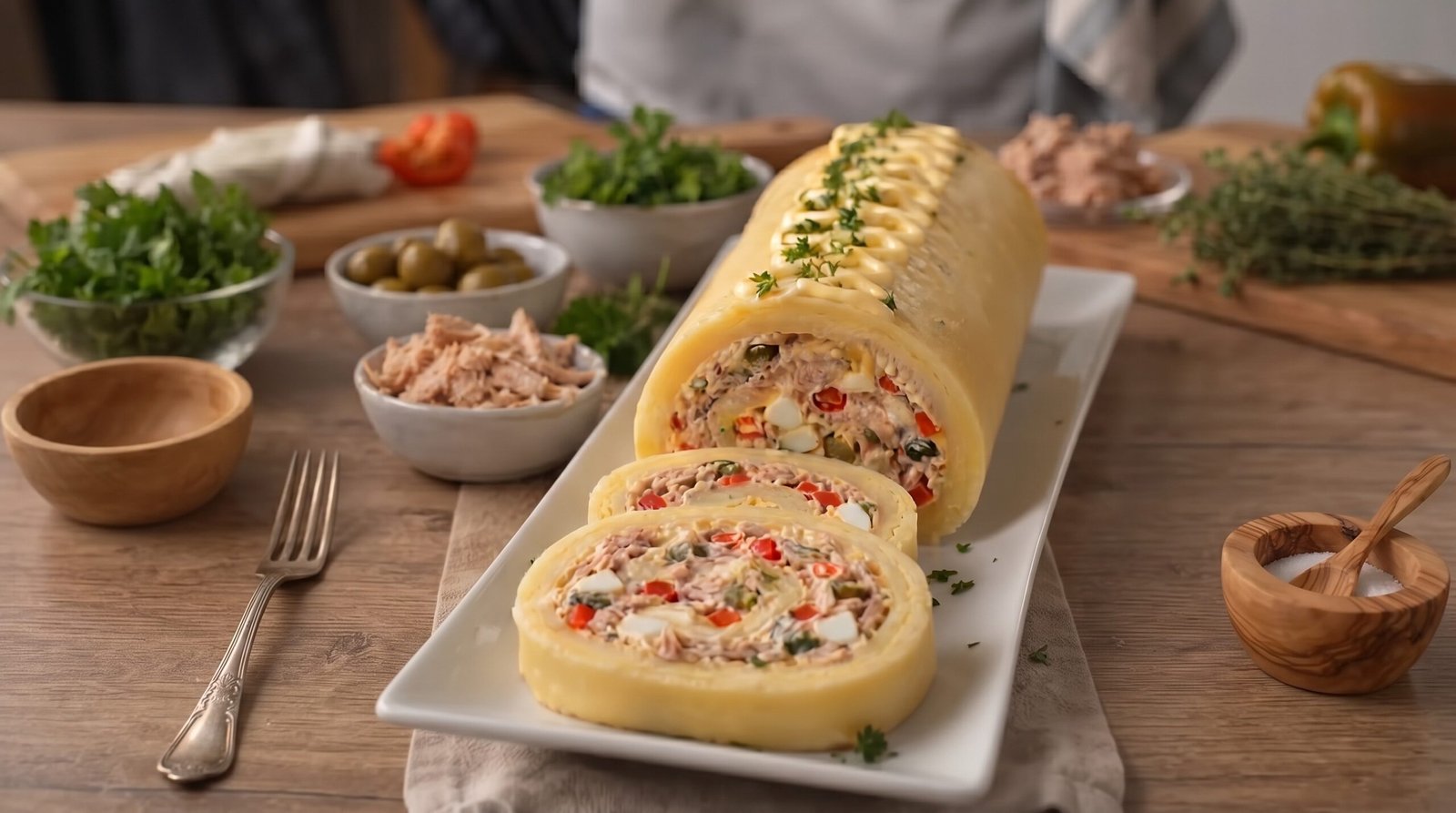
I remember the first time I tried to assemble a potato roll. I had a vision of a fancy, spiraled appetizer that would impress my guests, but my initial attempt ended up being more of a pile of mashed potatoes than a elegant roll. It took me a few afternoons in my own kitchen, experimenting with the starchiness of different potatoes and the consistency of my filling, to find the right balance. This dish is essentially a savory Swiss roll made from a flat, thin layer of mashed potatoes spread with a rich, tangy tuna salad filling.
When you get it right, this appetizer has a lovely presentation where you see distinct layers of golden potato, bright red peppers, and cream-colored tuna and eggs. It is a wonderful option when you want something that looks like it took hours to prepare but actually relies on basic pantry staples. I find that it works just as well for a casual weekend lunch as it does for a spread of snacks at a small gathering. You will end up with a centerpiece that is satisfying, holds its shape well, and offers a pleasant combination of textures in every bite.
Why This Recipe Works
This recipe relies on the natural binding properties of cooled, starchy potatoes. By spreading the mashed potatoes onto a flat sheet and cooling them before adding the filling, the starch sets, allowing you to roll the mixture into a compact cylinder without it crumbling apart. The filling needs to be firm enough to hold the roll together, which is why we use a mayonnaise-based tuna mixture. The mayonnaise binds the tuna, diced eggs, and peppers together, acting like a glue for the internal layers.
The flavor profile works because of the contrast between the mild, earthy base of the potatoes and the bright, salty, and acidic elements of the tuna salad. The peppers add a mild crunch and a burst of color, while the hard-boiled eggs provide a creamy, savory note that rounds out the tuna. You can adjust the seasoning by adding more lemon juice or mustard depending on your taste preferences. Because the roll is served chilled, the flavors have time to meld together, making the second day leftovers taste even better than when you first assemble it.
Another reason this recipe is reliable is that it uses simple, accessible ingredients. Most people have canned tuna, potatoes, and mayonnaise in their pantry or fridge. You do not need any exotic spices or complex cooking techniques. The only real requirement is a bit of patience during the rolling process and ensuring your potatoes are mashed until they are completely smooth. Smooth potatoes are essential for a clean roll, as any lumps can poke through the sheet or create weak spots that break when you try to turn it. This dish is meant to be made ahead, which is a major advantage for any host trying to keep things organized.
Ingredient Notes
Potato Base Ingredients
For the base, you need starchy potatoes, which are essential for the right texture. Look for Russet or Yukon Gold potatoes, as they mash easily and hold their shape well once cooled. I usually avoid waxy potatoes like red bliss for this, as they tend to be too dense and do not create the smooth, spreadable consistency I need for the sheet. You will need a bit of butter to add richness and perhaps a tablespoon of milk to help with the mashing, but be careful not to make the mixture too runny.
Tuna Filling Ingredients
The filling is where you can be creative with textures. I prefer using canned tuna in water rather than oil, because it is easier to drain completely. Excess liquid in the tuna will make the filling soggy and potentially ruin the structure of your roll. I like to use a mixture of mayonnaise and a small amount of Dijon mustard. The mustard adds a depth that cuts through the creaminess of the mayo. Finely diced red bell pepper provides a crunch that contrasts with the soft potato, while hard-boiled eggs provide a necessary protein element. You can also add capers or finely chopped pickles if you enjoy a bit of extra tang.
Herb and Garnish Elements
Fresh parsley is my go-to for this recipe. I stir some into the tuna mixture for a burst of color and flavor, and I save the rest to sprinkle over the finished roll. The greenery looks sharp against the light-colored potato and the bright red peppers. If you do not have parsley, fresh dill or chives are excellent alternatives that pair just as well with the tuna. Make sure to chop your herbs finely so they do not disrupt the smooth texture of the roll when you slice it.
| Ingredient | Amount | Notes |
|---|---|---|
| Russet potatoes | 2 lbs | Peel and cut into even chunks |
| Butter | 3 tablespoons | Unsalted preferred |
| Mayonnaise | 1 cup | Divided for potato and tuna |
| Canned tuna | 10 oz | Drained very well |
| Hard-boiled eggs | 3 large | Finely chopped |
| Red bell pepper | 1/2 cup | Finely diced |
| Dijon mustard | 1 teaspoon | For the tuna filling |
| Fresh parsley | 1/4 cup | Chopped finely |
| Salt and pepper | To taste | For seasoning the potato |
The Recipe
- Prep Time: 30 minutes
- Cook Time: 20 minutes
- Total Time: 2 hours (includes cooling)
- Servings: 8 slices
- Difficulty: Intermediate
Equipment needed: Large pot, potato masher, parchment paper, baking sheet, mixing bowl, plastic wrap, knife.
Step-by-Step Instructions
Step 1: Cook and Mash the Potatoes
Bring a large pot of salted water to a boil. Add the peeled and cubed potatoes. Cook for about 18 to 20 minutes or until they are fork-tender. Do not overcook them into mush, but make sure they are soft enough to pass a fork through with no resistance. Drain the water completely, letting the potatoes steam for another minute in the hot pot to remove excess moisture. This is crucial; if they are watery, the sheet will not set. Add the butter and mash the potatoes until they are completely smooth. Stir in two tablespoons of mayonnaise to add a bit of creaminess and bind the starches. Season with salt to taste.
Step 2: Prepare the Potato Sheet
Lay out a large piece of parchment paper on your clean countertop. Carefully spread the mashed potatoes onto the paper in an even layer. Use a spatula to shape it into a rectangle that is about 8 by 12 inches. The layer should be about 1/2 inch thick. If it is too thin, it will tear when you roll it. If it is too thick, it will not roll easily. Let this potato sheet sit at room temperature for about 30 minutes until it has cooled down completely. The potatoes need to be firm and set before you spread the filling.
Step 3: Create the Tuna Filling
In a separate medium-sized mixing bowl, combine the thoroughly drained canned tuna with the remaining mayonnaise and the Dijon mustard. Add the chopped hard-boiled eggs, the finely diced red bell pepper, and the fresh parsley. Stir everything together gently. You want the mixture to be combined but not mashed into a paste. Season with a pinch of salt and black pepper. The texture should be firm enough that it does not slide off a spoon. If it looks too dry, add another teaspoon of mayonnaise. If it looks too wet, drain it again or add a little more chopped egg.
Step 4: Assemble the Roll
Once the potato base has cooled and set, carefully spoon the tuna filling over the potato sheet. Spread it evenly, leaving about a half-inch border along the edges. This border will prevent the filling from squishing out when you roll it. Starting from the shorter end, use the parchment paper to help you lift the potato and fold it over onto itself. Roll it gently but firmly. Peel the parchment paper away as you go. Once the roll is complete, wrap it tightly in plastic wrap to help it maintain its shape. Place the roll in the refrigerator for at least one hour to firm up properly before slicing.
Step 5: Slice and Serve
Remove the roll from the refrigerator and unwrap it carefully. Use a sharp, thin-bladed knife to slice the roll into rounds that are about 1 inch thick. Clean the knife between each cut by wiping it with a warm, damp cloth. This ensures that the cuts are clean and you do not drag the filling across the potato layers. Arrange the slices on a platter and garnish with a little extra fresh parsley or a drizzle of mayonnaise on top if you like. Serve chilled.
Mistakes I Made (So You Don't Have To)
Using Wet Potatoes
My first attempt failed because I did not drain the potatoes long enough after boiling. The excess moisture turned the potato sheet into a paste rather than a firm base. The fix is to steam the potatoes for an extra minute in the pot after draining the water, and to ensure they are cool before spreading them. If your potatoes seem too soft even after cooling, place the spread-out sheet in the fridge for 15 minutes before adding the filling.
Adding Too Much Liquid to the Tuna
I once added too much mayonnaise to the tuna filling, which made it essentially a liquid puddle. When I tried to roll it, the filling oozed out of every side. The fix is to add mayonnaise one tablespoon at a time until the mixture reaches a thick, spreadable consistency. Always drain your canned tuna in a fine-mesh strainer and press it with the back of a spoon to remove every drop of liquid.
Uneven Filling Distribution
I used to dump all the filling in the center and try to spread it, which resulted in a thick lump in the middle of my roll. The fix is to distribute the filling in small dollops across the entire potato sheet, then use an offset spatula to spread them gently into an even layer. Keeping a border around the edges is also vital, as it allows the potato to seal itself when you finish the roll.
Rushing the Chilling Process
I tried to slice the roll almost immediately after assembling it. It was a disaster; the whole thing collapsed because the potato was still warm and soft. The fix is to be patient and keep it in the refrigerator for at least 60 minutes. The cold temperature firms up the fats in the mayonnaise and helps the potato starch set, creating a roll that holds its shape perfectly when sliced.
Variations and Tips
Adding Texture with Vegetables
You can introduce other vegetables to the filling for more variety. Finely diced celery adds a nice, crisp bite that works beautifully with the tuna and pepper. I have also used finely chopped scallions to add a mild onion flavor that does not overpower the other ingredients. Just be sure to chop whatever vegetable you add quite finely so it doesn't create gaps in the roll.
Herb Infusion
While I love parsley, you can swap it out for other fresh herbs depending on what you have. Fresh tarragon has a lovely, subtle anise note that tastes fantastic with cold tuna and potatoes. Basil is another option, though it should be chopped right before adding so it doesn't oxidize and turn dark. Fresh chives are another favorite for a mild, onion-like bite that looks great when sprinkled over the final roll.
The Make-Ahead Advantage
This dish is a fantastic make-ahead option. You can assemble the roll entirely, wrap it in plastic wrap, and keep it in the refrigerator for up to 24 hours before you plan to serve it. In fact, I think the texture improves after a few hours in the fridge because the flavors have time to meld. Just wait to garnish the top with extra parsley until right before you serve it so it stays bright and fresh.
Serving Ideas
If you are looking for a side dish, this roll pairs well with a simple green salad dressed with a light lemon vinaigrette. The acidity of the dressing complements the richness of the potato roll perfectly. If you are serving this at a party, arrange the slices on a large wooden board and put a few extra crackers or slices of toasted baguette on the side for people who want to scoop up any filling that might be left behind.
Storage and Reheating
This is a cold appetizer, so it should stay refrigerated at all times until you are ready to eat. Store any leftovers in an airtight container or wrap the roll tightly in plastic wrap. It will stay safe to eat for up to 3 days in the refrigerator. Do not try to freeze this dish, as the potatoes will lose their texture and the mayonnaise-based filling will separate upon thawing. It is meant to be enjoyed fresh and cold, so there is no need to reheat it. If you have leftovers, pull them from the fridge 5 minutes before serving so they aren't ice-cold, which helps the flavors shine through.
Frequently Asked Questions
Can I use sweet potatoes for this?
I would not recommend using sweet potatoes for this recipe. Sweet potatoes have a much higher sugar content and a different moisture level than Russet or Yukon Gold potatoes. They are also usually softer and do not hold the sheet shape as well. Stick to starchy white-fleshed potatoes to ensure the roll sets firmly and maintains its structure when you slice it.
How do I stop the potato sheet from breaking?
The key to preventing cracks is to make sure your potato base is smooth and the layer is even. If you have lumps in your mash, they will create weak points that break when you try to roll it. Also, make sure you don't overcook the potatoes, as they will become too wet. If you see a crack as you are rolling, just use your fingers to gently push the potato back together; it is very forgiving and can be easily patched before the final chill.
Can I use canned salmon instead of tuna?
Absolutely. Canned salmon is a great alternative to tuna and has a similar flakey texture that works well in this roll. Make sure you remove any bones or skin before mixing it with the other filling ingredients. The flavor of salmon is slightly richer than tuna, so you might want to add a little extra lemon juice to the filling to keep it bright and balanced.
What if I don't have parchment paper?
Parchment paper is very helpful, but you can use a large, clean sheet of plastic wrap to help you assemble the roll. Lay the plastic wrap out, spread the potatoes onto it, and then use the plastic to help lift and roll the sheet. However, parchment paper is much sturdier and I highly recommend it for the best results. It makes the rolling process much easier to manage.
Can I serve this warm?
This recipe is specifically designed to be served cold. If you try to serve it warm, the potato base will likely be too soft to hold its shape, and the filling will soften, making it difficult to slice into neat rounds. The cold temperature is essential for setting the potatoes and creating that firm, classic roll shape that looks so professional on a platter.
Final Thoughts
Making a potato roll is one of those projects that feels very rewarding once you see the beautiful spiral layers. It is simple enough for a weeknight dinner preparation but impressive enough to bring to a gathering with friends. Once you get the hang of the potato sheet, you can start experimenting with different fillings, like roasted vegetables or different types of fish.
My best advice is to take your time with the mashing and the chilling. If you respect the cooling time, you will have a perfect, firm roll every time. I hope you enjoy putting this together as much as I do. It truly is a fun way to turn basic ingredients into something memorable and special for your next meal.