
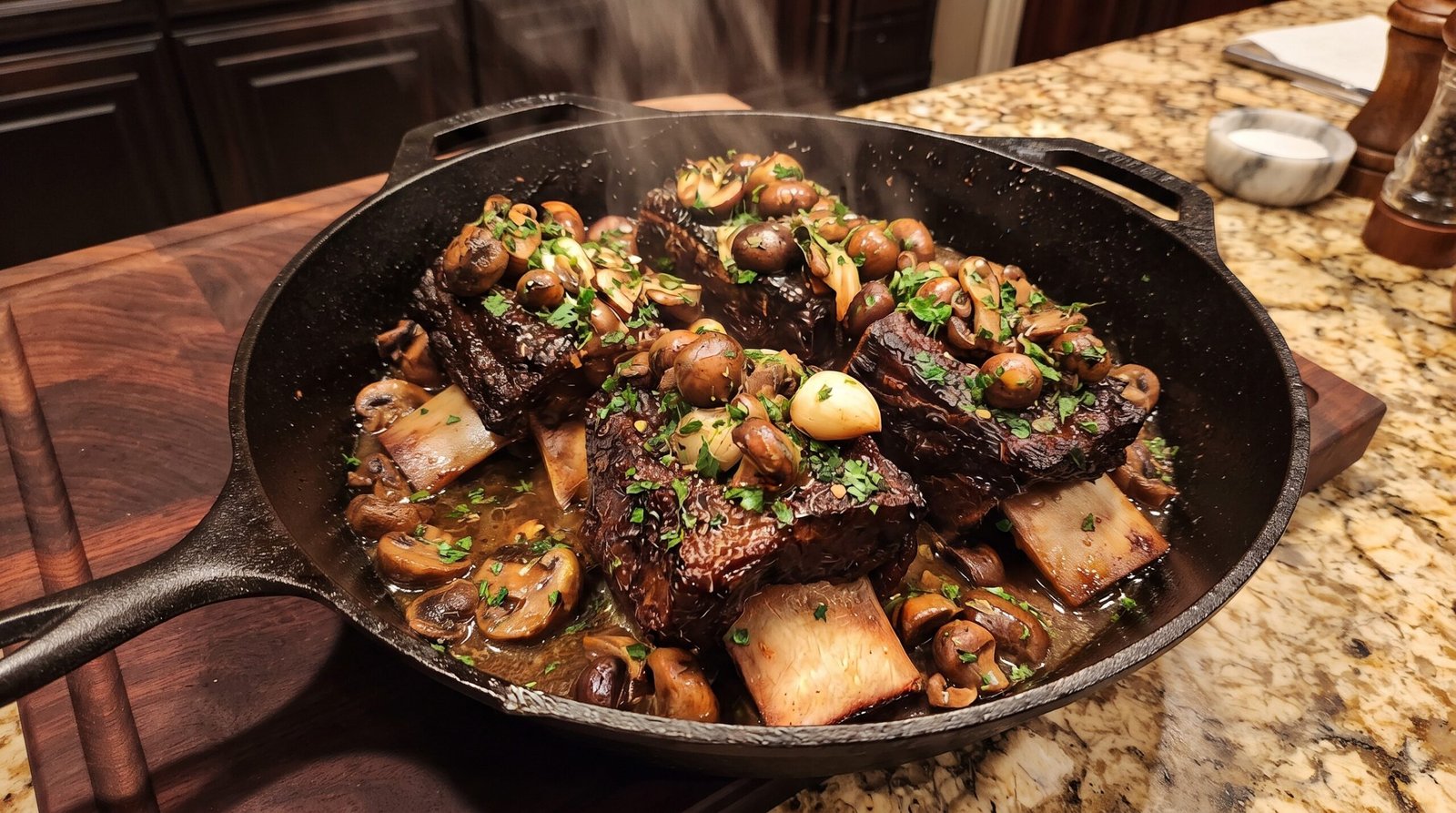
I remember the first time I tried to make dinner for my friends on a rainy Tuesday evening. I wanted something that felt like a warm blanket after a long day, but I was worried about ending up with tough meat. I reached for a package of beef short ribs and decided to go the slow-braised route. There is something grounding about standing at the stove, watching the steam rise from a heavy pan, knowing that patience is the main secret to getting the dinner right. The house fills with the smell of roasting beef, garlic, and earthiness, and by the time you pull the pan out of the oven, the meat is so tender it practically falls off the bone with just a nudge from your fork.
These Braised Beef Short Ribs with Mushrooms are exactly what I turn to when I want a meal that feels like a treat but doesn't require constant fussing. You get that deep, rich flavor that only comes from browning the meat properly before simmering it low and slow. The mushrooms act like sponges for the sauce, becoming savory little nuggets of flavor. This is the kind of recipe that makes you look like a pro, even if you are just hanging out in your kitchen in sweatpants. Let me walk you through how to put this together so you can have this satisfying meal ready for your own table.
Why This Recipe Works
The magic of this recipe really comes down to the texture and the balance of flavors. When you start by searing the beef, you create a crust on the surface of the meat. This isn't just for color; it is a chemical reaction that creates a savory depth. If you skip this part, the meat ends up tasting like boiled beef, which is never the goal. By searing the short ribs in a heavy-bottomed pan, you lay the foundation for a gravy that is concentrated and intense.
The addition of mushrooms is another reason this works well. Mushrooms provide a meaty, earthy note that complements the richness of the beef fat. Because they cook down in the braising liquid, they soak up the herbs and the juices from the meat. This means every bite you take has a bit of vegetable and a bit of protein, creating a balanced mouthful.
Finally, the cooking method of braising is very forgiving. Unlike a quick pan-sear of a steak, which needs to be timed down to the second, these ribs sit in liquid at a low temperature for several hours. This allows the connective tissue in the ribs to break down slowly. This transformation turns tough, chewy meat into something soft and buttery. It is a slow process, but it is entirely hands-off once the pan is in the oven. You gain time to do other things while your kitchen starts smelling better by the minute. It is an honest dish that rewards you for waiting.
Ingredient Notes
The Beef
For this dish, you want bone-in beef short ribs. These are cut from the plate or chuck section of the cow. Look for pieces that have a good amount of marbling throughout the meat. If the rib is too lean, it will dry out during the three-hour cook. You want the fat to render down so the meat stays moist. Don't worry about the size of the bone; just make sure the pieces are roughly the same size so they cook at a consistent rate. You should plan on one or two ribs per person depending on how hungry everyone is.
The Mushrooms
I prefer using cremini mushrooms, which are sometimes labeled as baby bellas. They have a more developed flavor than standard white button mushrooms. I like to keep them whole or just halved if they are large, so they hold their shape throughout the braise. If you can only find button mushrooms, they work fine, though you might want to add a tiny bit more salt to the sauce to make up for the lower intensity of flavor.
Aromatics and Liquids
Garlic is non-negotiable here. I leave the cloves whole because they soften up and become almost sweet during the long cook. For the liquid, I use a mixture of a dry red wine and a high-quality beef stock. The wine provides the acidity needed to cut through the richness of the beef fat. If you prefer not to use wine, you can use more beef stock and a tablespoon of balsamic vinegar to get that necessary acidity. The herbs, specifically fresh thyme and rosemary, are essential for bringing an herbal brightness to the heavy sauce.
| Ingredient | Amount | Notes |
|---|---|---|
| Beef short ribs | 4 to 6 pieces | Bone-in, well-marbled |
| Cremini mushrooms | 1 pound | Cleaned and left whole |
| Garlic | 1 whole head | Separated into cloves and peeled |
| Dry red wine | 2 cups | Such as Cabernet or Merlot |
| Beef stock | 2 cups | Low sodium works best |
| Fresh thyme | 1 small bunch | Tied with kitchen twine |
| Fresh rosemary | 2 sprigs | Woody stems removed |
| Olive oil | 2 tablespoons | For searing the beef |
| Salt and pepper | To taste | Kosher salt and cracked pepper |
| Fresh parsley | 1/4 cup | Chopped for garnish |
The Recipe
- Prep Time: 20 minutes
- Cook Time: 3 hours
- Total Time: 3 hours 20 minutes
- Servings: 3 to 4
- Difficulty: Intermediate
Equipment
- Large cast-iron Dutch oven
- Tongs
- Measuring cups
- Chef knife
- Cutting board
- Aluminum foil
Step-by-Step Instructions
Step 1: Prep the Meat and Preheat
Start by preheating your oven to 325 degrees Fahrenheit. While the oven heats up, take your short ribs out of the refrigerator and pat them completely dry with paper towels. Moisture is the enemy of a good sear. If the meat is wet, it will steam instead of browning. Season every side of the ribs generously with salt and pepper. Don't be shy with the seasoning here, as it is the only time you will directly flavor the beef itself.
Step 2: Sear the Ribs
Place your Dutch oven on the stove over medium-high heat. Add the olive oil and let it shimmer. Carefully place the ribs in the pot, making sure they aren't crowded. You might need to do this in two batches. Let them cook for about 3 to 4 minutes per side without moving them. You want a dark brown crust to form on the surface. Once they are browned on all sides, remove them to a plate and set them aside. There will be dark bits stuck to the bottom of the pot; do not wash this out, as it is packed with flavor.
Step 3: Add Aromatics and Deglaze
Lower the heat to medium. Toss the whole garlic cloves into the pot with the rendered beef fat. Let them cook for about 2 minutes until they are slightly golden. Now, pour in the red wine. Use a wooden spoon to scrape up all those browned bits from the bottom of the pot. This is called deglazing. Let the wine simmer for about 5 minutes to reduce by half. This reduces the sharp alcohol taste and leaves behind a concentrated, savory base for your sauce.
Step 4: Assemble the Pot
Return the browned short ribs to the Dutch oven, tucking them in among the garlic and the liquid. Add the mushrooms around the beef. Pour in the beef stock until the ribs are about halfway submerged in the liquid. Lay the bundle of fresh thyme and the rosemary sprigs right on top. Cover the pot tightly with a lid or a piece of heavy-duty aluminum foil tucked firmly around the edges to trap the steam.
Step 5: The Slow Braise
Transfer the pot to the preheated oven. Let the ribs braise for 3 hours. You are looking for the meat to be fork-tender. When you test it, the meat should pull away from the bone with very little resistance. The internal temperature of the beef should reach at least 195 degrees Fahrenheit for the best texture. If it feels tough, give it another 20 minutes. Don't rush this part, as the magic happens in the final hour of cooking.
Step 6: Serve
Carefully remove the pot from the oven. Discard the herb stems. The sauce should be glossy and slightly thickened from the juices released by the meat and mushrooms. Taste the sauce; it should be savory and balanced. Sprinkle the chopped fresh parsley over the entire dish right before you bring the pot to the table. Serve the ribs with some of the braising liquid and mushrooms spooned over the top.
Mistakes I Made (So You Don't Have To)
Crowding the Pan
The first time I made this, I tried to fit all six ribs into the pot at once because I was in a rush. Because the pan was crowded, the temperature dropped, and the ribs started to steam in their own juices instead of getting a brown crust. Now, I always cook them in two batches. It takes five extra minutes, but the flavor difference is worth it.
Rushing the Deglazing
I once poured the wine in and immediately added the stock without waiting for the wine to reduce. The result was a thin, watery sauce that tasted too much like harsh alcohol. Now, I make sure the wine reduces by at least half before adding the stock. It concentrates the sugars and acidity, which gives the finished sauce a much richer, smoother mouthfeel.
Using Lean Beef
I once bought "healthy" lean short ribs with almost no fat visible. I ended up with dry, stringy meat that was a chore to eat. The fat is necessary for this cooking method. It melts into the sauce and keeps the meat moist throughout the long braising time. Stick to well-marbled cuts; you are eating this for the experience, not for calorie counting.
Forgetting to Salt the Meat
I used to think that since the sauce was salty, I didn't need to season the beef itself. I was wrong. The meat inside remained bland. Now, I make sure to rub the salt into the beef ribs before searing. It makes the beef taste savory all the way through, which makes the whole dish much more satisfying.
Variations and Tips
A Quicker Stovetop Method
If you don't want to use the oven, you can cook these on the stovetop. After you add the liquid and cover the pot, turn the heat down to the lowest setting possible. You want a very gentle simmer. Keep the lid on tightly and cook for about 2.5 to 3 hours, checking occasionally to make sure the liquid isn't evaporating too quickly. If it looks low, add a splash of water.
Adding Root Vegetables
If you want a one-pot meal, you can add chunks of carrots or parsnips into the pot during the last hour of cooking. They soak up the juices and become delicious. Just keep the pieces large so they don't turn into mush during the final hour of the heat. Avoid potatoes, as they tend to break down too much and make the sauce grainy.
The Make-Ahead Trick
This dish actually tastes even better the next day. If you have time, cook it a day in advance. Let it cool, then put the whole pot in the fridge. The next day, you can easily scrape off the layer of hardened fat that forms on the surface. Reheat it slowly on the stovetop over low heat until the meat is steaming hot throughout.
Finishing the Sauce
If you prefer a thicker sauce, remove the ribs and mushrooms once they are cooked. Keep them warm under foil. Put the pot back on the stove over high heat and let the liquid boil for 5 to 8 minutes until it reduces to a syrup-like consistency. Pour this concentrated sauce back over the meat just before serving.
Storage and Reheating
If you have leftovers, you are in luck. Let the beef cool to room temperature, but do not leave it out for more than two hours. Transfer the ribs, mushrooms, and sauce into an airtight container. Keep it in the refrigerator for up to three days.
To reheat, the best method is to use a pan on the stove. Add a splash of water or beef stock to the pan to loosen the sauce, as it will thicken significantly in the fridge. Cover and heat over low heat until the internal temperature reaches 165 degrees Fahrenheit. I don't recommend freezing this dish, as the mushrooms tend to become watery and soft when thawed, which changes the texture of the sauce.
Frequently Asked Questions
Can I use a different cut of beef if I can't find short ribs?
You can use beef chuck roast if you can't find short ribs. Cut the roast into large, uniform chunks. It will behave very similarly to short ribs because it also has a good amount of connective tissue and marbling. The cooking time will remain about the same, as long as the chunks are substantial.
Do I really need to use wine for this?
You don't have to use wine, but it does add a depth of flavor that is hard to replicate. If you want to skip it, use more beef stock and add one tablespoon of balsamic or red wine vinegar to provide that necessary acidic bite. It won't taste exactly the same, but it will still be a very savory and tender dish.
How do I know when the meat is done?
The best way to tell is by the texture. A fork should slide into the meat with absolutely no resistance. If the meat still feels tight or pulls away from the fork, it needs more time. If you have a meat thermometer, the internal temperature should reach at least 195 degrees Fahrenheit. It is very hard to overcook these if they are submerged in liquid.
My sauce is too thin, what can I do?
If the sauce hasn't thickened enough, simply remove the meat and vegetables once they are done. Turn the heat to high and let the remaining liquid bubble and reduce for several minutes. It will naturally thicken as the water evaporates and the beef juices concentrate. You can also whisk in a tiny knob of cold butter at the end for a glossy finish.
Can I add onions to this?
While I personally prefer the clean flavor of just the garlic and the beef, you can certainly add pearl onions. If you do, peel them and add them to the pot when you put the mushrooms in. They will become sweet and soft. Avoid chopped yellow onions, as they might disappear into the sauce or become too sweet for this specific flavor profile.
Final Thoughts
Making these braised beef short ribs is a reminder that the best food doesn't have to be complicated. It just needs good ingredients and a little bit of time to reach its full potential. There is something very special about a dish that turns a humble cut of meat into something so tender and rich.
I hope this becomes a staple in your kitchen whenever you need a meal that feels like a real accomplishment. Whether you are cooking for guests or just looking to enjoy a quiet, slow evening, this recipe is there to make the process simple and the results worth every minute.