
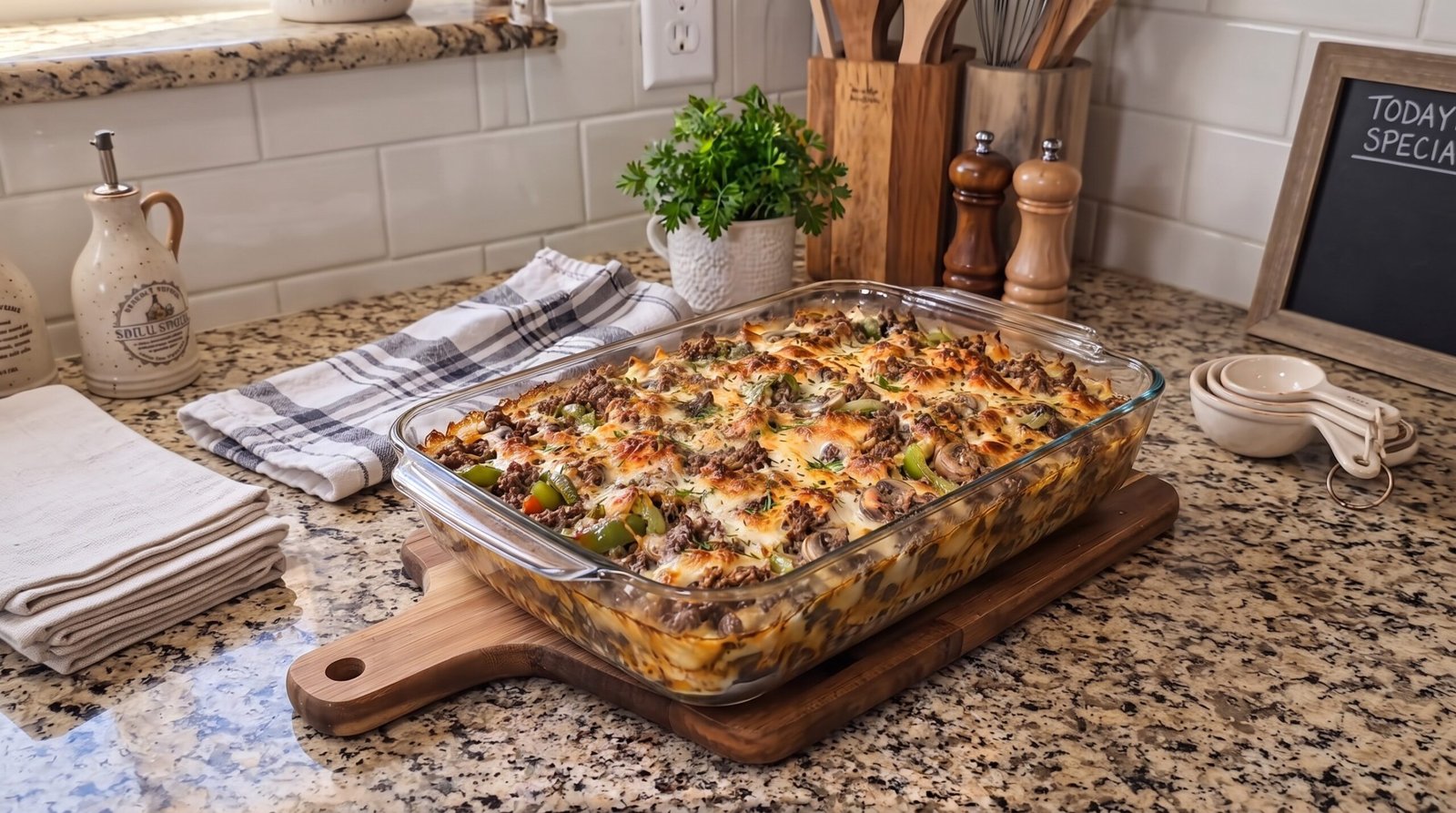
I often find myself standing in the kitchen at five in the evening, staring at the refrigerator and wondering how to get a hot dinner on the table before everyone starts asking what we are eating. Between finishing up work and getting the house settled, I need something that fills up a baking dish and takes care of itself in the oven. This beef and vegetable casserole has become a regular rotation item for me because it combines ground meat with hearty vegetables and a generous amount of cheese. It is the type of meal that feels substantial without requiring hours of standing by the stove.
When I first started making this, I used whatever vegetables were left in the drawer. I learned that as long as you account for the moisture content of the produce, you can create a reliable meal. This recipe yields a bubbling, savory dish that is easy to serve directly from the glass pan. It provides a balanced combination of protein and garden produce in one go, which is exactly what a busy household needs to stay fed and satisfied.
Why This Recipe Works
This casserole works because it uses the oven to handle the heavy lifting after a short stovetop session. By browning the ground beef first, you ensure that the meat develops a deep flavor before it hits the baking dish. If you were to put raw ground meat directly into the casserole, it would release too much grease and not develop that savory taste that comes from initial searing. The vegetables are chopped into bite-sized pieces so they cook evenly alongside the meat.
The texture is another reason this works well. Because the ingredients are mixed with a bit of cheese throughout and then topped with a thick layer, the final result is held together nicely when you scoop it out. It is not overly saucy or thin, which is a common problem with casseroles that turn into a puddle on the plate. Instead, you get distinct pieces of beef, tender slices of mushroom, and soft bell peppers that have softened in their own juices.
Flavor-wise, this dish relies on the natural juices of the beef and the sweetness of the sautéed peppers. I keep the seasoning simple with dried herbs and a touch of salt and black pepper because the cheese adds its own salty profile to the dish. The cheese melts into the crevices of the beef and mushrooms, creating a savory bridge between the protein and the vegetables. It is a forgiving recipe, meaning you can adjust the ratios based on what you have without ruining the structural integrity of the meal.
Ingredient Notes
The Protein Base
I always reach for a standard ground beef with about 15 to 20 percent fat content. You want a little bit of that fat to help the vegetables cook down and to keep the meat from turning dry in the oven. If you buy very lean beef, you might find the final product a bit tougher than you like. You could substitute this with ground turkey, but I recommend adding a small splash of oil to the pan when browning it to compensate for the lower fat content.
The Fresh Vegetables
Mushrooms are essential here because they soak up the flavors of the meat and the herbs as they roast. I prefer cremini or baby bella mushrooms for their slightly deeper taste, but white button mushrooms work just as well. I slice them roughly the same thickness as the bell peppers so they are ready at the same time. The green bell peppers provide a mild bitterness that cuts through the richness of the cheese. I avoid yellow or red peppers if I want a more savory, earthy flavor, but you can swap them if you prefer a sweeter profile.
The Cheese and Binder
Using a high-quality shredded mozzarella is the key to that golden, bubbly top. I recommend grating the cheese yourself from a block because the pre-shredded bags are coated in potato starch which prevents them from melting into that smooth, gooey texture we want. You can also mix in some shredded sharp cheddar if you want a bolder flavor, but stay away from processed cheese slices as they do not bake the same way.
| Ingredient | Amount | Notes |
|---|---|---|
| Ground beef | 2 pounds | 80/20 fat content is best |
| Bell peppers | 3 large | Seeded and chopped into one inch squares |
| Mushrooms | 16 ounces | Cremini or white, sliced thick |
| Mozzarella cheese | 3 cups | Shredded from a block |
| Garlic powder | 1 tablespoon | Adds savory depth |
| Dried oregano | 1 teaspoon | For an earthy herbal scent |
| Salt | 1 teaspoon | Adjust to your taste |
| Black pepper | 1/2 teaspoon | Freshly cracked is best |
| Olive oil | 1 tablespoon | Just enough to coat the pan |
The Recipe
- Prep Time: 15 minutes
- Cook Time: 40 minutes
- Total Time: 55 minutes
- Servings: 6 to 8
- Difficulty: Easy
Equipment Needed:
– Large skillet
– 9×13 inch glass baking dish
– Knife and cutting board
– Wooden spoon
– Cheese grater
Step 1: Prep the Ingredients
Start by washing your bell peppers and mushrooms thoroughly under cold water. Pat the mushrooms dry with a paper towel so they do not steam in the pan later. Core the peppers and remove the seeds, then chop them into even, one-inch pieces. Slice the mushrooms into thick half-moons or quarters.
Preheat your oven to 375 degrees Fahrenheit. While the oven is warming up, set out your ground beef so it takes the chill off. This helps it cook more evenly when it hits the hot skillet. Take your block of mozzarella cheese and grate it using the medium-size holes on your grater. Set the cheese aside in a bowl until you are ready for the assembly phase.
Step 2: Brown the Beef
Place your large skillet over medium-high heat and add the tablespoon of olive oil. Once the oil shimmers, add the ground beef. Use your wooden spoon to break the meat into small chunks as it browns. Continue cooking for about 8 to 10 minutes. You want to cook the meat until it is no longer pink and most of the moisture has evaporated.
If you see an excessive amount of grease in the pan, carefully spoon out about half of it, but leave a little bit behind to keep the dish flavorful. Season the meat with the garlic powder, oregano, salt, and black pepper. Stir well so the spices are evenly distributed throughout the meat. Remove the skillet from the heat for a moment while you move to the next step.
Step 3: Sauté the Vegetables
In the same skillet with the remaining beef fat, add the chopped peppers and mushrooms. You do not need to clean the pan between these steps because the leftover flavor is exactly what we want. Turn the heat back up to medium and cook the vegetables for about 5 to 7 minutes.
You are looking for the mushrooms to release their liquid and start to soften, and the peppers should lose their raw crunch. They do not need to be fully soft because they will continue cooking in the oven. Once the vegetables have shrunk slightly and look bright, turn off the heat and stir the meat back into the skillet to combine everything.
Step 4: Assemble the Casserole
Transfer the meat and vegetable mixture into your 9×13 inch glass baking dish. Spread it out with your spoon so the mixture forms an even layer across the bottom of the dish. It should look quite full at this point.
Take half of your shredded mozzarella cheese and sprinkle it directly over the meat and vegetable mixture. Use your spoon to gently fold the cheese into the mix, which helps create a gooey center. Then, take the remaining half of the cheese and spread it in an even layer over the entire top surface of the casserole. This will create the golden crust.
Step 5: Bake and Serve
Place the dish on the center rack of your 375-degree oven. Bake it for 20 to 25 minutes. You will know it is done when the cheese is melted and bubbling across the surface. If you like a slightly darker top, you can turn on the broiler for the last 2 minutes, but watch it closely so the cheese does not burn.
Once done, remove the dish carefully using oven mitts and set it on a heat-safe surface. Let the casserole sit for about 5 to 10 minutes before you try to scoop it. This rest period is essential because it allows the juices to redistribute and the cheese to set slightly, making it much easier to serve without it falling apart on the plate.
Mistakes I Made (So You Don't Have To)
Not Browning the Beef Enough
Early on, I used to undercook the beef, thinking it would finish in the oven. This was a mistake because the excess water released by under-browned meat turned the bottom of my casserole into a soupy mess. I learned to let the meat cook until it is truly browned and the water has evaporated. If you rush this part, the whole dish loses its structural firmness. Always give the meat that extra few minutes in the skillet.
Slicing Mushrooms Too Thin
I once tried to slice my mushrooms very thinly, thinking they would cook faster. Instead, they completely disappeared into the mix and turned into a mushy texture that was hard to distinguish. I now slice them into thick, hearty pieces that hold their shape even after the bake. If you keep them thick, they add a nice chew to the dish that balances out the softer vegetables and the cheese.
Forgetting the Rest Period
I used to be so hungry that I would pull the dish out of the oven and scoop it onto a plate immediately. The result was a loose pile of ingredients that didn't stay together. Allowing the casserole to sit for 10 minutes is not just about temperature; it is about letting the fats and cheese cool just enough to act as a binder. It makes for a much neater presentation and a better bite.
Adding Too Much Liquid
Once, I tried adding a splash of stock to the meat mix to keep it moist. Since the mushrooms and peppers release plenty of their own water during the cooking process, the extra liquid just made the casserole watery and ruined the crust. Stick to the natural juices of the meat and vegetables. If you find the meat is too dry while browning, just add a tiny bit more oil, but skip the liquids like stock or sauce.
Variations and Tips
Swapping the Cheese
While mozzarella is the standard for that classic stretch, you can swap it for a mix of Gruyère and fontina if you want a more complex, nutty flavor. These cheeses also melt beautifully and provide a slightly more sophisticated taste. If you prefer a little kick, mix in some shredded pepper jack. Just be aware that pepper jack has more moisture, so the top might be slightly softer than with plain mozzarella.
Adding Herbs
I love using fresh herbs to brighten up the dish. If you have some fresh parsley or basil on hand, chop it up and sprinkle it over the top right when you take the dish out of the oven. The residual heat will release the oils from the herbs, making the whole kitchen smell fresh. This is much better than adding delicate fresh herbs before the baking process, as the high heat would turn them black and take away their flavor.
Make-Ahead Strategy
You can assemble this entire casserole up to 24 hours before you plan to bake it. Prepare the meat and vegetable mixture, put it in the baking dish, and add the cheese on top. Cover the dish tightly with foil or plastic wrap and store it in the refrigerator. When you are ready to eat, just pop it into the preheated oven. You may need to add about 5 to 10 minutes to the total baking time since you are starting from a cold state.
Adding Texture
If you feel the dish needs a little crunch, sprinkle some toasted breadcrumbs over the cheese during the last 5 minutes of baking. You can mix the crumbs with a little melted butter and garlic powder for an extra savory finish. This creates a contrast to the gooey cheese and soft vegetables. It is a simple addition, but it definitely changes the eating experience if you find the dish a bit too soft.
Storage and Reheating
If you have leftovers, you must refrigerate them within 2 hours of taking the dish out of the oven. Keep the casserole in an airtight container or cover the original baking dish tightly with aluminum foil. It will stay good in the refrigerator for up to 3 days. Because this contains dairy and meat, I do not recommend pushing the limit past the third day.
When you want to reheat a portion, the best method is using the oven or a toaster oven to ensure the top stays somewhat firm. Reheat at 350 degrees until the center is steaming hot and reaches 165 degrees Fahrenheit. You can use the microwave if you are in a hurry, but be aware that the cheese will become quite soft and the peppers might get a bit more rubbery. If you do microwave it, heat in 60-second intervals and stir if possible to ensure even warming. I personally do not recommend freezing this dish, as the mushrooms tend to turn watery and the cheese loses its nice texture once thawed and reheated.
Frequently Asked Questions
Can I use different types of meat for this recipe?
Yes, you can easily swap the ground beef for ground pork or even a mix of beef and pork. Ground pork provides a slightly sweeter, richer flavor that pairs very well with the mushrooms. You could also use ground chicken or turkey, just ensure you add a little extra oil when browning as these meats are naturally leaner and can dry out during the baking process.
Is it necessary to pre-cook the vegetables before baking?
I highly recommend it. If you throw raw peppers and mushrooms into the baking dish with the meat, they will release a large amount of liquid during the bake. This will result in a casserole that is swimming in juice rather than one that is held together by the cheese. Sautéing them for a few minutes removes that excess water and ensures the vegetables are cooked through perfectly.
What should I serve with this casserole?
Since the dish is quite rich due to the cheese and meat, I prefer to serve it with something light. A crisp green salad with a simple vinaigrette is a perfect balance to the savory profile of the beef. If you want something more substantial, a side of roasted broccoli or some toasted crusty bread to soak up any juices works great. It is a hearty enough main dish that you really do not need much else.
How do I know when the meat is fully browned?
You should look for the color to change from pink to a dark, deep brown. You should also listen for the sound of the fat sizzling in the pan, which indicates that most of the moisture from the meat has evaporated. If you see pink spots, keep cooking. When you stir, the meat should feel firm and look evenly colored throughout the skillet.
Can I reduce the amount of cheese?
You can certainly use less cheese if you prefer, but be aware that it acts as a binder for the vegetables and meat. If you reduce it significantly, the casserole might not hold its shape as well when you scoop it onto a plate. If you want a lower cheese content but still need structure, you could mix a beaten egg into the meat mixture before baking, which will help hold everything together as it cooks.
Final Thoughts
Making this casserole has saved me on many nights when I just needed something reliable and comforting. It is one of those meals that does not require a complex set of instructions or fancy equipment. It is simply about browning the ingredients well and letting the heat work in the oven to combine those flavors into something that makes for a great dinner.
I hope you find this recipe as helpful as I do. It is meant to be flexible, so do not hesitate to experiment with the vegetables you have on hand or the herbs that you enjoy the most. Enjoy the process of putting it together and even more, enjoy sitting down to a hot meal that you prepared with simple, wholesome ingredients.