
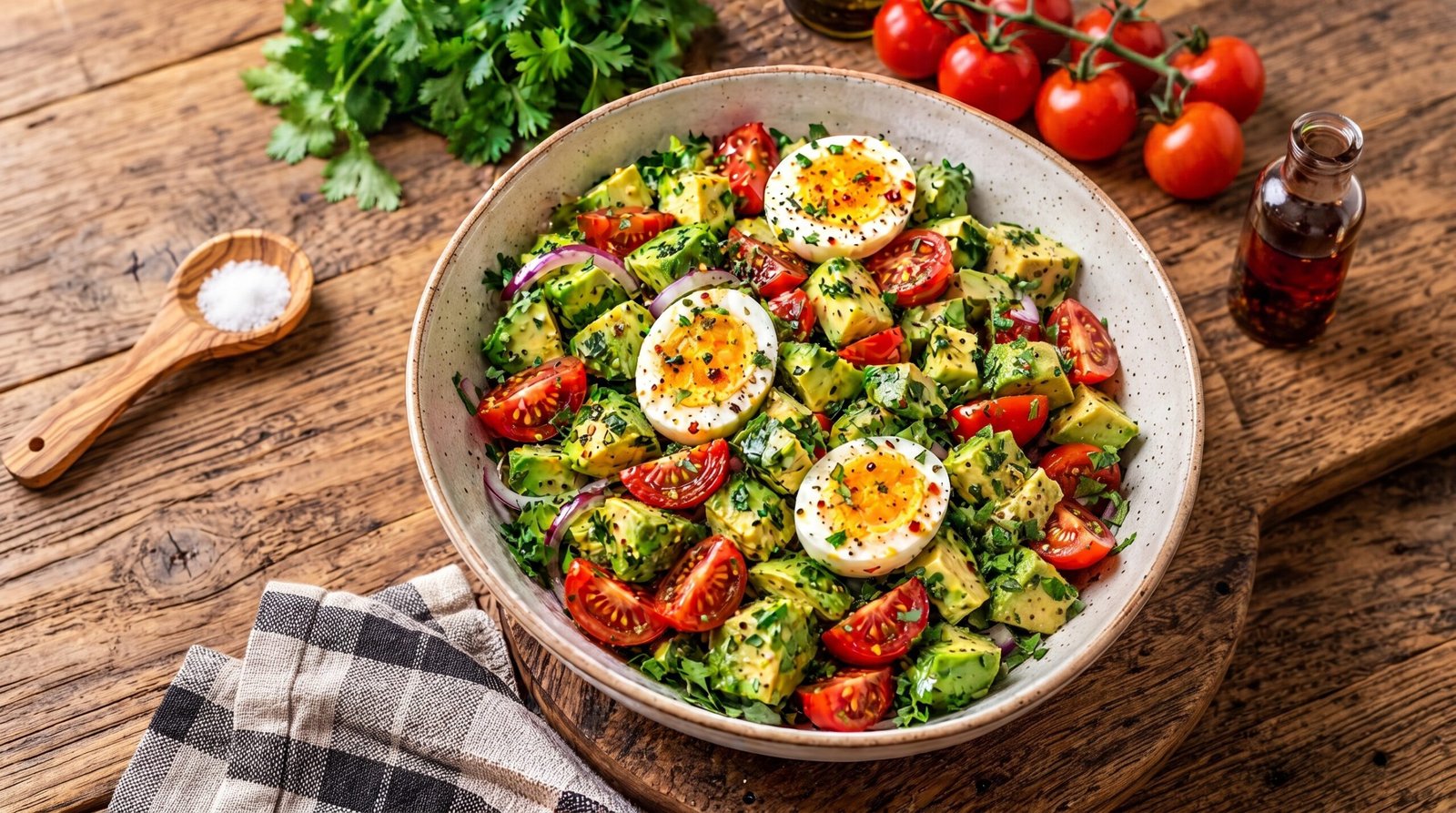
There are those evenings when the thought of standing over a hot stove for an hour feels impossible. Last Tuesday was one of those days for me. I had come home late, my fridge was looking a bit sparse, but I had a few ripe avocados, a carton of eggs, and a container of cherry tomatoes. I wanted something fresh that felt like a proper meal without the stress of complex preparation. This avocado and egg tomato salad was the result of that quick kitchen session. It hit the spot because it uses simple pantry staples to create a balance of textures that actually fills you up. Whether you are looking for a light lunch or a quick dinner that requires minimal effort, this combination of cool, creamy, and bright ingredients works every time. You get a nice contrast between the soft avocado, the bite of the tomato, and the firm, protein-rich egg, all held together by a simple dressing. It is the kind of reliable dish I keep in my back pocket for busy weeks when I still want to eat something made from scratch in my own kitchen.
Why This Recipe Works
This salad works because it relies on the natural creaminess of the avocado. When you chop the avocado into bite-sized chunks, it acts almost like a dressing base. As you toss the salad, a little bit of the avocado breaks down and coats the other ingredients, adding a velvety mouthfeel that connects the acidity of the tomatoes and the savory notes of the eggs. It is a satisfying experience because you get a different texture in every forkful. The cherry tomatoes provide a necessary burst of moisture and a slightly tart flavor that cuts through the richness of the fat in the avocado. Without them, the dish would feel a bit one-note.
Another reason I find myself making this so often is the ease of the preparation process. Boiling an egg is a low-stress task that gives you consistent, reliable results if you watch the clock. Once the eggs are cooled and peeled, the rest is just chopping and mixing. There is no heavy cooking involved, and no need to manage multiple pots or pans at the same time. You can prep the entire thing in under twenty minutes, which is helpful when you are genuinely hungry. The flavors are clean and straightforward, relying on the quality of the vegetables rather than complex sauces. If you have some good quality olive oil and a bit of fresh herb, like parsley or cilantro, you have everything you need to brighten up the final bowl. It is simple, effective, and always hits the right notes for a quick, wholesome meal.
Ingredient Notes
The Core Ingredients
- Avocado: You need avocados that yield slightly to gentle pressure when you squeeze them. If they are too hard, they will not have that signature creaminess. If they are too soft, they will turn into mush when you try to toss the salad. Look for skin that is dark green or near black.
- Eggs: Large eggs are the standard here. You want to boil them until the yolk is set but still vibrant and slightly jammy. This gives the best texture for a salad. Avoid overcooking them until they have a gray ring around the yolk, as that changes the flavor profile significantly.
- Cherry Tomatoes: These are better than large tomatoes for this specific salad because they hold their shape better when chopped. They provide a nice pop of juice. I prefer red ones for the color, but a mix of yellow and red adds a nice visual variety to the bowl.
Dressing and Aromatics
- Olive Oil: A good quality extra virgin olive oil is best here because the dressing is so simple. You want that fruity, slightly peppery kick that higher-quality oils offer. Since you are using it raw, you will definitely taste it.
- Red Onion: A small amount of red onion adds a sharp, pungent bite that contrasts well with the mild avocado. You should slice these very thinly so they do not overpower the other ingredients. If you are sensitive to raw onion, soak the slices in ice-cold water for five minutes before adding them to the bowl to mellow out the intensity.
- Fresh Herbs: Parsley or cilantro both work well. Parsley provides a clean, earthy flavor, while cilantro adds a brighter, citrus-like note. I usually pick based on what I have on hand. Always chop them finely so they distribute evenly throughout the salad.
- Lemon Juice: Fresh lemon juice is non-negotiable. It helps prevent the avocado from browning too quickly and provides the acidity needed to lift all the flavors. Bottled juice often has a metallic aftertaste that you do not want in a fresh salad.
| Ingredient | Amount | Notes |
|---|---|---|
| Large Eggs | 4 units | Boiled to medium-hard consistency |
| Ripe Avocados | 3 units | Cubed into one-inch pieces |
| Cherry Tomatoes | 2 cups | Halved or quartered |
| Red Onion | 1/4 cup | Very thinly sliced |
| Fresh Parsley | 1/4 cup | Finely chopped |
| Extra Virgin Olive Oil | 2 tablespoons | High-quality for dressing |
| Lemon Juice | 1 tablespoon | Freshly squeezed |
| Salt and Pepper | To taste | Sea salt and cracked black pepper |
The Recipe
- Prep Time: 10 minutes
- Cook Time: 10 minutes
- Total Time: 20 minutes
- Servings: 2 to 3
- Difficulty: Easy
Equipment needed:
– Medium saucepan for boiling eggs
– A slotted spoon
– A sharp chef's knife
– A cutting board
– A medium-sized mixing bowl
– A small bowl for mixing dressing (optional)
Step-by-Step Instructions
Step 1: Prepare the Eggs
Fill your medium saucepan with enough water to cover the eggs by at least an inch. Place the pan over high heat and bring the water to a full, rolling boil. Once it is boiling, carefully lower the heat to a gentle simmer so the eggs do not crack when they hit the bottom. Gently lower your eggs into the water using a spoon.
Set a timer for exactly ten minutes. You want the yolk to be firm but not chalky. If you prefer a slightly softer, jammy center, you can aim for eight or nine minutes, but ten minutes is the safest bet for a standard, easy-to-peel result. Keep a close eye on the heat; if the water is boiling too aggressively, the eggs will bounce around and crack their shells.
Step 2: Cooling and Peeling
As soon as the timer goes off, use your slotted spoon to move the eggs from the boiling water into a bowl filled with ice and water. This is crucial. It stops the cooking process instantly and makes the shells much easier to remove. Let them sit in the ice bath for at least five minutes until they are completely cool to the touch.
Once they are cool, gently tap the eggs on your counter to crack the shells all over. Peel them under a small stream of cool running water, which helps loosen the membrane between the shell and the white. Pat the peeled eggs dry with a paper towel and set them aside. Cut each egg into quarters or thick slices, depending on how you want them to look in the bowl.
Step 3: Chop the Produce
While the eggs are cooling, get your vegetables ready. Take your avocados and cut them in half, removing the pit. Scoop the flesh out and slice it into bite-sized cubes, about an inch in size. If the avocados are very ripe, handle them carefully so they do not fall apart into a paste.
Take your cherry tomatoes and give them a quick wash and dry. Slice them in half, or into quarters if they are on the larger side. Thinly slice the red onion into tiny half-moons. The key here is to keep the sizes uniform so you can get a little bit of everything in a single bite.
Step 4: Assemble the Salad
In your large mixing bowl, combine the cubed avocado, sliced tomatoes, and the thinly sliced red onion. Add the finely chopped parsley. Gently pour the olive oil and fresh lemon juice over the mixture. Use a large spoon to very gently fold the ingredients together. Do not overmix, or the avocado will break down too much.
Season the mixture with a generous pinch of sea salt and freshly cracked black pepper. Add the egg wedges last. Because the eggs are delicate, you want to fold them in as the very last step. I usually place them on top and give the bowl a very light toss just to ensure the dressing hits them.
Step 5: Serve Immediately
This salad is best served immediately after assembly. Because avocado oxidizes when exposed to air, the colors will start to turn within an hour or two. If you have to wait, cover the bowl with plastic wrap, pressing the wrap directly onto the surface of the salad to minimize air contact, and store it in the fridge for no more than thirty minutes.
Taste a small portion and adjust the seasoning if necessary. Sometimes a little extra lemon juice makes the flavors pop more, depending on the ripeness of the tomatoes. The goal is a bright, fresh, and savory flavor profile that relies on the contrast between the creamy avocado and the firm, cooked egg.
Mistakes I Made (So You Don't Have To)
Over-boiling the Eggs
I used to boil my eggs for fifteen minutes because I was worried about them being underdone. This resulted in that dreaded green-gray ring around the yolk, which is technically safe to eat but has a sulfurous, dry taste. The fix is strictly timing your eggs. Ten minutes in boiling water is the sweet spot for a bright yellow, creamy yolk that tastes fresh and pleasant. Always use a timer, and move them to an ice bath immediately.
Using Under-ripe Avocado
I once tried to make this with avocados that were still hard as rocks. The result was a salad with no cohesion. The avocado chunks stayed firm and tasteless, and they didn't help create that subtle, creamy sauce that makes the salad work. The fix is simple: if your avocados aren't ready, wait a day or two. You can speed up ripening by putting them in a brown paper bag with an apple or a banana, but you really need that soft, buttery texture for this specific recipe to come together.
Chopping Everything Too Small
In an effort to make the salad look uniform, I once chopped the tomatoes and avocados into tiny bits. When I tossed the salad, it turned into a guacamole-like mush. You want chunky, distinct pieces. Keep your avocado cubes around one inch, and only halve your cherry tomatoes. Larger pieces hold their structure better and make the final presentation much more appetizing.
Adding the Dressing Too Early
I once prepared the salad an hour before guests arrived and dressed it completely. By the time we sat down, the salt had drawn too much moisture out of the tomatoes, and the lemon juice had caused the avocado to lose its bright green color. Now, I keep the dressing and the produce separate until the final minute. Adding the salt, oil, and lemon juice just before serving ensures the texture stays crisp and the colors remain vibrant.
Variations and Tips
Add a Touch of Heat
If you like a bit of a kick, add a pinch of red pepper flakes when you season the salad. It pairs surprisingly well with the richness of the avocado and the simplicity of the eggs. A little dash of hot sauce can also work if you prefer a vinegar-based heat, but start small so you do not mask the fresh flavors of the herbs.
Make it More Filling
Sometimes I want this to be a heavier meal, so I add some chickpeas or even some leftover cooked quinoa. If you add these, just make sure to increase the amount of olive oil and lemon juice slightly so the dressing still coats everything well. These additions provide a nice chew and turn the salad into a more substantial bowl that can easily serve as a standalone lunch.
Use Different Herbs
While parsley and cilantro are my go-to choices, you can use fresh basil or even chives. Basil adds a sweet, floral note that is lovely with tomatoes. Chives give a milder, onion-like flavor that works very well with eggs. If you are using fresh herbs, always add them at the end so they do not wilt from the acidity of the lemon juice.
The Ice Bath Trick
Never skip the ice bath when boiling your eggs. Not only does it stop the cooking, but it creates a thermal shock that pulls the egg away from the shell wall, making them much easier to peel. This is the difference between a smooth, perfect egg and a mangled mess. Even if you are in a rush, five minutes in cold water makes a world of difference.
Storage and Reheating
This salad is truly a fresh-eating dish. Because of the avocado, it does not keep well for long periods. If you have leftovers, store them in an airtight container in the refrigerator and eat them within 24 hours. The avocado will inevitably start to darken, but it is still safe to consume as long as it has been refrigerated. I do not recommend freezing any part of this salad. The texture of both the avocado and the hard-boiled egg whites changes significantly when frozen, becoming watery and rubbery once thawed.
If you find yourself with leftovers, try to use them as a topping for toast or inside a wrap the next morning. If the salad looks a bit dull, a fresh squeeze of lemon juice can help revive the color slightly. Ensure that the leftovers are returned to the refrigerator within two hours of preparation to keep things food-safe. If you have concerns about the eggs, make sure they were cooked through until the yolk was set; never store partially cooked or runny eggs for later consumption.
Frequently Asked Questions
Can I use mayonnaise instead of olive oil?
You can, but it changes the character of the salad completely. Olive oil keeps the dish feeling light and fresh, allowing the natural flavor of the avocado to shine. Mayonnaise creates a much heavier, thicker coating that leans more toward a potato salad style. If you really prefer a creamy dressing, you could use a mixture of Greek yogurt and a little mustard, but I find olive oil and lemon is the most classic and effective way to dress this particular mix.
My eggs always stick to the shell, how do I fix this?
The best way to ensure easy-to-peel eggs is to lower them into already boiling water rather than starting them in cold water. Starting with boiling water sets the egg white quickly, which helps prevent it from sticking to the membrane. Also, using older eggs is actually better than using very fresh ones, as the pH level changes slightly and makes them easier to peel. Most importantly, that immediate transition to an ice bath is the secret to a clean peel every single time.
How do I know if an avocado is ripe enough to use?
A perfectly ripe avocado for this salad should feel firm but yield slightly to pressure when you squeeze it gently in the palm of your hand. If it feels mushy, it is over-ripe and will turn into a paste the moment you toss the salad. If it feels hard as a rock, it will have no flavor and a waxy texture. Look for a dark color on the skin and a slight softening near the stem.
Can I prep the eggs ahead of time?
Yes, you can boil and peel the eggs up to three days in advance. Store them in a sealed container in the refrigerator. This is a great time-saving trick for busy mornings. Just remember to keep them unpeeled if possible, as they stay fresher in their shells, but pre-peeled eggs are fine if you are planning to use them within a day or two. Just be sure they are kept cold at all times.
Is it safe to leave this salad out at room temperature?
No, you should never leave this salad sitting out on the counter for more than two hours. The eggs and avocado are perishable and can grow bacteria if left in the "danger zone" of temperatures for too long. If you are serving this at a gathering, keep the bowl inside a larger bowl filled with ice to keep it cool, or serve it in small batches and replenish from the fridge as needed.
Final Thoughts
This simple salad has become one of my favorite go-to recipes when I need something reliable and satisfying. It is amazing how much flavor you can get from just a handful of fresh ingredients when you treat them with a little care.
I hope you find this as helpful as I do when you are looking for a quick, fresh meal. It is a humble dish, but sometimes those are the ones that end up being the most memorable and the most frequently made in a home kitchen.