
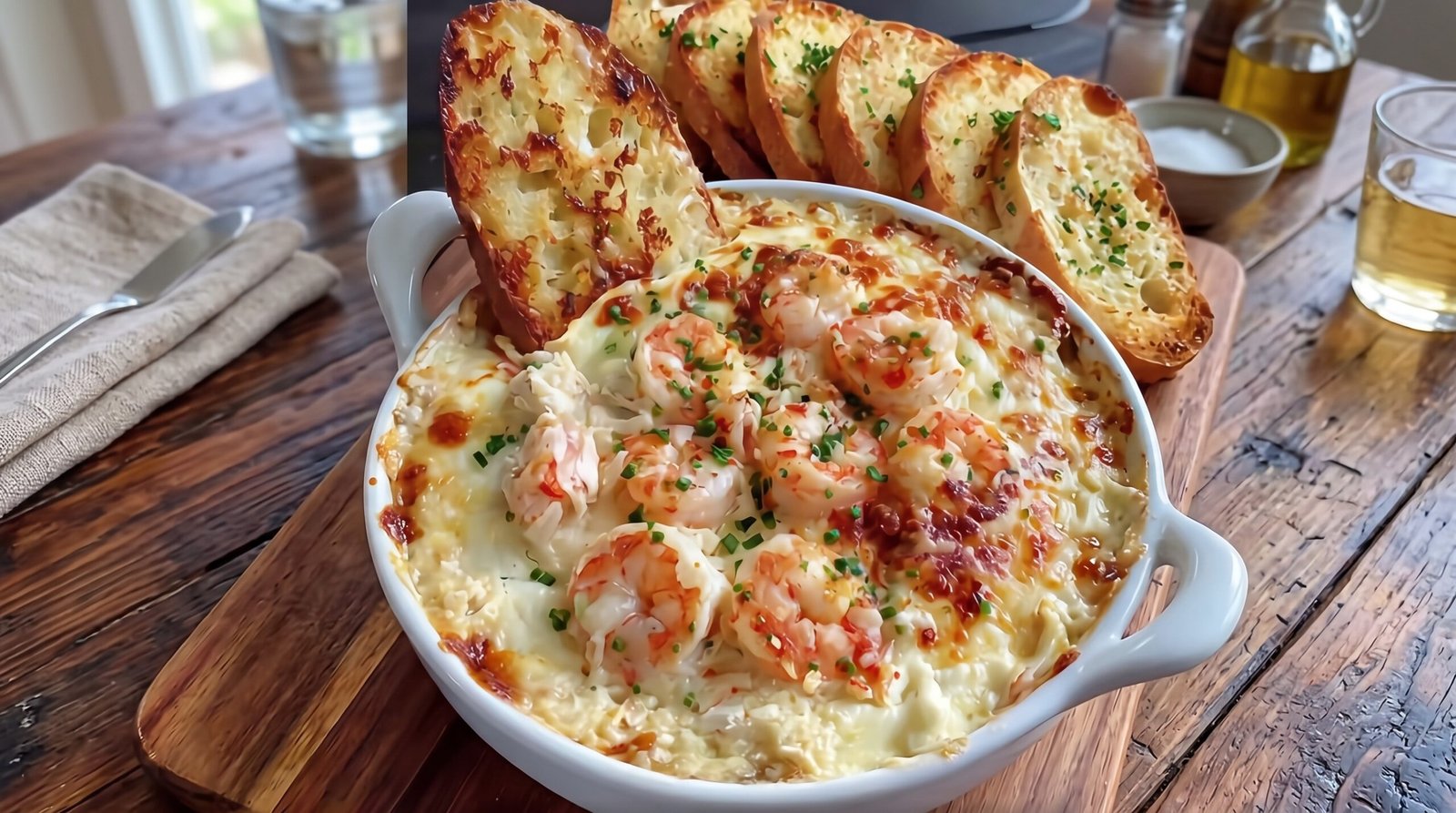
Sometimes when I get home after a long shift, I want something that feels like a night out at a fancy bistro but takes about as much time as making a simple grilled cheese. I used to rely on ordering in, but the wait times were frustrating and the quality was hit or miss. One evening, I realized I had some seafood in the freezer and a bit of cheese in the fridge, so I threw them together with some herbs and bread. The result was this Cheesy Shrimp and Crab Seafood Bake. It is a hearty, indulgent meal that manages to feel special without requiring hours of prep work. I have made this dozens of times since that first night, and it remains my go-to for those evenings when I need comfort food that actually delivers on flavor. It uses simple pantry staples and just a few fresh components, making it a reliable way to treat myself or surprise guests without stress.
Why This Recipe Works
This dish succeeds because it balances textures. You get the soft, sweet bite of tender shrimp and the delicate, flaky nature of crab meat, all held together by a rich, bubbly layer of browned cheese. The bread serves as the perfect vessel for scooping up the creamy, savory mixture. It creates a satisfying contrast between the toasted, slightly rough surface of the crusty bread and the smooth, decadent seafood filling. Because the seafood cooks quickly, you do not have to worry about long wait times.
Flavor-wise, the combination is quite classic. Shrimp and crab naturally complement each other because both offer a clean, sweet oceanic flavor profile. Adding a bit of garlic and fresh herbs keeps the base from feeling too heavy or one-note. The cheese topping, which I prefer to use as a blend of sharp and creamy varieties, adds a saltiness that ties everything together. It is not overly complicated, and that is exactly why it remains a favorite in my household.
Ease is another factor. You do not need to stand over a stove for very long. Most of the work happens in the oven. Once you mix your base ingredients and arrange the shrimp and bread, the heat does the rest. It is a one-pan style meal if you are careful with your dish selection, which means less time washing dishes and more time enjoying your dinner. I often find that I can prep the whole thing in under fifteen minutes. If you have guests over, it looks impressive when pulled straight from the oven, yet you have barely broken a sweat to put it together.
Ingredient Notes
The Seafood
The stars of the show are obviously the shrimp and the crab. For the shrimp, I always buy raw, peeled, and deveined tails. I prefer medium or large sizes because they hold up well in the oven without turning into rubber. If you use small salad shrimp, they will get lost in the sauce. For the crab, I look for lump or backfin crab meat. It has a great texture. You can use canned if you drain it very well, but fresh is better if it is available at your local fish counter. Always check your packaging labels to ensure the quality is what you expect.
The Dairy and Aromatics
I use a mix of cream cheese and a sharper melting cheese like Gruyere or a good quality white cheddar. The cream cheese provides the base for the sauce, while the secondary cheese gives you that golden crust on top. For aromatics, fresh garlic is non-negotiable. I avoid the jarred stuff because it lacks the bite of fresh cloves. A little bit of fresh chives or parsley right before serving adds a brightness that cuts through the richness of the dairy.
The Bread
You want a bread that can handle being toasted in the oven. A crusty French baguette or an artisan sourdough loaf works best. If the bread is too soft, it will turn into mush when it touches the seafood juices. You want something with a bit of chew and a sturdy crust. Slicing them into thick, diagonal rounds gives you enough surface area to act as a scoop. Sometimes I brush them with a tiny bit of olive oil or butter before they go in the oven to make sure they get a nice golden color.
| Ingredient | Amount | Notes |
|---|---|---|
| Raw shrimp | 1 pound | Peeled and deveined, tails off |
| Crab meat | 8 ounces | Lump or backfin, well drained |
| Cream cheese | 8 ounces | Softened to room temperature |
| Shredded Gruyere | 1.5 cups | Or sharp white cheddar |
| Fresh garlic | 3 cloves | Minced finely |
| Fresh chives | 2 tablespoons | Finely chopped |
| French baguette | 1 loaf | Sliced into 1-inch thick rounds |
| Olive oil | 2 tablespoons | For brushing the bread |
| Lemon juice | 1 teaspoon | Freshly squeezed |
| Salt and pepper | To taste | Adjust based on your preference |
The Recipe
- Prep Time: 15 minutes
- Cook Time: 20 minutes
- Total Time: 35 minutes
- Servings: 4
- Difficulty: Easy
Equipment needed:
– Large mixing bowl
– Baking dish (a shallow oval or rectangular ceramic dish works best)
– Pastry brush
– Chef knife
– Cutting board
Step-by-Step Instructions
Step 1: Prep the Oven and Ingredients
Preheat your oven to 400 degrees Fahrenheit. While the oven is warming up, set your cream cheese on the counter so it softens. If you are in a rush, you can cut the cream cheese into smaller cubes to speed up the process. Make sure your shrimp is completely thawed if you are using frozen, and pat it dry with a paper towel. Moisture is the enemy of a good sear, even in a bake.
Wash and dry your chives, then chop them finely. Peel your garlic cloves and mince them as small as possible so you don't get a giant chunk of garlic in one bite. If you are using fresh crab, check it over for any stray pieces of shell by gently running your fingers through it. Preparing everything before you start mixing ensures the assembly goes smoothly without any panic.
Step 2: Create the Base
In your large mixing bowl, combine the softened cream cheese, the minced garlic, half of the shredded cheese, the lemon juice, and half of the chopped chives. Season this mixture with a pinch of salt and a bit of black pepper. Mix it with a sturdy spatula or a wooden spoon until it is smooth and well combined. The cream cheese should be easy to spread.
Once the base is smooth, gently fold in your crab meat. Do this carefully so you do not break up the lumps of crab too much. You want to keep some texture in the finished dish. Once the crab is incorporated, take your prepared shrimp and toss them into the mixture as well. Give it one or two gentle folds just to coat the shrimp lightly in the cream cheese mixture, but don't overwork the seafood.
Step 3: Assemble the Dish
Transfer the creamy seafood mixture into your baking dish. Spread it out evenly with your spatula. It should fill the bottom of the dish in an even layer. If you are using a large oval dish, you want a uniform depth so everything cooks at the same rate. This is important to ensure the shrimp in the middle cook through while the edges don't burn.
Take your baguette slices and arrange them around the edges or tucked slightly into the sides of the dish. Brush the tops of the bread slices with a little bit of olive oil. This helps the bread crisp up nicely while the seafood cooks underneath. If you prefer, you can also rub a raw garlic clove over the bread slices before oiling them for an extra layer of flavor.
Step 4: Top and Bake
Sprinkle the remaining shredded cheese over the top of the seafood mixture. You can also sprinkle a little extra over the bread if you like. Place the baking dish in the center rack of your preheated oven. Bake at 400 degrees Fahrenheit for 18 to 20 minutes. You are looking for the cheese to be bubbling and golden brown on top.
The shrimp must reach an internal temperature of 145 degrees Fahrenheit to be safe to eat. You can check this by inserting a digital food thermometer into the thickest part of one of the larger shrimp near the center of the dish. It should look opaque and pinkish-white when done. The crab meat should be heated through and smell fragrant. If the cheese isn't browned enough after 20 minutes, you can put it under the broiler for 1 to 2 minutes, but keep a close eye on it so it does not burn.
Step 5: Final Touches and Serving
Remove the dish from the oven carefully. It will be very hot. Let it sit for about 5 minutes before serving. This short rest allows the sauce to settle a little bit so it doesn't run all over the place when you scoop it out. It also makes it easier to eat without burning your tongue.
Sprinkle the remaining fresh chives over the top for a pop of green color and a fresh, onion-like bite. Serve it immediately with the toasted bread. Guests or family can use the bread to scoop up the cheesy, creamy seafood mixture. I usually serve this as a main course with a light side salad to provide some acidity and crunch, which helps balance the richness of the cheese.
Mistakes I Made (So You Don't Have To)
Overworking the Crab
In my very first attempt, I mixed the crab into the cream cheese so aggressively that it turned into a paste. The dish tasted fine, but I lost that lovely, distinct texture of lump crab meat. The fix is to fold it in with a light hand using a rubber spatula at the very last second. Just a few turns are enough to combine everything without breaking the meat into tiny, unrecognizable shreds.
Using Thin Bread
I once tried this with standard sandwich bread because I didn't want to run to the store for a baguette. That was a mistake. The bread became soggy and fell apart the moment it touched the sauce. The lesson here is that you need a sturdy, crusty bread like a baguette or a dense sourdough. These types of bread hold their structure even when exposed to the moisture of the seafood and the heat of the oven, providing that necessary crunch.
Uneven Shrimp Sizes
Early on, I used a mix of tiny salad shrimp and large ones. The tiny ones were overcooked and rubbery by the time the large ones were finished. Now, I always make sure the shrimp are relatively uniform in size. If I have a range of sizes, I arrange the larger ones near the center where the heat is slightly more intense and the smaller ones toward the edges. Keeping them consistent is the easiest way to ensure the perfect bite every time.
Rushing the Rest Time
I used to serve this the second it came out of the oven. The sauce was far too liquid and difficult to manage. Letting it stand for at least 5 minutes makes a world of difference. The cheese sets slightly, and the mixture thickens into a rich, cohesive dip. It also keeps the bread from becoming instantly soaked, maintaining that contrast between crispy bread and creamy seafood.
Variations and Tips
Adding a Kick
If you like a bit of heat, add a teaspoon of red pepper flakes or a dash of hot sauce to your cream cheese base. A little bit of heat cuts through the fat of the cheese wonderfully. I sometimes add a bit of smoked paprika as well, which adds a subtle depth that pairs perfectly with the sweetness of the crab and the savory nature of the shrimp.
Herb Swaps
While I love the clean taste of chives, you can absolutely play with the herbs. Fresh dill is a fantastic addition if you want a more classic seafood flavor. Parsley is a safe, neutral choice that adds color. If you are feeling adventurous, a little bit of fresh tarragon can provide a sophisticated, slightly licorice-like note that works very well with the richness of the cream cheese and Gruyere.
Make-Ahead Strategy
You can prep the seafood base ahead of time and keep it in the refrigerator for up to 2 hours before you plan to bake. Do not add the bread until right before you put it in the oven, or the bread will lose its texture. If you are prepping in advance, keep the mixture covered tightly with plastic wrap to prevent a skin from forming on the cream cheese.
Serving Ideas
This dish is quite heavy because of the cheese and cream base. I find that it works best as a main course when paired with a light, vinegary green salad. A simple arugula salad with lemon vinaigrette provides the perfect acidic counterpoint to the rich, salty seafood bake. You don't need heavy sides here. Keep the focus on the main dish and a light, crisp vegetable on the side.
Storage and Reheating
If you have leftovers, they need to be handled carefully because of the seafood and dairy. Store them in an airtight container in the refrigerator within 2 hours of cooking. They will stay good for up to 2 days. Because this contains seafood and cream, I don't recommend keeping it longer than that for quality and safety reasons.
To reheat, the best method is the oven. Preheat your oven to 350 degrees Fahrenheit. Place the leftovers in a baking dish and cover it with foil. Heat for about 10 to 15 minutes, or until the center is steaming hot and reaches an internal temperature of 165 degrees Fahrenheit. I do not recommend freezing this dish, as the cream cheese base will likely separate and become grainy, and the shrimp will turn tough upon thawing and reheating.
Frequently Asked Questions
Can I use cooked shrimp instead of raw?
It is technically possible, but I strongly advise against it. The shrimp will likely overcook and become tough and chewy during the time it takes to bubble the cheese in the oven. Raw shrimp absorb the flavors of the cheese and garlic as they cook, which results in a much more tender and flavorful end product.
Is there a substitute for Gruyere?
Yes, if you cannot find Gruyere or find it too expensive, a high-quality sharp white cheddar is a great alternative. You want a cheese that has enough body to melt well but enough flavor to stand up to the seafood. Avoid using pre-shredded cheese from a bag, as it contains anti-caking agents that prevent it from melting smoothly. Shred your own cheese from a block for the best results.
How do I know if the shrimp are cooked properly?
You should look for them to turn opaque and form a gentle C-shape. If they curl into a tight O-shape, they are likely overcooked. Using a digital thermometer is the most reliable way to check. Ensure the thickest part of the shrimp reaches 145 degrees Fahrenheit. This ensures they are safely cooked but still succulent.
Can I add other seafood to the mix?
You can certainly add scallops or even bits of white fish like cod. If you add scallops, make sure they are cut into pieces similar in size to the shrimp so they cook at the same rate. Any additions should be well-drained of excess water, as moisture can easily turn your creamy base into a watery mess.
Why did my sauce separate?
Sauce separation usually happens if the heat was too high or the mixture was over-baked. Keep your oven at 400 degrees Fahrenheit as directed. If the cheese starts to look like it is releasing too much oil, it is a sign that it is getting a bit too hot for too long. Always keep an eye on the dish during those final minutes of baking.
Final Thoughts
Making a seafood bake at home is one of the most rewarding ways to turn a standard weeknight into something memorable. You get the richness of a restaurant-quality meal without the complexity or the cost. It is a dish that really highlights how simple, high-quality ingredients can come together to make something greater than the sum of their parts.
I hope you give this recipe a try next time you have a craving for something indulgent and comforting. It is straightforward enough for a quick dinner but impressive enough to share with friends. Just remember to use good bread, watch your cooking times, and enjoy the process.