
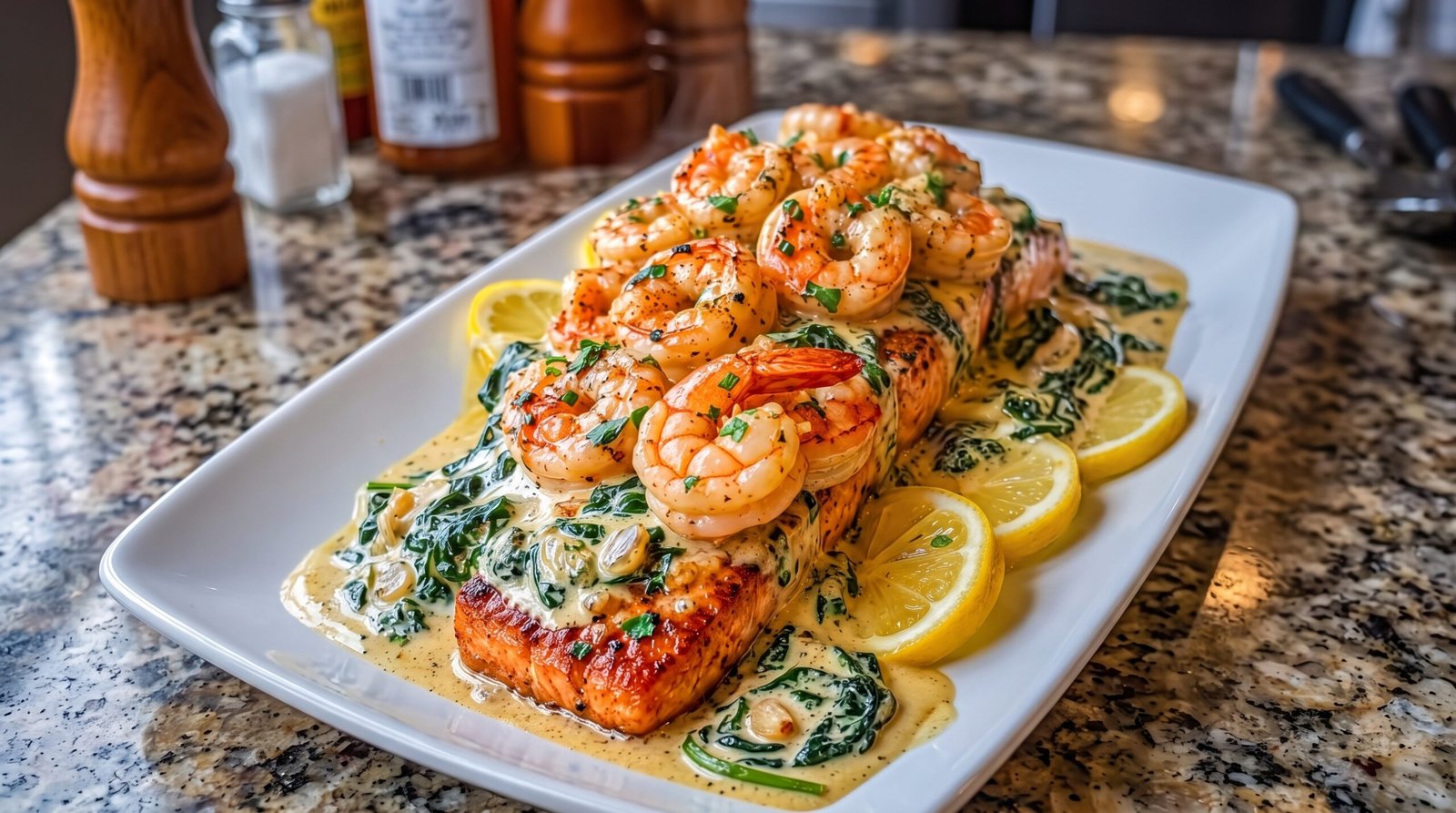
I remember the first time I tried to cook seafood for a dinner party. I was nervous about overcooking the fish and ending up with something dry and unappealing. It took me a few attempts to realize that the secret lies in keeping the cooking time short and watching the pan closely. Salmon and shrimp are forgiving if you pay attention to the subtle changes in color and texture as they hit the heat. This creamy garlic butter salmon and shrimp dish became my go-to when I want a meal that feels special but does not require hours of prep in the kitchen.
This recipe delivers a satisfying balance of rich, velvety sauce and fresh, tender seafood. You get the slight char on the salmon exterior and the plump, snappy bite of properly cooked shrimp. It is a hearty meal that pairs well with steamed vegetables or a simple crusty bread to soak up the leftover sauce. If you have been looking for a way to combine two of the most popular types of seafood into one cohesive plate, this is the preparation that will help you achieve that result consistently without much stress.
Why This Recipe Works
The main reason I rely on this recipe is the controlled cooking method. By searing the salmon first and then introducing the shrimp to the same pan, you build layers of flavor. The fat rendered from the salmon skin and the butter create a base that clings to the ingredients, ensuring the sauce is not thin or watery. Many recipes suggest baking everything together, but I find that pan-searing allows you to get a better texture on the crust while keeping the interior moist. Since seafood cooks so rapidly, the window between raw and overdone is small. Using a pan gives you full control to pull the protein out the moment it reaches the right temperature.
The sauce is another reason this works well. Many cream sauces are too heavy, but by using a combination of fresh garlic, herbs, and a splash of lemon juice, the acidity cuts through the richness of the cream. This keeps the meal from feeling too heavy, even though it is quite indulgent. You will notice the garlic mellows out as it simmers in the cream, providing a fragrant background note that ties the shrimp and salmon together. It is an honest dish that relies on simple pantry staples like butter, heavy cream, and garlic to do the heavy lifting. There are no complicated techniques required, just standard stovetop heat management. If you can flip a piece of fish and stir a pan, you have the skills needed to make this dinner a regular rotation in your home. It feels like a bistro-style meal that is surprisingly accessible for a weeknight.
Ingredient Notes
The Protein
When selecting your ingredients, the quality of the seafood dictates the final outcome. For the salmon, I prefer thick, center-cut fillets because they stay juicy and cook more evenly than the thinner tail pieces. Look for fish that smells clean, like the ocean, and has a firm texture. If you press it with your finger, the flesh should spring back. For the shrimp, I find that large or jumbo shrimp work best here because they hold up well to the sauce and provide a nice contrast to the salmon. I prefer buying them peeled and deveined to save time, but I always ensure they are thawed completely and patted dry. Moisture is the enemy of a good sear, so taking a moment to dry the shrimp with paper towels is a vital step. If you buy frozen shrimp, run them under cold water, drain them well, and place them on a towel before starting.
The Aromatics and Fats
Fresh garlic is non-negotiable for this dish. I chop about four to five cloves quite finely. You want small bits that will disappear into the sauce, coating every piece of fish and shrimp. Do not use the pre-minced jars if you can help it, as the flavor is much sharper and less balanced. For the fat, a mixture of olive oil and unsalted butter provides the best of both worlds. The olive oil prevents the butter from burning too quickly, while the butter provides that distinct, rich flavor profile that defines the dish. If you only have salted butter, just cut back on the added salt in the final steps. The spinach should be fresh, not frozen. Frozen spinach contains too much liquid and will water down the cream sauce. Wash the leaves well and remove any thick stems so you are left with tender greens that wilt down into the sauce in just a minute or two.
| Ingredient | Amount | Notes |
|---|---|---|
| Salmon fillets | 2 pieces | 6 ounces each, skin on or off |
| Large shrimp | 1/2 pound | Peeled and deveined, tails off |
| Heavy cream | 3/4 cup | Full fat for the best texture |
| Garlic | 4 cloves | Freshly minced |
| Baby spinach | 3 cups | Packed, washed and dried |
| Unsalted butter | 2 tablespoons | High quality preferred |
| Olive oil | 1 tablespoon | For the initial sear |
| Lemon juice | 1 tablespoon | Freshly squeezed |
| Salt and pepper | To taste | Fine sea salt works well |
| Fresh parsley | 1 tablespoon | Finely chopped for garnish |
The Recipe
- Prep Time: 15 minutes
- Cook Time: 15 minutes
- Total Time: 30 minutes
- Servings: 2 people
- Difficulty: Easy
- Equipment: Large stainless steel or non-stick skillet, tongs, meat thermometer, cutting board, chef's knife.
Step-by-Step Instructions
Step 1: Prep the Ingredients
Before you heat the pan, get everything ready. Pat the salmon fillets dry with paper towels. Season both sides of the salmon generously with salt and pepper. Do the same for the shrimp after patting them dry. Mince your garlic and chop the parsley. Make sure the spinach is washed and free of excess water. Having these ingredients near the stove is crucial because once you start cooking, the heat moves fast and you will not have time to go hunting for the salt or the cream.
Step 2: Sear the Salmon
Place your skillet over medium-high heat and add the olive oil. Once the oil shimmers, place the salmon fillets in the pan. If the skin is still on, place it skin-side down first. Let it cook undisturbed for about 4 to 5 minutes. You are looking for a deep, golden brown crust to develop on the bottom. The fish should release easily from the pan when it is ready. If it sticks, give it another 30 seconds. Flip the fillets carefully and cook for another 3 to 4 minutes on the other side. Use a thermometer to ensure the thickest part hits an internal temperature of 145 degrees Fahrenheit. Remove the salmon from the pan and set it aside on a plate.
Step 3: Cook the Shrimp
In the same pan, which will still have some flavorful oil and drippings from the salmon, add the butter. Once it melts and begins to foam, add the shrimp in a single layer. They will cook very quickly, usually about 1 to 2 minutes per side. You want them to turn opaque and pink. Do not crowd the pan, as this will cause them to steam rather than sear. Once they are firm and opaque, remove them from the pan and place them on the plate with the salmon.
Step 4: Make the Cream Sauce
Turn the heat down to medium. Add the minced garlic to the leftover butter and drippings in the pan. Sauté for about 30 seconds until it smells fragrant but not browned. Pour in the heavy cream and let it simmer gently for 2 to 3 minutes. It should thicken slightly and coat the back of a spoon. Stir in the lemon juice, which will help balance the fat in the cream. Taste the sauce and adjust with salt and pepper.
Step 5: Wilt the Spinach and Combine
Add the baby spinach to the simmering cream. It will look like a lot, but it will wilt down rapidly. Use tongs to turn the leaves in the sauce until they are just wilted, which should take about 60 to 90 seconds. Once the spinach is soft, return the salmon and the shrimp to the pan. Gently toss them in the cream and spinach mixture for about 30 seconds to warm everything through. Take the pan off the heat immediately so the shrimp do not turn rubbery. Garnish with fresh parsley and serve right away while hot.
Mistakes I Made (So You Don't Have To)
Overcooking the Shrimp
My biggest mistake when I first started making this was leaving the shrimp in the pan too long. If you let shrimp sit in a hot pan while you fiddle with other things, they turn tough and rubbery. The fix is to be disciplined about removing them as soon as they turn pink. Remember that the residual heat in the cream sauce will continue to cook them slightly even after they leave the pan.
Burning the Garlic
I have definitely burned the garlic by having the heat too high. Burnt garlic turns bitter and ruins the entire sauce. The trick is to lower the heat to medium as soon as you finish the seafood and before you add the aromatics. If the pan looks too dark or has black bits, wipe it out with a paper towel before adding the butter for the sauce.
Using Too Much Liquid
I once used thin milk instead of heavy cream, and the sauce never thickened. It resulted in a watery mess that did not cling to the fish or shrimp. Stick to heavy cream or a very thick half-and-half. If you want a thicker sauce, let it simmer for an extra minute before adding the spinach, but watch it closely so the milk solids do not scorch on the bottom of the pan.
Not Drying the Seafood
I used to skip the step of patting the seafood dry. When I put wet salmon or shrimp into the hot pan, it resulted in a sad, pale exterior because the moisture prevented a good sear. Always take the extra minute to dry your proteins thoroughly with paper towels. It makes a significant difference in the final flavor and appearance of the crust.
Variations and Tips
Add Some Heat
If you enjoy a bit of spice, add a pinch of red pepper flakes to the pan when you sauté the garlic. It adds a subtle warmth that contrasts well with the rich cream. Just be careful not to overdo it, as you still want the sweetness of the shrimp and the richness of the salmon to be the main events.
Incorporate Sun-Dried Tomatoes
For a more vibrant flavor, add a tablespoon of chopped sun-dried tomatoes to the sauce when you add the garlic. They provide a tangy, concentrated sweetness that works well with the spinach. If you do this, you might need slightly less salt, as sun-dried tomatoes can be quite savory on their own.
The Make-Ahead Tip
You can prepare the salmon and shrimp just before you serve, but you can save time by prepping your garlic, washing the spinach, and measuring out your cream beforehand. If you have a busy weeknight, having the raw ingredients ready to go allows you to get the meal from the fridge to the table in under 20 minutes.
Changing the Green
While baby spinach is my favorite for its delicate texture, you can also use chopped kale or chard if you want a firmer green. Just be aware that these vegetables take longer to cook down, so you will need to add them to the cream earlier and let them simmer for about 3 to 4 minutes until they are tender enough to eat.
Storage and Reheating
If you have leftovers, they should be stored in an airtight container in the refrigerator. Seafood-based cream dishes are best eaten within one to two days for the best quality and safety. When you are ready to reheat, do not use the microwave if possible, as it will likely turn the shrimp into rubber and separate the cream sauce. Instead, reheat the dish in a small skillet over low heat with a splash of water or more cream to loosen the sauce. Stir it gently until the fish is steaming hot throughout, aiming for 165 degrees Fahrenheit. This dish does not freeze well, as the cream sauce tends to break and the texture of the shrimp changes significantly upon thawing. It is best enjoyed fresh or within a couple of days of cooking.
Frequently Asked Questions
Can I use frozen salmon fillets for this?
Yes, you can use frozen salmon, but you must thaw it completely in the refrigerator overnight. After thawing, pat it dry very thoroughly, as frozen fish often retains more surface moisture. If the fish is still cold in the center, it will cook unevenly, leaving the outside dry while the inside remains underdone. Always ensure the fish is fully thawed before it hits the hot oil.
Why did my sauce break or look oily?
A broken sauce usually happens if the heat was too high while adding the cream or if the pan was too hot. Heavy cream can separate if it boils aggressively. Keep the heat at a gentle simmer and whisk the sauce constantly. If it still looks a bit thin or separated, a tiny squeeze of lemon juice and a quick whisk can sometimes bring it back together.
Can I substitute the heavy cream with something lower in fat?
You can try using half-and-half, but the sauce will be thinner and less luxurious. If you choose this route, you might need to simmer it for longer to reduce it, but watch out for the lower fat content causing it to curdle. Avoid using standard milk, as it lacks the fat required to create a stable, creamy emulsion that coats the seafood effectively.
How do I know when the shrimp are perfectly cooked?
The best way is to look for the color change and the shape. Raw shrimp are translucent and greyish; cooked shrimp turn opaque, pink, and white. They should also curl into a loose C-shape. If they curl into a tight O-shape, they are likely overcooked. Always check the thickest part of the shrimp if you are unsure, as they should be firm and not mushy.
Is it safe to leave the leftovers out on the counter?
No, never leave seafood out at room temperature for more than two hours. Bacteria can grow rapidly in cream and seafood mixtures. As soon as you are finished eating, transfer the leftovers to a container and get them into the refrigerator promptly. This is a vital rule for any dish involving dairy and proteins to ensure your leftovers remain safe to consume later.
Final Thoughts
Making this creamy garlic butter salmon and shrimp at home is a simple way to bring a restaurant-quality feel to your dinner table. It proves that you do not need complex methods or hours of time to create something that feels special and satisfying. The combination of tender fish, plump shrimp, and a smooth, garlic-infused sauce is a timeless pairing that works for many occasions.
Once you have mastered the timing of the sear and the simmer, you will find yourself reaching for this recipe often. It is adaptable, straightforward, and consistently provides a hearty meal. Take your time with the heat control, keep a close eye on the seafood, and you will have a successful dinner that highlights the quality of your ingredients.