
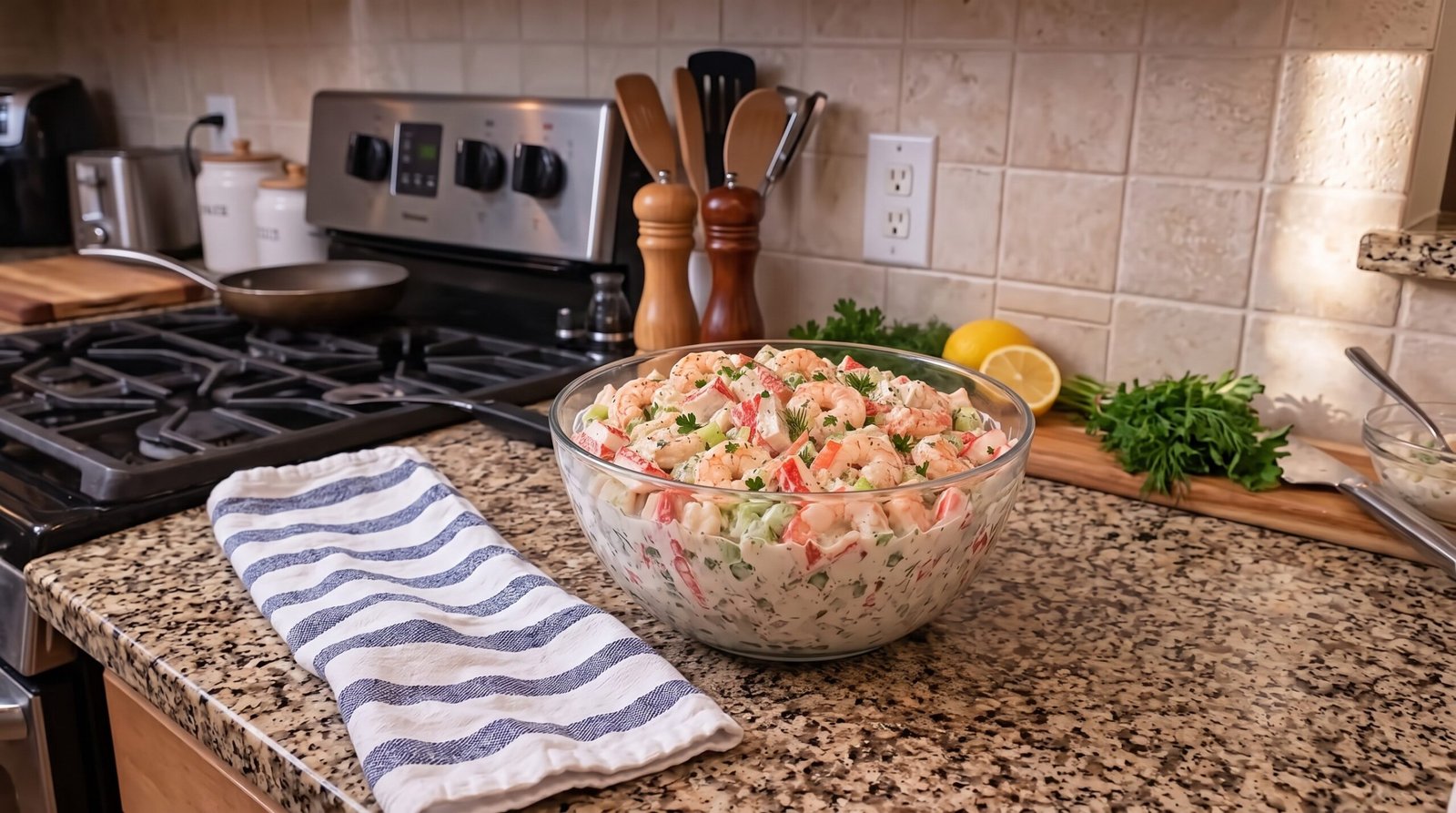
When the temperature rises or I have a house full of hungry guests, I often find myself staring at the refrigerator wondering how to put together a meal that feels substantial but stays light. I used to rely on heavy pasta dishes that felt like a chore to finish in the heat. One afternoon, while I had a bit of leftover shrimp and some imitation crab sticks from a previous snack plate, I decided to toss them into a cold pasta salad. It was a simple experiment that turned into a staple in my home. This creamy seafood pasta salad has become my go-to because it is refreshing, satisfying, and doesn't require turning on the oven when I am already tired from a long day. If you want something that keeps well in the fridge and actually tastes better after the flavors have had a few hours to mingle, this is the dish you are looking for.
Why This Recipe Works
The main reason I reach for this recipe again and again is the texture contrast. You get the firm, bouncy bite of the cooked shrimp paired with the tender, slightly sweet imitation crab. When you fold those into a creamy dressing that coats every piece of pasta, you create a harmonious dish that feels balanced. Many pasta salads suffer from becoming dry or bland as the noodles soak up all the liquid, but my method of cooling the pasta properly and using a rich, mayonnaise-based dressing keeps everything moist and flavorful for days.
The flavor profile is also quite versatile. It leans on fresh aromatics like celery, which provides a necessary crunch that breaks up the softness of the seafood and the cooked pasta. Because the dish is served cold, you don't lose any of the brightness that sometimes fades away in hot, stovetop meals. It is a very forgiving recipe. If you don't have exactly the right herb on hand, you can adjust easily. Most people have these basic pantry and fridge staples on hand, so you won't find yourself making an emergency trip to the grocery store just to pull this together before dinner. It feels clean and light, yet it is filling enough to serve as a main course for a casual weekend lunch or a side dish at a larger gathering where you need something that appeals to a wide variety of tastes. The cooling nature of the ingredients makes it a wonderful addition to outdoor meals, though you must always remember to keep it chilled properly to stay safe.
Ingredient Notes
The Seafood
- Shrimp: I prefer to use medium-sized shrimp, peeled and deveined. You can buy them frozen and thaw them under cold running water to save time. Make sure they are cooked until they turn opaque and firm, which usually takes about 3 to 4 minutes in boiling water. Never serve them rubbery, so watch the pot closely.
- Imitation Crab: This is a classic component of this style of salad. It has a mild sweetness that complements the shrimp. I usually chop the sticks into bite-sized chunks so they mimic the size of the shrimp pieces. If you have a sensitivity to certain ingredients, check your product labels carefully.
The Pasta and Veggies
- Pasta: Small, bite-sized shapes like shells or rotini work best because they have little crevices that trap the creamy dressing. Cook the pasta in well-salted boiling water until it is al dente. This means it should still have a little bit of bite to it and not be mushy.
- Celery: Fresh, crisp celery is essential for the texture. I like to dice it into small, uniform pieces so you get a bit of crunch in every forkful.
- Herbs: Fresh parsley or fresh dill works wonderfully here. I prefer to chop them finely so the flavor distributes evenly throughout the salad without any large pieces overwhelming your palate.
The Creamy Dressing
- Mayonnaise: Use a high-quality mayonnaise for the base. It provides the richness that holds the salad together.
- Lemon Juice: A splash of fresh lemon juice is non-negotiable. It cuts through the thickness of the mayonnaise and adds a bright acidity that brings the whole dish to life.
- Seasonings: Simple salt and black pepper are usually all you need. I sometimes add a dash of garlic powder if I want an extra layer of flavor, but you can keep it simple if you prefer.
| Ingredient | Amount | Notes |
|---|---|---|
| Shrimp | 1 pound | Peeled, deveined, cooked, and chilled |
| Imitation crab | 8 ounces | Chopped into bite-sized pieces |
| Rotini pasta | 8 ounces | Dry weight, cooked al dente |
| Celery | 2 stalks | Finely diced |
| Mayonnaise | 1 cup | High-quality, full-fat preferred |
| Lemon juice | 1 tablespoon | Freshly squeezed |
| Fresh parsley | 2 tablespoons | Finely chopped |
| Salt | 1/2 teaspoon | Adjust to your taste |
| Black pepper | 1/4 teaspoon | Freshly cracked |
The Recipe
- Prep time: 20 minutes
- Cook time: 10 minutes
- Total time: 30 minutes (plus cooling)
- Servings: 6
- Difficulty: Easy
- Equipment: Large mixing bowl, colander, medium pot, chef's knife, cutting board
Step-by-Step Instructions
Step 1: Cook the Pasta
Bring a large pot of water to a boil over medium-high heat. Add a generous pinch of salt to the water. Once the water is boiling, add your chosen pasta. Follow the package directions to cook it until it reaches an al dente state, which usually takes about 8 to 10 minutes. Test a piece around the 8-minute mark; it should be cooked through but still have a firm center.
Drain the pasta immediately using a colander. Rinse it under cold running water for a minute or two to stop the cooking process completely. This step is vital to ensure the pasta doesn't end up sticky or overcooked. Once it is cool to the touch, let it drain thoroughly in the colander so there is no excess water clinging to the noodles.
Step 2: Prepare the Seafood
If you are using raw shrimp, bring a separate medium pot of water to a boil. Drop the peeled and deveined shrimp into the water and cook them for 3 to 4 minutes. You will know they are done when they turn opaque and curl into a C-shape. Use a thermometer to ensure they have reached a safe internal temperature of 145 degrees Fahrenheit.
Drain the shrimp and transfer them to an ice bath to cool down quickly. Once they are cold, pat them dry with a paper towel. Chop the larger shrimp into smaller pieces if they are too big for a single bite. For the imitation crab, simply remove it from the packaging and chop it into pieces that roughly match the size of your shrimp chunks.
Step 3: Mix the Dressing
In a large mixing bowl, combine the mayonnaise, lemon juice, salt, and black pepper. Whisk these ingredients together until the dressing is smooth and well-combined. Taste a tiny bit of the dressing. It should be tangy and rich. If it feels too thick, you can add a half-teaspoon more lemon juice or even a tiny splash of water to thin it out to your preferred consistency.
Stir in your finely chopped parsley at this stage. By mixing the herbs into the dressing first, you ensure that every part of the salad gets an even distribution of flavor. It also helps to prevent the herbs from clumping together when you add the bulky ingredients like the pasta and the seafood.
Step 4: Combine Everything
Add the cooled pasta, the prepared shrimp, the imitation crab, and the diced celery into the large bowl with the dressing. Use a sturdy spatula or a large spoon to gently fold everything together. You want to be careful here; try not to break up the crab or the shrimp pieces as you stir.
Continue folding until every piece of pasta and seafood is evenly coated in the creamy dressing. If the mixture seems a bit dry, add a tiny bit more mayonnaise, but start with very small amounts. You want a creamy coat, not a soup. Take a moment to look at the mixture; it should look vibrant with the white seafood and the bright green celery and herbs.
Step 5: Chill and Serve
Cover the bowl tightly with plastic wrap or a lid. Place it in the refrigerator for at least one hour before serving. This cooling time allows the flavors to meld together and ensures the salad is cold and refreshing when you bring it to the table. The pasta will absorb some of the dressing, which is normal.
Before serving, give the salad one final gentle stir. If the salad seems to have soaked up too much of the dressing while it was sitting, you can stir in a tablespoon of fresh mayonnaise just before you put it on the table. Serve it in bowls, garnished with an extra sprinkle of fresh herbs if you want to add a bit of visual flair to your plate.
Mistakes I Made (So You Don't Have To)
Overcooking the Pasta
The biggest mistake I made when I first started preparing this salad was overcooking the pasta. If the pasta is soft before it goes into the fridge, it will turn into a mushy, gluey mess once it absorbs the moisture from the dressing. I learned to watch the timer closely and drain it exactly when it hits that al dente stage. The fix is simple: start checking the pasta two minutes before the package says it is done. If you bite into a piece and it still has a firm, slightly resistant center, it is ready to be drained.
Skipping the Ice Bath for Shrimp
I once thought I could just rinse the shrimp under cold water for a few seconds and be done with it. However, the residual heat kept the shrimp cooking, and they ended up rubbery and tough by the time I mixed the salad. Now, I always use an ice bath. Filling a bowl with cold water and ice cubes and dropping the cooked shrimp in there for two minutes ensures they stop cooking instantly and maintain a wonderful, firm texture that stands up to the creamy dressing.
Using Too Much Liquid
Early on, I tried to make the dressing extra creamy by adding too much lemon juice or even a little milk, and I ended up with a runny salad that pooled at the bottom of the bowl. The pasta didn't stick to the sauce, and the salad looked unappealing. I learned that mayonnaise is the star here, and the acidity should only come from a small amount of lemon juice. If the salad looks too dry after sitting in the fridge, only add a tiny amount of extra mayonnaise right before serving, never thin it out with liquids that don't belong in a mayo-based sauce.
Uneven Chopping
I used to be lazy with the celery and the crab, leaving some chunks huge and others tiny. It made for a very uneven eating experience where you would get a giant mouthful of celery and then nothing but pasta. Now, I take the extra two minutes to ensure all my ingredients are roughly the same size as the shrimp. This makes every bite balanced and consistent. It really changes the quality of the dish, so don't rush the chopping process.
Variations and Tips
Add a Bit of Heat
If you like a little kick in your food, you can stir a teaspoon of hot sauce or a pinch of red pepper flakes into the dressing. It adds a nice layer of heat that contrasts well with the mild sweetness of the imitation crab. Just start with a small amount and taste as you go so you don't overpower the delicate flavors of the seafood.
Incorporate Fresh Crunch
While celery is the classic choice for crunch, I sometimes swap it for finely diced cucumber if I want an even lighter flavor. If you use cucumber, be sure to peel it and remove the seeds before chopping. This prevents the salad from becoming watery, which is a common issue with cucumber in a creamy dressing.
Make it Ahead
This salad is actually better if you make it a few hours before you plan to serve it. The flavors have time to mingle and the pasta soaks up the seasoning. You can safely keep this in the refrigerator for up to 24 hours. If you need to make it further in advance, leave the dressing separate and combine everything only a few hours before serving to maintain the best texture.
Use Different Seafood
While shrimp and imitation crab are the traditional stars, you can mix it up if you have other options available. Diced cooked lobster or even flaked, cooked white fish can be a nice variation. Just ensure any fish you use is fully cooked and chilled properly before adding it to the salad. Avoid using delicate, flaky fish that might turn to mush when you fold the salad.
Storage and Reheating
Because this dish contains seafood and mayonnaise, it is critical to handle it safely. You must keep the salad refrigerated at all times when you are not actively eating it. If you are serving this at a picnic or a party, keep the bowl sitting on a larger bowl filled with ice to ensure it stays below 40 degrees Fahrenheit. If it sits out at room temperature for more than two hours, you should discard it to prevent any food safety issues.
Leftovers can be stored in an airtight container in the refrigerator for up to three days. I find that the texture is best within the first 48 hours. After that, the pasta may become a bit soft. This is a cold dish, so you should never attempt to reheat it. Warming up mayonnaise or seafood in the microwave will change the texture drastically and is not recommended for food safety reasons. Simply enjoy it straight from the fridge.
Frequently Asked Questions
Can I use low-fat mayonnaise for this recipe?
You can use a lower-fat version, but be aware that it might change the consistency of the dressing. Regular full-fat mayonnaise provides a rich, stable emulsion that holds up well with the pasta. If you use low-fat, you might find the dressing separates slightly or looks a bit thin. If you choose to use it, just add it gradually until you reach the desired coating thickness.
My pasta got mushy after sitting in the fridge. What happened?
This usually happens because the pasta was cooked too long or because it wasn't rinsed thoroughly enough after cooking. If the pasta is still warm when it hits the dressing, it will continue to soften, and it will soak up all the liquid from the dressing, making it lose its creamy coating. Always rinse your pasta well with cold water and ensure it is fully cooled before tossing it with the rest of the ingredients.
Is it safe to leave this salad out at a summer barbecue?
No, it is not safe to leave this salad sitting out for a long time. Because it contains dairy-based mayonnaise and seafood, it is a perishable item. If you are outdoors, you must keep it in a cooler or nestled in a bowl of ice to keep the temperature low. Never leave it out on a table for more than two hours. If it has been sitting out in the heat for longer than that, you should safely discard it.
Can I freeze the leftovers?
I do not recommend freezing this salad. Mayonnaise-based dressings do not freeze well; the emulsion will break, and the sauce will turn into a watery, separated mess once it thaws. Additionally, the texture of the cooked pasta and the delicate seafood will deteriorate significantly in the freezer. It is a dish that is meant to be enjoyed fresh or within a few days of making it.
How do I know when the shrimp is perfectly cooked?
The best way to tell if your shrimp is done is to look for the color change. Raw shrimp are translucent and grey, but as they cook, they turn a bright, opaque pinkish-white. They will also curl up into a C-shape. If they curl into a very tight O-shape, they have likely been cooked a little too long and may become tough. Always check the thickest part of the shrimp to ensure it is firm and opaque all the way through before taking it off the heat.
Final Thoughts
Making this seafood pasta salad has become one of those tasks I look forward to when the weather gets warm. It feels like a small reward for a busy week to have something so cool and crisp waiting in the fridge. The beauty of the dish really lies in the simplicity of the components, allowing the flavor of the seafood to shine through without being masked by heavy spices or complicated cooking methods.
I hope you find this as refreshing as I do. It is one of those reliable recipes that you can turn to whenever you need a quick, satisfying meal that brings a bit of brightness to the table. Just remember to keep your ingredients chilled and enjoy it within those first few days for the best quality. Grab your favorite bowl, get your pasta boiling, and enjoy your meal.