
Introduction: When a Weeknight Dinner Goes Completely Sideways
Let me take you back to a chaotic Tuesday evening a couple of years ago. I had good intentions. I wanted to make a “healthy, wholesome” dinner, so I pulled four sad-looking salmon fillets out of the freezer, threw them onto a baking sheet, and shoved them into the oven with a pathetic sprinkle of dried dill and salt.
Forty minutes later, my kitchen smelled like a commercial fish market on a hot summer day.
When I pulled the baking sheet out, the salmon was completely gray, bone-dry, and stuck to the aluminum foil like superglue. The edges were charred into leather, while the center was somehow still weirdly translucent and lukewarm. My partner took one polite bite, chewed for what felt like ten minutes, and gently asked if we had any cereal in the pantry.
I was heartbroken. And annoyed. Why was cooking fish at home always such a gamble?
That kitchen failure sent me down a rabbit hole. I refused to let salmon defeat me. I spent the next few weeks testing techniques, playing with flavors, and reading up on how professional kitchens keep fish juicy while packing it with flavor.
That trial-and-error journey led me to the holy grail of seafood dinners: Creamy Tuscan Stuffed Salmon.
If you think salmon has to be boring, dry, or intimidating, I’m about to change your entire world. Today, I’m sharing the exact recipe, the hard-earned lessons, and the step-by-step framework that turns standard weeknight fish into an absolute masterpiece. Let’s dive in.
The Reality Check: Why Plain Salmon Gets Boring (And How Stuffing Saves It)
Let’s be honest with each other for a second. Plain baked salmon is great when you’re on a strict, no-fun diet, but on a regular Tuesday night? It gets old fast.
The biggest issue with cooking salmon fillets is that they dry out in a heartbeat. Lean fish proteins tighten up fast under high heat, squeezing out moisture and leaving you with a chalky texture. That’s why fat is salmon’s best friend.
When you introduce a rich, creamy, garlic-and-spinach filling tucked right into a pocket of the fish—and let it bake over a bed of savory, sun-dried tomato cream sauce—something magical happens. The filling acts as an internal insulator, keeping the center of the salmon incredibly tender and moist, while the exterior gets a gorgeous, savory sear.
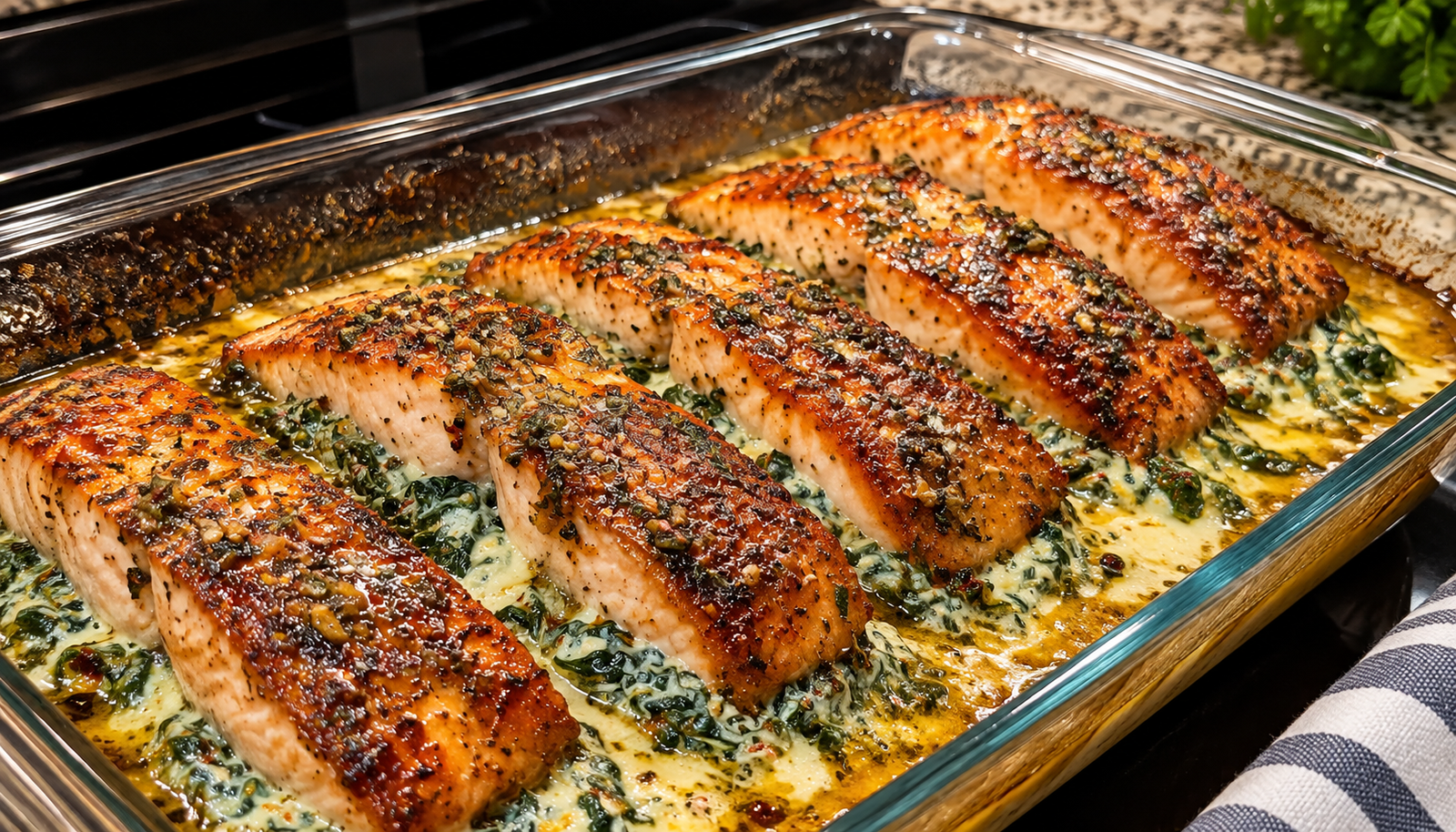
Plus, let’s talk about presentation. When you pull a glass baking dish out of the oven filled with golden-brown, crispy-topped salmon resting on a bubbling bed of creamy, herb-spiked spinach, it looks like you spent four hours in culinary school. In reality? You can throw this together in under 45 minutes, with most of that time spent hands-off.
Before we get to the stove, let’s look at what you need to stock your kitchen with.
The Ingredient List
For a dish that tastes like a high-end Italian bistro meal, the ingredient list is remarkably straightforward. No weird additives or impossible-to-find specialty items—just fresh, wholesome components that work together harmoniously.
| Category | Item | Quantity / Notes |
| The Main Event | Salmon Fillets | 4 thick-cut center-cut salmon fillets (about 6–8 oz each). Skin-on or skinless works, though skin-on helps hold the shape better during searing. |
| The Filling | Fresh Spinach | 3 cups, roughly chopped. (Do not use frozen unless you squeeze every single drop of moisture out of it first!) |
| Cream Cheese | 4 oz, softened to room temperature. This gives the filling its thick, velvety structure. | |
| Mozzarella Cheese | 1/2 cup, freshly shredded. (Pre-bagged works, but freshly grated melts much smoother). | |
| Parmesan Cheese | 1/3 cup, freshly grated. Adds that nutty, savory kick. | |
| Garlic | 3 cloves, minced. Fresh is non-negotiable here! | |
| The Sauce & Seasoning | Heavy Cream | 1/2 cup. Creates the rich base of the pan sauce in the baking dish. |
| Sun-Dried Tomatoes | 1/3 cup, drained and chopped. They add a brilliant pop of sweet, tangy contrast. | |
| Olive Oil & Butter | 1 tablespoon olive oil + 2 tablespoons unsalted butter for searing. | |
| Seasoning Mix | 1 tsp smoked paprika, 1 tsp Italian seasoning, salt, and freshly cracked black pepper to taste. |
Step-by-Step Guidance: From Prep to Plate
Ready to cook? Let’s walk through this together. Take your time, keep your workspace clean, and don’t rush the steps.
Step 1: Prep and Cut the Pockets
- Bring to Room Temp: Take your salmon fillets out of the fridge about 15 minutes before you start cooking. Cold fish hitting a hot pan will seize up and cook unevenly.
- Pat Dry: Grab a roll of paper towels and pat every single fillet until it is completely dry. Moisture ruins a good sear.
- Cut the Pockets: Place a fillet flat on your cutting board. Take a sharp, thin knife (a boning knife or a sharp paring knife works best) and cut a deep horizontal pocket into the thickest side of each fillet. Be careful not to cut all the way through to the other side—you want a pocket, not a butterfly split!
Step 2: Mix the Creamy Filling
- In a medium mixing bowl, combine your softened cream cheese, shredded mozzarella, grated parmesan, half of your minced garlic, and the chopped fresh spinach.
- Season the mixture with a pinch of salt, pepper, and a small pinch of your Italian seasoning.
- Stir everything together until it forms a thick, cohesive paste. It should look like a rich dip.
Step 3: Stuff and Season
- Using a small spoon or your clean fingers, gently stuff each salmon pocket with a generous spoonful of the cheese and spinach mixture. Don’t overstuff them, or the filling will ooze out everywhere in the oven.
- Rub the outside of the salmon fillets with a little olive oil, then season the top and bottom generously with your salt, pepper, smoked paprika, and remaining Italian seasoning. That paprika is what gives the top crust that gorgeous, deep golden-brown color.
Step 4: The Sear (Optional but Recommended)
- Grab a heavy oven-safe skillet (like a cast-iron skillet). Heat it over medium-high heat with a tablespoon of olive oil and a tablespoon of butter.
- Once the butter is foaming, place the stuffed salmon fillets into the pan. Sear them for just 2 to 3 minutes on the skin side until a nice, crispy crust forms.
- Alternative (The Casserole Route): If you prefer a simpler cleanup, you can skip the stovetop sear entirely and arrange the stuffed fillets directly into a lightly greased glass baking dish, exactly like the setup in our reference image. Both methods work wonderfully!
Step 5: Build the Sauce and Bake
- Preheat your oven to 400°F (200°C).
- If you’re using a baking dish, tuck your remaining minced garlic, chopped sun-dried tomatoes, and heavy cream right around the base of the salmon fillets. Pour a tiny splash of broth or water if needed to keep things juicy.
- Bake uncovered for 12 to 15 minutes. You’ll know it’s done when the salmon flakes easily with a fork, the internal temperature hits 135°F, and the creamy sauce around the base is bubbling and slightly reduced.
Real Examples, Use Cases, and Life Lessons
Every home cook makes mistakes along the way. Here are a few blunders I made while perfecting this recipe so you can skip the frustration:
- The Soggy Spinach Trap: The very first time I made a stuffed salmon, I used frozen spinach straight from the package without thawing or draining it. As it baked, water leaked out of the spinach and turned my thick cream cheese filling into a watery, separated soup. Lesson learned: Always use fresh chopped spinach, or if using frozen, thaw it and squeeze it dry inside a clean kitchen towel until not a single drop of water remains.
- Overcooking the Fish: Salmon cooks terrifyingly fast. If you leave it in the oven for 25 minutes thinking “more heat is better,” you’ll end up with chalky protein and dry filling. Pull it at 12–15 minutes. The residual heat will finish the job while it rests.
- Skipping the Acid: Cream cheese, heavy cream, and butter are wonderfully rich, but they can coat your palate heavily. Adding chopped sun-dried tomatoes and a quick squeeze of fresh lemon juice right before serving cuts right through that richness and balances the entire flavor profile.
As for real-life use cases? This is my absolute go-to dish when I want to impress dinner guests without spending all night hiding in the kitchen. It pairs brilliantly with a bed of garlic butter angel hair pasta, a side of roasted asparagus, or a simple crisp green salad with a bright vinaigrette. You can use that extra Tuscan cream sauce from the bottom of the dish to coat your pasta or drizzle over your veggies—it’s pure liquid gold.
Common Mistakes to Avoid Summary
To make sure your dinner turns out picture-perfect on the first try, keep these quick checkpoints in mind:
- Don’t cut all the way through the fish: Keep your knife steady when making the pocket, leaving the back seam intact so your filling doesn’t leak out into the pan.
- Don’t buy pre-shredded cheese: Pre-shredded mozzarella is coated in anti-caking agents that prevent it from melting smoothly into a velvety sauce. Take two minutes to grate a block yourself.
- Don’t crowd the pan or dish: Give your salmon fillets a little breathing room in your baking dish or skillet so the heat circulates evenly and the edges get properly seared.
Final Thoughts
Cooking delicious food at home doesn’t require a commercial kitchen, fancy chef knives, or complicated ingredients. It’s about learning how simple components interact with heat, respecting cooking times, and not being afraid to make a mess along the way.
That Tuesday night salmon disaster feels like a distant memory now. Whenever I pull a bubbling, golden pan of Creamy Tuscan Stuffed Salmon out of the oven, I’m reminded that every kitchen failure is just a stepping stone toward a great recipe.
So go ahead, grab some fresh fillets, crank up your oven, and treat yourself to a dinner that feels like a luxury vacation. Take your time, enjoy the process, and happy cooking!