
Prep Time: 15 mins | Cook Time: 10 to 12 mins | Rest Time: 8 mins | Servings: 4 to 6 people
Years ago, whenever a major anniversary or birthday came around, I used to book a table at a high-end steakhouse just to order filet mignon. I was convinced that home kitchens were fundamentally incapable of producing that melt-in-your-mouth tenderness with a dark, crackling, herb-flecked crust[cite: 6]. Every time I tried searing beef tenderloin on my own stove, I either scorched the outside while leaving the middle raw, or cooked it so long it chewed like boiled leather.
Then I had a candid chat with a line cook friend who broke down the reality of restaurant pan-searing. He showed me that the secret isn’t an industrial broiler; it comes down to dry meat, an intensely hot cast iron skillet, and the classic French technique of arrosé—spooning foaming herb and garlic butter constantly over the steaks while they finish searing[cite: 6].
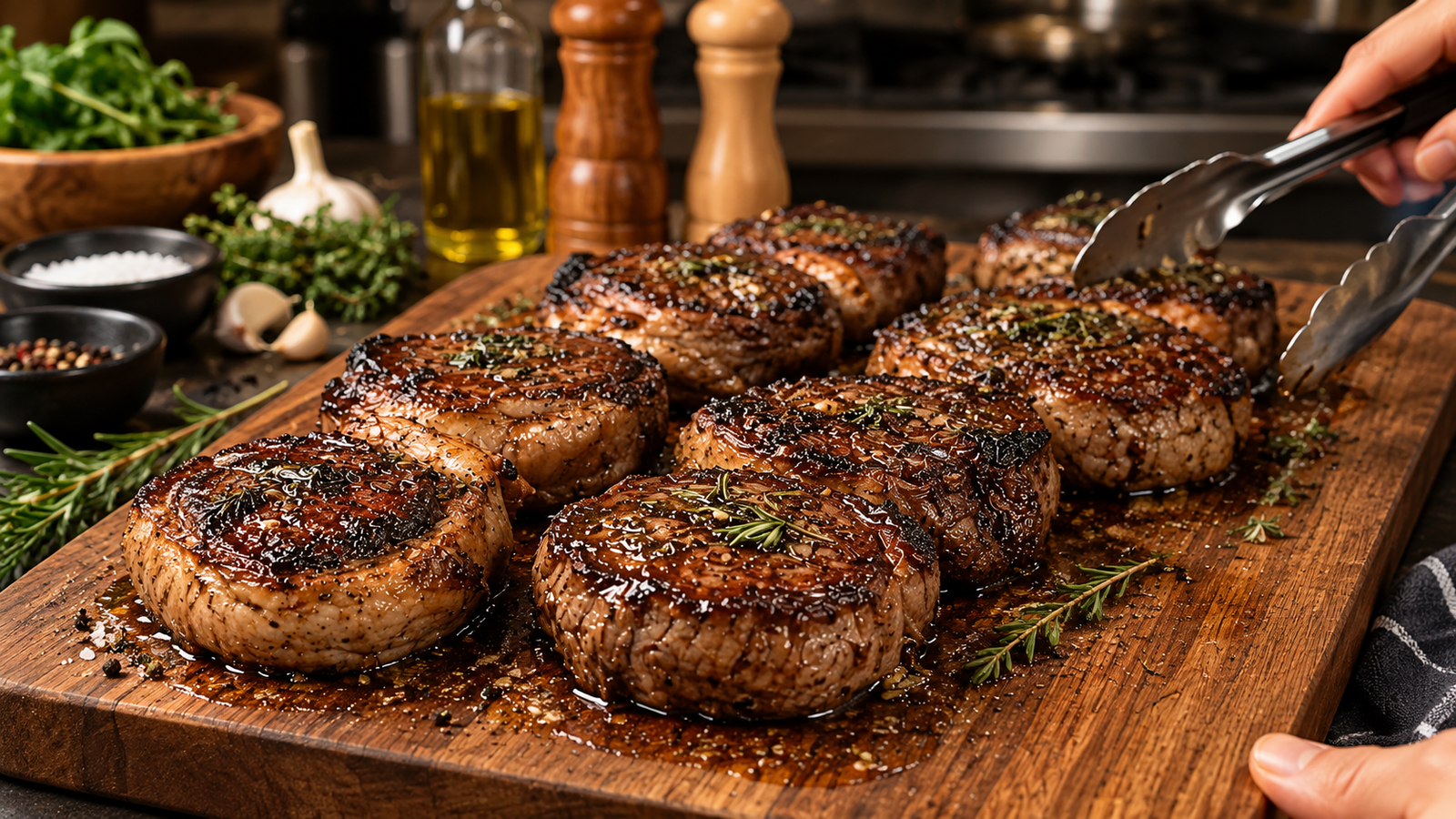
The first time I nailed this method at home, pulling a batch of thick, glistening medallions off the heat onto my cutting board[cite: 6], my family went completely quiet at the dinner table. When a knife glides through beef with almost zero resistance, you realize you never need to drop two hundred dollars at a steakhouse again.
Why Filet Medallions Demand Special Care
Beef tenderloin is the most tender muscle on the animal because it does virtually no physical work. But that tenderness comes with a catch: it contains almost no intramuscular fat (marbling).
Unlike a ribeye, which bastes itself from the inside as fat melts, a filet mignon can dry out in seconds if neglected. That is why thick-cut medallions—especially when wrapped in a thin ribbon of bacon or butcher’s twine—are the gold standard[cite: 6].
The round, compact shape allows you to build a deep, caramelized crust on the flat top and bottom without overcooking the center[cite: 6]. Finishing the sear with plenty of foaming butter, crushed garlic, and fresh rosemary acts as an external marinade, infusing rich moisture and earthy fragrance directly into the lean meat[cite: 6].
The Ingredients You Need
High-end steaks don’t hide behind heavy marinades; quality ingredients and precise seasoning do the heavy lifting:
| Ingredient | Amount | Notes & Details |
| Beef Tenderloin Medallions | 6 cuts (approx. 6 to 8 oz each) | Center-cut filet mignon, cut roughly 1.5 to 2 inches thick[cite: 6] |
| Thin-Cut Bacon (Optional) | 6 strips | Wrapped around the perimeter to protect the lean edges and add savory richness[cite: 6] |
| Coarse Kosher Salt | 1.5 tbsp | Diamond Crystal preferred; coarse grains create an even, textured crust without over-salting |
| Coarse Black Pepper | 1 tbsp | Freshly cracked gives visible, savory flecks across the crust[cite: 6] |
| High-Smoke Point Oil | 2 tbsp | Avocado oil or refined canola; prevents scorching during the initial sear |
| Unsalted Butter | 4 to 5 tbsp | High-fat European-style butter (like Kerrygold) creates the best velvety foam[cite: 6] |
| Fresh Rosemary | 3 to 4 sprigs | Bruised slightly to release essential oils into the butter bath[cite: 6] |
| Fresh Thyme | 4 to 5 sprigs | Classic herbal pairing for beef tenderloin[cite: 6] |
| Fresh Garlic Cloves | 4 to 5 cloves | Smashed with the flat of a knife, skin on, to perfume the pan without burning |
(Uniform thickness—around 1.5 to 2 inches—is critical so every medallion finishes at the exact same temperature[cite: 6])
Step-by-Step Cooking Method
Step 1: The Dry-Brine (Do Not Skip This)
Take your medallions out of the refrigerator at least 45 minutes before cooking. Cold meat dropped into a hot pan drops the skillet’s surface temperature, causing the beef to steam rather than sear.
Pat the steaks completely dry with paper towels. Wrap a strip of bacon around the circumference of each medallion and secure it snugly with kitchen twine, or simply tie twine around plain beef to keep its neat cylindrical shape[cite: 6].
Season generously on all sides with kosher salt and coarse black pepper[cite: 6]. Let them sit on the counter; as the salt draws out surface moisture, it dissolves and gets reabsorbed into the meat, seasoning the filet to its core.
Step 2: Get the Skillet Screaming Hot
Set a heavy 12-inch cast iron skillet over high heat for a full 5 minutes. Cast iron holds thermal mass like nothing else, which gives you that classic steakhouse char.
Add your avocado oil. When the oil begins to shimmer and shows faint wisps of smoke, your pan is ready.
Gently lay the seasoned medallions into the pan using metal tongs, laying them away from you so hot oil doesn’t splash toward your hands[cite: 6]. Give them room; if you crowd too many into a small pan, cook in two separate batches.
(Let the meat sear undisturbed for the first three minutes to form that rich Maillard crust[cite: 6])
Step 3: Sear the Flat Surfaces
Resist every impulse to poke, nudge, or flip the medallions right away. Let them sit completely undisturbed for 3 to 4 minutes.
Peek underneath: once a deep, mahogany crust has developed, flip each medallion over with your tongs[cite: 6]. Sear the second side for another 2 to 3 minutes.
If you wrapped them in bacon, briefly pick up each medallion with tongs and roll the edges against the hot skillet floor for 30 seconds to render and crisp the bacon ribbon[cite: 6].
Step 4: The Butter-Basting Bath (Arrosé)
Turn the heat down to medium. Drop the unsalted butter, smashed garlic cloves, and sprigs of rosemary and thyme directly into the pan alongside the steaks[cite: 6].
As the butter melts, tilt the skillet slightly toward you. The melted butter will pool at the bottom edge, frothing and sizzling with the herbs and garlic.
Using a large metal spoon, rapidly and continuously scoop the hot, foaming herb butter over the tops of the medallions[cite: 6]. Bathe the meat continuously for about 2 minutes. This circulating butter gently cooks the center of the steak while washing it in nutty milk solids, garlic, and fresh rosemary[cite: 6].
(Spoon the foaming butter over the steaks continuously to glaze the meat and finish the cook evenly[cite: 6])
Step 5: Check Temperature and Rest
Do not rely on the “poke test” against your palm; when you’re working with expensive beef tenderloin, use a reliable digital instant-read thermometer (like a ThermoWorks Dot or Thermapen). Insert the probe into the center of the thickest medallion:
- Rare: 120°F to 125°F
- Medium-Rare (Recommended): 130°F to 135°F
- Medium: 140°F to 145°F
Pull the steaks out of the pan onto a wooden cutting board about 5°F below your target temperature, as carryover heat will continue cooking the interior[cite: 6]. Spoon a few tablespoons of the warm pan drippings and herbs over the top[cite: 6].
Let the meat rest undisturbed for 7 to 8 minutes. During this time, the muscle fibers relax and redistribute their savory juices evenly throughout the cut.
(Resting on a cutting board allows the juices to settle back into the meat rather than spilling out[cite: 6])
3 Critical Mistakes That Ruin Filet Mignon
- Cooking Straight from the Fridge: If your steaks are cold when they hit the hot iron, the exterior burns before the cold center warms up, resulting in a thick, gray ring of overcooked meat beneath the crust. Always give thick cuts at least 30 to 45 minutes on the counter.
- Adding Butter Too Early: Butter contains water and milk solids that scorch at roughly 350°F. If you put butter in the pan at the start of a high-heat sear, those milk solids turn bitter and black. Always sear in high-smoke-point oil first, and introduce butter only toward the end for basting.
- Cutting into the Meat Immediately: Slicing a hot steak the second it leaves the pan releases all the pressurized juices onto the cutting board, leaving your filet dry. Give it a full 8-minute rest; those juices will stay inside the meat where they belong.
(A proper rest guarantees a clean, rosy medium-rare center from edge to edge with zero moisture loss)
What to Serve with Filet Medallions
Because beef tenderloin is elegant, rich, and naturally savory, pair it with classic steakhouse sides that complement its buttery profile[cite: 6]:
- Garlic Mashed Yukon Golds: Creamy, velvety potatoes whipped with heavy cream and roasted garlic are built to catch every drop of herb butter running off the cutting board[cite: 6].
- Blistered Asparagus or Broccolini: Tossed in olive oil and lemon juice, then roasted hot until the tips char, offering a clean, acidic crunch against the tender beef.
- Pan-Seared Wild Mushrooms: Sauté cremini or chanterelles in the same skillet right after the steaks come out, letting them soak up the remaining garlic-herb pan drippings[cite: 6].
- A Full-Bodied Red Wine: A dry Cabernet Sauvignon, Malbec, or Bordeaux cuts through the rich butter and elevates the savory rosemary crust[cite: 6].
(A showstopping, restaurant-quality meal enjoyed right at your own dining table)
Storing and Reheating Leftovers
On the off chance you have leftover medallions, treat them gently so they don’t lose their delicate texture.
- Refrigeration: Wrap cooled medallions tightly in foil or place them in an airtight container for up to 3 days. Pour any leftover pan butter over the meat to keep it protected[cite: 6].
- Reheating Without Overcooking: Never blast leftover filet in the microwave. Instead, preheat your oven to 250°F (120°C). Place the steaks on a wire rack set inside a rimmed baking sheet and warm them for 12 to 15 minutes until just heated through. Alternatively, slice the chilled meat paper-thin and serve it cold over an arugula and shaved parmesan salad.
Frequently Asked Questions
Is kitchen twine really necessary?
It isn’t mandatory, but it helps significantly. Tenderloin cuts are naturally uneven; tying twine around the center keeps them in a tall, uniform cylinder so they cook evenly throughout[cite: 6]. Remove the string right after resting, just before slicing.
Can I make these on an outdoor gas grill?
Yes, but you will miss out on the butter-basting step. If grilling, set up a two-zone fire: sear hot over direct flame for 2 minutes per side to mark the meat, then slide the steaks over indirect heat with a small cast-iron dish of herb butter melting alongside them to spoon over the tops.
Why did my skillet smoke out the whole kitchen?
Cast iron searing generates real smoke. Always turn your stove vent hood to maximum before the steaks hit the pan, use an oil with a high smoke point (avoid regular extra virgin olive oil for the initial sear), and wait to add butter until the heat is lowered.
Cooking restaurant-grade filet mignon at home isn’t about complicated kitchen gadgets—it is about respecting the meat, getting your pan hot, and finishing with good butter and fresh herbs[cite: 6]. Pick up a few thick-cut medallions this weekend, fire up your cast iron, and enjoy an unforgettable dinner made entirely on your own terms[cite: 6].