
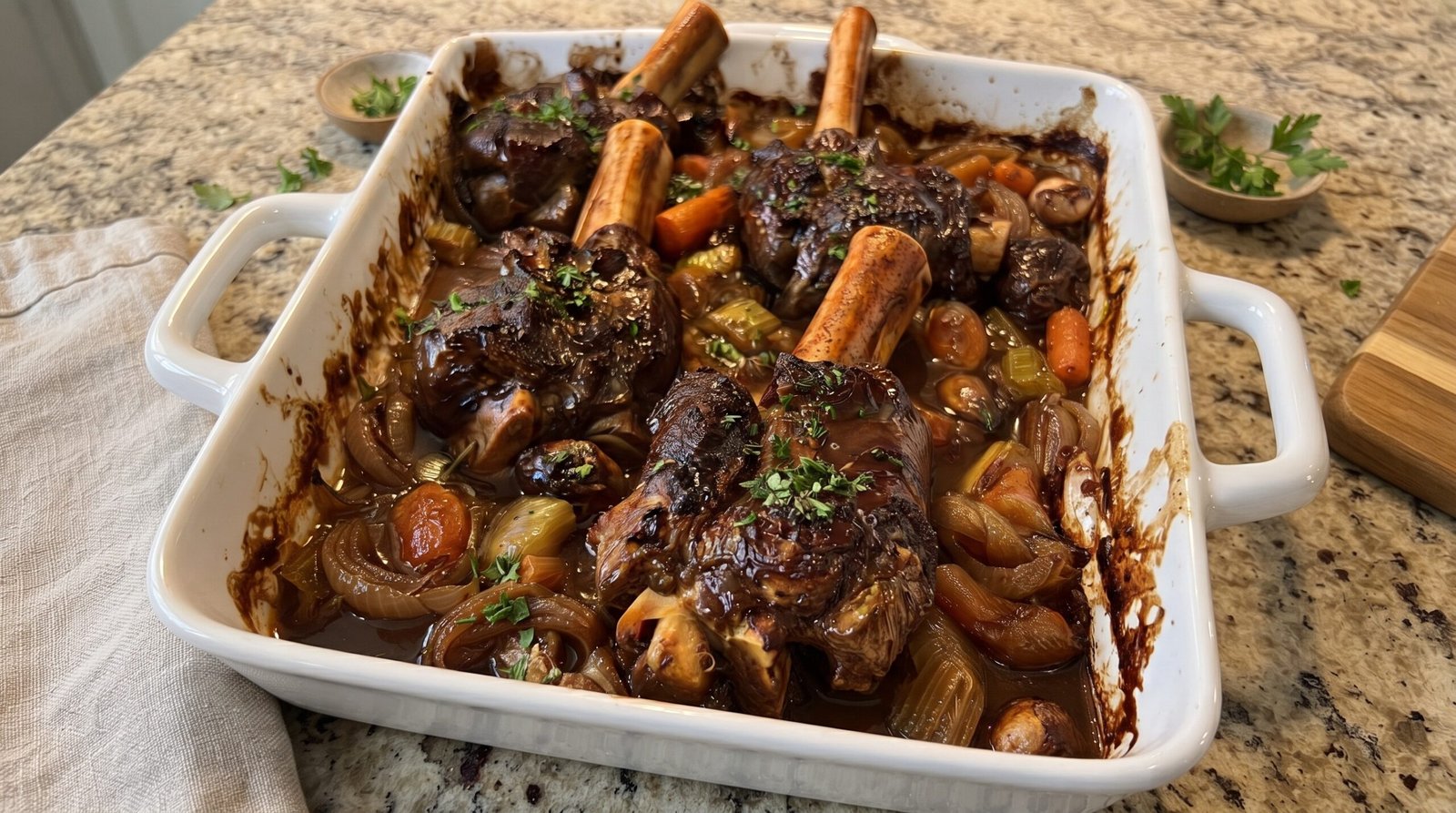
I remember the first time I tried to make lamb shanks at home. I was living in a drafty apartment, trying to impress some friends, and I had no idea how much time these cuts of meat actually required. I expected them to be ready in an hour, but they stayed tough and chewy, leaving me embarrassed. It took several more attempts to really understand how to get that meat to pull away from the bone with just a fork. Since then, slow braised lamb shanks have become a staple in my kitchen when the weather turns cold and I want something substantial to serve. It is a patient meal, but it teaches you a lot about the rhythm of cooking.
When you cook these shanks properly, the collagen breaks down into a rich, velvety sauce that coats every bite. You do not need expensive equipment, just a heavy pot and a steady heat source. The secret really lies in the low temperature and the time spent in the oven, which allows the muscle fibers to relax. This article will walk you through my method for achieving consistent results. Whether you are prepping for a quiet Sunday dinner or hosting a small gathering, this recipe provides a hearty, savory experience that feels earned.
Why This Recipe Works
This recipe relies on the principle of long, slow braising, which is the only way to transform a tough, connective-tissue-rich cut like a lamb shank into something tender. By using a dutch oven or a heavy-duty roasting pan with a lid, you create a self-basting environment. As the liquid gently bubbles, it softens the meat, and the steam trapped inside the vessel ensures that the shanks remain moist throughout the process.
The combination of aromatics and a robust braising liquid creates a deep flavor profile. I include celery, carrots, and onions as the base because they release their natural sugars and liquids as they cook. These vegetables meld with the savory juices from the lamb to create a pan sauce that is thick and flavorful without requiring heavy cream or butter. The time spent searing the meat before braising adds a significant depth of flavor through the Maillard reaction, which is essential for a high-quality finished product.
You will find that the consistency of the heat is easier to manage in an oven set at 325 degrees Fahrenheit compared to a stovetop burner, which can often have hot spots. The ambient heat of the oven penetrates the heavy pot from all sides, ensuring that the cooking is even. This also prevents the liquid from evaporating too quickly. Because the process is largely hands-off once the pot is in the oven, you have the flexibility to attend to other parts of your day, which makes this a very practical main dish to prepare when you are not in a rush.
Ingredient Notes
The Lamb
The shanks are the star here. You want to look for shanks that have a good amount of meat on the bone. If the bone looks completely bare, you will have less to eat. I typically aim for one large shank per person. If you can only find smaller ones, plan for two per person. You do not need to trim them excessively, as the fat will render down and add flavor to the sauce during the long cooking time.
The Braising Liquid
For the base of the liquid, I use a mixture of a dry red wine and a high-quality beef or lamb stock. The alcohol adds complexity, but remember that most of it cooks off, leaving behind deep, fruity notes that cut through the richness of the lamb. If you prefer not to use wine, you can replace it with an equal amount of additional stock mixed with a tablespoon of balsamic vinegar to provide that necessary acidity. Always taste your stock before adding it to ensure it is not too salty, as the liquid will reduce and concentrate during the three hours of cooking.
The Vegetables and Aromatics
The vegetables used here are the standard mirepoix of carrots, celery, and onions, but I also like to add small whole mushrooms and garlic cloves. You do not need to chop these finely. Leaving them in larger chunks ensures they hold their shape throughout the braising process and do not turn into mush. If you like fresh herbs, a bundle of rosemary and thyme tied with kitchen string is perfect. These herbs infuse the sauce with an earthy aroma that complements the lamb perfectly.
| Ingredient | Amount | Notes |
|---|---|---|
| Lamb shanks | 4 pieces | About 1 pound each |
| Carrots | 3 large | Cut into 2-inch chunks |
| Celery stalks | 3 stalks | Cut into 2-inch pieces |
| Yellow onions | 2 medium | Cut into thick wedges |
| Garlic | 6 cloves | Peeled and left whole |
| Beef or lamb stock | 2 cups | Use low sodium |
| Dry red wine | 1 cup | Cabernet or Merlot works well |
| Fresh thyme | 4 sprigs | Tied with string |
| Fresh rosemary | 2 sprigs | Tied with string |
| Olive oil | 2 tablespoons | For searing |
| Salt and black pepper | To taste | For seasoning meat |
The Recipe
- Prep time: 20 minutes
- Cook time: 3 hours
- Total time: 3 hours 20 minutes
- Servings: 4
- Difficulty: Intermediate
Equipment needed: Large dutch oven with lid, kitchen tongs, small bowl, oven mitts, meat thermometer.
Step-by-Step Instructions
Step 1: Prep and Season the Meat
Start by taking the lamb shanks out of the refrigerator about 30 minutes before you plan to cook. This allows the meat to reach a more even temperature. Pat the shanks thoroughly dry with paper towels. If they are wet, they will steam instead of searing when you put them in the hot oil. Generously season every side of the meat with salt and black pepper. Do not be shy with the seasoning, as the shanks are quite large and need it to carry the flavor into the center of the meat.
Step 2: Sear the Shanks
Heat your heavy-duty dutch oven over medium-high heat. Add the olive oil and wait until it shimmers. Place the shanks into the hot pot. Do not crowd them; if your pot is not large enough to fit all four at once, do it in two batches. Let them sit undisturbed for 3 to 4 minutes per side until they have a deep, dark brown crust. Turn them carefully using tongs. Once browned, remove the shanks from the pot and set them aside on a plate.
Step 3: Sauté the Vegetables
Reduce the heat to medium. Add your onions, carrots, and celery to the same pot, using the rendered fat and browned bits left behind from the lamb. Stir the vegetables occasionally for about 8 minutes. You want them to start softening and picking up all that flavor from the bottom of the pot. Toss in the whole garlic cloves during the last 2 minutes. They will become fragrant and sweet without burning.
Step 4: Deglaze and Build the Sauce
Pour in the red wine to deglaze the pot. Use a wooden spoon to scrape up all the stuck bits, which are full of concentrated flavor. Let the wine simmer for about 5 minutes until it has reduced by half. Pour in the beef or lamb stock and bring it to a gentle simmer. Once bubbling, return the browned lamb shanks to the pot, nestling them into the vegetables and the liquid. Add the fresh herb bundle, ensuring it is partially submerged.
Step 5: The Long Braise
Cover the dutch oven tightly with its lid and place it in the center of your preheated 325 degree Fahrenheit oven. Let it cook for 3 hours. Do not open the lid during the first 2 hours. After 3 hours, test the meat. It should be fork-tender, meaning a fork should slide in and out with almost no resistance. If the meat still feels tight or rubbery, give it another 20 minutes. Use a meat thermometer to ensure the internal temperature is well above 165 degrees Fahrenheit.
Step 6: Serve and Rest
Carefully remove the pot from the oven. Take out the lamb shanks and set them on a serving platter. Cover the platter loosely with foil. If you want a thicker sauce, skim the excess fat off the top of the liquid in the pot, then simmer the liquid on the stove over medium-high heat for 10 minutes until it thickens. Taste for seasoning and adjust with salt if necessary. Pour the vegetables and the thickened sauce over the lamb and serve while steaming hot.
Mistakes I Made (So You Don't Have To)
Overcrowding the Pot During Searing
Early on, I tried to fit all the shanks into the pan at once to save time. The result was a pale, gray-looking shank because the pan temperature dropped too quickly, causing the meat to release its juices immediately. Now, I always sear in batches. Even if it takes an extra 5 minutes, the depth of flavor you get from a proper sear is worth the effort.
Not Using Enough Liquid
I once used too little stock, thinking the vegetables would provide enough moisture. Halfway through the cooking time, the bottom of the pot had scorched, and the sauce tasted bitter. Always ensure the shanks are at least one-third to one-half submerged in liquid. The braising liquid should be deep enough to create steam but not so high that it boils the meat rather than braising it.
Using High Heat in the Oven
I thought that by increasing the oven temperature, I could speed up the cooking time. I set the oven to 400 degrees Fahrenheit, and while the meat did get cooked, it was tough and dry rather than tender. Braising requires low, consistent heat to slowly melt the connective tissue. Keep the oven at 325 degrees Fahrenheit and have patience; there is no shortcut to tenderness with this cut of meat.
Forgetting to Skim the Fat
In one of my early attempts, I served the sauce immediately without skimming the fat. The result was an oily film on top of the sauce that felt heavy and masked the flavor of the herbs. Now, I always let the pot sit for a few minutes after taking it out of the oven, which allows the fat to rise to the surface. It is much easier to remove a tablespoon of fat before you serve, which makes the final dish cleaner and more enjoyable.
Variations and Tips
Add Some Citrus Zest
For a bright finish, try adding the zest of half an orange or a lemon to the braising liquid toward the end of the cooking process. The citrus oils provide a fresh contrast to the heavy, savory notes of the lamb. Just add the zest right after you take the pot out of the oven, stir it in, and let it sit for a minute before serving.
Incorporate Dried Fruit
If you enjoy a bit of sweetness, consider adding a handful of dried apricots or prunes to the pot during the last hour of braising. They break down slightly and add a rich, jammy depth to the sauce that works beautifully with the gaminess of the lamb. It is a traditional touch that elevates the dish for special occasions.
Make-Ahead Strategy
These shanks actually taste even better the next day. You can cook the entire dish, let it cool, and store it in the refrigerator overnight. The flavors have more time to meld, and it is much easier to remove the solidified fat from the top of the pot the next day. Simply reheat the whole pot in the oven at 300 degrees Fahrenheit until the meat is steaming hot and the sauce is liquid again.
Alternative Vegetables
If you do not have celery or onions, feel free to use fennel bulbs or parsnips. Fennel provides a mild anise flavor that pairs perfectly with lamb, and parsnips add a subtle sweetness. Just make sure to cut them into similar sizes so they all cook at the same rate. This is a forgiving dish when it comes to root vegetables, so feel free to use what you have on hand.
Storage and Reheating
If you have leftovers, they will keep well in an airtight container in the refrigerator for up to 3 days. Ensure the meat is stored in the braising liquid so it does not dry out. When you are ready to eat, reheat the leftovers until they reach an internal temperature of 165 degrees Fahrenheit. You can do this on the stovetop over low heat with a splash of extra stock, or in the oven at 300 degrees Fahrenheit covered with foil.
I do not recommend freezing this dish, as the texture of the vegetables and the structure of the meat can change when thawed. The long braising process makes the fibers delicate, and freezing tends to break them down too much, leading to a mushy final result. If you must store it for longer than 3 days, it is better to consume it within that window. Always refrigerate the leftovers within 2 hours of cooking to ensure they remain safe to eat.
Frequently Asked Questions
Why is my lamb tough after 3 hours?
If the meat is still tough after 3 hours, it simply needs more time. Every shank is different depending on the age of the animal and the size of the cut. Do not worry; just put the lid back on and give it another 20 to 30 minutes in the oven. It will eventually reach that point where it falls off the bone.
Can I cook this on the stovetop instead of the oven?
Yes, you can cook it on the stovetop, but you must keep the heat very low. Use the smallest burner you have on the lowest setting. The oven is generally preferred because the heat surrounds the pot, but if you must use the stovetop, keep a close watch to ensure the bottom of the pot does not burn and the liquid maintains a very gentle simmer.
Do I have to use wine in this recipe?
You do not have to use wine. If you prefer to skip it, just add an extra cup of stock. I suggest adding a small splash of apple cider vinegar or balsamic vinegar to maintain the acidity that the wine would have provided, which helps balance the richness of the meat.
What should I serve with these lamb shanks?
Because the sauce is so rich, you want something to soak it up. Creamy mashed potatoes, polenta, or even a simple crusty piece of bread are excellent choices. Steamed green beans or roasted root vegetables on the side also provide a nice color and texture contrast to the soft lamb.
How can I tell if the lamb is done without a thermometer?
While a thermometer is the best way to be sure, you can look for visual cues. When the meat has shrunk away from the bone significantly, that is a great sign. Also, test it with a fork; if you can easily twist the fork and pull a piece of meat off without any tension, it is finished cooking.
Final Thoughts
Making lamb shanks is a rewarding process that rewards patience and attention to detail. Once you master the timing and the technique of the long braise, you will find that you can prepare this for any occasion with total confidence.
I hope you enjoy the process of bringing this meal together as much as I do. It truly captures the essence of home cooking and is a wonderful way to enjoy a quiet, comforting meal at the end of a long week.