
I still remember the freezing, rainy Sunday evening three years ago that nearly swore me off making cabbage in a slow cooker forever.
My partner and I were craving traditional rustic European comfort food: savory smoked sausage, sweet, buttery, melt-in-your-mouth braised cabbage, and crusty bread to swipe through the pan juices. I had seen countless “dump-and-go” recipe videos floating around social media claiming that all you had to do was chop up a raw head of green cabbage, toss sliced smoked kielbasa right on top, pour in two cups of chicken broth, clamp down the lid, and walk away for six hours.
It sounded so effortless, so budget-friendly, and so foolproof that I didn’t question it for a second.
When I lifted the lid that evening, the scene was an absolute culinary heartbreak.
The sausages hadn’t browned at all; they had boiled in a lake of murky liquid, leaving their casings limp, pale, and rubbery. And the cabbage? It had collapsed into a mushy, yellowish-grey sludge floating in two inches of bland, watery fat. Because I hadn’t understood vegetable moisture release, every bite tasted like sulfur and boiled water. My family chewed politely through three bites, quietly pushed their bowls aside, and made peanut butter toast. I threw the entire pot straight into the trash in defeat.
That dinner disaster bugged me for weeks. The combination of salty, smoky pork kielbasa and naturally sweet, slow-braised green cabbage is an absolute classic. And a slow cooker should be the absolute best tool in your kitchen to break down sturdy cabbage leaves into silky, buttery submission.
I spent the next month testing batches: playing with wedge thickness, figuring out casing mechanics, eliminating added liquids, and balancing the rich pork fat with apple cider vinegar and real butter.
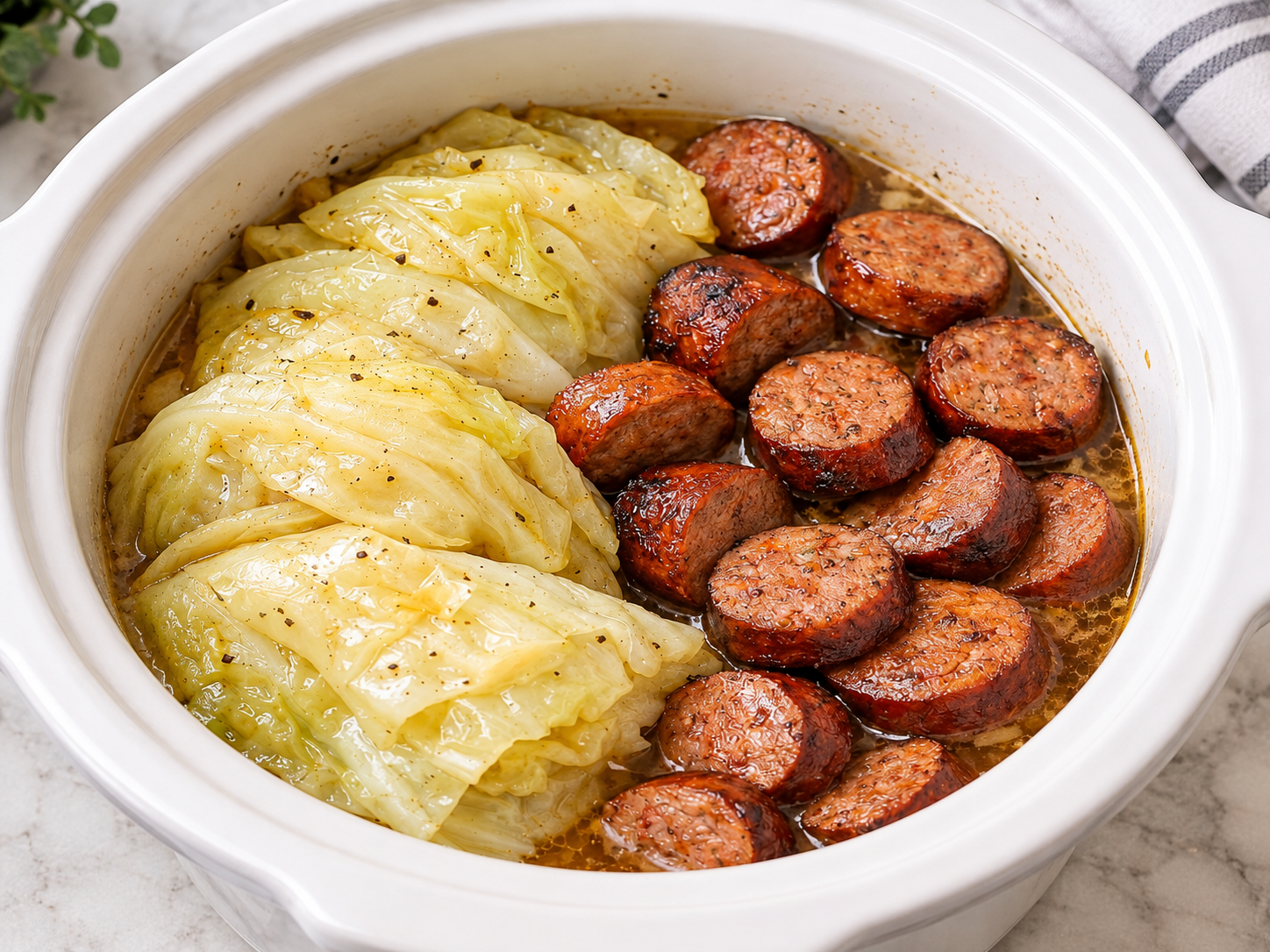
The photo above is the hard-earned victory sitting in my slow cooker: sweet, silky, butter-glazed cabbage wedges resting neatly on one side, flanked by thick, crispy, pan-seared smoked sausage slices swimming in a rich, concentrated garlic-herb jus.
Here is how you make this soul-warming comfort meal at home without turning your vegetables into a pot of mush.
Why “Dump-and-Go” Cabbage and Sausage Fails (The Kitchen Physics)
Green cabbage looks like a rock-hard, sturdy vegetable on your cutting board, but inside a slow cooker, its behavior completely changes. Understanding these three rules makes the difference between cafeteria sludge and restaurant perfection:
1. The Water Trapped in Cabbage (Never Add Broth)
Green cabbage is composed of roughly 92% water. In an enclosed slow cooker, moisture cannot evaporate; it condenses on the underside of the heavy lid and rains continuously back down into the pot. If you pour a cup or two of water or broth into the crock at the beginning, you are effectively boiling the vegetables. You only need two to three tablespoons of liquid just to start the steam cycle; the cabbage, onions, and melting butter will naturally release plenty of sweet, concentrated juices as they braise.
2. The Raw Sausage Casing Mistake
Smoked kielbasa, Polish sausage, or andouille links rely on a browned, caramelized exterior to deliver deep flavor and structural snap. If you drop pale, cold sausage slices directly into the slow cooker, the casing boils into a chewy, rubbery skin. Giving the sausage rounds a blisteringly fast 3-minute skillet sear over high heat triggers the Maillard reaction, locking in juices and giving you those dark, crispy edges that stay snappy throughout the braise.
3. The Wedge Method vs. Shredding
If you slice cabbage into thin shreds like coleslaw, the heat will break down its delicate cell walls until it disintegrates into mush. Cutting your cabbage into thick, sturdy wedges (leaving part of the core intact) keeps the leaves bound together. The steam gently tenderizes the interior of the wedge into buttery perfection while allowing you to lift whole, gorgeous portions out with a slotted spoon without the vegetable tearing apart.
Ingredients & Tools You’ll Need
Essential Gear
- 6-Quart Oval Slow Cooker: (An oval ceramic slow cooker, like the white insert in the photo, provides the wide footprint needed to lay cabbage wedges on one side and sausage slices on the other without piling them deep).
- 12-Inch Cast-Iron or Heavy Stainless-Steel Skillet: For searing the sausage slices at high heat before braising.
- Sharp Chef’s Knife: To slice clean, intact wedges through a dense head of cabbage.
- Large Slotted Spoon & Metal Tongs: To transfer the delicate, tender cabbage wedges and sausage slices cleanly onto dinner plates.
The Ingredient Breakdown
| Component | Ingredient | Quantity | Practical Role |
| The Star Meat | Smoked Polish Kielbasa, Andouille, or Ring Sausage | 1.25 to 1.5 lbs (sliced into ¾-inch thick rounds) | Delivers salty, smoky, deeply savory flavor to the dish. |
| The Vegetable | Fresh Green Cabbage | 1 medium head (approx. 2.5 lbs, cut into wedges) | Braises down into sweet, tender, buttery ribbons. |
| Aromatic Bed | Sweet Yellow Onion | 1 medium (thinly sliced) | Forms a caramelized, jammy cushion at the bottom of the pot. |
| Aromatic Depth | Fresh Garlic | 4 to 5 cloves (minced) | Infuses the braising juices with robust, savory warmth. |
| The Glaze Fat | Unsalted Butter | 4 tbsp (half a stick, cubed) | Melts across the cabbage leaves to give them a glossy, silky texture. |
| Acid Lift | Apple Cider Vinegar | 1.5 tbsp | Essential acidity that cuts right through rich pork fat and butter. |
| Steam Splash | Low-Sodium Chicken or Vegetable Broth | ¼ cup (only 4 tbsp!) | Just enough moisture to kick off the steam cycle without drowning the food. |
| Sweet Balance | Dark Brown Sugar | 1 tsp | Highlights the natural caramel sweetness of the sweated onions. |
| Herbal Lift | Dried Thyme or Oregano | 1 tsp | Earthy seasoning that perfumes the braising liquid. |
| Spicy Accent | Crushed Red Pepper Flakes | ½ tsp (to taste) | Gentle heat that lingers pleasantly on the palate. |
| Seasoning | Coarse Kosher Salt & Cracked Black Pepper | 1 tsp salt, 1 tsp coarse black pepper | Balances the sweet cabbage and rich sausage. |
| Garnish | Fresh Italian Flat-Leaf Parsley | 2 tbsp (finely chopped) | Sprinkled over the plate for clean color and freshness. |
Step-by-Step Cooking Instructions
Step 1: Sear the Sausage to Mahogany Perfection
Place your 12-inch skillet over medium-high heat on the stove.
Cut your smoked kielbasa into uniform, thick rounds—roughly ¾-inch to 1-inch thick.
Do not add oil to the pan! Smoked sausage is packed with natural fat that renders out the moment it hits hot metal.
Lay the sausage rounds flat in the skillet in a single layer.
Sear untouched for 2 to 3 minutes per side.
Cook’s Tip: Resist the urge to constantly stir or flip them. You want direct contact so each slice develops that blistered, deep golden-brown char seen in the photo.
Transfer the seared sausage rounds to a plate with tongs. Leave the rendered sausage drippings in the skillet.
Step 2: Cut the Cabbage into Intact Wedges
Peel off and discard the two tough, discolored outer leaves of your cabbage.
Rinse the head under cold water and pat dry.
Set the cabbage root-side down on your cutting board. Slice the head directly in half through the center of the stem.
Cut each half into 3 or 4 thick, uniform wedges (faankon).
The Secret to Keeping Cabbage Intact: Do not cut out the dense white core at the bottom! Leave a small triangle of the core attached to the base of every wedge. That core acts as a natural structural anchor, keeping the leaves from unfurling and disintegrating into a tangled mess while simmering.
Step 3: Layer the Slow Cooker Strategically
Lightly mist your slow cooker insert with olive oil spray.
Scatter your thinly sliced yellow onions and minced fresh garlic across the bottom to form an aromatic bed.
Now, arrange the ingredients side-by-side:
- Place your thick cabbage wedges snugly along one side of the oval crock, standing them upright or fanning them slightly so the leaves catch the steam.
- Pile your seared, crispy sausage slices along the opposite side of the crock.
Arranging them side-by-side (as pictured) keeps the sausage crisp instead of submerging it under vegetables, and allows you to scoop both components onto dinner plates cleanly.
Step 4: Season and Dot with Butter
In a small glass measuring cup, whisk together:
- ¼ cup low-sodium chicken broth
- 1.5 tablespoons apple cider vinegar
- 1 teaspoon dark brown sugar
- 1 teaspoon dried thyme (or oregano)
- ½ teaspoon red pepper flakes
- 1 teaspoon coarse kosher salt
- 1 teaspoon freshly cracked black pepper
Slowly drizzle this seasoned liquid directly over the cabbage wedges and sausage slices.
Cut the 4 tablespoons of cold unsalted butter into small pats.
Tuck the butter pats between the cabbage leaves and over the top of the wedges.
As the cooker heats up, the butter will slowly melt down through the leaves, basting them in rich fat and seasoning.
Step 5: The Low-and-Slow Steam Braise
Clamp the slow cooker lid down tightly.
- Low Setting (Strongly Recommended): Cook for 5 to 6 hours.
- High Setting: Cook for 3 to 3.5 hours.
Cook’s Mistake to Avoid: Keep the lid closed! For the first three hours, do not lift the lid to check or stir. The cabbage needs trapped, pressurized steam to break down its tough cellulose fibers. Every time you open the lid, you dump heat and add 20 minutes to your cooking time.
Around hour 5 on Low, slide the tip of a paring knife into the thickest part of a cabbage wedge near the core. It should slide in effortlessly with zero resistance, yielding like soft, warm butter while still holding its clean wedge shape.
How to Plate and Serve
This dish is all about rustic, hearty comfort.
When you are ready to eat, use a large metal slotted spoon or tongs.
Gently lift a whole, butter-glazed cabbage wedge from the pot and lay it across one side of a wide, shallow dinner plate.
Scoop a generous pile of sizzling, caramelized smoked sausage slices and arrange them right alongside the cabbage.
Now, look at the bottom of your slow cooker: the melted butter, rendered sausage fat, garlic, cider vinegar, and sweet cabbage juices have reduced into a shimmering, golden broth.
Ladle two to three spoonfuls of that savory garlic-butter jus generously over both the cabbage and the sausage.
Scatter fresh chopped Italian parsley over the top and serve immediately while steaming hot.
Practical Troubleshooting & Common Mistakes
- “My cabbage turned into a watery soup.”
This happens when cooks add a whole can or carton of broth. Cabbage releases cups of its own sweet liquid as it cooks. Stick strictly to ¼ cup of broth! If your crock still looks too liquidy at the end, simply ladle some of the excess broth into a small pan, boil it down on your stove for 5 minutes with a dab of butter until concentrated, and pour it back over the vegetables. - “The cabbage leaves broke apart and turned mushy.”
This is the classic consequence of slicing the core off before cooking. Always leave a small piece of the stem attached to each wedge so the leaves stay anchored together. Also, avoid cooking past 6 hours on Low; once the cabbage is tender, switch the cooker to “Warm”. - “The dish tasted heavy or greasy.”
Pork sausage and butter are naturally rich. If the dish feels too heavy on your palate, you likely forgot the apple cider vinegar. A splash of vinegar or a squeeze of fresh lemon juice cuts through that animal fat, brightening the entire dish with a clean, tangy finish.
What to Serve with Cabbage and Sausage
This one-pot meal is hearty enough to serve as a complete dinner on its own, but it pairs naturally with comforting sides that can soak up that golden pan jus:
- Crusty Sourdough or Warm Dinner Rolls: Essential for mopping up every last drop of garlic butter and sausage broth from your plate.
- Creamy Garlic Mashed Potatoes: Spooning the tender cabbage, sausage slices, and savory jus directly over a steaming mound of Yukon Golds is pure heaven.
- Coarse Stone-Ground or Dijon Mustard: Serve a small ramekin of spicy mustard on the side to dip the crispy sausage slices into.
- Egg Noodles or Boiled Baby Potatoes: Toss boiled buttered potatoes or egg noodles right into your bowl to catch the flavorful cooking juices.
Storing and Transforming Leftovers
If you have leftover sausage and cabbage, let them cool completely, transfer to an airtight glass container, and store in the refrigerator for up to 4 days.
Because cabbage is dense, it actually absorbs more of the smoky, garlic-infused butter broth as it sits overnight.
When reheating, skip the microwave—microwaving can make cabbage rubbery. Instead, melt a teaspoon of butter in a cast-iron skillet over medium heat, dump in your leftover cabbage and sausage, and sauté for 4 to 5 minutes until the edges of the cabbage get slightly caramelized and the sausage sizzles.
For the ultimate next-day breakfast, push the reheated cabbage and sausage to the side of the skillet, crack two eggs directly into the pan, and fry until the whites are crisp and yolks are runny. Break the yolk over the warm cabbage, and you have a diner-level breakfast hash ready in minutes!