
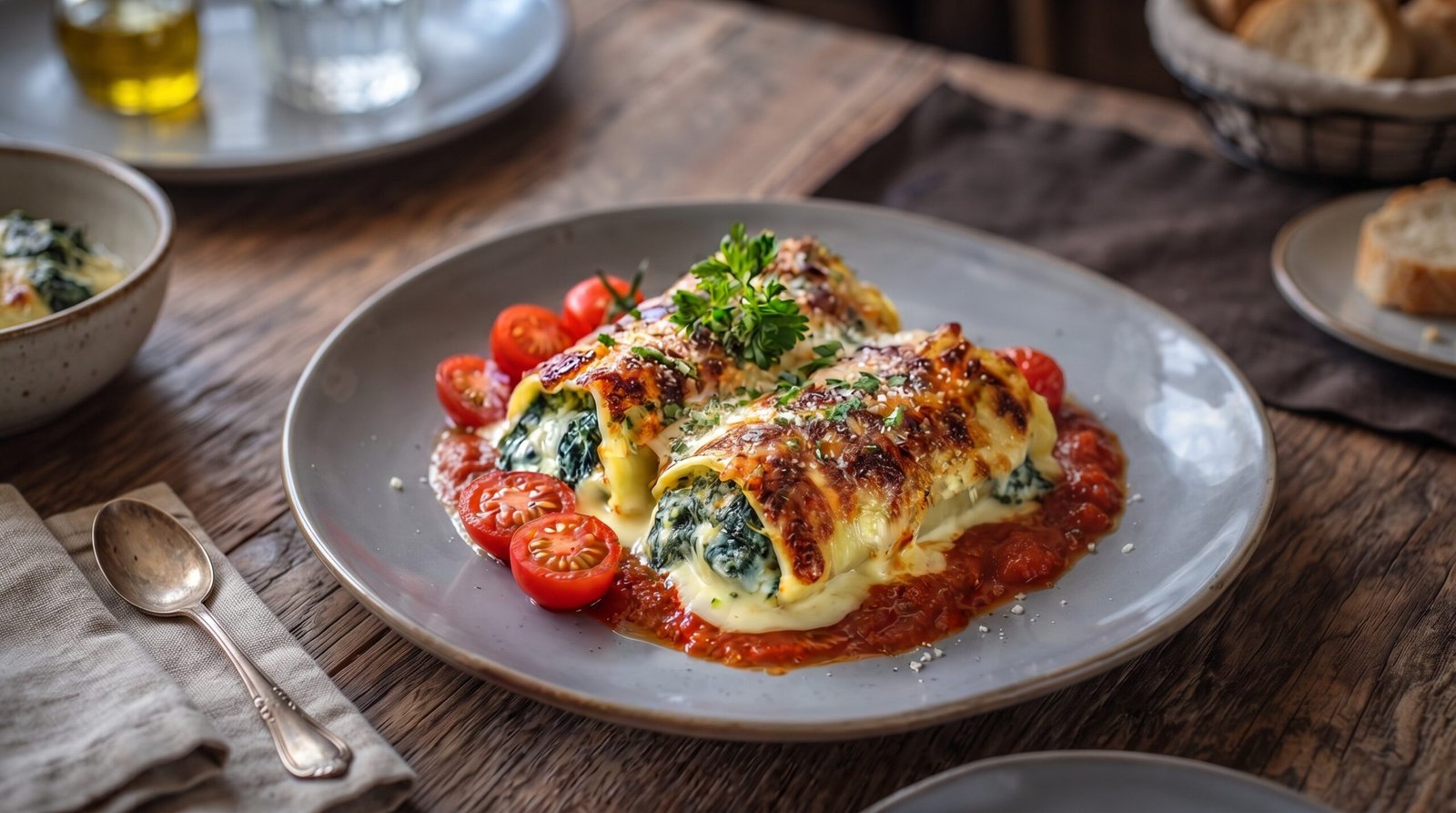
It happens every single Tuesday. The clock hits five, I am staring at the pantry, and I have absolutely no interest in spending an hour chopping vegetables or waiting for a complex sauce to simmer. I want something substantial that feels like a real meal, something that uses ingredients I usually have on hand, and something that makes the kitchen smell like an Italian trattoria. This is when I turn to my classic spinach and ricotta cannelloni. It is one of those meals that looks much fancier than it actually is, but it relies on simple, fresh ingredients that come together into a creamy, comforting dish. You will get a tray of golden pasta tubes filled with a light, herb-forward mixture, all swimming in a tangy tomato sauce. It is the kind of recipe that stays in your back pocket for those times when you need something reliable, satisfying, and easy to clean up after.
Why This Recipe Works
This dish works because it balances textures. You have the soft, tender bite of the pasta shell, the creamy and slightly grainy texture of the ricotta and spinach filling, and the slight resistance of the tomato sauce that keeps everything from drying out in the heat of the oven. Because the filling is quite light, it does not weigh you down, even though it is a pasta dish. The spinach provides a fresh, earthy flavor that cuts right through the richness of the ricotta cheese, making every bite taste balanced.
Ease of preparation is another big factor. You do not need to make a fancy bechamel or spend all day cooking a meat ragu. A store-bought or a quick homemade tomato sauce serves as the base, and once you have mastered the assembly, you can put the whole tray together in less than fifteen minutes. The cooking process is hands-off once the pan hits the oven, which gives you time to tidy up the kitchen or toss together a simple green salad to serve alongside.
The flavor profile is also very accessible. Ricotta and spinach is a classic combination for a reason, as it appeals to almost everyone, including picky eaters. By adding a bit of fresh nutmeg and plenty of grated cheese to the filling, you elevate the humble components into something that tastes like it came from a dedicated pasta shop. The way the edges of the pasta crisp up slightly on the top of the tray while the middle stays soft and saucy creates a lovely variation in every mouthful. It is a forgiving meal that rarely goes wrong if you follow the basic timing.
Ingredient Notes
The Pasta and Filling
You need dried cannelloni tubes or fresh lasagne sheets that you roll yourself. If you use the dry tubes, check the package to see if they need to be pre-boiled. Most modern brands are meant to be filled dry and then baked in the sauce, which makes the process much faster. For the filling, you need high-quality ricotta. I always buy the whole milk version because it has a better mouthfeel than the low-fat options. Drain the ricotta in a sieve for ten minutes before using it to remove excess moisture.
Spinach should be fresh, but if you only have frozen, make sure you thaw it completely and squeeze out every last drop of water. If the spinach is wet, your filling will become a soup inside the pasta. I prefer using fresh baby spinach that I wilt in a hot pan for thirty seconds. It retains a bright green color and a cleaner flavor. You will also need eggs to help bind the mixture together so it holds its shape inside the tubes.
The Sauce and Cheese
The tomato sauce is the canvas for the whole dish. You can use a jarred marinara if you have a favorite brand, but a simple sauce made from canned crushed tomatoes, a clove of garlic, and a pinch of dried oregano is hard to beat. The acidity of the tomatoes is necessary to balance the creamy cheese. Do not be tempted to use a thick paste, as you need the moisture to help the pasta cook properly in the oven.
For the topping, parmesan is essential. I always grate it fresh from a block. The pre-grated stuff in bags often contains anti-caking agents that prevent it from melting correctly. You want those little pools of salty, browned cheese on top of your pasta. A little bit of mozzarella, torn into small pieces, can be tucked into the sauce for extra stretch, but keep it sparse so you do not make the dish too oily.
| Ingredient | Amount | Notes |
|---|---|---|
| Dried cannelloni tubes | 12-14 pieces | Check if pre-cooking is required |
| Ricotta cheese | 15 ounces | Whole milk preferred, drained |
| Baby spinach | 10 ounces | Fresh, wilted and squeezed dry |
| Parmesan cheese | 1 cup | Freshly grated |
| Egg | 1 large | Beaten |
| Nutmeg | 1/4 teaspoon | Freshly grated |
| Marinara sauce | 24 ounces | Standard jarred or homemade |
| Mozzarella | 1/2 cup | Shredded or torn |
| Salt and pepper | To taste | Add to the filling mixture |
The Recipe
- Prep Time: 20 minutes
- Cook Time: 35 minutes
- Total Time: 55 minutes
- Servings: 4
- Difficulty: Easy
Equipment needed: Large mixing bowl, piping bag or a sturdy spoon, baking dish (9×13 inch), colander, and a sharp knife.
Step-by-Step Instructions
Step 1: Prep the Oven and Dish
Preheat your oven to 375 degrees Fahrenheit. It is important to get the oven fully hot before you put the dish inside so the cooking starts immediately. If you put the cold tray in before the oven is ready, the pasta can become mushy before the sauce starts to bubble. While the oven heats up, lightly grease your 9×13 inch baking dish with a little olive oil or butter to prevent any sticking at the bottom. Spread about one-third of your tomato sauce across the bottom of the dish to create a bed for the pasta.
Step 2: Prepare the Filling
Take your wilted spinach and press it hard against the sides of a colander until no more liquid comes out. Chop the spinach roughly so you do not have long, stringy pieces in your bite. In your mixing bowl, combine the drained ricotta, the chopped spinach, half of the parmesan cheese, the egg, a good pinch of salt, a crack of black pepper, and the nutmeg. Mix everything together with a wooden spoon until you have a smooth, uniform, pale green paste.
Step 3: Fill the Pasta Tubes
If you are using a piping bag, transfer the filling into it and snip the end to about an inch wide. Hold a cannelloni tube upright and pipe the mixture in from one side, then flip it and pipe from the other side until it is full. If you do not have a piping bag, use a small teaspoon to push the mixture in. This takes a bit longer, but it works just as well. Gently lay each filled tube into the baking dish on top of the sauce.
Step 4: Add Sauce and Cheese
Once the dish is full of tubes, pour the remaining tomato sauce over the top. Make sure to cover the ends of the tubes completely with sauce, as these are the parts most likely to dry out or stay hard during baking. Scatter the remaining parmesan cheese over the top and add the torn mozzarella. The cheese should be evenly distributed to ensure every tube gets a bit of crispy topping.
Step 5: Bake the Dish
Cover the dish tightly with aluminum foil and place it in the center rack of the oven. Bake for twenty minutes. The steam trapped under the foil will cook the pasta through. After twenty minutes, remove the foil carefully to avoid the steam, and bake for another fifteen minutes uncovered. This will allow the sauce to thicken slightly and the cheese on top to turn a deep golden brown.
Step 6: Serve and Rest
Once the time is up, pull the dish out and look for a bubbling, thick sauce and a golden cheese crust. Let the cannelloni sit on the counter for at least five minutes before serving. This rest period is crucial because it allows the internal filling to set slightly, making it much easier to lift the tubes out of the pan without them falling apart on your plate. Serve while still hot.
Mistakes I Made (So You Don't Have To)
Too Much Moisture in the Filling
The most common mistake I made early on was not squeezing the spinach enough. If you leave water in the leaves, it releases into the pasta while baking. This leaves you with a watery, thin sauce and pasta that turns into mush instead of holding its shape. Always use a clean kitchen towel to give the spinach a final squeeze before mixing it with the cheese.
Overstuffing the Tubes
I used to try and pack as much filling as I could into each tube. Because the pasta expands while it cooks, overstuffed tubes tend to split open in the oven, spilling all that good ricotta into the sauce. It still tastes fine, but it does not look nearly as nice. Leave just a tiny bit of space at the ends of the tubes to allow for that natural expansion.
Skipping the Foil
I once tried to bake these uncovered the whole time because I wanted a crusty top. The result was that the top layer of pasta became hard and leathery before the inside was even cooked. The steam from the foil is essential to soften the starch in the pasta. Keep the foil on for the first two-thirds of the cooking time, then take it off only for the final browning.
Forgetting the Resting Period
I was always in such a rush to eat that I would serve the dish the second it came out of the oven. The ricotta filling is very fluid when it is piping hot. When you try to scoop it up immediately, it just slides out of the pasta. Letting it sit for five minutes allows the dairy to stabilize, which keeps the filling inside the tube where it belongs.
Variations and Tips
Add Some Protein
If you want a heartier version, you can add cooked, crumbled Italian sausage to your tomato sauce. Just brown the sausage in a pan first, drain the excess fat, and mix it into your sauce before spreading it into the bottom of the dish. It adds a nice savory depth that pairs well with the spinach. Just be sure to fully cook the meat before it goes into the oven.
Make it Ahead
This is a great dish to prepare in advance. You can assemble the entire tray up to twelve hours before you plan to bake it. Just cover the dish tightly with plastic wrap and keep it in the fridge. When you are ready to cook, take it out of the fridge about twenty minutes before putting it in the oven so it does not go into the heat completely ice cold, which would change your cooking time.
Herb Boost
I love to add fresh basil or parsley to the filling. If you have extra herbs in the garden, stir them in right before you fill the pasta tubes. The freshness of the raw herbs adds a level of brightness that dried versions simply cannot match. Always add herbs at the very end of your preparation so they do not wilt too much or lose their flavor.
Veggie Substitutions
You can swap the spinach for finely chopped chard or kale. If you use kale, make sure to remove the tough stems first and chop the leaves very finely. Because kale is heartier than spinach, you might want to steam it for a minute or two longer to ensure it is tender enough for the filling. The process for removing moisture remains exactly the same.
Storage and Reheating
If you have leftovers, they keep well in the fridge for up to three days. I store them in an airtight container once they have cooled to room temperature. Do not leave the pasta out on the counter for more than two hours after cooking. To reheat, you can use the oven or the microwave. The oven is better for keeping the texture right. Place the pasta in a heat-proof dish, cover it loosely with foil, and bake at 350 degrees Fahrenheit until the center is steaming hot, which usually takes about fifteen to twenty minutes.
If you are using the microwave, put the pasta on a plate and cover it with a paper towel. Heat it in one-minute intervals. I do not recommend freezing this dish. Ricotta has a high water content and tends to become grainy and watery once it has been frozen and thawed. The pasta also loses its structure during the freezing process. It is best to stick to making only what you can eat within a few days.
Frequently Asked Questions
Can I use store-bought fresh pasta sheets?
Yes, you can. If you buy fresh pasta sheets, you need to cut them into rectangles that are roughly four by six inches. You do not need to boil them first. Simply place the filling along one edge of the pasta sheet and roll it up like a cigar. These will cook slightly faster than the dried tubes, so start checking for doneness after about twenty-five minutes of total baking time.
Why does my sauce turn watery?
The most common reason is not having enough tomato sauce in the dish, or failing to drain the spinach properly. The pasta absorbs moisture as it cooks. If there is not enough sauce surrounding the pasta, it can dry out, but if the ingredients inside are wet, the moisture seeps out and thins the sauce. Always use a thick marinara and ensure your greens are bone-dry before mixing.
How do I know when the pasta is done?
You can test the pasta by inserting a sharp knife into the side of one of the central tubes. If the knife slides through with no resistance, the pasta is tender and cooked through. If you feel a hard or chewy center, the pasta needs a few more minutes. The sauce should be bubbling around the edges, and the cheese on top should look melted and slightly browned.
Can I add meat inside the filling?
Yes, you can certainly add cooked ground beef or turkey to the filling mixture. If you do this, make sure the meat is browned and cooked through completely before mixing it with the ricotta and spinach. I suggest using a lean meat so that the extra fat does not make the filling too heavy or greasy. Remember to adjust your salt levels if the meat is pre-seasoned.
What should I serve with this?
Since the cannelloni is quite rich, I like to serve it with something acidic or crisp. A simple green salad with a bright vinaigrette, such as lemon juice and olive oil, works perfectly to cut through the creaminess. You could also serve it with roasted zucchini or steamed green beans with a dash of sea salt. A slice of crusty bread is also good for mopping up the leftover sauce on the plate.
Final Thoughts
This simple spinach and ricotta pasta dish is a reminder that we do not need complicated techniques to get a great meal on the table. By focusing on quality ingredients and paying attention to the small details—like draining the greens and resting the dish before serving—you can create something that feels like a treat any night of the week.
I hope this becomes a regular in your rotation just like it has in mine. It is honest, comforting, and gives you a bit of extra time to enjoy your evening. Grab some good ricotta, get your oven ready, and enjoy the process of pulling this together. There is nothing quite like a warm tray of homemade pasta to end the day on a high note.