
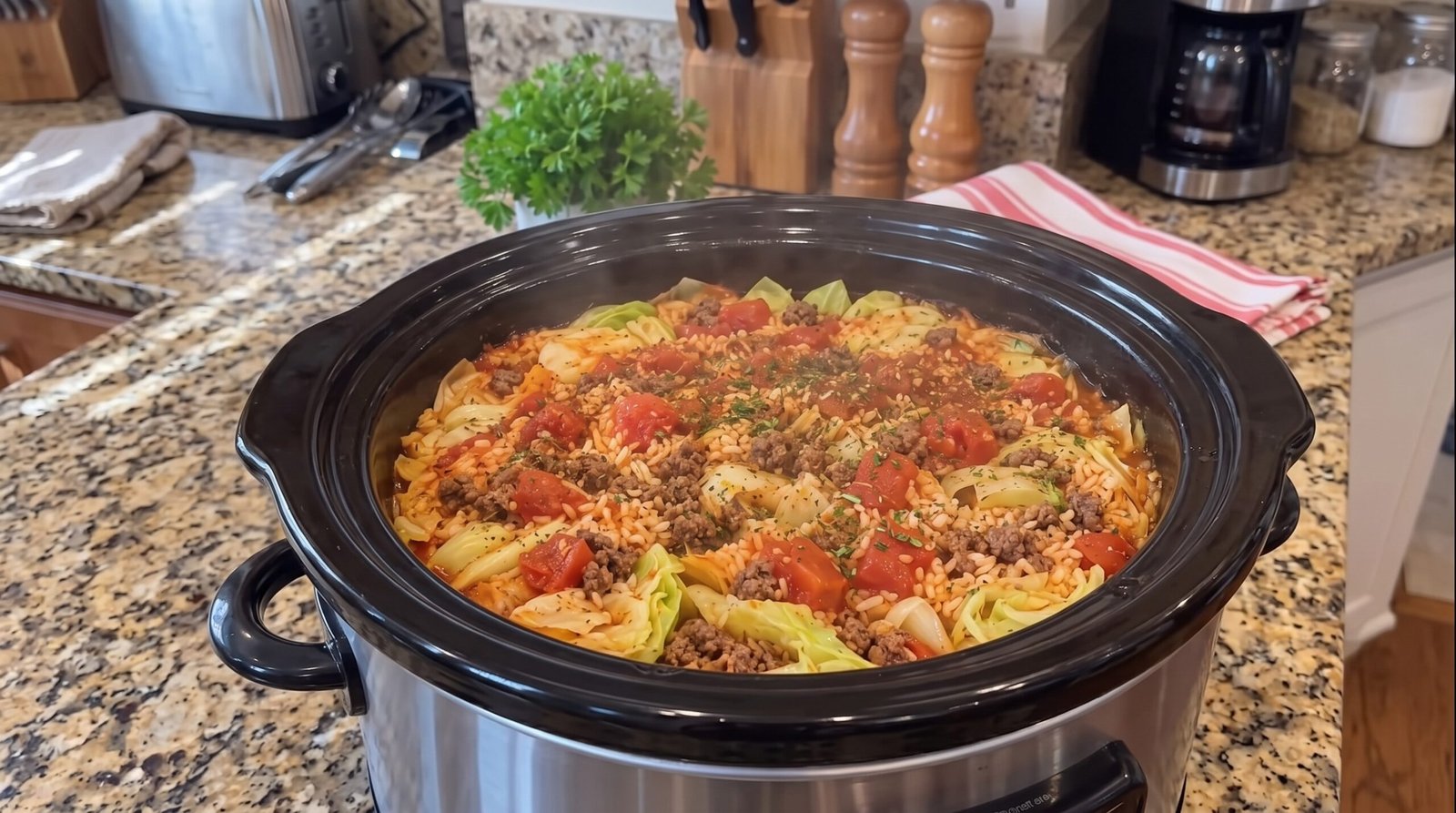
It happens every single time I find myself standing in the kitchen at 5:00 PM without a plan. I open the pantry, stare at the half-empty cupboards, and realize I have plenty of ground beef and a lonely head of cabbage sitting in the crisper drawer. Instead of spending an hour rolling individual cabbage leaves, I realized I could just toss everything into the slow cooker and let it do the work. This unstuffed cabbage roll slow cooker casserole is my go-to solution for busy weeknights when I want something hearty that feels like a home-cooked meal but requires almost zero effort. It saves me from the takeout menu while using basic ingredients that actually satisfy my hunger.
You will get a comforting bowl that combines the familiar flavors of traditional cabbage rolls—savory beef, tomato-based sauce, and softened cabbage—without any of the tedious assembly. It is a one-pot meal that simplifies your routine, leaves you with minimal dishes, and provides enough leftovers for a second lunch the next day.
Why This Recipe Works
The beauty of this dish lies in the simplicity of its construction. Because you are not blanching or rolling leaves, the preparation time is remarkably low. You are essentially chopping the cabbage into rough pieces, browning the beef, and layering everything into the pot. The cabbage acts as a natural base that absorbs the liquid from the tomatoes and the juices from the meat, creating a soft, tender texture that melts in your mouth. Unlike oven-baked versions that can dry out if left too long, the slow cooker creates a moist, consistent environment.
The flavor profile relies on the slow release of sugars from the cooked cabbage mixed with the acidity of the canned tomatoes. Since the ingredients simmer together for several hours, the meat seasoning penetrates the cabbage leaves thoroughly. I find that this method brings out a subtle sweetness in the cabbage that is often lost in faster cooking methods. The rice provides a hearty filler that thickens the sauce as it absorbs the liquids, turning a thin tomato mixture into a cohesive casserole.
This method also works well because it is incredibly forgiving. If you have an extra cup of cabbage or want to add more beef, the recipe does not fall apart. It is a very sturdy dish that can withstand the low, steady heat of the slow cooker without turning into mush. The result is a homey, rustic meal that tastes even better when it has had a chance to meld for a few hours. It is consistent, reliable, and uses standard pantry staples that you likely already have on hand, making it a great budget-friendly option for any night of the week.
Ingredient Notes
The Protein
Ground beef is the heart of this dish. I prefer using a lean ground beef, around 85% to 90% lean, because it leaves enough fat to add flavor without making the final result feel greasy. If you choose a higher fat content, just make sure to drain the excess fat after browning it in the skillet. If you want a different protein, ground turkey or pork also work, though they lack the richness of beef. Check your product labels to ensure they are fresh and handle them according to standard food safety guidelines.
The Produce
A firm head of green cabbage is essential. You want to look for one that feels heavy for its size with tightly packed leaves. Avoid heads that have brown spots or wilted, yellow outer leaves. The cabbage needs to be cut into roughly one-inch square pieces. You can also include some thinly sliced carrots or a bit of diced celery if you have them in the fridge, but cabbage is the star here. Always wash the cabbage thoroughly before chopping to remove any debris trapped between the leaves.
The Pantry Staples
White rice is the standard choice for this dish. I use long-grain white rice because it cooks consistently in the juices. Do not use instant rice here, as it will disintegrate into mush over the long cooking period. For the tomatoes, canned crushed tomatoes or petite diced tomatoes provide the best base. I often reach for fire-roasted diced tomatoes when I want an extra layer of smoky depth. You will also need a bit of beef broth to ensure there is enough liquid for the rice to absorb without burning at the bottom of the pot.
Seasonings
The aromatics are simple but effective. I use dried thyme, salt, black pepper, and sometimes a teaspoon of paprika for a bit of color. Garlic powder and onion powder are my secret weapons here, as they distribute more evenly throughout the dish than fresh chopped onion or garlic, which can sometimes get lost in the bulk of the cabbage. If you prefer fresh garlic, you can certainly mince two or three cloves and add them during the browning stage. Always taste the sauce once the dish is finished and adjust the salt level to your personal preference before serving.
The Recipe
- Prep Time: 15 minutes
- Cook Time: 4 hours on high or 7 hours on low
- Total Time: 4 hours 15 minutes to 7 hours 15 minutes
- Servings: 6 servings
- Difficulty: Easy
Equipment needed:
– Large skillet
– Slow cooker (6-quart size is ideal)
– Chef’s knife
– Cutting board
– Wooden spoon
| Ingredient | Amount | Notes |
|---|---|---|
| Ground beef | 1.5 pounds | Lean preferred |
| Green cabbage | 1 medium head | Roughly chopped |
| Long-grain white rice | 1 cup | Uncooked |
| Diced tomatoes | 28 ounces | Do not drain |
| Beef broth | 1.5 cups | Low sodium if available |
| Garlic powder | 1 teaspoon | Or to taste |
| Dried thyme | 1/2 teaspoon | Or dried oregano |
| Salt | 1 teaspoon | Adjust to taste |
| Black pepper | 1/2 teaspoon | Freshly ground is best |
| Paprika | 1 teaspoon | Optional for color |
Step-by-Step Instructions
Step 1: Prep the Ingredients
Start by washing the head of cabbage thoroughly under cool running water. Remove the tough outer leaves and discard them. Use a sharp chef's knife to cut the head into quarters and remove the thick, woody core at the base of each section. Chop the remaining leaves into pieces that are roughly one to two inches in size. They do not need to be perfect, as they will shrink down significantly once they cook.
Place the chopped cabbage in a large bowl or directly into your slow cooker if it is large enough. If you have any extra vegetables like carrots, chop them into thin rounds at this time and set them aside. Having everything chopped and ready makes the actual assembly much faster once the beef is cooked.
Step 2: Brown the Beef
Place your large skillet over medium-high heat. Once the pan is hot, add the ground beef. Use your wooden spoon to break the meat into small crumbles as it cooks. You want to cook the meat until it is browned all the way through and no pink remains. This usually takes about 6 to 8 minutes.
Once the beef is browned, take a look at how much fat has rendered out. If there is a significant amount of grease in the pan, drain it carefully into a heat-safe container or discard it. You want to keep the flavor from the drippings, but you do not want an oily casserole. Season the beef in the pan with a little salt, pepper, and the garlic powder to give it a head start on flavor.
Step 3: Layer the Slow Cooker
Now, begin layering your ingredients into the slow cooker. I like to start with half of the chopped cabbage on the bottom. Add the uncooked white rice over the cabbage layer. Then, add the browned ground beef on top of the rice. Pour the second half of the cabbage over the beef. This helps ensure that the cabbage on top steams properly while the rice on the bottom gets soaked in the juices.
Pour the entire can of diced tomatoes, including the liquid, over the cabbage. Finally, pour the beef broth over the top. The liquid will naturally trickle down through the layers as the slow cooker heats up. Sprinkle the dried thyme, paprika, and the remaining salt and pepper over the top. Do not stir it yet; let the ingredients sit in their layers for now.
Step 4: Cook the Dish
Cover the slow cooker with the lid. Set the temperature to low and cook for 7 hours, or set it to high and cook for 4 hours. During this time, the rice will absorb the moisture from the tomatoes and beef broth, and the cabbage will soften until it is tender.
You will know the dish is done when the rice is fully cooked and tender to the bite, and the cabbage is soft enough to be easily cut with a fork. If you have a meat thermometer, you can check that the center of the casserole has reached an internal temperature of 165 degrees Fahrenheit, which confirms the beef is thoroughly cooked and the dish is hot enough for safe consumption.
Step 5: Final Stir and Serve
Before serving, use a large spoon to gently stir the ingredients. You want to make sure the rice, beef, tomatoes, and cabbage are well combined and evenly distributed throughout the sauce. This final stir also helps the sauce thicken slightly as it coats all the components.
Taste the mixture. If it feels like it needs a bit more seasoning, add a little extra salt or a splash of Worcestershire sauce if you have it. Ladle the mixture into bowls while it is steaming hot. You can garnish each bowl with a little fresh parsley if you want a pop of green, but it is delicious just as it is.
Mistakes I Made (So You Don't Have To)
Mistake 1: Not using enough liquid
The first time I made this, I underestimated how much liquid the dry rice would soak up. I ended up with a casserole that was a bit too dry and a layer of burnt rice at the bottom of the slow cooker. The fix is simple: ensure you use the full amount of broth and the juice from the tomato can. If it looks very dry before you start the cooking cycle, add an extra splash of broth.
Mistake 2: Using the wrong rice
I once tried this with quick-cooking brown rice, thinking it would be healthier. It turned into a gummy mess because the cooking time was too long for that type of grain. Stick to standard long-grain white rice. It holds its structure much better under the long, moist conditions of the slow cooker and gives you the texture you expect from this dish.
Mistake 3: Crowding the cabbage
Sometimes I try to cram too much cabbage into the pot right from the start. If you press it down too hard, you might not leave enough room for the steam to circulate, which leads to uneven cooking. If your cabbage does not all fit at once, wait about thirty minutes into the cooking process until the first layer has wilted slightly, then add the rest. It is a simple adjustment that ensures everything cooks through correctly.
Mistake 4: Stirring too early
I used to be tempted to open the lid and stir the casserole halfway through. Every time you open the lid of a slow cooker, you let out a significant amount of heat, which extends your total cooking time. Resist the urge to stir. Keep the lid on until the very end, and your cooking times will be much more consistent. You do not need to mix it until it is finished cooking.
Variations and Tips
Add a splash of sweetness
If you like your cabbage rolls with a slightly sweeter profile, add a tablespoon of brown sugar to the tomato base before cooking. It balances the acidity of the tomatoes and pairs beautifully with the earthy flavor of the cabbage. It is a small addition but makes a noticeable difference in the depth of the final flavor.
Make it a meal prep star
This dish is perfect for planning ahead because it reheats so well. If you have a busy week ahead, prepare the whole batch on a Sunday. Once it has cooled, portion it into individual containers and store it in the refrigerator. It will stay good for up to three days. When you are ready to eat, just pop a container in the microwave until it is steaming hot.
Use fresh herbs
While dried thyme is reliable, finishing the dish with fresh herbs really brightens it up. Parsley, dill, or even a little bit of chopped chives added right before serving can elevate the presentation and the flavor. If you use fresh herbs, chop them finely and sprinkle them over the top of the entire pot just before serving, or add them individually to each bowl.
Adjust the cabbage texture
If you prefer your cabbage to be very soft and almost melt-in-your-mouth, you can extend the cooking time on low by an extra 30 to 60 minutes. Because cabbage is very resilient, it is unlikely to overcook if you give it a little extra time. Keep an eye on the consistency of the rice, though; if the rice is perfectly cooked, you might want to stop the cooking process regardless of the cabbage texture.
Storage and Reheating
If you have leftovers, store them in an airtight container in the refrigerator. The dish stays fresh and tasty for up to three days when kept in the fridge. Because this contains ground beef, it is important to get the leftovers into the refrigerator within two hours of cooking to keep them safe. Never leave the food out on the counter to cool down for too long.
When you want to reheat, you can use the microwave or the stovetop. If using the microwave, cover the dish to trap the steam and heat it in one-minute intervals, stirring in between, until it is steaming hot throughout. If you are heating it on the stove, add a tiny splash of water or broth to the pan to prevent the rice from sticking, and heat it over medium heat until it reaches 165 degrees Fahrenheit. I do not recommend freezing this dish, as the texture of the cabbage and the rice can become somewhat grainy and soft after being thawed and reheated.
Frequently Asked Questions
Can I use turkey instead of beef?
Yes, ground turkey is a great substitute. It has a slightly lighter flavor but absorbs the tomato and herb notes just as well. Just be aware that turkey has less fat than beef, so you might want to add a tablespoon of olive oil to the skillet when you are browning it to keep it from sticking or drying out during the slow cooker phase.
Is it possible to use pre-cooked rice?
I do not recommend it. Pre-cooked rice will get very soft and mushy during the long, humid cooking process in the slow cooker. The recipe is designed specifically for raw white rice to absorb the tomato juices and broth as it cooks. If you really want to save time, it is better to serve the beef and cabbage mixture over rice that you cook separately on the stovetop just before serving.
Why is my sauce watery?
If your sauce is too thin, it usually means the rice did not absorb all the liquid. Ensure you are using long-grain white rice and that you are measuring it correctly. If you find yourself with too much liquid at the end, simply stir the mixture and let it sit uncovered on the high heat setting for 15 minutes. This allows some of the excess moisture to evaporate, which will naturally thicken the sauce as the rice finishes soaking up the last of the liquid.
Do I need to brown the meat first?
Browning the meat is a step I always perform because it adds a significant amount of flavor and removes excess grease. If you skip this step and add the raw meat directly to the pot, the dish will be much paler and have a greasy mouthfeel. You will also miss out on the deep, savory flavor that comes from searing the beef, which is crucial for a hearty casserole like this one.
Can I leave this on the warm setting all day?
While it is tempting to leave food on the warm setting for hours, it is best to switch the slow cooker off or move the food to the refrigerator once the cooking time is done. Leaving it on the warm setting for extended periods can cause the rice to continue cooking and eventually lose its texture, and it can also cause the cabbage to become overly soft. For the best quality, serve it when it is finished or move it to storage containers promptly.
Final Thoughts
Making this unstuffed cabbage roll slow cooker casserole has become one of my favorite ways to simplify my kitchen routine. It delivers all those classic, homey flavors without the frustration of labor-intensive food preparation. It is the kind of dish that makes the house smell wonderful and provides a reliable, hearty meal for anyone sitting at the table.
Give this a try on a busy day when you need something nourishing but don't have the energy for complex cooking. Once you see how easily the simple ingredients come together, it will surely become a regular part of your own rotation. Happy cooking!