
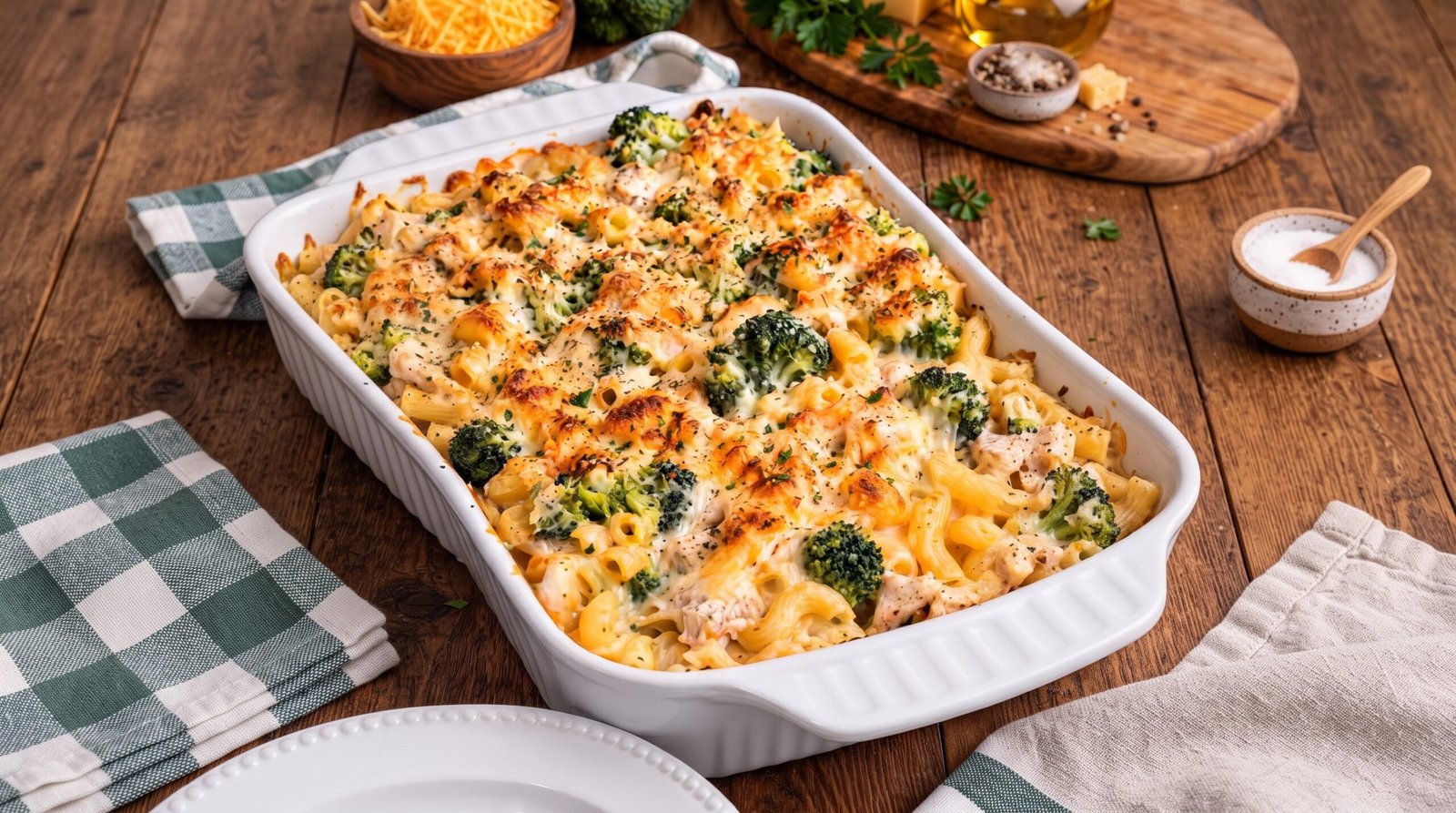
I remember the first time I faced a busy Tuesday evening with a fridge full of random ingredients and a hungry household. I had some leftover cooked pasta, a head of broccoli that needed using, and a bit of chicken breast left over from the weekend. It is moments like those that lead to the best kind of comfort food. I threw everything into a baking dish with a quick homemade cheese sauce, and this cheesy chicken and broccoli pasta bake was born. It is one of those meals that feels like a full dinner without requiring ten different pans or hours of standing over the stove.
The real beauty of this dish is how it pulls together familiar flavors in a way that feels intentional rather than like leftovers. If you have been searching for a reliable, hearty weeknight dinner that satisfies everyone at the table, this is it. You get the creaminess of melted cheese, the bite of tender-crisp broccoli, and the substance of chicken and pasta all in one warm bowl. It is simple, humble, and keeps well for the next day, which is always a bonus when my schedule gets crowded.
Why This Recipe Works
This recipe works because it relies on the classic marriage of sharp cheddar, savory chicken, and earthy greens. The combination is timeless for a reason. By using a stovetop-to-oven method, you ensure the sauce is properly emulsified and smooth before it ever hits the heat of the oven, which prevents that grainy texture some baked pasta dishes get. The pasta stays slightly firm because it finishes its cooking process in the oven while soaking up all that flavor from the sauce and the juices of the chicken.
The texture contrast is another factor that makes this dish stand out. You have the soft, tender pasta ribbons combined with the slight crunch of the broccoli florets and the chew of the chicken. When you top it with a bit of extra cheese and let it bubble under the broiler for a few minutes, you get a textured top layer that adds a nice variety to every forkful. It is not just a pile of mushy noodles; it has depth and body.
From a practical standpoint, it is a very forgiving meal. You are not dealing with delicate soufflés or complex ratios that fall apart if you are off by a gram. The cheese sauce is a simple roux-based sauce, which is a staple technique in any kitchen. If you have mastered the basics of whisking butter, flour, and milk together, you have already mastered the hardest part of this recipe. It is a reliable dish that consistently delivers a warm, satisfying meal with minimal fuss and easy cleanup.
Ingredient Notes
The Protein and Pasta
The foundation of this bake is chicken breast and your choice of short pasta shape. I prefer using penne or rotini because the nooks and crannies of the pasta hold onto the cheese sauce much better than long, smooth noodles like spaghetti. For the chicken, I use boneless, skinless breasts, but thighs work too if you prefer darker, moister meat. The key is to cut the meat into uniform, bite-sized pieces so everything cooks at the same rate. When you are buying pasta, try to find a high-quality brand that holds its shape well when boiled; you want it slightly under-cooked before it goes into the oven.
The Fresh Components
Fresh broccoli is non-negotiable for me in this specific bake. Frozen broccoli tends to get a bit too soft and watery, which can thin out your sauce during the baking process. By using fresh florets, you get a nice snap that balances the richness of the cheese. I always cut the florets into small, consistent pieces so they cook through during the time in the oven. If the florets are too large, they stay raw inside; if they are too small, they disintegrate. You want them to be just tender enough to be pierced with a fork.
The Sauce and Dairy
For the cheese sauce, I recommend a good quality sharp cheddar. It provides a robust flavor that cuts through the creaminess. Using pre-shredded cheese is a common mistake because it is coated in potato starch, which prevents it from melting into a smooth, silky sauce. I always buy a block of cheddar and grate it myself using a box grater. It takes an extra minute but makes a world of difference. You will also need whole milk to give the sauce its necessary body and richness. Skim milk will result in a sauce that feels thin and watery.
| Ingredient | Amount | Notes |
|---|---|---|
| Penne pasta | 16 ounces | Use dry pasta |
| Chicken breast | 1.5 pounds | Cubed into 1 inch pieces |
| Broccoli florets | 3 cups | Fresh, cut into small pieces |
| Unsalted butter | 4 tablespoons | For the roux |
| All-purpose flour | 4 tablespoons | For thickening |
| Whole milk | 3 cups | Cold or room temperature |
| Sharp cheddar | 3 cups | Freshly grated |
| Salt | 1 teaspoon | To taste |
| Black pepper | 0.5 teaspoon | Freshly cracked |
| Garlic powder | 1 teaspoon | For extra seasoning |
The Recipe
- Prep Time: 20 minutes
- Cook Time: 35 minutes
- Total Time: 55 minutes
- Servings: 6 servings
- Difficulty: Easy
- Equipment: Large pot for boiling, large skillet for sauce, 9×13 inch baking dish, meat thermometer
Step-by-Step Instructions
Step 1: Boiling the Pasta and Chicken
Start by bringing a large pot of salted water to a rolling boil. Add your pasta and cook it for about two minutes less than the package instructions suggest. You want the pasta to still have a firm bite in the center because it will finish cooking in the oven. While the water boils, heat a splash of oil in a large skillet over medium-high heat. Add your cubed chicken pieces and cook until they reach an internal temperature of 165 degrees Fahrenheit. You are looking for the meat to be white all the way through and lightly browned on the edges. Remove the chicken from the skillet and set it aside.
Step 2: Preparing the Cheese Sauce
In the same skillet where you cooked the chicken, melt the butter over medium heat. Once it is bubbling, whisk in the flour and cook for one to two minutes, stirring constantly. You want the flour smell to disappear and the mixture to turn a light golden color. This is your roux, the base of your sauce. Gradually pour in the milk while whisking vigorously to avoid any lumps. Continue to cook, stirring frequently, until the sauce thickens enough to coat the back of a spoon. This should take about five to seven minutes over medium heat.
Step 3: Integrating the Cheese
Turn the heat to low once your sauce is thick and smooth. Add the garlic powder, salt, and pepper. Gradually add two cups of the grated cheddar cheese, a handful at a time, stirring constantly until fully melted. Once the cheese is incorporated and the sauce is perfectly smooth, take the skillet off the heat. You do not want the sauce to boil while the cheese is in it, as that can cause the dairy to separate and become oily. Taste the sauce at this stage to see if it needs a little more salt.
Step 4: Combining the Ingredients
Preheat your oven to 375 degrees Fahrenheit. In a large mixing bowl, combine the cooked, drained pasta, the browned chicken pieces, and the fresh, raw broccoli florets. Pour the warm cheese sauce over the mixture and stir until every noodle and vegetable is coated evenly. Ensure you do not break the broccoli florets as you stir. The raw broccoli will cook perfectly during the oven cycle, absorbing the flavors from the cheese sauce and becoming tender-crisp.
Step 5: Baking to Perfection
Transfer the mixture into your 9×13 inch baking dish. Spread it out evenly so the surface is somewhat level. Sprinkle the remaining cup of cheddar cheese over the top of the pasta. Place the dish in the preheated oven and bake uncovered for twenty minutes. The cheese on top should be melted and golden. If you like a more toasted look, turn the broiler on for the final two minutes, watching closely to ensure the cheese bubbles and turns a light, golden brown without burning.
Step 6: Resting and Serving
Once the baking is done, remove the dish from the oven and let it sit for five minutes. This resting period is important because it allows the sauce to thicken slightly and set, making it much easier to scoop out. If you serve it straight from the oven, the sauce might be too runny. After the short rest, the dish will be warm, fragrant, and ready to be served directly from the baking dish.
Mistakes I Made (So You Don't Have To)
Overcooking the Pasta
The biggest mistake I made in the beginning was boiling the pasta for the full time suggested on the package. When you then combine it with sauce and put it in a hot oven, the pasta continues to cook, absorbing liquid. If it is already soft from the boiling pot, it turns into mush. Now, I always drain the pasta two minutes early. It should have a noticeable bite to it before it goes into the baking dish, as the heat of the oven and the moisture from the sauce will finish it perfectly.
Using Pre-Shredded Cheese
I once tried to save time by using a bag of pre-shredded cheese. The sauce never got smooth; instead, it stayed gritty and grainy no matter how much I whisked. I discovered that the anti-caking agents added to those bags—usually potato starch or cellulose—actually prevent the cheese from melting properly into a sauce. Now, I always take the extra few minutes to grate my cheese from a solid block. It melts evenly into a creamy sauce every single time, which is worth the small amount of extra effort.
Not Seasoning the Sauce
Early on, I forgot that the pasta and chicken absorb a lot of salt. My first few attempts at this bake tasted bland. I learned that you need to season the cheese sauce itself with enough salt, pepper, and garlic powder to stand up to the neutral flavors of the pasta and the broccoli. I now make sure to taste the sauce while it is still in the skillet, just before adding the cheese, to make sure it has enough seasoning. It should be flavorful enough that you would be happy eating it on its own.
Crowding the Broccoli
I once packed the broccoli into the bake without cutting it small enough. Large chunks of broccoli don't cook through in the twenty minutes of baking time, leaving the centers crunchy and raw while the edges of the pasta were overcooked. I now make sure all my broccoli florets are cut into very small, bite-sized pieces. This ensures they soften evenly alongside the pasta, absorbing the cheesy sauce without staying hard. Consistency in size is the secret to getting a tender vegetable in every forkful.
Variations and Tips
A Crunchier Topping
If you prefer a little extra texture on top of your cheesy chicken and broccoli bake, you can sprinkle breadcrumbs mixed with a little melted butter over the cheese layer before putting it in the oven. Panko breadcrumbs work particularly well for this, as they remain light and airy. Just add them during the last ten minutes of baking so they don't get too dark. This adds a nice contrast to the soft pasta and creaminess of the sauce.
Adding a Heat Kick
For those who enjoy a bit of warmth in their comfort food, I sometimes add a half-teaspoon of crushed red pepper flakes into the sauce when I add the garlic powder. You can also mix in some diced pickled jalapeños before baking for a more pronounced heat. If you go this route, just be mindful of the salt content in the peppers, as it might change the balance of the sauce. Start small and add more if you find your household enjoys the kick.
The Make-Ahead Strategy
This dish is great for busy schedules because you can prep it ahead. You can boil the pasta, cook the chicken, and make the cheese sauce earlier in the day. Keep the pasta, chicken, and sauce in separate containers in the fridge. When you are ready to bake, combine them in the baking dish, add the cheese, and put it in the oven. You may need to add five minutes to the total baking time if the ingredients are coming straight from the refrigerator, but it makes dinner time effortless.
Using Different Veggies
If you don't have broccoli on hand, cauliflower is a fantastic substitute. Cut it into small florets just like you would with broccoli, and it will bake perfectly. You can also mix in some frozen peas, but add them right before putting the dish in the oven since they are already cooked. I like to keep the pieces small so they don't overpower the pasta, as this dish really relies on the balance of all the components working together.
Storage and Reheating
If you have leftovers, they should be moved to an airtight container and placed in the refrigerator within two hours of cooking. Keeping them at room temperature for too long is a safety risk with dairy-based sauces. Stored properly in the fridge, this dish stays good for up to three days. I find the flavors actually settle nicely after a day or two, though the pasta will continue to soften as it sits in the sauce.
When you are ready to reheat, the microwave works fine, but I prefer the oven for a better texture. If using the oven, cover the dish with foil to prevent the cheese from burning, and heat it at 350 degrees Fahrenheit until the center is steaming hot. You want to ensure it hits 165 degrees Fahrenheit for food safety, especially since there is chicken in the mix. If the sauce seems a bit dry after reheating, just add a tablespoon of milk to the dish before warming it; it helps loosen the sauce and brings that creamy consistency back.
Frequently Asked Questions
Can I use cooked rotisserie chicken to save time?
Yes, using shredded rotisserie chicken is an excellent time-saver for this recipe. Since the chicken is already cooked, you can skip the step of browning it in a skillet. Simply stir the shredded chicken into the mixture with the pasta and broccoli before adding the cheese sauce. It adds a slightly different texture, but it is just as delicious and cuts down your prep time significantly on busy weeknights.
Why did my cheese sauce separate?
Cheese sauce separation usually happens if the heat is too high when the cheese is added. If the sauce boils with the cheese in it, the fats can separate, leading to an oily, gritty texture. Always turn the burner to low or pull the skillet entirely off the heat before stirring in the cheese. Whisking continuously helps the proteins and fats bind into a smooth, emulsified sauce that coats the pasta perfectly.
Can I freeze this pasta bake for later?
This dish does not freeze particularly well because the cheese-based sauce and the cooked pasta tend to change texture after being frozen and thawed. The pasta can become mushy, and the sauce may lose its creamy consistency. If you need a meal for later, I recommend prepping all the components but keeping them in the fridge for up to two days rather than freezing them. It is best enjoyed fresh or from the refrigerator.
What is the best way to keep the broccoli from getting mushy?
To keep the broccoli tender-crisp, ensure you are cutting the florets into small, consistent pieces about the size of a large grape. If the florets are too big, they need too much time in the oven, which will result in overcooked pasta. By keeping them small, they reach the perfect state of tenderness exactly when the pasta and cheese sauce are bubbling and ready, maintaining that pleasant bite that you want in this kind of dish.
Does the garlic powder need to be added?
The garlic powder is there to provide a base layer of savory flavor that complements the richness of the cheddar. While you can omit it if you prefer a simpler flavor profile, I find it really ties the dish together. If you want a more intense garlic flavor, you could sauté one or two cloves of minced fresh garlic in the butter before adding the flour for your roux, but powdered garlic is much easier to manage without risking burnt bits.
Final Thoughts
This cheesy chicken and broccoli pasta bake has become a reliable staple in my routine. It manages to feel like a complete, comforting meal without requiring fancy techniques or hard-to-find ingredients. Whether you are cooking for your family or just want leftovers for the next few days, it delivers on flavor and ease every time.
I hope this dish finds a place in your rotation when you need something warm and satisfying. Remember to grate your own cheese for the best result and keep those broccoli pieces small. Once you get the hang of the simple roux, you will see how easy it is to throw together on even the busiest of days.