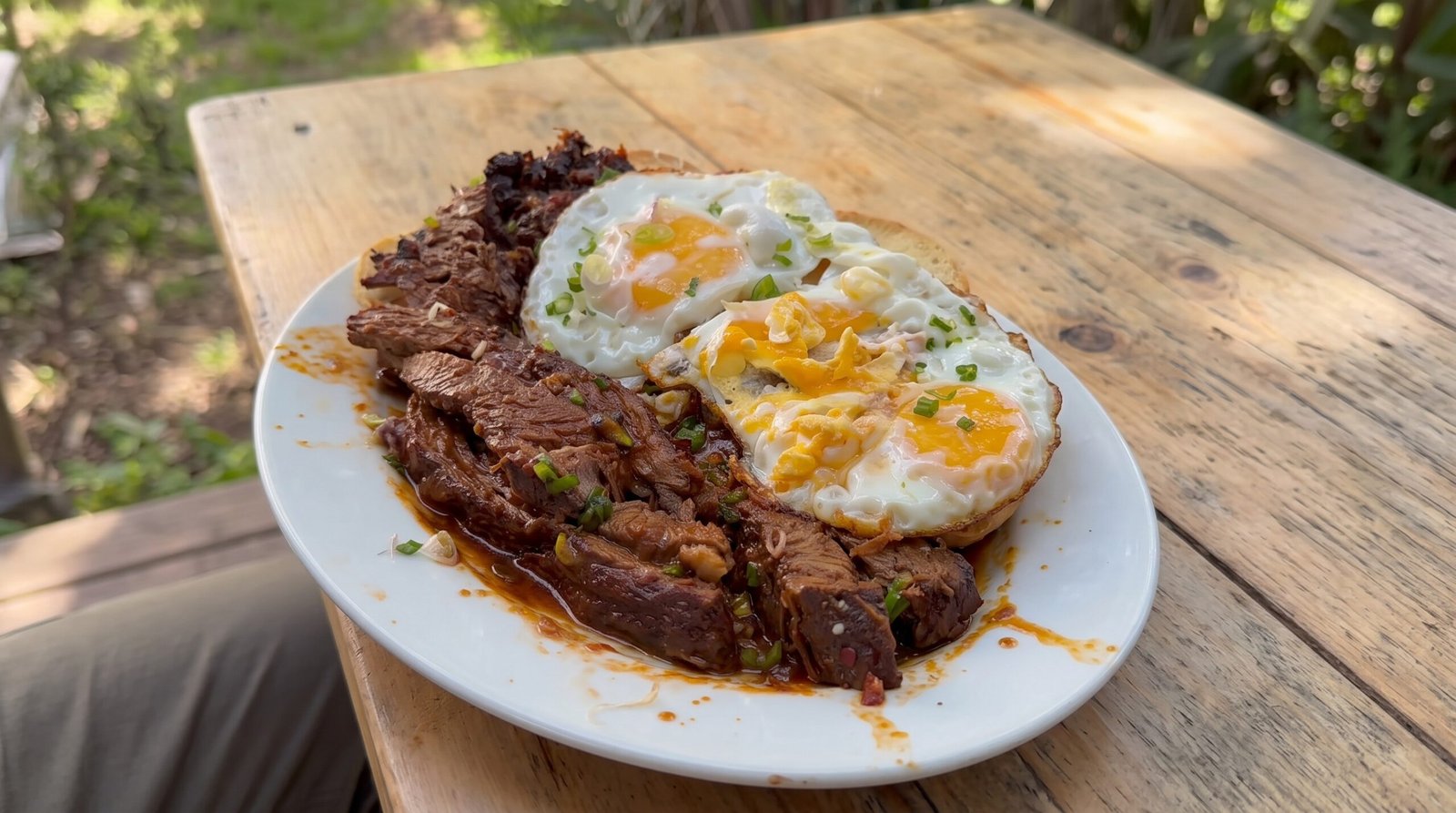
I often find myself standing in my kitchen on a busy Saturday morning, staring into the fridge without a plan. Most of the time, I want something that feels substantial but does not require hours of prep or a mountain of dishes. This pan-seared steak with fried eggs has become my go-to for those moments. It uses simple pantry staples and one hot skillet to turn a basic piece of beef into a meal that feels like it came from a neighborhood bistro. You get the richness of the seared beef paired with the runny, golden yolks of fresh eggs, all served right on a toasted piece of bread to soak up the juices.
It is a straightforward process, but getting the timing right is the key to success. You do not need fancy equipment or complex techniques to make this happen. Whether you are craving a hearty breakfast or a quick dinner, this combination provides a satisfying balance of savory protein and comforting textures. I have learned over time that the quality of the beef makes a difference, but you can achieve great results with whatever cut you have on hand as long as you watch the heat. Follow along as I break down exactly how I put this together in my own kitchen.
Why This Recipe Works
The main reason I reach for this recipe so often is how well the flavors interact. When you sear the beef, you create a deep, savory crust that provides a great contrast to the soft, creamy center of a fried egg. As you cut into the yolk, it mixes with the pan juices and the oils from the meat, creating a natural sauce that soaks into the toasted bread underneath. It is a harmonious combination where every element plays a specific role. The steak provides the chew and the salty, iron-rich flavor, while the eggs add a silkiness that rounds everything out.
Another reason this dish stays in my regular rotation is the speed. I can have this on the table in about twenty minutes, which is helpful when I am feeling impatient or just want to eat without much fuss. You are not waiting for an oven to preheat or dealing with long marination times. It is a high-heat, high-reward method that relies on timing rather than complex culinary skills. I also appreciate how little cleanup is required. Since everything happens in one pan, I am not left with a sink full of pots.
Finally, the textures here are really satisfying. You get the crunch of the toasted bread, the firm bite of the steak, and the velvet feel of the egg yolk. It hits all the right notes for a comforting meal. It is not complicated, but it feels intentional. Over the years, I have stopped overthinking the seasoning, sticking instead to a good amount of salt and pepper to let the beef stand on its own. It is a reliable dish that consistently delivers a hearty meal without any unnecessary drama.
Ingredient Notes
The Beef
For this dish, I prefer a cut that is relatively thin, such as a flank steak, skirt steak, or a thin-cut sirloin. These cuts cook quickly and stay tender if you slice them against the grain after they are done. Avoid very thick cuts like a porterhouse or a thick ribeye, as they will take much longer to cook and might be difficult to manage in the same pan with your eggs. If the meat has a little bit of marbling, it will keep it juicy during the quick sear. Always look for deep red color and make sure the package feels cold to the touch.
The Eggs
Fresh eggs are essential here because you want the yolk to stay intact and rich. I generally use large, farm-fresh eggs when I can get them. The color of the yolk is often more vibrant, which looks great against the dark sear of the beef. If you are worried about the eggs sticking, make sure your pan is properly seasoned or use a high-quality non-stick skillet. I usually crack them into a small bowl first to ensure there are no shell fragments before sliding them into the hot pan.
The Bread
Choose a hearty, crusty bread like sourdough or a thick-cut rustic loaf. You want something that can handle the moisture from the steak juices and the egg yolks without falling apart. A flimsy white bread will get soggy too quickly. I like to toast mine in the residual fat of the pan after I have removed the steak, as it picks up all those savory brown bits from the bottom. If you do not have bread, this is also great served over a bed of sautéed greens, but the toast really helps pull the whole meal together.
Aromatics and Seasoning
I keep the seasonings very basic: kosher salt and freshly cracked black pepper. That is all the beef needs. For the finish, I like to scatter some thinly sliced green onions over the top. They add a crisp, fresh bite that cuts through the richness of the steak and eggs. If you enjoy a little heat, a pinch of red chili flakes is a great addition, but it is entirely optional. Stick to good quality oil for the pan—something with a high smoke point like avocado or canola oil is best so it does not burn while you are searing the meat.
| Ingredient | Amount | Notes |
|---|---|---|
| Steak | 8-10 ounces | Thinly sliced or a thin cut like skirt or flank |
| Eggs | 2 large | Fresh, kept at room temperature |
| Bread | 1-2 slices | Sourdough or rustic country bread |
| Oil | 2 tablespoons | Avocado or high-heat cooking oil |
| Green Onions | 2 stalks | Thinly sliced for garnish |
| Salt | To taste | Kosher salt is best |
| Black Pepper | To taste | Freshly cracked |
The Recipe
- Prep Time: 5 minutes
- Cook Time: 10 minutes
- Total Time: 15 minutes
- Servings: 1-2
- Difficulty: Simple
Equipment:
– Heavy-bottomed skillet (cast iron works well)
– Tongs
– Small bowl for cracking eggs
– Knife and cutting board
Step-by-Step Instructions
Step 1: Prep the Ingredients
Start by taking your steak out of the refrigerator about 10 minutes before you plan to cook. This takes the chill off and helps it cook more evenly. If you have a larger piece of meat, slice it into manageable strips about one inch thick against the grain. This makes it much easier to handle in the pan and ensures a tender bite. Pat the meat dry with paper towels; moisture on the surface of the meat will prevent it from searing properly and instead cause it to steam. Season both sides of the meat generously with kosher salt and black pepper.
Step 2: Sear the Steak
Place your skillet over medium-high heat and add one tablespoon of oil. Once the oil begins to shimmer, carefully lay the steak strips into the pan. You should hear a sharp sizzle immediately. If you do not, the pan is not hot enough. Let the steak cook undisturbed for about 2 to 3 minutes on the first side. This allows a brown crust to form. Flip the pieces over and cook for another 2 minutes for medium-rare. Use a meat thermometer to check the center of the thickest piece; it should reach 130°F for medium-rare. Remove the meat from the pan and set it aside on a plate to rest.
Step 3: Toast the Bread
While the pan is still hot and retains the flavorful drippings from the beef, place your slices of bread directly into the skillet. If the pan seems dry, add a small drizzle of oil. Toast the bread for about 1 to 2 minutes on each side until it is golden brown and slightly crispy. The bread should soak up the remaining meat juices left in the pan. Once toasted, remove the bread and place it on your serving plate. This base will hold all the components of the meal together perfectly.
Step 4: Fry the Eggs
Lower the heat to medium and add the remaining tablespoon of oil to the skillet. Crack the eggs into a small bowl, then gently pour them into the hot pan, keeping them separate if possible. Cook the eggs for about 2 to 3 minutes. I like my whites fully set with the edges slightly crispy, while the yolk remains soft and runny. You can spoon a little of the hot oil from the pan over the egg whites to help them cook faster without disturbing the yolk.
Step 5: Assemble and Serve
Once the eggs are cooked to your liking, turn off the heat. Carefully transfer the eggs to the top of your toasted bread. Arrange the rested steak strips alongside the eggs or draped over the side of the bread. Sprinkle the thinly sliced green onions over the entire dish. The heat from the freshly cooked steak and eggs will slightly wilt the onions and release their flavor. Serve the dish immediately while everything is piping hot.
Mistakes I Made (So You Don't Have To)
Overcrowding the Pan
The biggest mistake I made early on was putting too many pieces of meat in the pan at once. When the skillet is crowded, the temperature drops rapidly and the moisture cannot escape quickly enough. Instead of a nice sear, the meat ends up boiling in its own juices, resulting in a grey, tough texture. Now, I always leave at least an inch of space between each piece of steak. If I have a larger amount to cook, I do it in two batches to ensure every piece gets that good, dark color.
Cooking the Eggs Too Fast
I used to try and cook the eggs on high heat because I was in a rush. This resulted in the bottom of the egg becoming tough and rubbery while the white near the yolk remained raw and translucent. I learned that medium heat is the sweet spot. It gives you enough heat to get those nice lacy, crispy edges, but it is gentle enough to ensure the egg whites cook through evenly. If you find the eggs are browning too quickly, just move the pan off the heat for a few seconds.
Skipping the Rest
I used to be so eager to eat that I would slice into the steak the second it left the pan. All the juices would immediately run out onto the cutting board, leaving the meat dry and lackluster. Resting the steak for at least 3 to 5 minutes allows the muscle fibers to relax and reabsorb those juices. Now, I always set the meat aside while I toast the bread and cook the eggs. It is a small wait that makes a massive difference in the final quality of the bite.
Using the Wrong Oil
In the past, I would use extra virgin olive oil for the sear. It has a low smoke point, and it would burn and turn bitter long before the steak was properly seared. Now, I stick to avocado or canola oil. They can handle the high heat required for searing without smoking out my kitchen or affecting the taste of the beef. It is a simple swap, but it has made my stovetop cooking much more consistent and pleasant.
Variations and Tips
Adjusting the Steak Cut
While I usually reach for flank or skirt steak, you can use thin-cut ribeye or even strip steak if that is what you have available. Just remember that the thicker the cut, the longer it will take to reach your desired level of doneness. If you are using a thicker cut, you may need to reduce the heat slightly after the initial sear to ensure the middle cooks through without burning the exterior. Always prioritize getting the meat sliced thinly against the grain for the best eating experience.
Adding Herbs
I love experimenting with fresh herbs to brighten up this dish. Thyme and rosemary are classic additions that work beautifully with beef. If you want to use them, toss a sprig into the pan right after you flip the steak. The heat will release the oils from the herbs, infusing the pan drippings. Just be sure to remove the woody stems before you serve. Alternatively, a sprinkle of fresh parsley at the end gives a clean, bright finish that looks great.
Making Ahead
This is not a dish that holds up well for later because the eggs are best served fresh and the steak can dry out if reheated too much. However, you can prep in advance. You can slice your green onions, get your seasonings ready, and even cut the bread into slices ahead of time. This makes the actual cooking process even faster when you are ready to eat. If you must reheat leftovers, do it gently in a pan with a splash of water, but keep in mind that the yolks will lose their runny quality.
Spicing it Up
If you enjoy a bit of heat, try adding a thinly sliced serrano pepper or a teaspoon of chili crisp to the pan when you add the eggs. The chili oil adds a depth of flavor that complements the beef very well. You could also sprinkle some smoked paprika over the steak before searing if you like a slightly woodier, smoky profile. These small tweaks don't change the method but do add variety if you make this dish often.
Storage and Reheating
If you happen to have leftovers, store the steak in an airtight container in the refrigerator within two hours of cooking. It will stay good for up to two days. I do not recommend storing leftover fried eggs, as the texture becomes rubbery and they do not reheat well. It is better to just cook the eggs fresh when you are ready to serve again. To reheat the steak, place it in a skillet over medium-low heat with a tiny bit of oil or water to keep it from drying out. Heat it until it reaches 165°F / 74°C. Do not microwave the steak, as it will likely turn out tough and chewy. The bread is best toasted fresh each time, so don't try to store leftovers of that.
Frequently Asked Questions
How do I know when the steak is done?
The best way to be sure is by using an instant-read meat thermometer. Insert it into the thickest part of the steak. For medium-rare, you are looking for 130°F, while medium is around 140°F. If you do not have a thermometer, you can press on the steak with your finger. It should feel firm but still have a slight give, similar to the feel of your palm just below your thumb.
Can I use a different oil if I do not have avocado oil?
Yes, any oil with a high smoke point will work fine. Canola, grapeseed, or even refined coconut oil are good choices. Avoid using butter for the initial sear, as the milk solids will burn quickly at high temperatures. You can, however, add a small knob of butter to the pan right at the end to baste the steak or the eggs for extra richness, but add it only after the main cooking is almost complete.
Why do my eggs keep breaking when I flip them?
You do not actually need to flip the eggs for this dish. If you prefer your yolks slightly more set, simply put a lid on the pan for the last 30 seconds of cooking. The steam trapped inside will cook the top of the yolk perfectly without you needing to touch it. This keeps the presentation clean and ensures the yolk stays intact and runny, which is exactly what you want for dipping your toast.
What should I do if my pan starts smoking too much?
Some smoke is normal when searing steak at high heat, but if it becomes excessive, move the pan off the burner immediately and turn down the heat. Your pan might be a bit too hot, or the oil might have a lower smoke point than you thought. Ensure your kitchen is well-ventilated by using your fan or opening a window. It is always better to slightly lower the heat and take an extra minute to cook than to burn the meat.
Is it safe to leave the cooked steak out for a while?
No, never leave cooked meat out at room temperature for more than two hours. Bacteria can grow rapidly in the danger zone, which is between 40°F and 140°F. If you are not going to eat the food within that two-hour window, it is safer to put it in the refrigerator. When reheating, make sure to bring it back up to 165°F / 74°C to ensure it is safe to eat, though the quality will be best if eaten right away.
Final Thoughts
This simple meal has saved me on more than one occasion when I was tired and needed something nourishing. It reminds me that you don't need a professional kitchen or complicated ingredients to create something that tastes intentional and satisfying. The combination of a well-seared steak and a fresh egg is a classic for a reason, and once you get the hang of the timing, it becomes second nature.
I hope this helps you get a good meal on the table without the stress. Remember that the best way to improve is just to keep cooking. Pay attention to how the meat feels in the pan and trust your senses. You will find your own rhythm, and soon this will be one of those dishes you can pull together without even thinking about the steps. Enjoy the process and the result.