
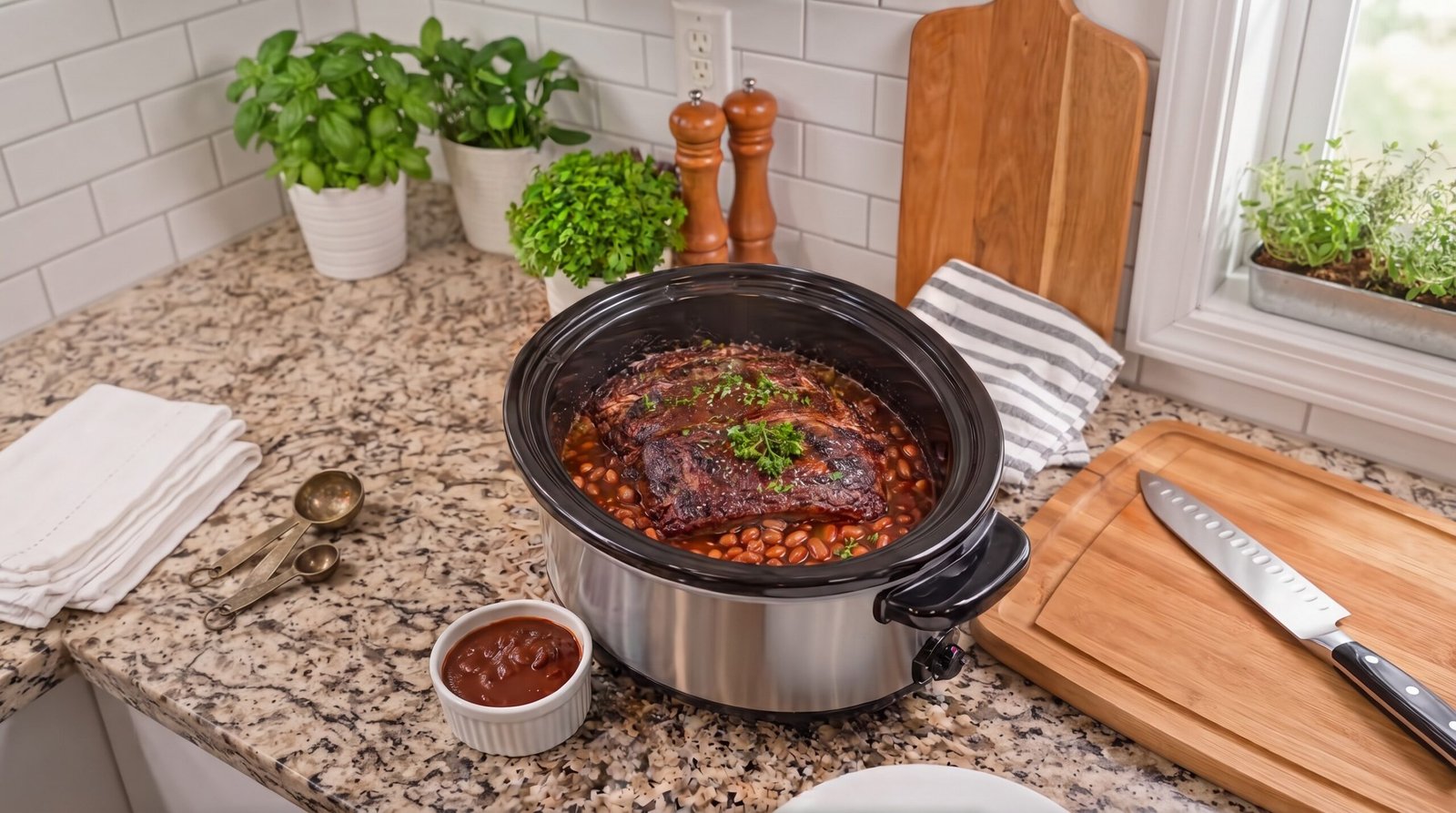
It happens every single time. I get home from a long day, the house is quiet, and I realize I completely forgot to plan dinner. Opening the pantry to see nothing but canned beans and checking the freezer to find a single piece of brisket is usually a recipe for ordering takeout. However, this slow cooker beef brisket and beans has become my standard emergency meal. It does not require much effort, and it fills the kitchen with a smell that makes you glad to be home. When I first started making this, I struggled with the meat being dry or the beans turning into mush. After some trial and error, I found the right balance of liquid and cook time that results in tender, shreddable beef that sits right on top of a base of savory, thick beans. It is one of those meals that essentially cooks itself while you focus on other things, leaving you with a hearty bowl of comfort food that hits the spot.
Why This Recipe Works
The beauty of this dish lies in the long, slow heat of the slow cooker. Beef brisket is a tough cut of meat, full of connective tissue that refuses to cooperate under high heat. When you introduce it to the slow cooker for eight hours on low, that collagen slowly melts away. This process transforms the fibers so they become tender and easy to pull apart with just a fork. Because the brisket cooks directly on top of the beans, the juices and fats from the meat drip down into the sauce as it renders. This adds a depth of flavor to the beans that you simply cannot get from a can on its own.
Another reason this recipe is a staple in my kitchen is its forgiving nature. If you leave it for an extra thirty minutes, the world does not end. The beans act as a bed for the meat, absorbing all that concentrated flavor from the brisket rub and the barbecue sauce. The texture contrast between the soft, yielding beans and the slightly firmer, seasoned beef creates a balanced bite. It is not overly complicated, it does not require constant monitoring, and it provides enough food to feed a small group or to have for lunches throughout the week. You get a lot of output for a very minimal amount of actual work in the kitchen.
Ingredient Notes
The Beef and The Beans
The centerpiece is a piece of beef brisket. You should look for a flat-cut brisket, which is more uniform in shape and easier to manage in a standard oval slow cooker. A three-pound piece usually fits perfectly. As for the beans, I stick with canned pinto or kidney beans because they hold their shape well during the long cooking time. You can use whatever your pantry offers, but white beans or butter beans might turn too soft if you are not careful. Always drain and rinse them well before adding them to the pot to control the thickness of your sauce.
The Flavor Base and Liquids
The sauce is what ties everything together. I use a base of store-bought barbecue sauce because it already contains the vinegar, sugar, and spices needed to balance the heavy flavor of the beef. If you prefer to make your own sauce, ensure it has a good balance of sweetness and acidity. I also add a little Worcestershire sauce and smoked paprika to amp up the depth. These ingredients help ground the sweetness of the barbecue sauce. Do not skip the fresh parsley at the end, as it cuts through the richness of the meat and makes the final dish look bright and inviting.
| Ingredient | Amount | Notes |
|---|---|---|
| Beef Brisket | 3 pounds | Flat cut works best |
| Canned Beans | 30 ounces | Pinto or kidney, drained and rinsed |
| Barbecue Sauce | 1.5 cups | Use your favorite variety |
| Worcestershire Sauce | 2 tablespoons | Adds a savory kick |
| Smoked Paprika | 1 teaspoon | For a hint of woodsmoke |
| Garlic Powder | 1 teaspoon | Adds aromatics |
| Black Pepper | 1/2 teaspoon | Freshly cracked is best |
| Fresh Parsley | 1/4 cup | Chopped for garnish |
The Recipe
- Prep Time: 15 minutes
- Cook Time: 8 hours
- Total Time: 8 hours 15 minutes
- Servings: 6 to 8
- Difficulty: Easy
- Equipment: 6-quart slow cooker, small mixing bowl, carving board, tongs.
Step-by-Step Instructions
Step 1: Prep the Ingredients
Start by opening your cans of beans and pouring them into a colander. Rinse them thoroughly under cold running water until the liquid runs clear and all the starchy foam is gone. Shake off the excess water and set the beans aside in a bowl. While they sit, take your brisket out of its packaging and pat it dry with paper towels. Removing that surface moisture helps the seasoning stick to the meat rather than sliding off into the pot. If the fat cap on your brisket is thicker than a quarter inch, you might want to trim it slightly with a sharp knife, but leave some of it on for moisture during the long cook time.
Step 2: Season the Meat
In a small bowl, whisk together the smoked paprika, garlic powder, and black pepper. Take this dry rub and press it firmly into all sides of the beef brisket. You want to make sure the spices are evenly distributed so that every slice has flavor. Do not add salt at this stage if your barbecue sauce is already very salty, as the sauce will season the meat plenty during the cooking process. Once the rub is applied, let the meat sit on your cutting board for about ten minutes while you prepare the base of the slow cooker. This gives the spices a moment to adhere to the surface of the meat.
Step 3: Layer the Slow Cooker
Pour your rinsed beans into the bottom of the slow cooker. In the same small bowl you used for the dry rub, mix your barbecue sauce with the two tablespoons of Worcestershire sauce. Pour about two-thirds of this sauce mixture over the beans and stir to coat them evenly. This ensures the beans are flavored from the start and prevents them from sticking to the sides of the pot. Place the seasoned brisket on top of the bed of beans. The meat should be sitting right in the center of the pot. You want the brisket to act like a lid for the beans, trapping the moisture underneath.
Step 4: The Slow Cook
Take the remaining third of the barbecue sauce mixture and brush it generously over the top of the brisket. This will help create a nice, tacky glaze on the outside of the meat as it cooks. Place the lid on your slow cooker and set it to the low setting. Do not be tempted to use the high setting, as high heat will make the brisket tough and chewy before it has a chance to break down properly. Let the brisket and beans cook for exactly eight hours. You will know it is done when the beef is fork-tender and pulls away easily with the touch of a fork. The internal temperature of the beef should be at least 195 degrees Fahrenheit for the best texture.
Step 5: Shred and Serve
Carefully lift the brisket out of the slow cooker and transfer it to a clean carving board. Let it rest for ten minutes, which allows the juices to redistribute and makes it easier to handle. While the meat rests, give the beans in the slow cooker a gentle stir. They should be creamy and coated in a thick, rich sauce. You can now choose to slice the brisket into thin strips or pull it apart with two forks into smaller chunks. Return the meat to the slow cooker and fold it gently into the beans. Sprinkle the freshly chopped parsley over the top before serving to add a bit of color and brightness to the bowl.
Mistakes I Made (So You Don't Have To)
Overcooking the Beans
Early on, I thought that longer was always better in a slow cooker. I once left the beans in for ten hours because I got stuck in traffic. When I got home, the beans had turned into a thick, mushy paste that resembled refried beans. While the flavor was still decent, the texture was not what I wanted for a hearty stew. The fix is simple: stick to the eight-hour mark. If you know you will be gone longer than eight hours, look for a slow cooker with a timer that automatically switches to a warm setting. This keeps the food at a safe temperature without continuing to cook the beans into oblivion.
Not Rinsing the Beans
One time, I was in a rush and dumped the canned beans directly into the slow cooker, liquid and all. The starch from that canning liquid reacted with the barbecue sauce, turning the whole dish into a gluey, thick mess that was way too salty. It ruined the consistency of the final sauce. Now, I always make sure to rinse the beans in a colander until the water is completely clear. This removes all the excess salt and starch, leaving you with clean beans that soak up the flavor of the barbecue sauce instead of fighting against it.
Trimming All the Fat
When I first started cooking brisket, I was nervous about fat, so I trimmed every bit of it off the meat before putting it in the slow cooker. The result was a dry, stringy piece of beef that lacked the richness I expected. Beef brisket needs that fat to stay moist over the long cooking process. I learned that you should leave a thin layer of fat on the meat. It renders down and flavors the sauce, and any extra fat that does not melt can be easily pushed to the side of your plate when you eat.
Ignoring the Resting Time
I used to pull the brisket out of the slow cooker and start chopping it immediately. The juices would run all over the cutting board, leaving the meat dry and disappointing. Resting the meat for ten minutes is a non-negotiable step. It gives the proteins time to relax and hold onto the juices inside. Since I started being patient and waiting those ten minutes, the quality of the beef has improved significantly. It is a small change that makes a big difference in how succulent the meat turns out.
Variations and Tips
Adding Root Vegetables
If you want to turn this into a more complete meal, you can add chunks of carrots or potatoes at the bottom with the beans. Keep the pieces about one inch in size so they cook through at the same rate as the meat. They soak up the juices from the brisket and become quite tender. This is a great way to stretch the meal further if you are serving a larger group of people. Just make sure the liquid level in the slow cooker stays sufficient, as the vegetables will absorb some of the sauce.
Making It Spicy
My family enjoys a bit of heat, so I often add a teaspoon of crushed red pepper flakes or a dash of hot sauce to the barbecue mixture before coating the meat. If you like it really spicy, you can even add a diced jalapeño directly into the beans. Just be mindful that the heat intensifies over the long cooking time, so start with a little and taste your sauce before you commit to adding too much. You can always add more heat at the end, but you cannot take it away once it has cooked into the beans.
Using Different Beans
While pinto and kidney beans are my go-to, you can swap them out for black beans or even great northern beans. Black beans offer a slightly earthy flavor that pairs well with the smokiness of the paprika. If you choose a smaller bean, keep an eye on them during the last hour of cooking to make sure they do not soften too much. The recipe is quite versatile, and changing the bean variety is an easy way to switch up the profile of the meal without having to change anything else.
The Make-Ahead Advantage
This dish is actually better the next day after the flavors have had time to meld in the refrigerator. If you are having guests over, I highly recommend making this a day ahead of time. You can cook the entire dish, let it cool completely, and then store it in the fridge overnight. The next day, simply reheat it in the slow cooker on low until it is steaming hot. The sauce usually thickens up slightly, and the meat becomes even more tender, making the leftovers just as good as the fresh batch.
Storage and Reheating
If you have leftovers, you should store them in an airtight container in the refrigerator within two hours of cooking. This prevents the growth of bacteria and ensures your meal stays safe to eat. The brisket and beans will keep well for up to three days in the fridge. Because this dish contains meat, it is important to store it properly. When you are ready to eat the leftovers, do not just warm them until they are lukewarm. Reheat them until they are steaming hot, which means reaching an internal temperature of at least 165 degrees Fahrenheit.
If you want to freeze the meal, it actually holds up quite well. Allow the mixture to cool completely and transfer it to a freezer-safe bag, pressing out as much air as possible to prevent freezer burn. You can keep it frozen for up to two months. To serve, let it thaw in the refrigerator overnight and then reheat it on the stovetop or in the slow cooker until it is piping hot. The beans might soften slightly upon thawing, but the flavor remains excellent. Avoid refreezing once the dish has been thawed and reheated.
Frequently Asked Questions
Can I use a different cut of meat?
While brisket is the traditional choice for this recipe due to its high collagen content, you could use a beef chuck roast if that is what you have on hand. Chuck roast is also tough and benefits from the slow, moist heat. The cooking time will remain the same, but keep in mind that chuck roast is often fattier, so you might need to skim some fat off the top of the beans before serving. The flavor will be slightly different, but it will still be a very tender and satisfying meal.
Do I need to sear the meat before putting it in the slow cooker?
For this specific recipe, searing is not required. The beauty of this method is its simplicity, and the flavor comes from the long-simmered sauce and the spices. While searing can add a nice color, the barbecue sauce glaze provides a similar visual appeal and depth of flavor without the extra step of browning the meat on the stove first. You can skip the sear and still end up with a very flavorful and tender result.
What if my beans are still too crunchy?
If eight hours have passed and your beans still feel a bit firm, it is likely because they were not completely covered by the liquid or the beans were particularly old. You can add a half cup of water or beef broth to the pot, stir gently, and cook on high for another thirty minutes. Keep a close watch during this extra time to ensure they reach the desired softness without turning into mush. Make sure to rinse the beans well next time, as the starch content in some canned beans can sometimes interfere with the cooking process.
Can I use homemade barbecue sauce?
Absolutely, and it is a great way to customize the dish to your tastes. Just ensure your homemade sauce has a good balance of sugar and vinegar. The sugar helps to create that nice, dark glaze on the brisket, and the acidity helps tenderize the meat fibers. Avoid using a sauce that is overly thin, as you want it to coat the meat and beans effectively. If your sauce is quite thick, you might want to thin it out with a splash of water or broth to ensure it does not scorch on the bottom of the slow cooker.
Is this recipe safe to leave on while I am at work?
Yes, provided you are using a reliable slow cooker and your workday is around eight to nine hours. The low heat setting is designed to keep the food in a safe temperature zone for that duration. Always ensure your slow cooker is on a flat, stable surface away from curtains or other flammable objects. If your schedule is unpredictable and you might be gone for twelve hours or more, it is better to set the timer if your device has one, or prepare this on a weekend when you can be present to check on it once the timer goes off.
Final Thoughts
Making this brisket and beans has saved my dinner plans more times than I can count. It is a reliable, straightforward recipe that relies on the slow cooker to do the heavy lifting while I go about my day. There is something truly rewarding about coming home to the smell of slow-cooked beef and barbecue sauce.
I hope this dish finds a place in your regular rotation when you need something hearty and comforting. It is simple, it uses basic ingredients, and it almost never fails to satisfy. Grab your favorite barbecue sauce, clear some room on your kitchen counter for the slow cooker, and enjoy the result.