
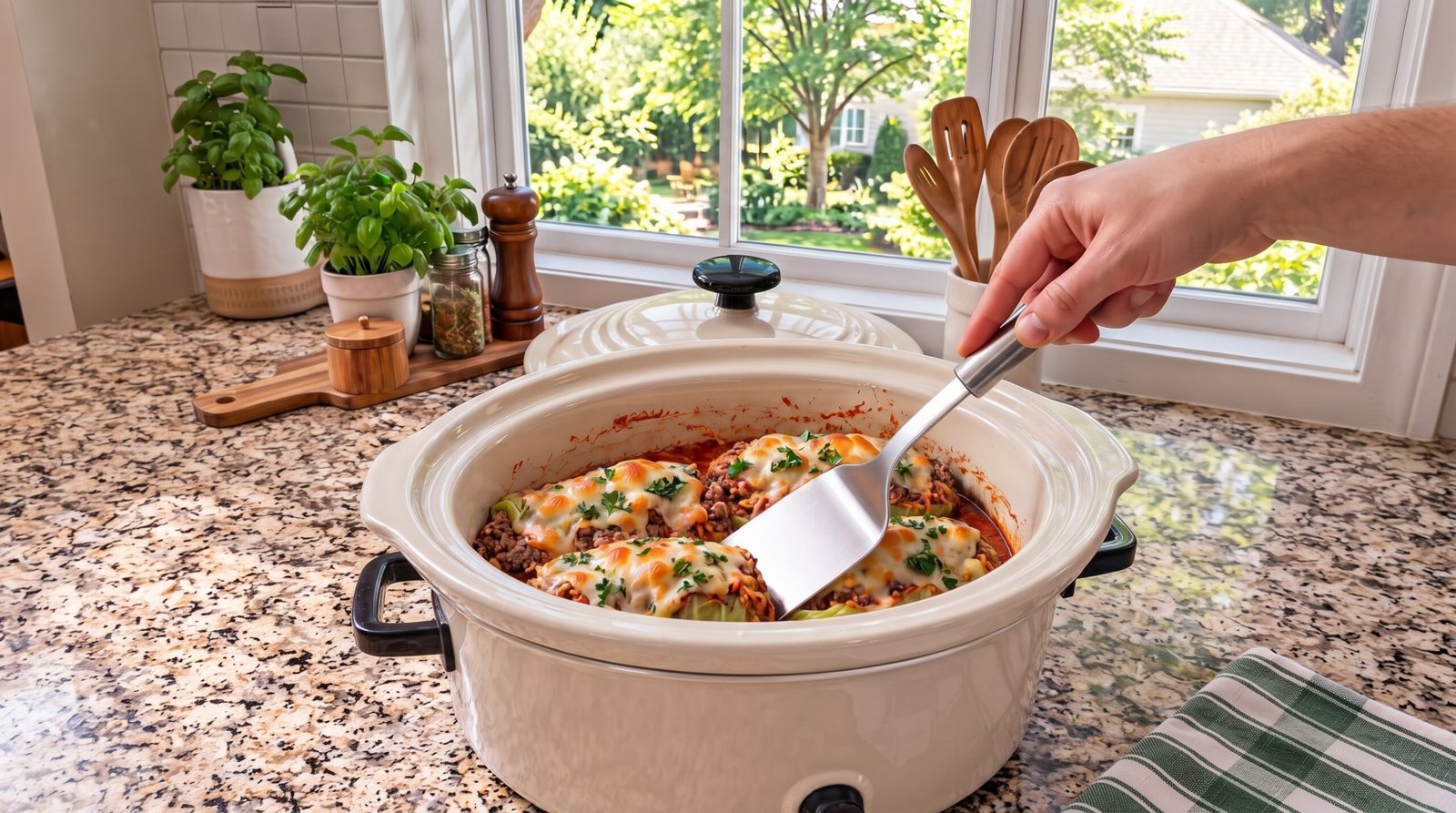
Making a weeknight dinner that feels like a labor of love but does not require hours at the stove is a challenge I face constantly. When the temperature drops and I want something hearty, I reach for this recipe. These slow cooker cabbage rolls with beef and rice bring me back to Sunday dinners where everything was cooked low and slow until the flavors melded together. The issue is usually the time-consuming process of rolling individual leaves and boiling them separately. I found a way to simplify this process so the cabbage cooks right in the sauce, becoming tender while absorbing the tomato broth and savory meat juices.
You will get a comforting meal that combines savory ground beef, fluffy rice, and tender cabbage leaves. It is the kind of dish that fills the kitchen with a homey scent and gives you leftovers for a busy Tuesday. By using the slow cooker, you avoid the hassle of rolling tight bundles, allowing the cabbage to soften while the beef cooks through. This meal fits into a busy schedule because once you prep the beef mixture and layer the components, the machine takes over the rest of the work.
Why This Recipe Works
This recipe relies on the moisture released by the cabbage as it cooks. Unlike oven-baked versions that can sometimes dry out if the liquid ratio is off, the closed environment of the slow cooker ensures the meat stays succulent. The rice acts as a binder and a sponge, soaking up the tomato-based sauce, which results in a consistent texture throughout. You are left with a dish that has balanced acidity from the tomatoes and richness from the beef.
The preparation is straightforward because it eliminates the need to blanch large cabbage leaves for traditional rolling. By chopping the cabbage and layering it, you ensure that every bite contains a mixture of vegetable and protein. The slow cooking time allows the fibers of the cabbage to break down enough to become buttery in texture, which is the main goal. It removes the stress of trying to keep tight rolls together while they simmer.
Flavor develops in a predictable way here. Because the beef is mixed with seasonings before being placed in the slow cooker, the aromatic profile of the onions, garlic, and dried herbs permeates the entire pot. There is no guesswork about whether the meat is cooked. You know it will reach a safe internal temperature of 160 degrees Fahrenheit over the course of the long cook time, which provides peace of mind when you are away from the kitchen for several hours. It is a reliable method for a reliable meal.
Ingredient Notes
The Meat and Protein Base
Ground beef is the heart of this dish. I prefer using a mixture that is about 80 percent lean and 20 percent fat. The fat is necessary because it adds moisture to the rice and keeps the meat from feeling chalky as it cooks. If you prefer, you can use ground turkey or a combination of pork and beef, though the cooking time remains identical. Always ensure your meat is fresh and stored in the refrigerator until the moment you start mixing.
The Cabbage and Vegetables
For the cabbage, a standard head of green cabbage works best. It is sturdy enough to hold its shape during the long, slow heat of the crock. You want to slice it into thick ribbons or chunks rather than shredding it too finely, as you want to feel the texture of the leaves in the finished dish. Onions are also essential here for the sweetness they provide. I use yellow onions because they soften well and mellow out as they cook, providing a subtle background flavor that complements the beef.
The Sauce and Rice
Long-grain white rice is the standard choice. It cooks effectively in the liquid produced by the tomato sauce and the cabbage. Do not use instant rice, as it will turn into a paste during the long cooking cycle. The sauce is built on a foundation of crushed tomatoes and tomato sauce. I like to add a splash of beef stock to give the liquid more depth, but you can stick to water if that is all you have. Check your product labels for the tomato sauce to ensure it fits your dietary needs if you are managing specific food restrictions.
| Ingredient | Amount | Notes |
|---|---|---|
| Ground beef | 2 pounds | 80/20 lean to fat ratio |
| Green cabbage | 1 medium head | Roughly chopped into 2-inch chunks |
| White rice | 1.5 cups | Uncooked long-grain variety |
| Crushed tomatoes | 28 ounces | Canned with juices |
| Tomato sauce | 15 ounces | Plain variety |
| Yellow onion | 1 large | Finely diced |
| Garlic | 4 cloves | Minced |
| Beef broth | 1 cup | Low sodium preferred |
| Dried thyme | 1 teaspoon | Adds earthy aroma |
| Salt and pepper | To taste | Adjust after cooking |
The Recipe
- Prep Time: 20 minutes
- Cook Time: 4 hours on high or 7 hours on low
- Total Time: 4 hours 20 minutes or 7 hours 20 minutes
- Servings: 6 to 8
- Difficulty: Easy
Equipment needed:
– 6-quart slow cooker
– Large mixing bowl
– Sharp chef knife
– Cutting board
– Measuring cups
– Spatula or wooden spoon
– Digital meat thermometer
Step-by-Step Instructions
Step 1: Prep the Ingredients
Start by chopping your cabbage into large, bite-sized pieces. Remove the tough core from the center of the cabbage head. You want the pieces to be uniform so they cook evenly throughout the pot. Dice your yellow onion finely and mince the garlic cloves. Keep these separate until you are ready to mix your meat.
In a large bowl, combine the raw ground beef, the uncooked rice, half of the diced onion, half of the minced garlic, and a healthy pinch of salt and pepper. Use your hands to mix this together until it is just combined. Do not overwork the meat, or it can become tough. You just want the rice and spices distributed evenly through the beef.
Step 2: Build the Base Layer
Before adding the beef mixture, place about one-third of the chopped cabbage and the remaining diced onion at the bottom of your slow cooker. This layer prevents the meat from sitting directly on the bottom surface and helps protect it from scorching. Pour a small amount of the tomato sauce over this base layer to help keep everything moist from the start.
Place the meat mixture into the slow cooker on top of the cabbage layer. You can shape it into large, loose portions or simply spread it out evenly depending on how you want to serve it. Since we are skipping the individual rolling, spreading it out makes it easier to scoop later once it is tender.
Step 3: Layer the Rest of the Cabbage
Take the remaining chopped cabbage and scatter it over the top of the beef mixture. If you have extra room, you can push the cabbage down slightly, but do not pack it in too tightly. You want the sauce to be able to move between the pieces of cabbage and meat as it heats up.
The cabbage will look like it takes up a lot of room, but remember it will wilt significantly as it cooks. Once the cabbage is in place, combine the crushed tomatoes, the rest of the tomato sauce, the beef broth, the thyme, and the remaining garlic in a separate bowl. Stir these together well.
Step 4: Add the Sauce and Begin Cooking
Pour the tomato and broth mixture over the top of the cabbage. Make sure you cover as much of the cabbage as possible so the top layer does not dry out. Use a spatula to gently press down on the cabbage to help the liquid move down through the layers.
Cover the slow cooker with the lid. Set the temperature to low for 7 hours, or if you are in a hurry, set it to high for 4 hours. Do not lift the lid during the first 3 hours of cooking, as this lets out the heat and moisture that are necessary for the cabbage to soften correctly.
Step 5: Check for Doneness
Once the cooking time has finished, use a digital meat thermometer to check the center of the largest portion of beef. It should reach an internal temperature of at least 160 degrees Fahrenheit. The cabbage should be very soft, and the rice should be fully cooked, having absorbed the surrounding tomato liquid.
If the rice is still firm, replace the lid and let it cook for another 30 minutes. Once everything is tender, stir the contents of the slow cooker gently to incorporate the sauce with the meat and cabbage. Taste a small bit to see if you need more salt or pepper. Serve immediately while it is steaming hot.
Mistakes I Made (So You Don't Have To)
Using Instant Rice
Early on, I thought using instant rice would make the process even faster. This was a mistake because instant rice is already partially cooked and dehydrated. After 7 hours in a slow cooker, it turned into a mushy, unrecognizable starch that destroyed the texture of the dish. Stick to standard, long-grain white rice. It holds its shape much better and provides that satisfying chew you want in a cabbage-based meal.
Forgetting to Salt the Beef Mixture
I once forgot to season the beef mixture before putting it into the slow cooker. I figured the tomato sauce would be salty enough, but the meat tasted bland on its own. Now, I always make sure to season the beef with salt and pepper in the mixing bowl. It makes a significant difference in the final flavor, as the seasoning gets locked into the meat as it slowly cooks.
Cutting the Cabbage Too Small
In my first few attempts, I shredded the cabbage like I was making coleslaw. This resulted in the cabbage disappearing into the sauce entirely, leaving me with a texture that was too uniform. I learned that leaving the cabbage in 2-inch chunks allows it to stay intact enough to provide a nice texture. It looks and feels much more like a traditional cabbage roll when the pieces have some structure.
Overfilling the Slow Cooker
I once tried to squeeze a massive head of cabbage into a smaller cooker, and it led to the liquid bubbling over the edges. It also prevented the heat from circulating, which meant the center stayed undercooked while the bottom started to dry out. Now, I make sure the ingredients do not go past the fill line of my 6-quart vessel. If I have too much cabbage, I save the rest for a stir-fry later in the week rather than trying to force it all in.
Variations and Tips
Adding Smoky Flavor
If you enjoy a deeper, woodsy taste, add a half-teaspoon of smoked paprika to the tomato sauce mixture before pouring it over the cabbage. It mimics the flavor of bacon or smoked pork, which is a classic pairing for cabbage and beef. It is a subtle change that makes the dish feel like it has been simmering on a stove for much longer than it actually has.
Using Different Broths
While beef broth is traditional for this meal, you can swap it for chicken or vegetable broth if that is what you have on hand. It will change the flavor profile slightly, making it a bit lighter, but it works perfectly well. I have even used a splash of red wine instead of some of the broth, which adds a nice level of complexity. Just remember that most of the alcohol will cook off, leaving behind a deep, rich flavor.
Make-Ahead Strategy
You can prep the meat and rice mixture the night before and store it in an airtight container in the refrigerator. In the morning, simply layer the cabbage, onions, and meat in the slow cooker and pour the sauce over the top. This saves about 15 minutes of work in the morning, making it easy to get this on the heat before leaving for the day.
Checking for Moisture
If you find the sauce is getting too thick, you can add a quarter-cup of water or broth during the final hour of cooking. Sometimes the rice absorbs more liquid than expected, and this helps ensure you still have a saucy finish. Just do not add too much, or the sauce will become watery and lose its richness.
Storage and Reheating
If you have leftovers, they should be moved into an airtight container and placed in the refrigerator within 2 hours of cooking. This prevents bacterial growth and keeps the meal safe. You can store these leftovers in the fridge for up to 3 days. The flavors often meld better on the second day, making it a great meal to prepare in advance.
When you want to reheat the leftovers, it is best to do it on the stovetop or in the microwave until the dish is steaming hot. You want the internal temperature of the beef to reach 165 degrees Fahrenheit. I do not recommend freezing this dish, as the cabbage tends to become overly soft and watery once thawed. The texture just does not hold up well after being frozen and reheated, so it is best enjoyed fresh or from the fridge.
Frequently Asked Questions
Can I use ground pork instead of ground beef?
Yes, ground pork is an excellent alternative to ground beef in this recipe. It has a slightly higher fat content, which can make the finished dish even more succulent. You can also use a 50/50 mix of beef and pork for a balanced flavor profile. The cooking time remains the same, and the internal temperature requirement of 160 degrees Fahrenheit still applies to ensure the pork is safe to eat.
What should I serve with these slow cooker cabbage rolls?
Because this is a filling, all-in-one meal, I usually serve it with something simple on the side. A slice of crusty sourdough bread is perfect for mopping up the remaining tomato sauce in the bowl. If you want something green, a light cucumber salad with a vinegar-based dressing provides a crisp contrast to the soft textures in the slow cooker.
Is it necessary to brown the beef before adding it?
For this specific recipe, it is not necessary to brown the beef first. Because you are cooking everything for a long time on low heat, the beef will cook through perfectly in the liquid. Adding the raw beef directly to the mixture also allows the juices to flavor the entire pot. If you prefer a darker flavor, you could brown it, but it adds extra time and another pan to wash.
My cabbage is still hard, what should I do?
If the cabbage is still firm after the recommended cook time, your slow cooker might run a little cooler than others, or the pieces might have been too large. Simply add another 30 to 45 minutes to the cooking time on high. Check it again with a fork to see if it is tender. If you need to add a bit more liquid to prevent it from drying out, a few tablespoons of broth will do the trick.
Can I use brown rice in this recipe?
I do not recommend using brown rice for this dish. Brown rice requires a longer cooking time and more liquid than white rice, and it often does not soften enough in the time it takes for the cabbage to cook perfectly. If you really prefer brown rice, you would need to pre-cook it halfway before adding it to the mixture, which defeats the purpose of the easy slow cooker method. Stick with white rice for the best results.
Final Thoughts
Making these slow cooker cabbage rolls has become a routine in my home whenever I have a busy week ahead. It provides a comforting meal that feels substantial without requiring me to stand over a hot stove for hours. The combination of simple pantry staples and fresh cabbage creates a dinner that is both reliable and satisfying.
Remember that the beauty of this dish is in its simplicity. Let the slow cooker do the heavy lifting while you focus on the rest of your day. With a little bit of patience, you will end up with a meal that warms you from the inside out and leaves you with enough leftovers to keep your kitchen stress-free for another day.