
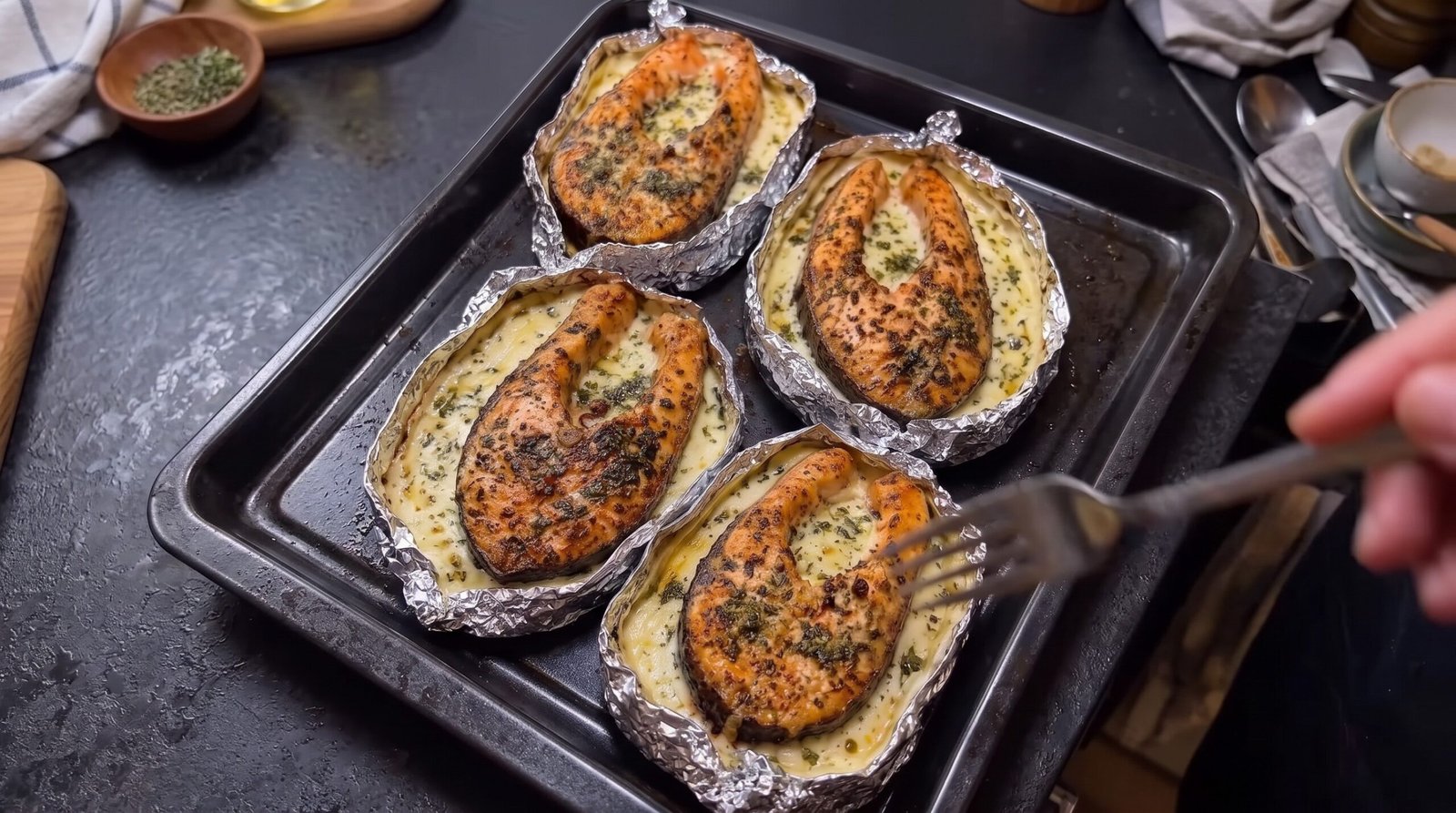
I often find myself standing in my kitchen at five in the evening, staring into the refrigerator, trying to decide what to put on the table that is quick but does not taste like a chore. Salmon steaks are my secret weapon because they look like a restaurant meal even on a Tuesday when I am feeling tired. There is something about the way the fat renders down and the edges crisp up in the heat that turns a simple piece of fish into a real dinner. This version of baked salmon steaks with a garlic cream sauce is one I have leaned on for years because the sauce keeps the fish tender and adds a rich layer of flavor that works with almost any vegetable. It does not require fancy gear or hours of prep time. You just need a few basic ingredients, some heavy-duty foil, and a hot oven. By the time you get your side dishes ready, the oven does all the heavy lifting for you, and you have a consistent, reliable meal that everyone likes.
Why This Recipe Works
The main reason I reach for this recipe so often is how forgiving the cooking method is. When you bake salmon in individual foil packets, or even in a shallow foil-lined tray as I do here, you are essentially poaching the fish in its own juices and the sauce. This creates a barrier that prevents the delicate proteins from drying out, which is a common problem with stovetop searing. You end up with a center that is buttery and opaque, exactly the way cooked salmon should be. The sauce is a mix of heavy cream, garlic, and herbs that bubbles around the edges of the steaks, thickening just enough to cling to the fish once it comes out of the oven.
The flavor balance is another win. Salmon is a fatty, rich fish, and it stands up well to bold flavors like garlic and parsley. Because the sauce remains liquid during the cooking, it permeates the surface of the steak. You get a combination of the browned, savory crust on the top of the salmon and the creamy, garlicky sauce underneath. It is a satisfying contrast that feels sophisticated without being complicated. It is also incredibly easy to clean up. Since the salmon rests on a layer of foil, you can lift the finished fish right off the tray. There is no stuck-on skin or burnt butter to scrub off the pan later, which is a nice bonus when you have had a long day.
Another aspect of why this works is the control you have over the cooking. Because you can see the fish as it cooks, you can tell exactly when it is ready. You are looking for an internal temperature of 145 degrees Fahrenheit, which is the point where the flakes separate easily with a fork. Unlike a deep casserole or a slow-cooked meal, this takes about 18 to 20 minutes at 400 degrees Fahrenheit. It is fast enough to fit into a busy schedule, but slow enough to develop the depth of flavor you need for a good weeknight dinner. It is a reliable dish that makes me feel like I have planned ahead even when I have not.
Ingredient Notes
The Salmon
You should look for salmon steaks that are about one inch thick. I prefer steaks over fillets for this recipe because the bone in the center adds a lot of flavor as it bakes and helps the fish maintain its round shape. If you go to a fish counter, ask for steaks that are all roughly the same size so they cook evenly on the tray. If you cannot find fresh steaks, frozen ones are fine as long as you thaw them completely in the refrigerator overnight. Moisture is the enemy of a good sear, so I always pat the steaks dry with paper towels before I start seasoning. If they are wet, they will steam instead of browning, and you lose that nice color on the top of the fish.
The Dairy and Aromatics
The sauce relies on heavy cream. Do not try to swap this for milk or even half-and-half, as those will curdle under the direct heat of the oven. You want the high fat content of heavy cream to ensure the sauce stays smooth and rich. For the garlic, I always mince it finely by hand. Jarred garlic often has a slightly metallic taste that comes through when it is baked, so fresh cloves are much better. I use a combination of dried herbs like parsley and dill, but if you have fresh herbs on hand, they work well too. Just remember that dried herbs are more potent, so use about half the amount if you are switching from fresh.
| Ingredient | Amount | Notes |
|---|---|---|
| Salmon steaks | 4 pieces | About 1 inch thick |
| Heavy cream | 1 cup | High fat content is necessary |
| Fresh garlic | 4 cloves | Minced very finely |
| Dried parsley | 1 teaspoon | For an earthy herbal note |
| Dried dill | 1/2 teaspoon | Pairs perfectly with fish |
| Salt | 1/2 teaspoon | Adjust to your taste |
| Black pepper | 1/2 teaspoon | Freshly cracked is best |
| Olive oil | 2 tablespoons | To coat the steaks |
The Recipe
- Prep time: 10 minutes
- Cook time: 18 minutes
- Total time: 28 minutes
- Servings: 4 people
- Difficulty: Easy
- Equipment: Baking sheet, heavy-duty aluminum foil, fork, small bowl, knife, cutting board.
Step-by-Step Instructions
Step 1: Prepare the Tray
Start by preheating your oven to 400 degrees Fahrenheit. While the oven heats up, take a large baking sheet and cover it with a large sheet of heavy-duty aluminum foil. You want to make sure the foil has edges that come up slightly, almost like a tray, to keep the cream sauce contained around the salmon. If the foil is not long enough, just overlap two pieces and crimp the seam tightly so the liquid does not leak onto the pan.
Step 2: Season the Salmon
Pat the salmon steaks dry with paper towels. Rub each steak with a little olive oil on both sides. In a small bowl, mix the salt, pepper, dried parsley, and dried dill. Sprinkle this mixture evenly over the top and sides of each salmon steak. Doing this before you place them in the cream ensures that the seasoning does not get washed away immediately.
Step 3: Arrange the Fish
Place the seasoned salmon steaks on the prepared baking sheet. Leave at least an inch of space between them so the hot air can circulate around the fish. Once they are arranged, carefully pour the heavy cream into the spaces between the steaks. You do not want to pour the cream directly over the top of the fish, or you will wash off your herbs and seasonings.
Step 4: Add the Garlic
Sprinkle the minced garlic evenly into the cream sauce surrounding the fish. Some of it will stick to the top of the steaks, which is exactly what you want. The garlic will infuse the cream as it warms up and turns into a savory, aromatic sauce.
Step 5: Bake the Salmon
Place the baking sheet into the center rack of your 400-degree oven. Set your timer for 18 minutes. The cream will start to bubble and thicken, and the top of the salmon will turn a light golden brown. You are looking for the fish to be opaque throughout. If you use an instant-read thermometer, the internal temperature should reach 145 degrees Fahrenheit.
Step 6: Serve the Dish
Remove the tray from the oven carefully. Use a flat spatula to lift each steak out of the pool of sauce. Spoon some of the creamy, garlic-infused sauce from the pan directly over each serving. Serve this immediately while the sauce is still hot and creamy.
Mistakes I Made (So You Don't Have To)
Using Thin Fillets
The first time I tried this, I used very thin salmon fillets instead of thick steaks. They cooked in about 8 minutes, which meant they were overcooked and dry by the time the cream sauce had barely started to thicken. Stick to thick steaks; they handle the oven heat much better.
Overcrowding the Pan
I once tried to cram six steaks onto a pan that was really meant for four. Because they were touching, the edges did not brown at all, and the steam trapped between them made the fish mushy. Give the fish room to breathe on the tray so the heat can work on all sides of the steaks.
Using Low-Fat Cream
I thought I could make this lighter by using half-and-half, but it turned into a grainy, separated mess in the oven. The sauce needs the fat in heavy cream to stay emulsified. If you are worried about the calories, just serve a smaller portion, but do not compromise on the cream quality.
Not Checking the Doneness
I once assumed that because the oven was set to a specific time, the fish would be perfect. I didn't account for the fact that my oven runs a bit hot. I ended up with dry, chalky salmon. Always use a thermometer or check the center with a fork to ensure it is cooked through but still moist.
Variations and Tips
Adding Citrus
A squeeze of fresh lemon juice right at the end adds a bright contrast to the heavy cream sauce. I like to add thin lemon slices on top of the steaks halfway through the baking process. It looks nice and the flavor migrates into the sauce.
Vegetables in the Tray
You can add halved cherry tomatoes or small pieces of asparagus to the pan along with the cream. They will cook in the sauce and provide a complete one-pan meal. Just ensure the vegetables are cut into small pieces so they finish at the same time as the fish.
Using Dried Spices Wisely
If you only have fresh herbs, wait until the very end to add them. Fresh parsley and dill can lose their color and flavor if they spend 20 minutes in the hot cream. Sprinkle them over the dish after you take it out of the oven.
Make Ahead Tip
You can prep the tray with the seasoned fish and the cream up to an hour before you plan to bake it. Just keep it in the refrigerator until the oven is ready. It makes for a very smooth transition from work to dinner.
Storage and Reheating
If you have leftovers, they should be moved to an airtight container and placed in the refrigerator within two hours of cooking. Fish is delicate, so it is best to eat leftovers within two days. To reheat, you can use a skillet over low heat with a splash of water to keep the sauce from burning. Reheat until the fish reaches 165 degrees Fahrenheit. I do not recommend freezing this dish, as the cream sauce tends to break and become watery upon thawing, which ruins the texture of the fish.
Frequently Asked Questions
Why is my cream sauce curdled?
This usually happens because the cream was too thin, or the oven temperature was too high, causing the dairy to separate. Using heavy cream is essential, and ensure your oven temperature is stable at 400 degrees Fahrenheit. Do not use high-heat settings like broil, as that will break the sauce quickly.
Can I use frozen salmon?
Yes, you can use frozen salmon, but you must thaw it completely in the refrigerator before starting the recipe. If you try to bake it while frozen, the center will stay raw while the outside overcooks, and the extra water released from the melting ice will ruin your cream sauce.
How do I know when the fish is done?
The best way is to use a meat thermometer inserted into the thickest part of the steak. You want it to register 145 degrees Fahrenheit. If you do not have a thermometer, look for the flakes to separate easily when you gently press a fork into the center.
Can I skip the foil?
The foil is very helpful for cleaning because it creates a sealed environment that keeps the sauce around the fish. If you do not use foil, the sauce will spread out over your baking sheet, get too hot, and potentially burn. Stick with the foil for the best results.
What should I serve with this?
Since the fish is rich and creamy, I like to serve it with something simple like steamed green beans, roasted potatoes, or a light crusty bread. The bread is particularly good for soaking up the leftover garlic cream sauce on the plate.
Final Thoughts
This recipe has become a standard in my house because it relies on simple ingredients that I usually already have. It is consistent, and the cleanup is as minimal as it gets, which makes a big difference after a long day.
Next time you have a package of salmon steaks in the freezer, give this method a try. It is a reliable way to get a flavorful, satisfying dinner on the table without needing to watch the stove every second. Just keep an eye on your oven, and you will have a meal that feels special every time.