
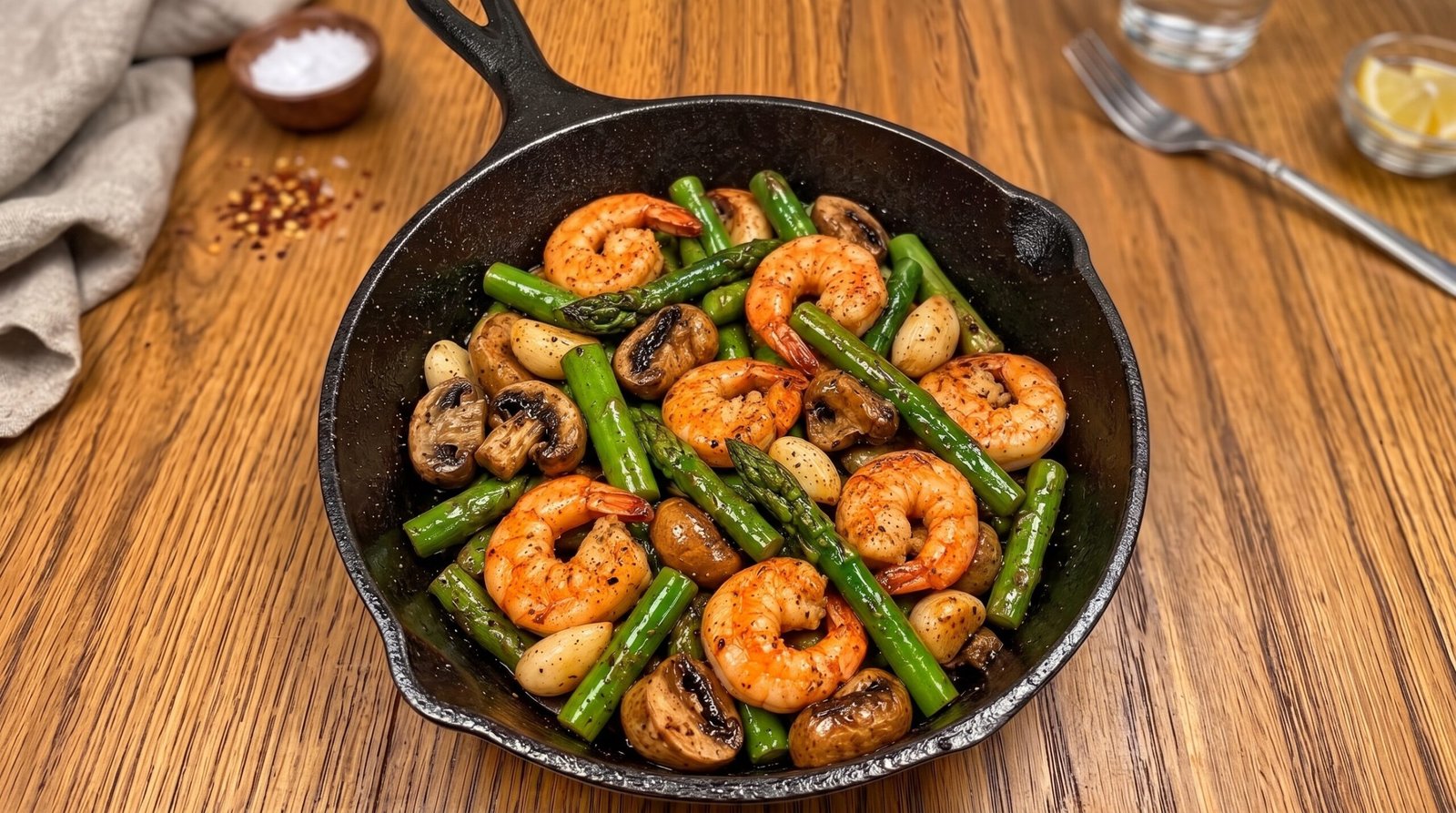
I often find myself staring into the refrigerator on a busy Tuesday evening, hoping that something simple will jump out at me. We have all been there, tired after work and wanting a meal that feels intentional but does not require hours in the kitchen. This garlic butter shrimp with asparagus and mushrooms is my go-to solution for those moments. It brings together the snap of fresh vegetables with the tender sweetness of shrimp, all tied together in a rich, garlicky pan sauce. Because everything cooks in the same skillet, the flavors meld beautifully as the juices from the mushrooms mingle with the butter. It is one of those meals that looks impressive enough to serve to guests but is modest enough to whip up for a quick dinner alone. You will find that this combination of ingredients is well-balanced and satisfying. Whether you are cooking for a small group or just yourself, this dish hits the right notes without any unnecessary fuss.
Why This Recipe Works
This recipe is built on the concept of high heat and speed. Shrimp is a delicate protein that turns rubbery if it stays in the pan for even a minute too long, so cooking it quickly ensures it remains tender. The mushrooms provide an earthy depth that contrasts nicely with the bright, grassy flavor of the asparagus. By using a cast iron skillet, you get a consistent, even heat that helps the vegetables develop some character rather than just steaming in the pan.
The flavor profile relies on the classic pairing of garlic, butter, and black pepper. When you sauté the garlic in butter, it becomes soft and fragrant, coating every piece of shrimp and vegetable. This method creates a light, flavorful sauce right in the pan. You do not need heavy cream or complex thickeners to make this feel indulgent. The natural moisture from the mushrooms and the rendered butter do all the work.
Another reason this recipe is a staple in my kitchen is its flexibility. The ingredient list is short and focused, which means fewer trips to the grocery store. It is also an efficient way to cook because you are only cleaning one pan at the end of the night. The timing of the ingredients is intentional, allowing each component to reach its peak texture at the same time. You start with the mushrooms because they take the longest to release their water, followed by the asparagus which needs a bit of crunch, and finally the shrimp which only needs a few minutes to turn pink and opaque. This rhythm is the key to a cohesive meal.
Ingredient Notes
The Seafood
The choice of shrimp is important here. I prefer large or jumbo shrimp, peeled and deveined with the tails left on for presentation, but you can use whatever size you have available. Fresh or frozen shrimp both work well. If you are using frozen, make sure to thaw them completely in a bowl of cold water and pat them dry with paper towels before they hit the pan. Moisture is the enemy of a good sear, so taking that extra minute to dry them off ensures they cook properly.
The Vegetables
For the asparagus, look for stalks that are firm and bright green. If the ends look woody or dry, snap them off; they will break naturally at the point where the tough part ends. For the mushrooms, cremini or white button mushrooms work perfectly. Slice them into halves or thick quarters so they hold their shape during the cooking process. You want them to soften and pick up the butter, not disappear into a mushy texture.
Aromatics and Fat
Fresh garlic is essential for the base of this flavor profile. Avoid using pre-minced jars if possible, as the taste of fresh cloves is much more vibrant. You will also need high-quality unsalted butter. Since the dish relies on the butter for its sauce, using a decent brand makes a noticeable difference. A splash of olive oil is also necessary to prevent the butter from burning during the initial sautéing phase.
| Ingredient | Amount | Notes |
|---|---|---|
| Large Shrimp | 1 pound | Peeled and deveined, patted dry |
| Fresh Asparagus | 1 bunch | Trimmed, cut into 2-inch pieces |
| Mushrooms | 8 ounces | Cremini or white, halved or quartered |
| Garlic | 4 cloves | Thinly sliced or finely minced |
| Unsalted Butter | 3 tablespoons | For flavor and sauce consistency |
| Olive Oil | 1 tablespoon | High smoke point, for sautéing |
| Black Pepper | 1 teaspoon | Freshly cracked is best |
| Salt | 1/2 teaspoon | Adjust to your taste |
The Recipe
- Prep Time: 10 minutes
- Cook Time: 12 minutes
- Total Time: 22 minutes
- Servings: 2 to 3
- Difficulty: Easy
Equipment needed: Large cast iron skillet, chef knife, cutting board, spatula.
Step-by-Step Instructions
Step 1: Prep the Ingredients
Start by prepping all your vegetables and seafood before you turn on the burner. Chop the woody ends off the asparagus and slice them into manageable two-inch segments. Slice the mushrooms into even pieces so they cook at a consistent rate. Peel and devein your shrimp, then pat them dry with paper towels to ensure they sear rather than steam. Slice your garlic cloves thinly. Having everything chopped and ready at your side is vital because once the cooking starts, the process moves quite quickly.
Step 2: Sauté the Mushrooms
Place your cast iron skillet over medium-high heat and add the olive oil. Once the oil shimmers, add the mushrooms in a single layer. Let them cook undisturbed for about 3 minutes. You want them to release their moisture and develop a light brown color on the surface. Resist the urge to toss them around constantly, as this keeps them from developing that nice color. Once they are softened and lightly browned, push them to the side of the skillet.
Step 3: Add the Asparagus
Add the asparagus pieces to the open space in the skillet. Sauté them for about 4 minutes, tossing them occasionally. You are aiming for a tender-crisp texture, where they are bright green and slightly softened but still hold their shape. If the pan seems too dry, add a tiny splash of water to help them steam briefly while they brown. Once the asparagus is done, push it to the side along with the mushrooms.
Step 4: Sear the Shrimp
Increase the heat slightly if needed and add the shrimp to the center of the pan. Sprinkle the shrimp with salt and fresh black pepper. Let them sit for about 2 minutes without moving them to get a good sear on one side. Once they turn pink and the edges are opaque, flip them over and cook for another minute. The shrimp should curl into a soft C-shape. Check that they are fully cooked through and opaque throughout, which is the standard sign of doneness for seafood.
Step 5: Incorporate Garlic and Butter
Once the shrimp are mostly cooked, add the butter and sliced garlic to the center of the pan. As the butter melts, it will pick up the bits of flavor from the vegetables and shrimp. Stir everything together in the pan for about 1 minute, allowing the garlic to become fragrant and the butter to coat everything in a light, glossy sauce. Be careful not to let the garlic turn dark brown, as it will become bitter.
Step 6: Serve Immediately
Turn off the heat and taste the dish. Adjust the salt and pepper if needed. Transfer the shrimp, asparagus, and mushrooms to a serving plate or eat directly from the skillet. Serve it while the butter sauce is still warm and liquid. The contrast between the savory mushrooms, the crisp asparagus, and the tender, buttery shrimp is best enjoyed right after cooking.
Mistakes I Made (So You Don't Have To)
Overcrowding the Skillet
Early on, I tried to fit too many vegetables and shrimp into a small pan. This resulted in the ingredients steaming in their own juices instead of getting a proper sear. The moisture release from the mushrooms is significant, and if the pan is crowded, they will just boil. The fix is simple: use the largest skillet you own, or work in two batches if your pan is on the smaller side. You want every piece to have contact with the hot surface of the cast iron.
Burning the Garlic
I used to add the garlic at the same time as the vegetables, thinking it would infuse the oil better. However, garlic burns much faster than mushrooms or asparagus. When the garlic turns dark brown or black, it adds an unpleasant, bitter flavor to the entire dish. Now, I always add the garlic during the final minute of cooking. This allows it to soften and perfume the butter without the risk of charring.
Not Drying the Shrimp
One time, I tossed the wet, freshly rinsed shrimp directly into the hot oil. The oil splattered everywhere, and the shrimp turned out grayish and watery instead of seared. Since shrimp are naturally high in water content, they need to be patted very dry with paper towels before seasoning and cooking. This simple step makes a massive difference in the final color and texture of the protein.
Cooking the Shrimp Too Long
I once walked away from the stove to check my phone, and when I returned, the shrimp had turned into tight, rubbery rings. Shrimp are extremely fast-cooking. Once they turn pink and opaque, they are essentially done. I now set a mental timer or stay right by the stove for the entire duration of the cooking process. If you notice them turning into tight coils, get them out of the pan immediately.
Variations and Tips
Add a Squeeze of Lemon
If you want to brighten the flavors, add a squeeze of fresh lemon juice at the very end, right before serving. The acidity of the lemon cuts through the richness of the butter and highlights the sweetness of the shrimp. Just half a lemon is plenty. You can also add some lemon zest if you want a more intense citrus aroma.
Spice it Up
For those who enjoy a bit of heat, add a pinch of crushed red pepper flakes along with the garlic. The warmth from the pepper flakes pairs perfectly with the butter and garlic. Start with just a quarter teaspoon and adjust based on your heat tolerance. It adds a nice background hum to the dish that keeps it from feeling one-dimensional.
Switch Up the Vegetables
While asparagus and mushrooms are my favorite pairing for this dish, you can substitute other vegetables that have similar cooking times. Zucchini rounds or snow peas work well. Just be aware that different vegetables release moisture at different rates, so keep an eye on the pan. Avoid root vegetables like carrots or potatoes, as they will not cook through in the short time the shrimp requires.
Time-Saving Tip
To save time on a busy night, do all your vegetable chopping in the morning and keep them in a sealed container in the refrigerator. When you get home, you only need to pull them out, pat your shrimp dry, and get the skillet hot. This reduces the active time in the kitchen significantly. You can also buy peeled and deveined shrimp from the start to skip the prep work entirely.
Storage and Reheating
If you have leftovers, they should be stored in an airtight container in the refrigerator. For the best quality, consume them within 2 days, as seafood loses its texture quickly. When reheating, do not use the microwave, as it will turn the shrimp into rubber. Instead, place the leftovers in a skillet over low-medium heat with a tiny splash of water or butter. Stir them gently until they are steaming hot throughout, aiming for an internal temperature of at least 165 degrees Fahrenheit. This method helps maintain the integrity of the vegetables and the succulence of the shrimp. This dish does not freeze well, as the texture of the asparagus and mushrooms changes significantly after thawing. It is best enjoyed fresh or within the next day or two.
Frequently Asked Questions
Can I use frozen shrimp for this recipe?
Yes, frozen shrimp is perfectly fine to use. The key is to ensure it is completely thawed before you start cooking. You can speed up the thawing process by placing the frozen shrimp in a colander and running cold water over them until they are soft. Once they are thawed, be sure to pat them dry with paper towels to remove all excess moisture.
How do I know when the shrimp is perfectly cooked?
You will know the shrimp is ready when it turns opaque and develops a light pink hue. It should also curl into a soft C-shape. If the shrimp curls into a tight O-shape, that is a sign that it has been overcooked. You can use a kitchen thermometer to ensure it reaches an internal temperature of 145 degrees Fahrenheit, but the visual cues are usually enough for this quick dish.
Can I substitute salted butter?
You can certainly use salted butter if that is what you have on hand. Just be mindful of the added salt content. I recommend reducing the amount of additional salt you sprinkle on the shrimp and vegetables, and then tasting the final dish before adding more. It is always easier to add salt than it is to fix an overly salty sauce.
What should I serve with this dish?
This recipe is quite filling on its own, but it pairs beautifully with something to soak up the garlic butter sauce. A piece of crusty bread or a portion of steamed rice works well. If you want a lighter option, a simple side salad with a bright vinaigrette provides a nice contrast to the savory, buttery elements of the main dish.
Is it necessary to use a cast iron skillet?
While a cast iron skillet is my preferred tool for this dish because of how well it retains heat, you can definitely use a stainless steel or nonstick pan. If you are using a nonstick pan, you might not get the same amount of browning on the mushrooms, but the flavor will still be excellent. Just make sure your pan is large enough to prevent the ingredients from crowding.
Final Thoughts
Making this garlic butter shrimp with asparagus and mushrooms has become a reliable habit in my kitchen. It is one of those rare meals that feels fancy but requires only a handful of ingredients and very little cleanup. The process is simple, but the results are always satisfying, especially when you have a bit of crusty bread to dip into the remaining butter sauce at the end.
I hope this becomes a regular part of your own rotation. Remember to keep the heat high, watch your timing carefully, and enjoy the process of making something fresh and flavorful for yourself or your family. It is a humble meal that proves you do not need much to have a great dinner.